
For millions of retirees and disabled workers, a specific day on the calendar decides how the entire month will go. The February 18, 2026 Social Security payments are one of those dates. The February 18, 2026 Social Security payments arrive right in the middle of the month, when many households are running low on cash and waiting for their next deposit to cover rent, groceries, and prescription medications.
Because the annual cost-of-living adjustment already began in January, this payment also reflects the higher 2026 benefit amount. What makes this mid-month deposit especially important is timing. Bills do not pause just because inflation rises. Utility prices, insurance premiums, and food costs in 2026 continue to stretch retirement budgets. Even though the increase is smaller than in recent years, beneficiaries are now beginning to feel the real-world effect of the 2.8% COLA in their bank accounts.
The February 18, 2026 Social Security payments follow the Social Security Administration’s birthday-based payment system. People whose birthdays fall between the 11th and the 20th of any month receive benefits on the third Wednesday. This group includes retirees, Social Security Disability Insurance recipients, and survivors receiving benefits. The deposit already includes the new 2026 cost-of-living adjustment, so many beneficiaries will notice a slightly larger direct deposit compared to late 2025. Knowing your payment group helps avoid banking confusion and allows you to plan recurring expenses like mortgage payments, prescriptions, and credit card bills with confidence.
Table of Contents
2026 Social Security Payments
| Key Detail | Information |
|---|---|
| Payment date | Wednesday, February 18, 2026 |
| Eligible beneficiaries | Birth dates 11th–20th |
| Included programs | Retirement, SSDI, Survivor benefits |
| Excluded | SSI payments |
| COLA increase | 2.8% in 2026 |
| Delivery | Direct deposit, debit card, mailed check |
| Adjustment starts | January 2026 |
The Social Security payment calendar will continue through 2026 using the same three-Wednesday system. The 2.8% adjustment will remain part of every monthly payment this year. For many households, the February 18, 2026 Social Security payments represent more than a routine government deposit. They provide stability and predictability. When you know exactly when money is coming and how much to expect, budgeting becomes far easier. As living costs continue to fluctuate in 2026, understanding your payment date and benefit increase helps you plan ahead rather than react at the last minute.
Who Gets Paid on February 18
The Social Security Administration does not send benefits to everyone at once. Instead, payments are spread across three Wednesdays each month. The February 18, 2026 Social Security payments specifically go to beneficiaries whose birthdays fall between the 11th and 20th.
Here is how the February 2026 payment schedule works:
- February 11 — Birthdays 1st to 10th
- February 18 — Birthdays 11th to 20th
- February 25 — Birthdays 21st to 31st
There are two important exceptions. Anyone who began receiving benefits before May 1997 is usually paid around the 3rd of each month. Supplemental Security Income recipients are also different because SSI follows a separate payment calendar. Understanding this schedule matters more than people think. Many retirees schedule automatic bill payments around their Social Security deposit. If you know your exact date, you can avoid overdraft fees and late payment penalties.
How The 2.8% COLA Boost Changes Monthly Checks
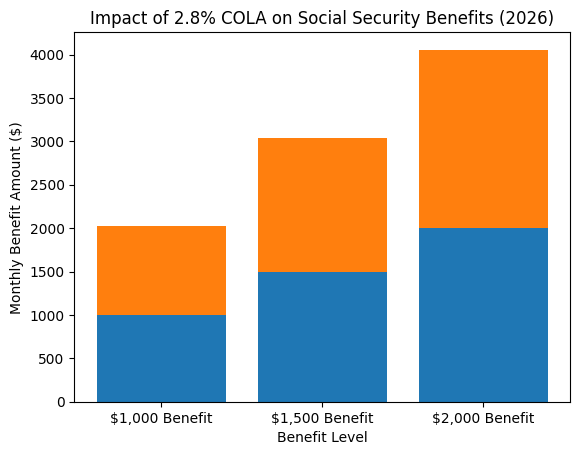
The reason people are paying close attention to the February 18, 2026 Social Security payments is the annual cost-of-living adjustment. For 2026, the increase is 2.8%.
Here is what that looks like in real numbers:
- A $1,000 monthly benefit increases to about $1,028
- A $1,500 benefit becomes roughly $1,542
- A $2,000 benefit rises to about $2,056
The average retirement benefit now approaches about $1,950 per month. While the increase is modest compared to earlier inflation spikes, it still helps retirees keep pace with rising prices. The best part is that beneficiaries do not need to do anything. The increase is automatic. It is applied directly to payments, including the February 18, 2026 Social Security payments.
Why The Increase Matters
- At first glance, a 2.8% increase may not sound dramatic. However, Social Security is designed to protect purchasing power. The February 18, 2026 Social Security payments ensure beneficiaries are not slowly losing value due to inflation.
- In 2026, some of the biggest rising expenses include prescription drugs, Medicare premiums, food prices, and electricity costs. For someone living on fixed income, even a $50 monthly increase can make a meaningful difference. Over a year, that is $600 in additional income without needing to work extra hours or withdraw retirement savings.
- The adjustment does not make retirees wealthy, but it helps prevent financial strain.
Payment Methods And When Money Arrives
- Most beneficiaries now receive the February 18, 2026 Social Security payments electronically. Direct deposit is the fastest and safest method.
- With direct deposit, funds typically appear early in the morning on the payment date. Many banks post federal payments before business hours begin.
- For people using the Direct Express debit card, the money is available immediately and can be used for purchases or ATM withdrawals. Paper checks still exist but are becoming rare. They can take several days to arrive depending on mail delivery.
- If your deposit does not appear immediately, do not panic. Banks sometimes process federal payments later in the day.
Retirement, SSDI, And Survivor Benefits Explained
- The February 18, 2026 Social Security payments include three different types of benefits.
- Retirement benefits are paid to workers who earned enough credits through payroll taxes during their working years.
- SSDI benefits go to individuals who can no longer work due to serious medical conditions. The payment schedule is the same as retirement benefits.
- Survivor benefits are provided to spouses, children, or dependent family members after a worker passes away. These also follow the same birthday-based calendar.
- Many households receive a mix of these benefits, especially couples where one spouse is retired and another qualifies for survivor benefits.
What If Your Payment Is Late
- If the February 18, 2026 Social Security payments do not arrive, the Social Security Administration recommends waiting three business days before reporting a missing payment.
- Before contacting Social Security, you should check your bank account again, verify your mailing address, and confirm there was no holiday delay. Sometimes banks hold deposits briefly for processing.
- After three business days, you can contact the agency and request a payment trace.
SSI Payments Are Different
- Supplemental Security Income is often confused with Social Security retirement benefits, but it is a separate program. SSI is needs-based and designed for individuals with very limited income or resources.
- SSI payments are usually issued on the first day of each month. Therefore, SSI recipients will not receive the February 18, 2026 Social Security payments. They already received their February payment earlier.
- This confusion is common, especially among new beneficiaries.
Budgeting Tips After The COLA Increase
- The additional money in the February 18, 2026 Social Security payments may seem small, but careful budgeting can stretch it much further.
- Practical ways to use the increase include covering rising Medicare premiums, paying off small credit card balances, starting an emergency fund, or offsetting grocery inflation.
- A modest increase used wisely can improve financial stability over the entire year.
FAQs on 2026 Social Security Payments
1. Who receives the February 18, 2026 Social Security payment
Anyone receiving retirement, disability, or survivor benefits with a birthday between the 11th and 20th will receive the payment.
2. Does this payment include the COLA increase
Yes. The deposit already reflects the 2.8% cost-of-living adjustment applied in January 2026.
3. Why didn’t I receive my payment on February 18
You may be an SSI recipient or someone who started benefits before May 1997 and follows a different schedule.
4. What should I do if my deposit is missing
Wait three business days, then contact the Social Security Administration or your bank to track the payment.