
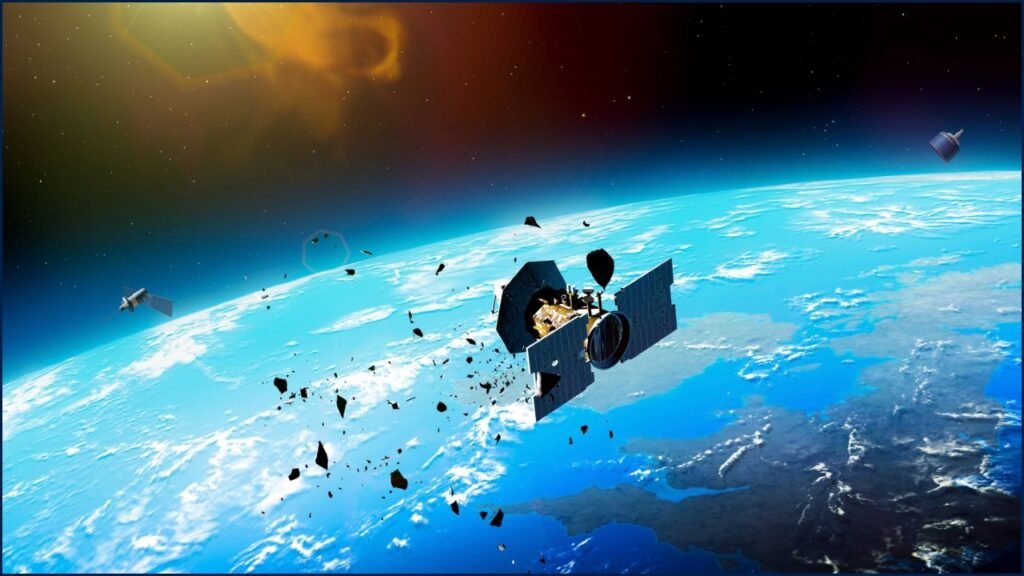
The space rocket debris risk for commercial aircraft is emerging as a new aviation safety challenge as global rocket launches accelerate. Aviation regulators and researchers say fragments from rockets or satellites reentering Earth’s atmosphere could pass through heavily traveled flight routes. While the probability of an aircraft strike remains low, experts warn the risk is increasing as private and government space activity expands.
Table of Contents
Space Rocket Debris Is Becoming a New Risk
| Key Fact | Detail / Statistic |
|---|---|
| Rising launch activity | More than 180 orbital launches occurred globally in 2023 |
| Reentry frequency | Spacecraft or rocket parts reenter Earth’s atmosphere roughly weekly |
| Aviation concern | Regulators warn debris could intersect commercial air routes |
| Satellite expansion | Over 7,500 operational satellites currently orbit Earth |
Why the Space Rocket Debris Risk for Commercial Aircraft Is Growing
The rapid expansion of commercial spaceflight has led to a sharp increase in rockets launched each year. Companies such as SpaceX, Blue Origin, and government agencies including NASA and the European Space Agency (ESA) now send satellites and spacecraft into orbit at an unprecedented pace.
Many of these missions involve large rocket stages or spacecraft components that eventually fall back toward Earth. Although most objects burn up during atmospheric reentry, some fragments survive and descend through the same altitudes used by commercial aircraft.
“Launch activity has grown dramatically, and that increases the probability of debris passing through aviation corridors,” said Dr. Marlon Sorge, executive director at the Aerospace Corporation’s Center for Orbital and Reentry Debris Studies, in a public safety analysis.
Researchers say uncontrolled rocket reentries are particularly concerning because their exact landing zones are difficult to predict.
The Intersection of Rocket Reentry Debris and Air Travel
Commercial aircraft typically cruise between 30,000 and 40,000 feet, an altitude that can overlap with falling debris fragments during certain stages of atmospheric descent.
According to the U.S. Federal Aviation Administration (FAA), airspace may occasionally be closed during rocket launches or spacecraft reentries to reduce the possibility of debris entering flight corridors.
Still, some analysts warn that these closures can disrupt travel. In several recent cases, flights have been delayed or rerouted to avoid potential debris paths following rocket incidents.
The aviation industry faces a delicate balance: maintaining safety without creating widespread disruptions across international flight networks.
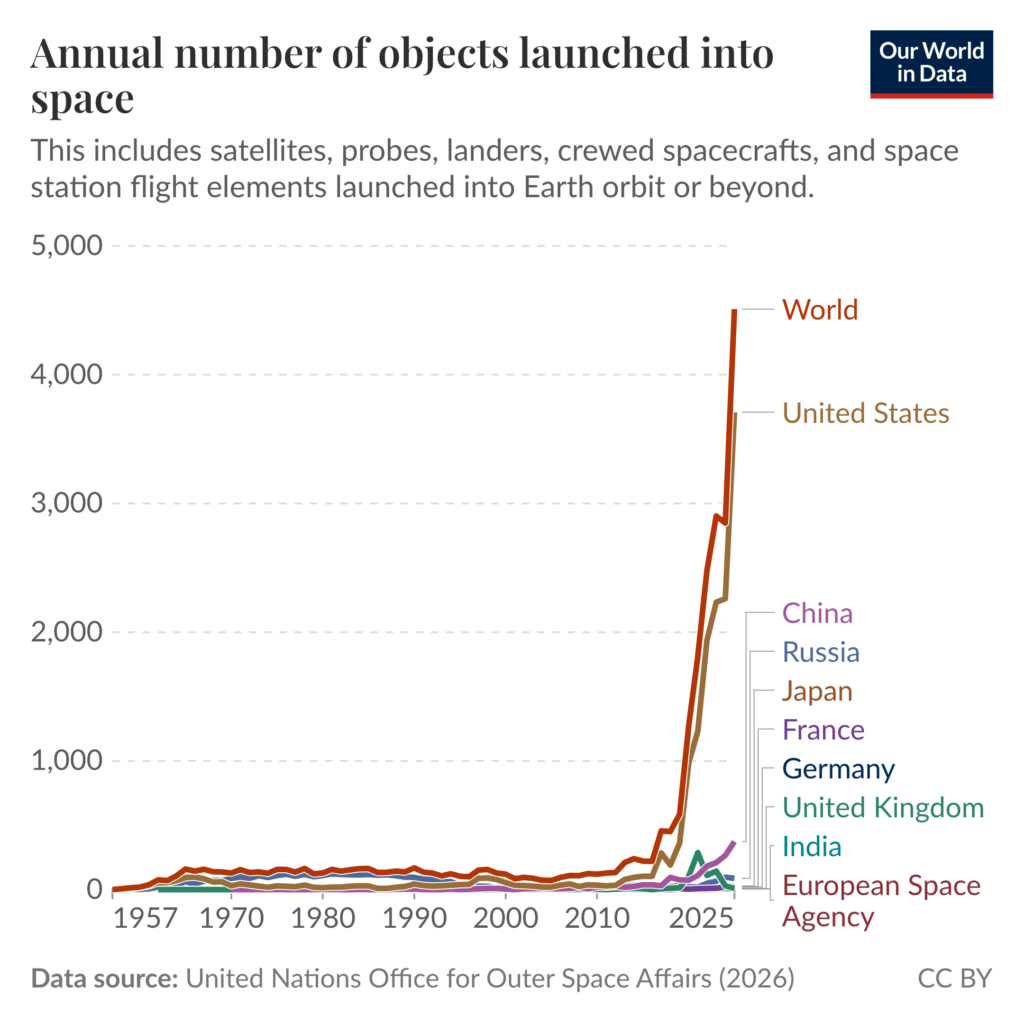
How Likely Is an Aircraft Strike?
Despite rising concern, experts emphasize that the probability of a direct aircraft strike remains very small.
However, new research suggests the risk is not negligible. A study from the University of British Columbia and the University of Southampton estimated that aircraft encounter probabilities increase as both space launches and air traffic grow.
“While the chance of an aircraft being hit is extremely low, it is no longer zero,” said Dr. Aaron Boley, an astrophysicist involved in the research.
The researchers warned that even a relatively small fragment could damage a windshield, wing structure, or engine if it collided with an aircraft at cruising speed.
Aviation Authorities Respond to Space Debris Aviation Safety Concerns
Regulators are now working to improve coordination between the aviation and space industries.
The FAA, the International Civil Aviation Organization (ICAO), and other global regulators have begun examining strategies to reduce the space debris aviation safety threat.
These measures include:
- Temporary airspace restrictions during rocket launches
- Improved tracking of satellite and rocket reentries
- Engineering spacecraft designed to burn up completely during descent
- Stronger coordination between air traffic control and launch operators
According to the FAA, improving predictive models for rocket reentry debris could help aviation authorities issue more precise warnings to airlines.
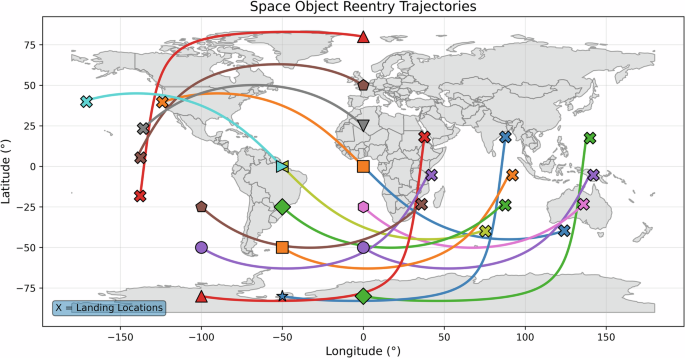
Rapid Growth of the Space Industry
The concern surrounding airspace safety risks is linked directly to the booming global space economy.
Industry analysts estimate that thousands of new satellites could launch in the coming decade as companies build large communications constellations for internet and navigation services.
The Space Foundation reports that the global space economy surpassed $570 billion in 2023, driven largely by satellite deployments.
Each launch increases the number of objects in orbit and, eventually, the number of spacecraft reentries.
“Space is becoming more crowded, and we must manage both orbital debris and atmospheric reentries responsibly,” said Holger Krag, head of the European Space Agency’s Space Safety Program.
Past Incidents That Highlight the Risk
Although no aircraft has been confirmed to suffer a direct hit from space debris, several incidents have highlighted the growing challenge.
In January 2024, debris from a SpaceX Starship test flight explosion forced the FAA to temporarily restrict airspace over parts of the Atlantic Ocean and Caribbean region. Several commercial flights were diverted to avoid potential hazards.
In another case in 2022, a large Chinese rocket stage made an uncontrolled reentry over the Indian Ocean, raising concerns among aviation authorities about unpredictable debris paths.
“These incidents illustrate how space operations can directly affect global aviation systems,” said Jonathan McDowell, an astrophysicist at the Harvard-Smithsonian Center for Astrophysics.
How Scientists Track Rocket Reentry Debris
Monitoring falling spacecraft components requires a complex network of space surveillance technologies.
Organizations such as the U.S. Space Surveillance Network track thousands of objects in orbit using radar systems, optical telescopes, and satellite sensors.
Once scientists determine that an object will reenter Earth’s atmosphere, they estimate possible landing zones using models that analyze:
- Orbital speed and altitude
- Atmospheric density
- Object mass and shape
- Solar activity affecting atmospheric drag
Despite these tools, predicting exact debris locations remains difficult.
Even small variations in atmospheric conditions can shift a reentry path by hundreds of kilometers.
The Role of Satellite Mega-Constellations
Another factor increasing the space rocket debris risk for commercial aircraft is the rapid growth of satellite mega-constellations.
Companies such as SpaceX, Amazon, and OneWeb are launching large networks of satellites designed to provide global broadband internet.
For example:
- SpaceX’s Starlink network already includes more than 5,000 satellites in orbit.
- Amazon’s Project Kuiper plans to deploy over 3,000 satellites.
While these satellites are designed to burn up completely upon reentry, the sheer number of spacecraft entering orbit increases the frequency of atmospheric descents.
Experts say careful engineering and responsible disposal practices will be essential as these constellations expand.
Environmental and Safety Implications
Beyond aviation risks, rocket debris also raises environmental concerns.
When satellites burn up during atmospheric reentry, they release small amounts of metals and other particles into the upper atmosphere. Scientists are studying how these materials might affect atmospheric chemistry.
Additionally, debris that survives reentry can fall into oceans or remote regions on land.
The United Nations Office for Outer Space Affairs (UNOOSA) has encouraged space agencies to adopt stronger debris mitigation practices to reduce these risks.
International Efforts to Improve Space Traffic Management
As space activity increases, international organizations are discussing new policies to manage the growing number of objects in orbit.
The United Nations Committee on the Peaceful Uses of Outer Space (COPUOS) has issued guidelines encouraging responsible spacecraft disposal and better tracking of space debris.
Similarly, aviation regulators are exploring ways to integrate space traffic data into global air traffic management systems.
Experts say improved cooperation between the aviation and space sectors will be critical.
“Airspace and outer space operations are becoming increasingly interconnected,” said Simonetta Di Pippo, former director of the United Nations Office for Outer Space Affairs.
A New Coordination Challenge Between Two Industries
For decades, aviation and spaceflight operated largely in separate environments. Today, the increasing overlap between the two sectors is creating a new regulatory challenge.
Experts say better international coordination will be essential as rocket launches continue to rise.
“The growth of the space industry is positive, but safety systems must evolve alongside it,” said Sorge of the Aerospace Corporation.
Without stronger coordination, regulators warn that disruptions to air travel could become more frequent.
Looking Ahead
Despite growing attention to the space rocket debris risk for commercial aircraft, aviation experts stress that flying remains extremely safe.
Still, as both space launches and global air travel increase, regulators and engineers are under pressure to ensure that the skies remain secure for both industries.
“Space and aviation now share the same environment,” said Krag of the European Space Agency. “Managing that shared space responsibly will be essential in the years ahead.”
FAQs About Space Rocket Debris Is Becoming a New Risk
What is the space rocket debris risk for commercial aircraft?
It refers to the possibility that fragments from rockets or satellites reentering Earth’s atmosphere could intersect with commercial flight paths.
Has a commercial airplane ever been hit by space debris?
No confirmed case exists, but aviation authorities monitor potential risks and sometimes close airspace during launches or reentries.
Why is the risk increasing?
The number of global rocket launches and satellites in orbit has increased significantly, leading to more objects eventually reentering the atmosphere.
How do regulators manage the risk?
Authorities use airspace restrictions, debris tracking systems, and coordination between space agencies and airlines.
Could future technology eliminate this risk?
Engineers are working on spacecraft designed to burn up entirely during reentry and on improved predictive models that help aviation authorities avoid debris paths.