
Scientific discoveries often begin with bold ideas that challenge long-standing beliefs. In 2010, a study published in the prestigious journal Science sparked worldwide attention when researchers claimed to have found a bacterium capable of using arsenic in place of phosphorus in its DNA.

The announcement captured headlines across the globe because phosphorus is considered one of the essential building blocks of life. If the claim proved correct, it could dramatically expand our understanding of biology and even reshape how scientists search for life beyond Earth. However, what began as an exciting breakthrough soon turned into one of the most debated controversies in modern microbiology.
Over the following years, researchers carefully examined the evidence behind the claim. Many scientists questioned whether the bacterium truly used arsenic to build its genetic material or if the findings were the result of experimental errors. Independent teams attempted to replicate the study and published their own results, which gradually weakened confidence in the original conclusions. After more than a decade of scrutiny, the journal Science ultimately decided to retract the paper, closing a chapter that had sparked intense debate within the scientific community.
Table of Contents
Controversial Arsenic Life
| Key Aspect | Details |
|---|---|
| Original Study Year | 2010 |
| Journal | Science |
| Lead Researcher | Felisa Wolfe-Simon |
| Organism Studied | GFAJ-1 bacterium |
| Location of Discovery | Mono Lake, California |
| Main Claim | Bacterium could replace phosphorus with arsenic in DNA |
| Scientific Reaction | Immediate skepticism and criticism |
| Later Research Findings | Bacteria required phosphorus and only tolerated arsenic |
| Retraction | Officially retracted after about 15 years |
| Reason for Retraction | Evidence did not support the extraordinary claim |
Arsenic Life Study Retraction
The arsenic life study retraction marked the end of a scientific controversy that lasted nearly fifteen years. The original research centered on a microbe called GFAJ-1, discovered in California’s Mono Lake, an environment known for its high levels of arsenic. The research team proposed that the organism could replace phosphorus with arsenic in essential biological molecules, including DNA. Because phosphorus has always been considered indispensable for life, the idea suggested that life might be able to exist in ways previously thought impossible. However, later investigations showed that the bacterium still depended on phosphorus to survive, and that arsenic was not actually incorporated into its DNA. With the core claim unsupported by strong evidence, the journal eventually withdrew the study from the scientific record.
The Original Claim (2010)
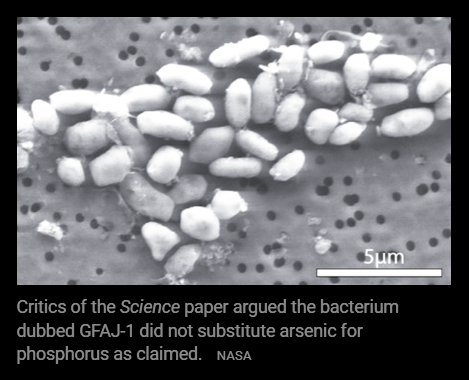
The original research focused on microbes living in Mono Lake, a hypersaline lake in California known for its unusual chemistry. The water contains high levels of arsenic, a toxic element that normally disrupts biological systems. Scientists collected samples from this environment and isolated a bacterium named GFAJ-1.
The research team proposed that this microbe could substitute arsenic for phosphorus in its biological molecules. Phosphorus is a key component of DNA, RNA, and cellular energy molecules such as ATP. According to the study, the bacterium could grow even when phosphorus levels were extremely low, suggesting that arsenic might be incorporated into its genetic structure.
This claim attracted widespread attention because it challenged one of the most basic assumptions in biology—that all life depends on the same fundamental chemical elements. The idea also excited scientists working in astrobiology, since it hinted that alien life forms might use different chemistry from life on Earth.
Why It Was Exciting
The discovery quickly gained international attention. NASA held a press conference to discuss the potential implications, and the research was widely covered in news outlets and scientific publications.
If the claim had been confirmed, it could have reshaped several areas of science. For example, it might have expanded the known limits of life on Earth, showing that organisms could adapt to extremely unusual chemical environments. It would also have influenced how scientists search for life on other planets. Instead of focusing only on environments similar to Earth, researchers might consider a wider range of chemical possibilities.
Beyond astrobiology, the study also raised important questions about evolution and biochemical flexibility. If life could use arsenic instead of phosphorus, it would suggest that biological systems are more adaptable than previously thought.
Immediate Scientific Criticism
Despite the excitement, the study quickly faced criticism from many scientists. Within days of publication, experts began pointing out potential flaws in the experimental design and data interpretation.
One major concern involved contamination. Critics argued that even tiny traces of phosphorus in the experimental environment could allow the bacteria to grow normally. If phosphorus was present, the microbes would not need to use arsenic at all.
Other researchers questioned the analytical methods used to detect arsenic in the DNA. They suggested that the techniques were not precise enough to prove that arsenic had replaced phosphorus within the genetic material. In addition, many chemists pointed out that arsenic forms unstable bonds in DNA structures, making the idea chemically unlikely.
These concerns led scientists around the world to attempt to replicate the experiment using more rigorous methods.
What Later Experiments Found
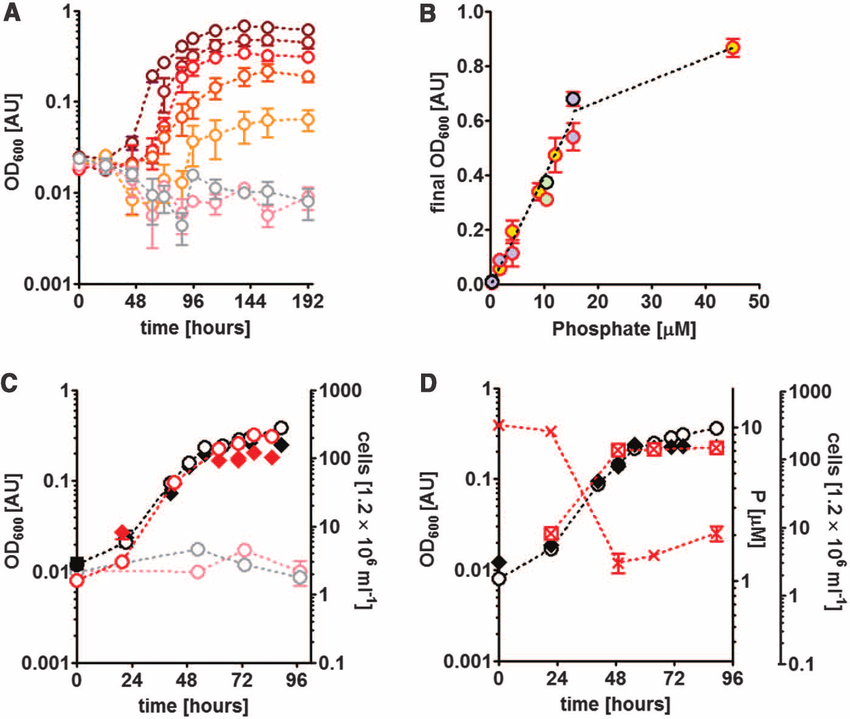
In 2012, independent research teams conducted detailed studies on the same bacterium, GFAJ-1. Their experiments provided a clearer understanding of how the organism actually survives in arsenic-rich environments.
The results showed that the bacterium did not incorporate arsenic into its DNA. Instead, it continued to rely on phosphorus just like other forms of life. The microbe was simply highly resistant to arsenic toxicity, allowing it to live in environments where other organisms might struggle.
Scientists discovered that even small amounts of phosphorus were enough for the bacterium to maintain normal cellular functions. The earlier findings likely resulted from trace phosphorus contamination in the experimental samples rather than a true biological substitution.
These studies effectively disproved the central claim of the original research.
Why the Paper Was Retracted
Although the study faced criticism for years, it remained part of the scientific literature for more than a decade. Eventually, the journal Science decided to retract the paper.
The retraction did not accuse the authors of misconduct or fraud. Instead, editors concluded that the experimental evidence was insufficient to support the study’s extraordinary conclusions. Because the main claim—that arsenic replaced phosphorus in DNA—was not supported by later research, the journal determined that the paper should no longer remain in the official record.
Interestingly, the original authors disagreed with the decision and continued to defend aspects of their work. Nevertheless, the scientific consensus had already shifted toward the conclusion that the initial interpretation was incorrect.
Why This Case Matters
The arsenic life controversy remains one of the most notable examples of scientific debate in recent decades. It illustrates how science evolves through testing, criticism, and replication.
At first, the study seemed to challenge fundamental biological principles. However, the intense scrutiny that followed helped scientists identify weaknesses in the original research. Independent experiments eventually clarified the true nature of the bacterium and corrected the scientific record.
The episode also highlights the importance of extraordinary evidence when making extraordinary claims. Groundbreaking discoveries often attract excitement, but they must withstand careful examination before becoming accepted knowledge.
Today, the case serves as a reminder that science is a self-correcting process. Even highly publicized discoveries can be questioned, tested, and revised as new evidence emerges.
Conclusion
The story of the arsenic life study is a fascinating example of how scientific knowledge develops over time. What began as a groundbreaking claim about a new form of life eventually turned into a lesson about the importance of verification and critical analysis.
While the bacterium discovered in Mono Lake did not rewrite the rules of biology, the controversy surrounding it strengthened scientific understanding and reinforced the importance of rigorous testing. The eventual retraction of the paper after fifteen years shows that science continues to refine itself, ensuring that reliable evidence remains at the foundation of our understanding of life.