
Millions of current and former customers of AT&T could soon receive compensation following a major cybersecurity lawsuit, widely referred to in coverage as the AT&T settlement update. The telecommunications company agreed to pay $177 million to resolve claims related to multiple data breaches that exposed sensitive customer information. Depending on documented financial losses and eligibility criteria, some claimants could receive payments of up to $7,500, although the majority of payouts are expected to be significantly smaller. The settlement represents one of the largest recent consumer data-breach agreements involving a U.S. telecommunications provider and reflects growing legal pressure on companies to strengthen cybersecurity protections.
Table of Contents
AT&T Settlement
| Key Fact | Detail / Statistic |
|---|---|
| Total settlement value | $177 million class-action agreement |
| Maximum possible payout | Up to $7,500 for customers affected by both breaches |
| Major breaches involved | Data leaks disclosed in 2024 affecting millions of customers |
| Claim filing deadline | December 18, 2025 |
| Final court approval hearing | January 15, 2026 |
While the AT&T settlement update represents a significant step toward compensating affected consumers, the final distribution of funds will depend on court approval and the total number of validated claims. For many customers, the coming months will determine how one of the largest telecommunications data-breach settlements in recent years ultimately unfolds.
Background: How the AT&T Settlement Update Emerged
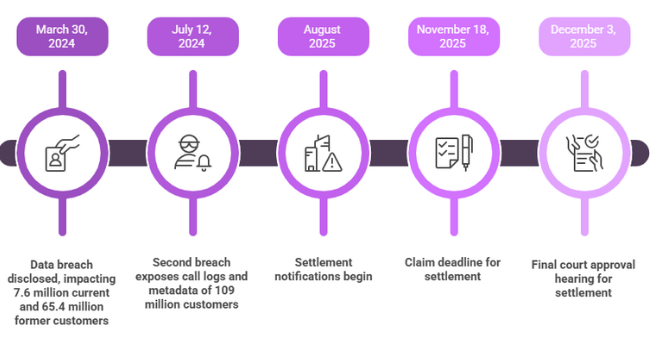
The AT&T settlement update stems from two large cybersecurity incidents disclosed in 2024 that exposed sensitive consumer information and triggered several lawsuits across the United States. The breaches involved unauthorized access to data belonging to both current and former AT&T customers, raising concerns about how telecommunications companies manage and safeguard vast amounts of personal information.
According to reports and legal filings, one breach involved a database that later appeared on criminal forums online. The leaked dataset reportedly included personal information such as names, contact details, and account identifiers. In some cases, sensitive information including partial Social Security numbers or account passcodes may have been exposed.
A separate incident involved unauthorized access to metadata associated with customer communications. While the content of calls or text messages was not included, the metadata reportedly contained details such as phone numbers involved in calls or texts, timestamps, and call durations. Experts note that even such metadata can provide significant insights into a person’s communications patterns.
The breaches sparked lawsuits alleging that AT&T failed to adequately protect customer information. Plaintiffs argued that stronger cybersecurity practices and internal controls could have prevented or limited the exposure of sensitive data.
AT&T did not admit wrongdoing as part of the settlement agreement. However, the company agreed to the financial settlement in order to resolve the legal disputes and avoid the uncertainty and cost associated with prolonged litigation.
Understanding the Structure of the Settlement
The settlement fund of $177 million is divided into multiple compensation pools linked to the two breaches involved in the case. Each pool is designed to reimburse affected consumers for documented financial harm and to provide modest payments to those whose information was exposed but who cannot demonstrate specific losses.
Settlement administrators typically divide such funds into several categories. These include reimbursement for documented financial losses, compensation for time spent addressing identity theft concerns, payments for credit monitoring services, and pro-rated cash distributions to eligible claimants.
In this case, the majority of the settlement fund is tied to the earlier breach involving more sensitive personal data. A smaller portion of the fund is connected to the breach involving communication metadata.
Legal experts explain that dividing settlement funds into separate pools helps ensure that compensation reflects the severity of each incident and the type of data exposed.
Who May Receive Compensation
Eligibility for payments depends on whether a person’s data was involved in one or both breaches and whether they submitted a claim before the established deadline.
Settlement administrators identified specific groups of customers whose information appeared in the compromised datasets. Notices were distributed through email, postal mail, and public announcements encouraging potentially affected individuals to review their eligibility.
Individuals whose personal information appeared in the earlier breach are generally categorized as members of the first settlement class. Those affected by the later breach involving communications metadata belong to a second settlement class.
Customers who were impacted by both incidents may qualify for compensation from both settlement pools. However, each claim must be reviewed and verified before payment is issued.
It is common in class-action settlements for eligibility verification to take several months. Settlement administrators must confirm claim information, validate supporting documents, and calculate how much each approved claimant will receive.
How the $7,500 Maximum Payment Works
The headline figure associated with the AT&T settlement update is the possibility that some claimants may receive up to $7,500. However, this amount represents the maximum reimbursement available for individuals who experienced documented financial losses linked to both breaches.
Under the settlement terms, individuals may be eligible to claim up to $5,000 in reimbursements related to losses connected to the first breach. These losses may include expenses such as identity theft recovery costs, fraudulent financial transactions, or credit monitoring services.
In addition, claimants may receive up to $2,500 in compensation linked to the second breach involving communication metadata.
To receive the maximum payout, claimants must provide documentation showing that the breaches directly caused measurable financial harm. Acceptable documentation may include bank statements, credit reports, fraud affidavits, or receipts for identity protection services.
For many customers, however, financial harm may not be easy to prove. In those cases, the settlement allows individuals to request a smaller payment for the time spent addressing potential risks associated with the breach.
Such payments are typically modest and depend on the total number of valid claims filed. Because the settlement fund must be shared among all eligible claimants, the final amount received by each person may vary widely.
When Payments Could Arrive
A federal court scheduled the final approval hearing for January 15, 2026, marking a key milestone in the settlement process. If the court approves the agreement and no appeals are filed, administrators will begin calculating payments and distributing funds.
However, settlement payments in large class-action cases often take months to distribute. Administrators must first review and validate thousands or even millions of claims. They must also resolve disputes, confirm documentation, and ensure that each claimant receives the correct amount.
In many cases, payments are distributed electronically through direct deposit or digital payment services. Some claimants may receive paper checks depending on the payment method they selected when submitting their claim.
Legal analysts note that appeals from objectors can sometimes delay settlements for months or even years. If no appeals arise in this case, payments could begin later in 2026.
Why Data Breach Settlements Are Increasing
The AT&T settlement update reflects a broader trend in which companies face increasing legal and financial consequences for cybersecurity failures.
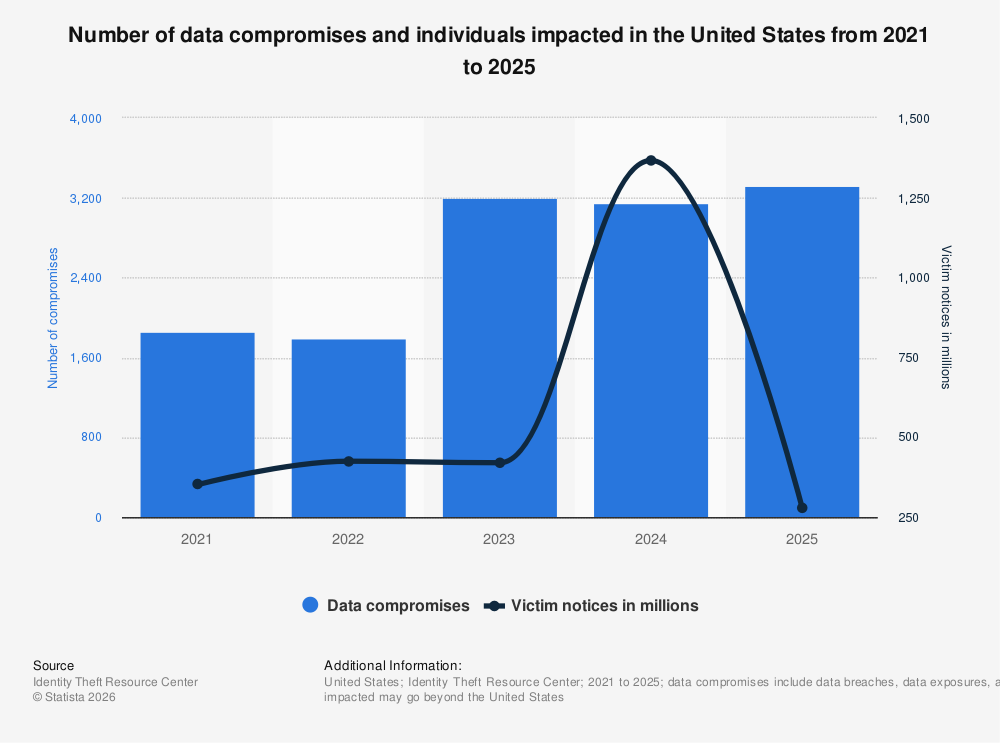
Over the past decade, large-scale data breaches have affected banks, retailers, healthcare providers, and technology companies. These incidents often expose millions of consumer records and trigger class-action lawsuits.
Legal experts say courts have become more willing to allow such cases to proceed when companies fail to implement reasonable data security measures.
In addition, state laws governing data privacy have expanded significantly in recent years. Several states have enacted laws requiring companies to promptly disclose breaches and provide identity protection services to affected consumers.
Regulators and lawmakers increasingly view cybersecurity as a core corporate responsibility. Companies that collect large volumes of personal information are expected to invest heavily in security infrastructure, employee training, and breach response planning.
How Telecommunications Companies Manage Customer Data
Telecommunications companies like AT&T handle vast amounts of personal and technical information every day. This includes customer names, addresses, billing information, device identifiers, and call records.
Because telecommunications networks connect millions of users, they generate large databases that can become attractive targets for cybercriminals. Attackers often seek such information to commit identity theft, financial fraud, or targeted phishing attacks.
Companies typically store this information in complex cloud-based systems and internal databases. Protecting those systems requires multiple layers of security, including encryption, access controls, monitoring tools, and incident response procedures.
Cybersecurity professionals note that no system is completely immune to breaches. However, strong safeguards can significantly reduce the risk of unauthorized access and limit the impact of an attack.
Consumer Impact and Lessons Learned
For consumers, data breaches can create long-term risks even if immediate financial losses do not occur. Stolen personal information may circulate on criminal marketplaces for years after a breach occurs.
Identity theft experts recommend that individuals affected by breaches monitor their credit reports, watch for unusual financial activity, and consider using credit monitoring or identity protection services.
The AT&T case highlights the importance of transparency when breaches occur. Companies are expected to notify affected customers quickly and provide clear instructions on how to protect themselves.
Consumer advocates argue that large settlements also serve as a deterrent by encouraging companies to invest more heavily in cybersecurity.
What Customers Should Do Now
The claim submission period has already closed, and individuals who did not file a claim before the deadline generally cannot participate in the settlement.
Customers who submitted claims should monitor their email accounts and physical mail for updates from the settlement administrator. Administrators may request additional information or documentation to verify eligibility.
Claimants should also ensure that their payment preferences and contact information remain up to date. Changes to email addresses or bank details may need to be reported to the administrator to avoid payment delays.
FAQ
What is the AT&T settlement about?
The settlement resolves lawsuits alleging that AT&T failed to adequately protect customer information during two major data breaches disclosed in 2024.
How much money can customers receive?
Eligible claimants may receive up to $5,000 or $2,500 depending on which breach affected them. Individuals impacted by both incidents may receive up to $7,500 if they can document financial losses.
Will every claimant receive thousands of dollars?
No. Many claimants are expected to receive smaller payments because the settlement fund must be divided among all approved claims.
When will payments be issued?
Payments may begin later in 2026 if the court grants final approval and no appeals delay the process.
Can new claims still be filed?
No. The official deadline for filing claims was December 18, 2025.