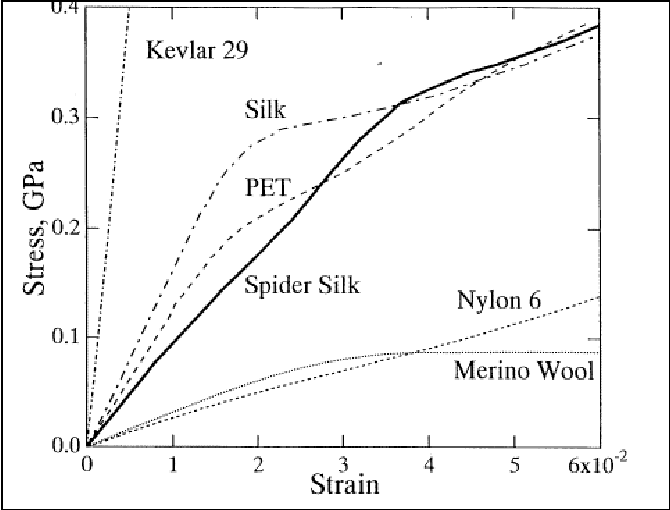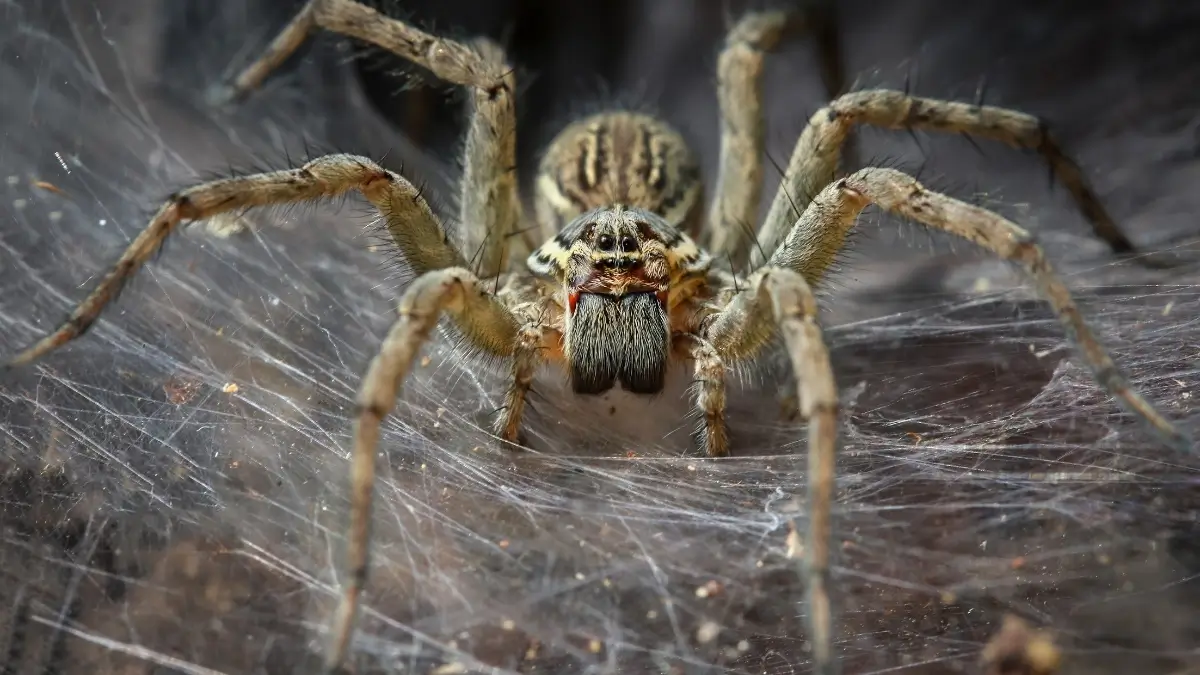

Spider Silk That’s Stronger Than Steel and Spans Rivers: Deep in the dense rainforests of Madagascar, a tiny spider is giving steel a run for its money. The Darwin’s bark spider (Caerostris darwini), though no larger than a thumb, spins a web so strong and so wide it can span entire rivers — and its silk is one of the toughest natural materials known to science. You read that right — stronger than steel, tougher than Kevlar, and as flexible as a bungee cord. Sounds like superhero material, right? Well, that’s not too far off. In fact, scientists are calling it nature’s own high-performance fiber — and they’re working overtime to understand it, replicate it, and apply it to medicine, engineering, and space tech.
Table of Contents
Spider Silk That’s Stronger Than Steel and Spans Rivers
From the shadows of Madagascar’s forests comes one of the most powerful materials nature has ever created — the silk of Darwin’s bark spider. It’s strong enough to replace steel, light enough to float on the breeze, and smart enough to inspire next-gen engineering. Scientists aren’t just fascinated — they’re hopeful. Spider silk might be the green solution to synthetic materials that pollute, break down, or just don’t quite get the job done. Whether it’s stopping bullets, healing wounds, or building bridges in space, this little spider may hold the key to the future.
| Topic | Details |
|---|---|
| Spider | Darwin’s bark spider (Caerostris darwini) |
| Location | Madagascar (Analamazaotra National Park) |
| Silk Strength | ~1.6 GPa (tensile strength) |
| Toughness | Over 350 MJ/m³ – 10x tougher than steel |
| Web Span | Up to 25 meters (82 feet) |
| Silk Composition | Spidroins – rich in proline & glycine |
| Top Producers | Only large adult females |
| Applications | Bulletproof vests, bio sutures, aerospace, smart fabrics |
| Official Reference | World Spider Catalog |
Darwin’s Spider Silk That’s Stronger Than Steel and Spans Rivers
Natural Engineering at Its Finest
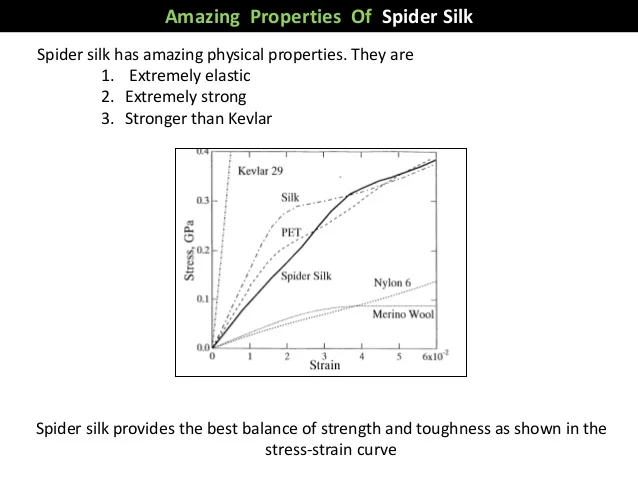
This spider’s silk has a tensile strength of up to 1.6 gigapascals (GPa) and a toughness of over 350 megajoules per cubic meter (MJ/m³). To put that in real-world terms, it’s more than 10 times tougher than steel by weight.
Let’s bring this home with a fun comparison:
- If you could weave a rope the diameter of a pencil out of this spider’s silk, it could theoretically stop a jet in flight.
- That same rope would weigh a fraction of what a steel cable would — and it’d stretch instead of snapping.
Built for Big Jobs
The Darwin’s bark spider doesn’t mess around when it comes to web construction. It spins enormous orb webs across rivers and lakes, up to 82 feet across. Only large females build these colossal webs, hanging them above water to snare flying insects like dragonflies and mayflies.
This isn’t a corner-of-the-room kind of web. It’s the largest known orb web in nature, and the silk must be both strong and resilient to stay intact through wind, water spray, and struggling prey.
The Science Behind the Spider Silk That’s Stronger Than Steel and Spans Rivers
Spider silk is a protein fiber — but not just any protein. It’s made of spidroins, which are long chains composed mainly of amino acids like glycine and proline.
What Makes It Special?
- Crystalline zones give the silk strength.
- Amorphous zones provide elasticity.
- Hydrogen bonding holds it all together like natural velcro.
- It’s biodegradable and biocompatible — meaning it breaks down safely and won’t cause harm in the body.
This combo of stretch and strength is what makes Darwin’s silk a material marvel.
“We can think of this silk as the holy grail of materials — lightweight, strong, flexible, and sustainable,” says Dr. Laura Cowen, a biomaterials expert at MIT.
How Scientists Are Studying Spider Silk That’s Stronger Than Steel and Spans Rivers?
Researchers didn’t just catch a spider and call it a day. They’ve developed rigorous protocols for examining and quantifying the silk.
Research Methods
- Field Collection: Scientists hike through rainforests and carefully collect egg sacs and females from Madagascar’s Analamazaotra Reserve.
- Controlled Lab Environment: Spiderlings are reared in lab habitats that mimic jungle conditions.
- Silk Harvesting: They use micromachines to “milk” the spiders — pulling silk as the spider anchors it to a surface.
- Tensile Testing: Machines stretch the silk to determine how much force it can take before breaking.
Only silk from large adult females reaches the elite level of strength. This suggests biology and ecology play a huge role in the silk’s toughness — younger spiders or males just don’t produce the same stuff.
Can We Use It in Real Life?
Absolutely — but we’ve got a few speed bumps first. Farming spiders at scale is nearly impossible — they’re territorial and cannibalistic. That’s why bioengineering has taken center stage.
Current and Future Applications
- Defense: Ultra-light body armor stronger than Kevlar.
- Medicine: Sutures and scaffolds for tissue regeneration.
- Sports Gear: Lightweight, durable climbing ropes and fishing lines.
- Aerospace: Tethering materials for satellites and drones.
- Smart Textiles: Wearables that respond to environment or body signals.
Companies like Kraig Biocraft Laboratories, Spiber Inc., and Bolt Threads are pioneering methods to synthesize spider silk using yeast, bacteria, or even goats — genetically modified to produce silk proteins in milk!
Why Can’t We Just Grow More Spiders?
Here’s the rub: spiders are solitary and aggressive. Unlike silkworms (used for traditional silk), spiders will eat each other if kept too close. Plus, they don’t produce silk in large enough quantities.
That’s why synthetic biology is so important. But duplicating the exact protein structure and spinning process is no easy feat — and scientists are still trying to get the strength-to-weight ratio just right.
Spider Silk Through History
Spider silk isn’t just a modern fascination. It’s been used across cultures for centuries.
- Ancient Greece: Used webs to stop bleeding wounds.
- Indigenous tribes: Created fishing lures and snares.
- WWII pilots: Used spider silk in crosshairs of gunsights because it was nearly invisible and super strong.
Nature has always provided — we just haven’t always understood how.
Biomimicry: Learning From Nature
The study of natural materials like spider silk falls under a growing discipline called biomimicry — learning from nature to solve human problems.
Other biomimicry breakthroughs inspired by animals:
- Velcro (from burrs sticking to dog fur)
- Bullet trains (inspired by kingfisher beaks)
- Gecko tape (from the nano-hairs on gecko feet)
Darwin’s spider silk might just be the next big bio-inspiration — especially for sustainable, high-performance materials.