

Arctic Noise Rises: The Arctic, long held sacred by Native Peoples and regarded by scientists as one of Earth’s last acoustic refuges, is changing fast. As shipping routes expand, sea ice melts, and oil exploration pushes deeper into untouched areas, noise pollution in the Arctic is rising. And one of its most affected residents? The narwhal—a deeply spiritual and biologically unique creature known to the Inuit as “Qilalugaq qernertaq”. As Arctic noise rises, narwhals are changing how they communicate, a signal that the ocean’s balance is off. From hushed tones to fewer calls, these changes aren’t just quirky animal behavior—they’re warnings. Narwhals aren’t adapting out of choice—they’re adapting to survive. And if we don’t listen, we may lose more than just a species—we could lose an entire soundscape, once shaped by nature, now drowned by noise.
Table of Contents
Arctic Noise Rises
Narwhals are more than just a symbol of the Arctic—they are its voice. As the Arctic gets louder, their silence speaks volumes. But there’s still time to act. By enforcing sound-reduction policies, investing in quiet technologies, and centering Indigenous knowledge, we can give narwhals—and the Arctic—a fighting chance. Let’s not wait for the sea to fall silent for good.
| Topic | Details |
|---|---|
| Species Affected | Narwhals (Monodon monoceros), a key Arctic marine mammal. |
| Disruption Type | Underwater noise pollution from increased ship traffic, seismic oil surveys, and industrial activities. |
| Behavioral Impacts | Narwhals reduce vocalizations, alter migratory patterns, and decrease feeding when noise levels spike. |
| Scientific Findings | University of Windsor study: Narwhal echolocation dropped by 75% when ships entered proximity. |
| Indigenous Insight | Inuit hunters report silence and migration shifts among narwhals. |
| Actionable Steps | Enforce quieter ship technologies, designate Arctic noise-free zones, enhance real-time noise monitoring. |
| Official Sources | WWF Arctic, NOAA Ocean Acoustics |
What Makes the Narwhal So Unique?
The narwhal isn’t just another whale—it’s one of the Arctic’s most legendary and biologically fascinating mammals. Often dubbed the “unicorn of the sea,” the narwhal’s tusk is actually a long, spiral tooth—up to 10 feet long—used for sensing water conditions, dominance displays, and possibly even communication.
They:
- Can dive deeper than 1,800 meters (1.1 miles).
- Live year-round in ice-packed waters.
- Use echolocation and high-frequency clicks to “see” underwater.
What separates narwhals from their marine cousins is their dependency on sound. The Arctic is naturally one of the quietest ocean zones, and narwhals evolved to thrive in that stillness. Sound is their survival toolkit—without it, they’re as good as blind.
What’s Causing the Arctic Noise Rises?
1. Climate Change and Melting Ice
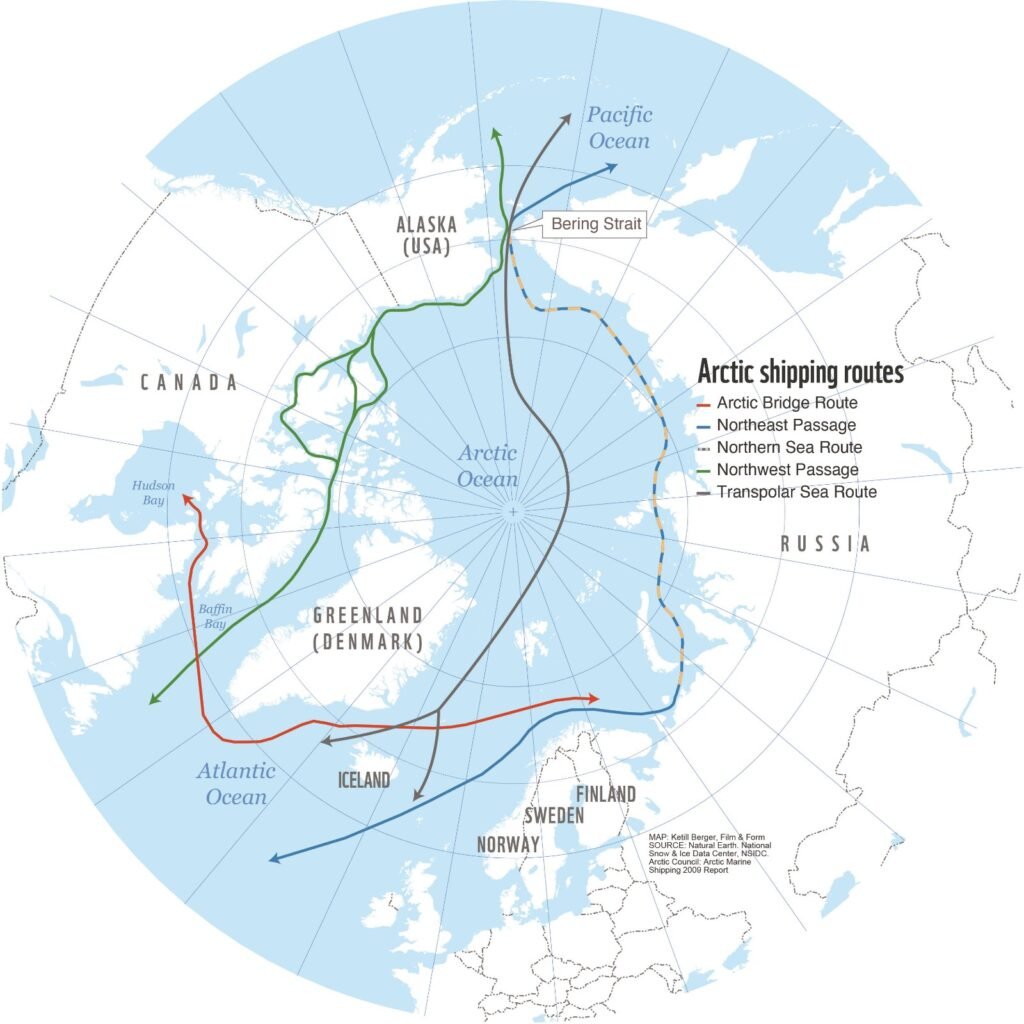
As Arctic sea ice melts, new open-water shipping lanes have opened in the Northwest Passage and Northern Sea Route. This brings more vessel traffic, especially during ice-free months from July to October.
2. Shipping Traffic Boom
According to a 2025 study published in Marine Policy, vessel traffic in the Arctic has tripled over the past 15 years. Cargo ships, tankers, cruise liners, and commercial fishing boats now enter narwhal territory on a regular basis.
3. Industrial Development
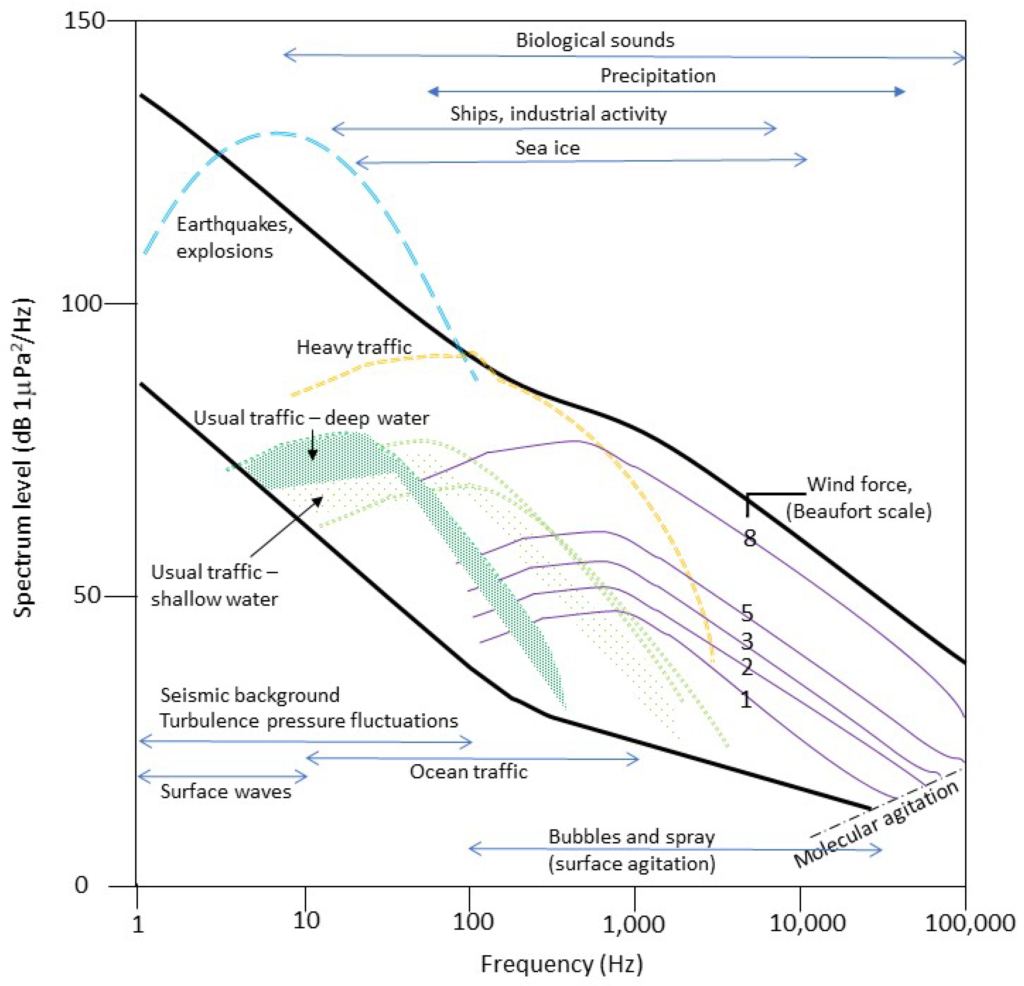
Seismic surveys used in oil and gas exploration blast loud pulses into the water that can reach up to 250 decibels. That’s louder than a space shuttle launch and significantly disrupts narwhal communication.
How Arctic Noise Rises Impacts Narwhal Communication?
Sound pollution doesn’t need to be constant to have a devastating effect. Even intermittent noise—from one or two ships—can send narwhals into silence.
Suppressed Echolocation
In quiet waters, narwhals send out click trains—short pulses of sound used to echolocate fish, terrain, and other whales. But under noise stress, narwhals dramatically reduce these clicks, making it harder to:
- Locate prey like halibut and Arctic cod.
- Avoid predators (orcas, polar bears).
- Navigate beneath thick ice layers to find breathing holes.
A 2023 University of Windsor study found that when a container ship passed within 30 km, narwhals reduced their buzzing activity by 85% and paused social communication for hours.
Behavioral Changes & Movement
Ship noise also causes narwhals to change direction abruptly, disrupting migration and potentially leading to habitat abandonment. These shifts aren’t minor—tracking data reveals:
- Altered migration timing by 2–3 weeks.
- Avoidance of traditional calving areas.
- Dive duration and depth alterations, increasing energy expenditure.
Cultural Silence
Inuit communities, particularly around Pond Inlet and Clyde River, have reported that “the narwhals are no longer singing.” Elders recount how in their youth, narwhals would echo through the fjords. Today, silence often follows the rumble of passing vessels.
“They stop calling. They scatter. It’s like they vanish.”
— Nakasuk Qumaaluk, Elder and hunter, Nunavut
Not Just Narwhals: The Broader Arctic Ecosystem at Risk
The Arctic operates as a finely tuned system. When narwhals are disrupted:
- Belugas and bowhead whales face similar auditory stress.
- Seals, prey for polar bears, shift to unfamiliar zones.
- Fisheries lose predictability in fish stocks.
The food chain trembles when narwhals leave a region. Their ecological role as mid-level predators helps control populations of squid and fish. When their feeding is interrupted, the entire web is affected.
Real-World Case: Baffin Bay Sound Experiment (2024)
In a joint project by the University of British Columbia and WWF Arctic, researchers placed hydrophones in Baffin Bay and monitored narwhal calls before and after a 48-hour shipping corridor test.
- Before ship passage: 9,800 calls logged.
- During passage: 1,312 calls (an 86% drop).
- Post-passage: Calls resumed only after 72 hours of silence.
Researchers also noted increased cortisol (stress hormone) in narwhal blubber samples taken via biopsy darts, indicating biological stress response to sound exposure.
What Can Be Done As Arctic Noise Rises?
Solutions do exist—and some are already being piloted.
1. Mandated Quiet Zones
Several NGOs have proposed seasonal no-go shipping zones during narwhal calving (June to August). These would protect vital habitats in places like Lancaster Sound.
2. Speed Limits for Ships
Slowing vessels from 20 to 10 knots can cut noise emissions by over 50%, according to NOAA’s Ocean Noise Strategy.
3. Quiet Ship Design
Retrofits like:
- Bubble shields to dampen propeller noise.
- Engine vibration dampeners.
- Hull modifications to reduce cavitation.
While costly upfront, quiet ship design has long-term fuel efficiency and regulatory compliance benefits.
4. Real-Time Acoustic Monitoring
Installing passive acoustic sensors on buoys allows for real-time noise alerts, enabling dynamic routing for ships to avoid narwhal pods.
What You Can Do (Even If You Live Far from the Arctic)
Speak up and show support for Arctic noise mitigation policies. Here’s how:
- Sign petitions through WWF Arctic.
- Support Indigenous-led conservation like Qikiqtani Inuit Association.
- Share infographics, educational videos, and articles on social media.
- Push for sustainable seafood that doesn’t rely on destructive Arctic trawling.
Scientists Unveil a New Battery Concept Powered by Unusual Sulfur Chemistry
What Scientists Say Would Happen If an Asteroid Struck the Moon in 2032
Scientists Study a Spider Silk That’s Stronger Than Steel and Spans Rivers