
A Handprint Made Nearly 68,000 Years Ago: Human history is filled with moments of wonder, but one recent discovery might just take the cake. A handprint found in a cave in Indonesia is causing a major stir in the world of archaeology and art. This ancient handprint, thought to be 68,000 years old, may represent the oldest human-made art in existence. For those of us passionate about the origins of humanity and its creative expressions, this find is a game-changer. In this article, we will explore the significance of this discovery, break it down for easy understanding, and offer practical advice on how it reshapes our understanding of early human culture. By the end, you’ll not only have a deep understanding of the handprint’s context but also the critical implications this discovery holds for the world of art, archaeology, and history.
Table of Contents
A Handprint Made Nearly 68,000 Years Ago
The discovery of a 68,000-year-old handprint in Indonesia is much more than just an ancient stencil. It’s a glimpse into the minds of our distant ancestors, revealing that art and symbolic thinking were part of human nature long before we thought possible. This discovery pushes back the timeline of human creativity and shows that Southeast Asia played a significant role in the early development of human culture. Whether you’re a student of history, a professional artist, or simply someone curious about human origins, this discovery is a treasure trove of information about who we are and where we come from.
| Key Point | Details |
|---|---|
| What was found? | A handprint stencil on a limestone cave wall in Sulawesi, Indonesia |
| How old is it? | 68,000 years old, making it the oldest known human art |
| Why is it important? | Pushes back our understanding of human art and symbolic behavior |
| Key discovery date | January 2026 |
| Significance | Provides evidence of early humans’ creativity in Southeast Asia |
Context: The Discovery That Changes Everything
We’ve all seen prehistoric cave art—drawings and paintings found in places like France and Spain, depicting animals, human figures, and abstract symbols. But did you know that the earliest art in the world may have been created in Southeast Asia, not Europe? The discovery of this handprint stencil in Sulawesi, Indonesia, turns everything we thought we knew about early human art upside down.
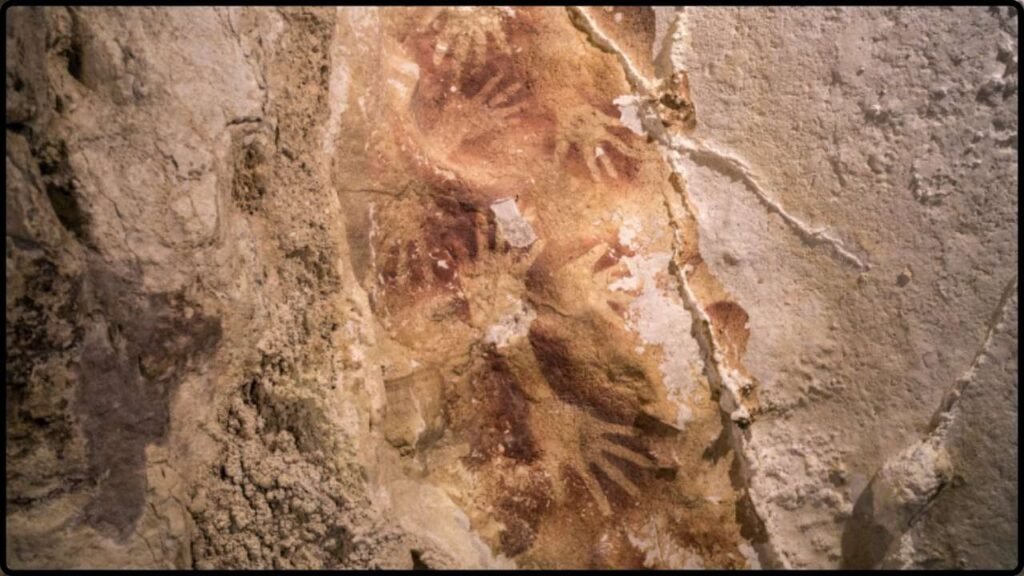
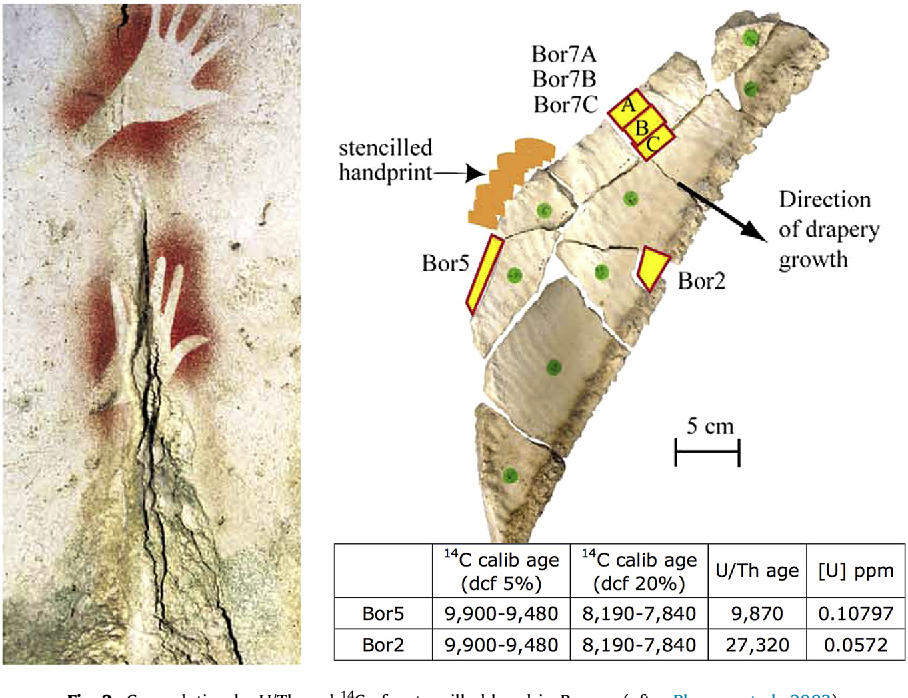
Dating back to an astonishing 67,800 years ago, this handprint is not just an ancient thumbprint; it’s a window into the world of early humans. Made by pressing a hand against the cave wall and spraying or blowing pigment around it, this form of art was likely a way to communicate or mark territory. The discovery suggests that humans in Southeast Asia were making symbolic art far earlier than the artists in Europe. It’s also the first known art to appear in this region, which gives us a fresh perspective on the role art played in the lives of early humans.
The Handprint Itself
Imagine this: You are standing in a dimly lit cave, surrounded by walls that have stood for thousands of years. Then, you notice something remarkable—a red handprint, preserved for all these millennia, a direct link to someone who lived almost 70,000 years ago. It’s not just a random smear or a splotch; it’s a stencil, a deliberate act of creativity.
The handprint is made using red ochre, a natural pigment, and its form is distinct. The fingers seem elongated, with some researchers speculating that the artist might have intentionally shaped them, lending a symbolic quality to the artwork.
The Importance of A Handprint Made Nearly 68,000 Years Ago Discovery
At first glance, it may seem like a simple handprint, but when you take a step back, it holds incredible significance. For centuries, researchers believed that humans in Europe were the first to develop complex cognitive abilities, including art. But now, we have evidence that Southeast Asia, home to some of the earliest modern humans, was a center of creative activity much earlier than expected.
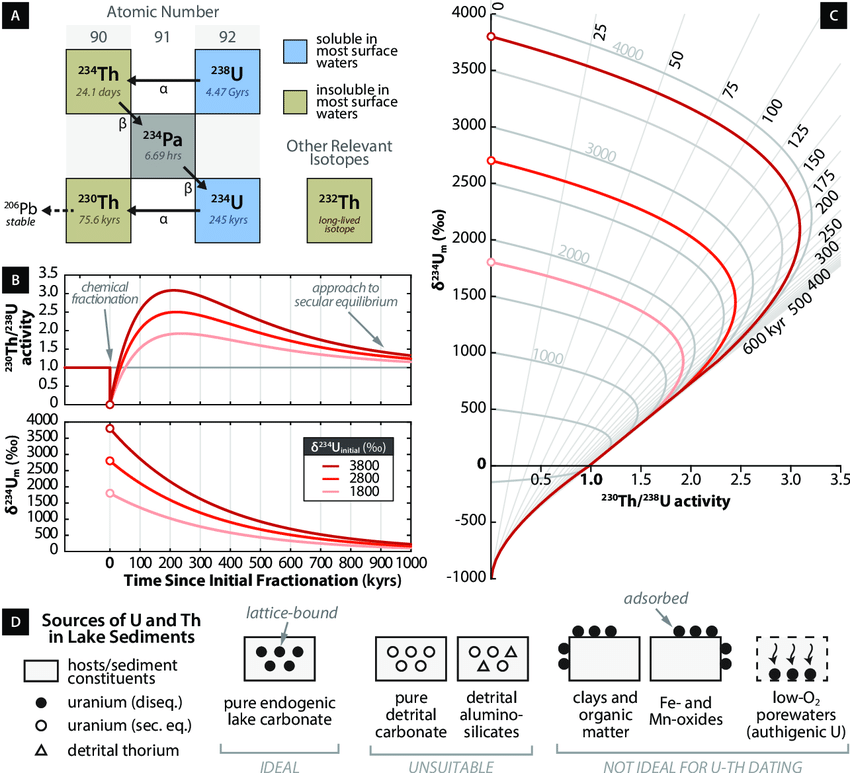
By examining the mineral deposits around the handprint, scientists used a process called uranium-thorium dating to confirm its age. The dating revealed that this art predates other known cave paintings by tens of thousands of years. The oldest known paintings in Europe, such as those found in the Chauvet Cave in France, are roughly 30,000 years old. This Indonesian find puts Southeast Asia in the spotlight, showing us that humans across the world were capable of sophisticated thought and creativity much earlier than we ever thought.
Artistic Expression: A Window Into Early Human Culture
One of the most fascinating aspects of this discovery is the role of artistic expression in early human culture. While we often associate art with later civilizations—like those of the ancient Egyptians, Greeks, or Romans—this handprint reveals that the impulse to create art and communicate symbolically was likely inherent in Homo sapiens from the very beginning.
For early humans, symbolic art wasn’t just a hobby or something to pass the time—it had cultural, spiritual, and social significance. Early art forms may have been used for communication, to mark territory, or to represent rituals and spiritual beliefs. It’s likely that these early artists were using their art to interact with the world around them in ways we can only begin to understand.
Art as a Communication Tool
Some anthropologists believe that the act of creating art may have been a way for early humans to communicate. Before written language, people used symbols, drawings, and handprints to share ideas, beliefs, and experiences. The handprint in Sulawesi is a great example—by leaving a mark on the wall, the artist may have been leaving a part of themselves for future generations to find.
This form of expression likely helped foster a sense of community, identity, and belonging among early humans, allowing them to share their experiences and communicate beyond simple words.
Practical Insights: Why A Handprint Made Nearly 68,000 Years Ago Matters for You
Understanding Human Creativity
The discovery of this ancient handprint reveals that early humans were not just surviving—they were thinking symbolically, creating meaningful representations, and expressing themselves. In modern times, we often think of creativity as something uniquely human, but this find shows that our ancient ancestors were already engaging in artistic activities.
For those in creative industries like art history, anthropology, or archaeology, this discovery is groundbreaking. It broadens our understanding of where art began and how it spread across the world. If you’re a history buff or simply fascinated by the origins of human culture, this discovery gives new life to the age-old debate about when humans first began thinking abstractly.
For artists, this handprint is more than just a curiosity. It’s a reminder that art is timeless—it transcends eras, cultures, and even the boundaries of what we once thought possible. Whether you’re a painter, sculptor, or graphic designer, the human impulse to create is deep-rooted and enduring.
Lessons from the Past: How to Approach Creativity
If there’s one thing we can learn from this discovery, it’s that creativity is a fundamental aspect of the human experience. Even in the face of survival, early humans took time to express themselves and communicate their stories. This shows that in the rush of daily life, there’s always room for creativity, whether through art, writing, or any other form of self-expression.
Moreover, symbolism and storytelling have been key parts of human evolution. If you’re looking for ways to tap into your creative flow, consider this: creativity isn’t just about making something beautiful—it’s about making something meaningful. Just as that ancient artist left behind a mark for future generations to discover, your work can have lasting impact, too.
How A Handprint Made Nearly 68,000 Years Ago Discovery Shapes Our Understanding of Human History?
Before this discovery, Europe had been considered the cradle of early art. Cave paintings, carvings, and other symbolic artifacts found in Spain, France, and Africa were thought to be the earliest signs of human creativity. Now, this handprint in Sulawesi challenges that view, suggesting that early humans were producing symbolic artwork on multiple continents.
The implication? Human culture is far more diverse and global than we’ve previously believed. It highlights the importance of looking beyond traditional centers of early human history and considering Asia and Oceania as key players in the evolution of creativity and cultural practices.
The Broader Implication for Anthropology
This discovery may also prompt a reevaluation of human migration patterns. How did early humans spread across the world? Did they carry their creative impulses with them? Did art develop independently in different regions, or was there cultural exchange across vast distances?
Anthropologists may now rethink how early humans were connected and how cultural practices, like art, evolved. This handprint isn’t just a piece of art—it’s a clue to understanding the global nature of human development.
Scientists Unveil a New Battery Concept Powered by Unusual Sulfur Chemistry
Archaeologists Identify the Oldest Poisoned Arrows Ever Found, Dated 60,000 Years
The Best-Preserved Dinosaur Embryo Ever Found May Unlock Secrets of De-Extinction