
Earth Might Show Signs of Ancient “Terraforming”: You’ve probably heard about terraforming Mars — shaping a dead planet into a living one. But here’s a twist: what if Earth itself was once terraformed? A bold theory circulating in recent scientific circles suggests exactly that. We’re not talking alien conspiracy — no little green men here. Instead, scientists are exploring whether the way life appeared on Earth so early and efficiently might resemble engineered processes. Whether the process was natural, directed by cosmic forces, or even intelligently guided, it’s got researchers looking at Earth in a brand-new light.
Table of Contents
Earth Might Show Signs of Ancient “Terraforming”
Whether you’re a pro in planetary science or a curious 10-year-old asking “Where did we come from?”, this theory inspires healthy skepticism and scientific wonder. The idea that Earth might show signs of ancient terraforming isn’t about alien movies — it’s about honoring complexity, following data, and embracing what we don’t yet know. This theory bridges hard science and cosmic imagination, giving us all permission to think bigger — and to stay humble.
| Topic | What It Means |
|---|---|
| Core Hypothesis | Earth’s early biosphere may reflect engineered-like patterns |
| Life Appeared | As early as 4.2 billion years ago |
| Abiogenesis Probability | Extremely low based on information theory |
| Alternative Ideas | Directed panspermia, natural seeding, cosmic delivery |
| Relevant Planets | Mars as a modern terraform example |
| Career Value | Fields in astrobiology, planetary science, and AI-driven bioinformatics |
Understanding Terraforming
Let’s break this down: terraforming means making a planet more Earth-like — adding an atmosphere, water, and conditions that can support life. Think of it as nature’s version of remodeling a house to suit its future tenants.
NASA has spent decades dreaming of terraforming Mars, using greenhouse gases to warm it and release CO₂ from ice caps. That process would take centuries, maybe longer.
But Earth? It was “ready for life” almost as soon as it cooled down. That quick setup has raised eyebrows and questions — especially now, as mathematical models challenge old assumptions.
The Timeline Puzzle: Why Did Life Appear So Fast?
Let’s rewind time.
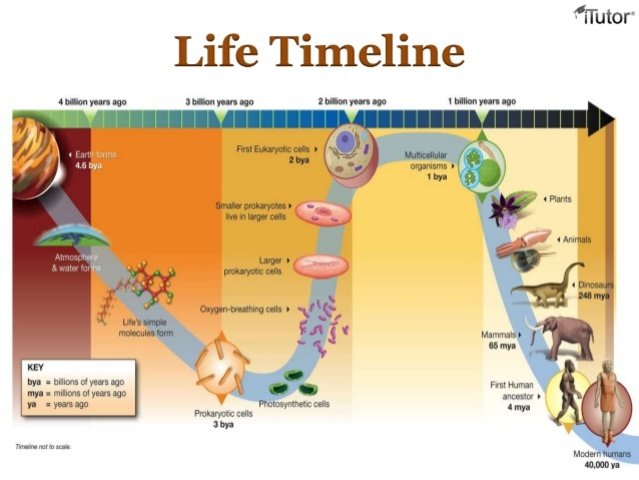
- Earth formed: ~4.54 billion years ago
- Earth cooled: ~4.3–4.1 billion years ago
- First oceans: ~4.2 billion years ago
- First microbial life: possibly as early as 4.1–3.8 billion years ago
That means life emerged just hundreds of millions of years after Earth became habitable — a blink of an eye, geologically speaking.
This speed is what some scientists call “too lucky to be random.” It’s not proof of anything strange — but it is a pattern worth examining.
The Math Doesn’t Lie: Earth Might Show Signs of Ancient “Terraforming”
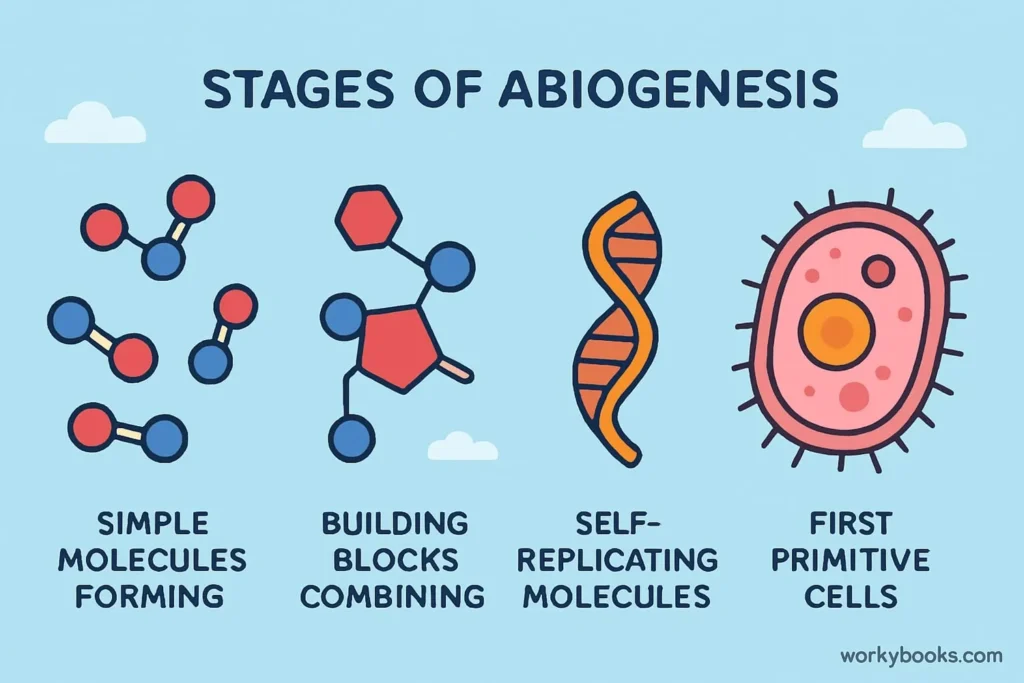
A 2025 study led by Dr. Robert Endres from Imperial College London applied information theory to the question of abiogenesis — the natural process of life arising from non-life.
The team found that the sheer amount of “biological information” needed to kickstart life is staggeringly complex. Like trying to form a Shakespeare play by tossing Scrabble tiles — theoretically possible, but beyond astronomical odds.
“We’re not saying life didn’t arise naturally. But the numbers challenge the sufficiency of chance and time.”
— Dr. Robert Endres
This is where the “ancient terraforming” idea slips in — could there have been a process or influence that nudged things along?
Panspermia: The Cosmic Delivery Service
This brings us to one of the most compelling alternatives: panspermia.
There are two main flavors:
- Natural Panspermia: Life’s building blocks arrive from space via comets, asteroids, or cosmic dust.
- Directed Panspermia: Life was intentionally seeded on Earth by a higher intelligence or civilization.
Francis Crick, co-discoverer of DNA, and Leslie Orgel proposed the latter in 1973. They didn’t claim aliens came here — just that the origin of life on Earth might involve a guided delivery of biology from elsewhere in the universe.
The concept is wild — but as science digs deeper into genetics, probability, and cosmic history, it’s no longer dismissed out of hand.
Mars as a Testbed: A Case Study
So, could we test these ideas?
Enter Mars, our red neighbor. It has:
- Frozen water under its poles
- Ancient riverbeds
- Conditions that may once have supported life
NASA’s Perseverance rover is already drilling and storing rock samples that might reveal biosignatures — chemical or structural signs of past life.
Meanwhile, Elon Musk and SpaceX envision terraforming Mars using atmospheric manipulation. The technology may be far off, but the goal is real — proving that a dead planet can be prepped for life.
If we can consider doing this… could it have been done before, elsewhere?
Glossary of Key Terms
| Term | Definition |
|---|---|
| Abiogenesis | Natural process of life forming from non-living matter |
| Terraforming | Altering a planet to support life |
| Information Theory | Study of complexity and information transfer |
| Panspermia | Hypothesis that life originated elsewhere and traveled to Earth |
What Are Scientists Really Saying About Earth Might Show Signs of Ancient “Terraforming”?
Let’s be clear: no one is declaring Earth was definitely terraformed.
Instead, this is a way to:
- Challenge assumptions about life’s origins
- Introduce new mathematical tools to biology
- Expand the search for life in the universe
“The early biosphere might not look designed — but its behavior could be indistinguishable from something designed.”
— Dr. Sara Walker, Astrobiologist, Arizona State University
Career Impact: Who Should Care?
This isn’t just philosophy — this touches multiple professional sectors:
For Scientists
- Theories like this impact astrobiology, geobiology, and complex systems modeling.
- Open new fields in probabilistic modeling and data-driven origin studies.
For AI/Bioinformatics
- Emerging parallels between DNA and code invite AI tools to map, model, and even simulate origin scenarios.
- Machine learning can help analyze massive fossil and planetary data sets.
For Educators
- These theories help teach critical thinking in science — not everything is settled, and questioning drives innovation.
For Policy and Space Law
- If we ever confirm directed panspermia, international space treaties and planetary protection laws will require revision.
What Evidence Would We Look For?
If Earth had been “terraformed” or seeded:
- We’d expect chemical anomalies in the earliest rocks.
- Possibly isotopic ratios that don’t match Earth’s geology.
- Maybe even prebiotic compounds arriving from space, preserved in meteorites.
(Hint: We’ve already found amino acids in space rocks.)
One challenge? Earth’s active geology erases most of its early crust. That makes it hard to find ancient signatures. Mars or Venus might preserve those signs better.
Scientists Recover a Woolly Rhino Genome From a Wolf’s 14,400-Year-Old Meal
Finland Discovers Trees That Trap Gold in Their Leaves, Thanks to Bacteria
The “Cursed” Amethyst and the Strange Misfortunes Linked to the Gem