
American Chestnut Revival Plan: The American Chestnut Revival Plan Moves Forward as scientists, Indigenous communities, conservation organizations, and forest stewards work together to restore one of North America’s most culturally significant and ecologically important trees. The American chestnut once stood as a symbol of strength across the Appalachian Mountains, towering over wildlife, supporting families with food and lumber, and playing an essential role in tribal traditions and sustainable forest management.
Before the early 1900s, this tree was everywhere—so common that many elders would say you could walk from Georgia to Maine in the shade of chestnut branches without ever stepping into the sun. But the arrival of chestnut blight, caused by the fungus Cryphonectria parasitica, changed everything. Introduced from Asia through imported nursery stock, the fungus spread at a pace never before seen in American forests, eliminating an estimated four billion trees by mid-century. Now, after decades of research, the revival plan is advancing faster than ever. Scientists are not just crossing their fingers—they’re using cutting-edge genomics, biotechnology, Indigenous ecological knowledge, long-term studies, and community-driven stewardship to create a blueprint for the chestnut’s comeback.
Table of Contents
American Chestnut Revival Plan
The American Chestnut Revival Plan is one of the most ambitious ecological restoration projects in U.S. history. It blends advanced genomics, traditional breeding, Indigenous ecological knowledge, and community engagement to heal an iconic species that once shaped the identity of eastern forests. Scientists are moving quickly, stewards are planting widely, and tribal leaders are sharing knowledge rooted in generations of relationship with the land.
Restoring the chestnut is not only a scientific mission—it is a cultural restoration, an ecological promise, and a commitment to future generations. As momentum grows, the dream of seeing towering chestnuts return to their rightful place in the American landscape becomes more real every year.
| Topic | Summary |
|---|---|
| Primary Goal | Restore the American chestnut to U.S. forests using genomic breeding, biotech innovation, and conservation planting |
| Blight Loss | Approx. 4 billion trees lost between 1900–1940 (Source: USDA) |
| Leading Organizations | The American Chestnut Foundation, U.S. Forest Service, Tribal Forest Programs |
| Major Breakthrough | Genomic selection accelerates breeding by up to 70% |
| Restoration Timeline | Large-scale reintroduction expected in 20–30 years |
| Beneficial Traits | Climate resilience, fast growth, carbon capture, wildlife support |
| Official Resource | https://www.acf.org |
A Tree That Once Ruled the Eastern Forests
To understand why scientists are racing to revive the American chestnut, it helps to understand just how important this tree once was. In the Appalachian region, chestnuts didn’t just grow—they dominated. They made up roughly one quarter of all hardwood trees across 200 million acres of land. Their nuts fed bears, deer, turkey, and countless forest creatures. Their wood supported barns, homes, furniture, railroad ties, and even musical instruments.
Many Native nations viewed the chestnut as a “relative” in the forest. Its bark, wood, and nuts were incorporated into ceremony, architecture, medicine, and trade. Chestnut wood burned hot and clean, making it essential for crafting tools and household items, while the nuts were a staple in winter food storage.
When the blight hit, communities didn’t just lose a tree—they lost a partner in the ecosystem and a key part of their cultural identity.
The Science Behind the American Chestnut Revival Plan: A Three-Path Strategy
Restoring a species nearly wiped out by disease is no simple task. Modern scientists rely on three interconnected strategies: genomic selection, traditional hybrid breeding, and biotechnology. Each approach plays a unique role in the revival project.
Genomic Selection: A Breakthrough in Speed and Accuracy
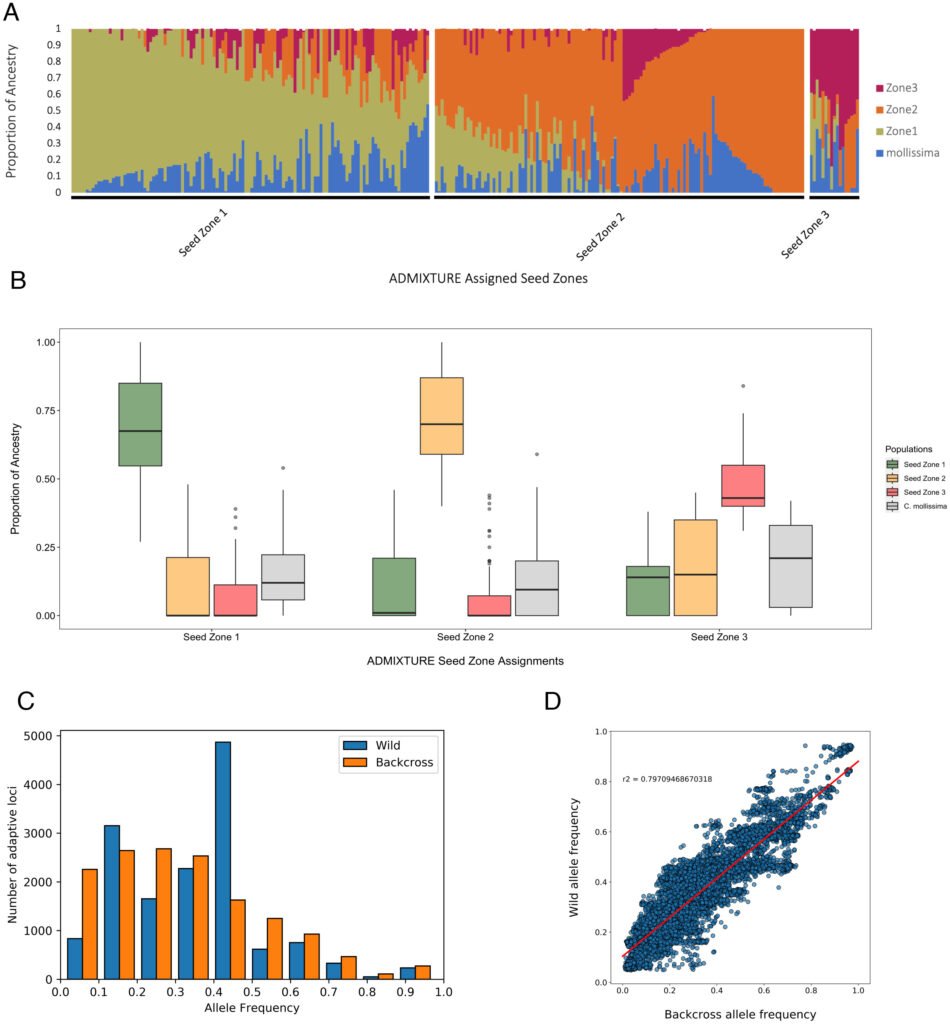
Recent advances in DNA sequencing now allow researchers to examine seedlings at the genetic level long before they mature. Scientists can identify the presence of blight-resistant markers, ideal growth traits, and temperature tolerances without waiting years for a tree to show symptoms in the field.
This genomic approach allows researchers to:
- Evaluate thousands of trees at once
- Reduce breeding cycles from 7–10 years to just months
- Identify high-resilience genetic combinations
- Forecast climate adaptability
Researchers at HudsonAlpha, Cornell, and the U.S. Forest Service published groundbreaking findings that allow for the prediction of blight resistance with roughly 95% accuracy. This method is now transforming orchard development across the Eastern United States.
Hybrid Breeding: Rebuilding the American Chestnut Genome
Traditional breeding programs remain essential. For decades, organizations like The American Chestnut Foundation have been crossing American chestnuts with blight-resistant Asian varieties. The goal is to produce trees that retain American traits—such as tall growth, straight trunks, and high nut production—while carrying the resistance genes needed to survive the blight.
Today’s advanced hybrids are:
- Between 70–85% American chestnut
- Strong enough to withstand blight exposure
- Genetically diverse to avoid monoculture risks
- Field-tested across multiple states
These trees are now planted in test orchards from Maine to Georgia.
Biotechnology: GM Chestnuts and the Darling 58 Story
Biotechnology represents the third pillar of restoration. One of the most discussed biotech solutions is Darling 58, a genetically engineered chestnut developed by SUNY researchers. It uses an enzyme from wheat to neutralize the acid the blight uses to kill tissue.
While field trials produced mixed results and The American Chestnut Foundation paused support pending further evaluation, biotech remains an essential long-term component for genetic diversity and resilience. The genetically engineered chestnut is currently under review by the USDA, EPA, and FDA.
Scientists emphasize that biotech is not replacing natural diversity—it is adding another line of defense.
Indigenous Ecological Knowledge: Restoring More Than Just a Tree
For many Native communities, the chestnut revival isn’t simply a scientific mission—it’s a cultural restoration. Indigenous ecological knowledge (TEK) emphasizes stewardship, reciprocity, and relational responsibility. Tribal forest programs are collaborating with scientists to merge Western technology with Indigenous land practices.
Tribal involvement includes:
- Controlled burning, which historically maintained chestnut-friendly ecosystems
- Seed stewardship and protection programs
- Youth education about traditional forest relationships
- Climate resilience planning
Elders often say that bringing back the chestnut is a form of healing, not just for the forest, but for the people who share its story.
Climate Benefits: A Tree Built for the Future
The American chestnut is remarkably well-suited for changing climate conditions. It grows fast, tolerates wide temperature swings, adapts to varying soil types, and stores carbon quickly. Its deep roots allow it to survive disturbances, drought cycles, and certain soil pathogens better than many hardwoods.
Climate scientists view chestnut restoration as a pathway to:
- Rebuilding biodiversity
- Stabilizing forest ecosystems
- Rapid carbon sequestration
- Reforesting degraded mining lands
- Enhancing watershed health
With climate variability increasing, chestnuts may become a central species for future forest resilience.
Economic and Community Impact of American Chestnut Revival Plan
Historically, chestnut wood was prized for construction, furniture, and fencing. Its nuts were valuable across local economies, especially in Appalachian communities. Reviving the species could unlock economic opportunities for rural areas.
Potential long-term economic benefits include:
- High-value lumber markets
- Nut production industries
- Forest-related tourism
- Research and green restoration jobs
- Local nursery and seedling production
Restoring the chestnut could support a sustainable economic model deeply rooted in ecological responsibility.
Restoration in Action: Where the Work Is Happening
Across the country, the revival is taking shape in orchards, greenhouses, tribal lands, state forests, and community programs. Maine, Pennsylvania, West Virginia, and Tennessee have become hotspots for large orchard development, while schools and local nonprofits host citizen-science projects that involve thousands of volunteers.
Mobile reporting tools now allow people to document surviving chestnut sprouts in the wild, contributing to genetic mapping efforts.
How Restoration Works: A Step-by-Step Overview
- Locate surviving American chestnuts
Researchers identify remnant trees capable of providing viable genetic material. - Crossbreed or sequence these trees
Hybrids or genetically evaluated seedlings are selected for strong resistance. - Grow and test in controlled orchard environments
Trees must pass repeated blight challenges. - Plant in regional trials
Field conditions reveal long-term performance in diverse climates. - Distribute seedlings to communities and conservation groups
Reforestation begins with managed planting efforts. - Monitor for decades
Forest restoration requires multi-generational observation and care.
Scientists project that with continued progress, forest-scale reintroduction could become a widespread reality within 20 to 30 years.
Key Data and Statistics of American Chestnut Revival Plan
- Blight kills nearly 99% of natural chestnut sprouts today
- Over 500,000 hybrid and genomic-selected seedlings are in active breeding programs
- More than 40 states host chestnut orchards or restoration partnerships
- American chestnut trees can grow up to 100 feet tall in ideal conditions
- Mature trees can produce up to 6,000 nuts each year
- The species’ native range once covered more than 200 million acres from Maine to Mississippi
Why 2026 Could Change Retirement Plans Across the U.S.
Why Tax Experts Expect 2026 to Be One of the Biggest IRS Refund Years Yet
How People Reach the Maximum $5181 Social Security Benefit in 2026