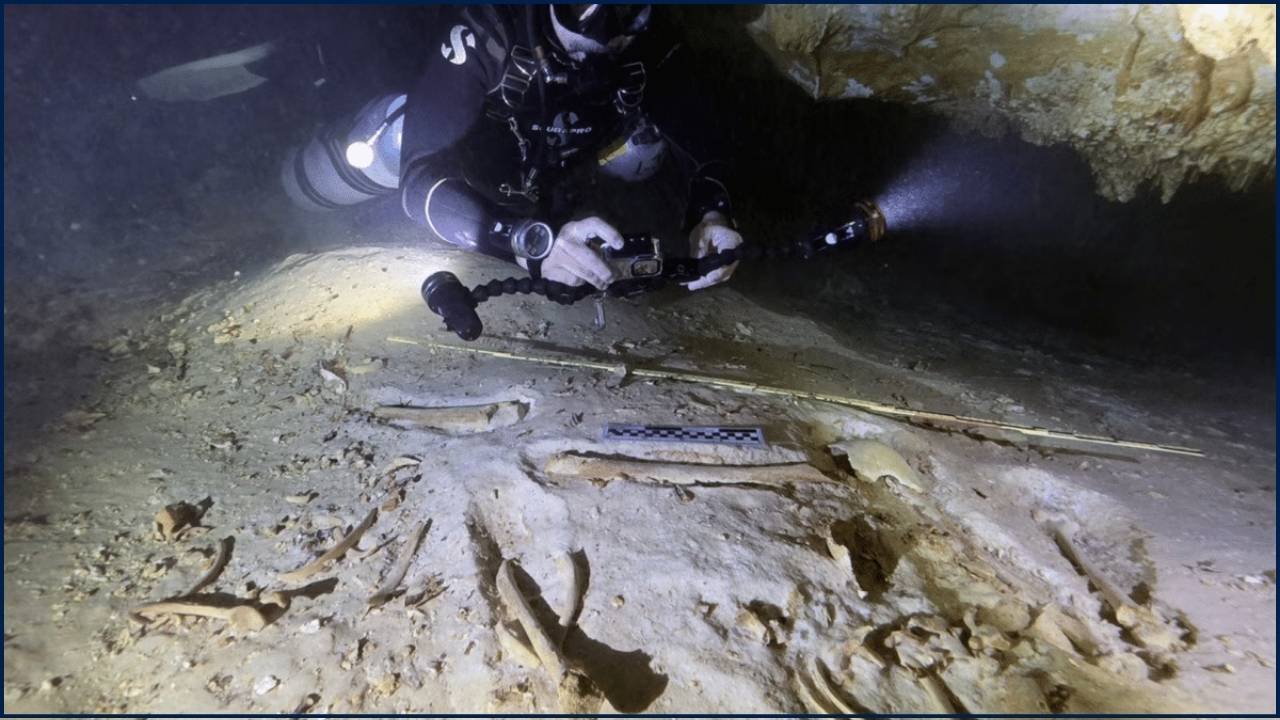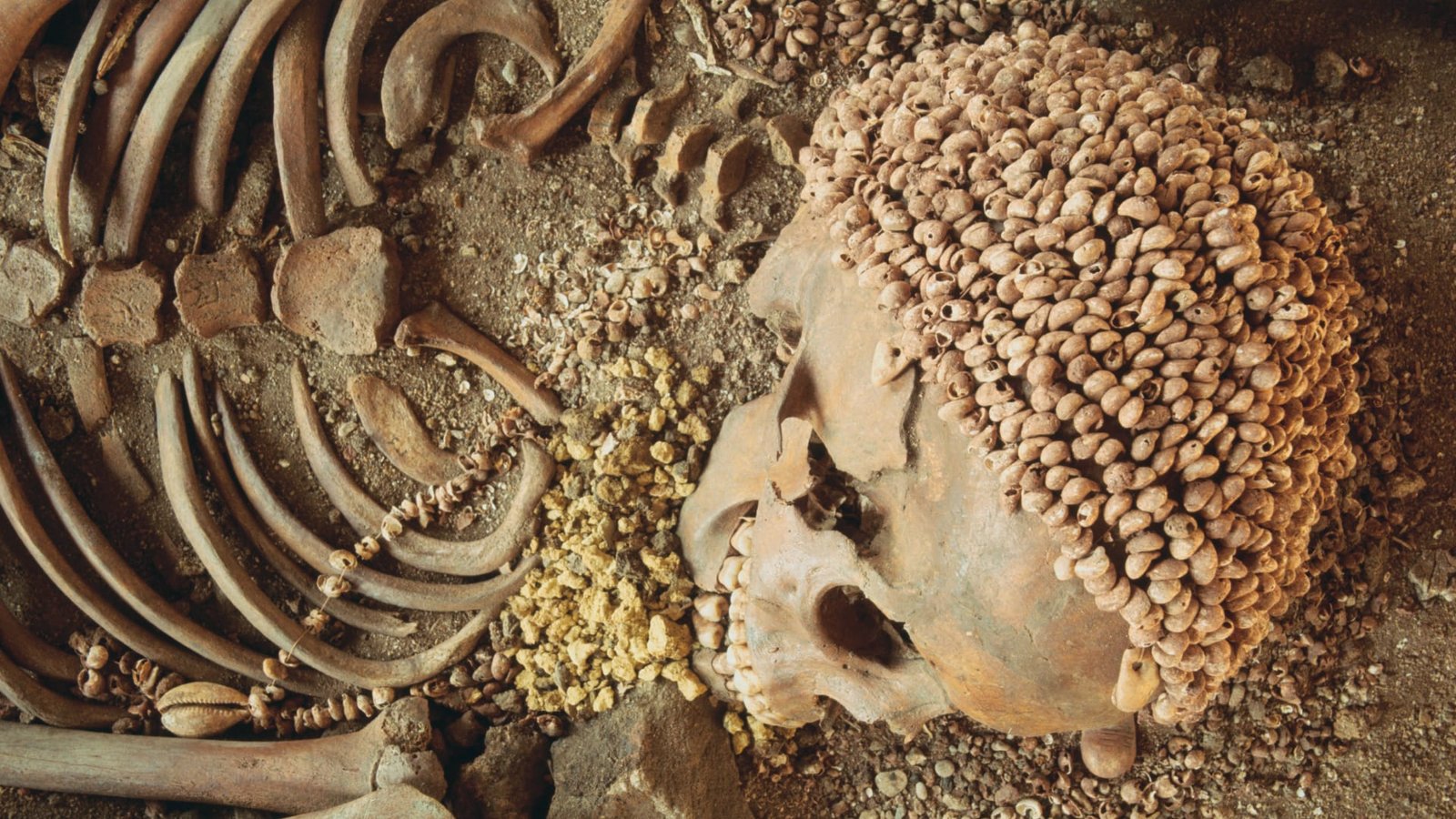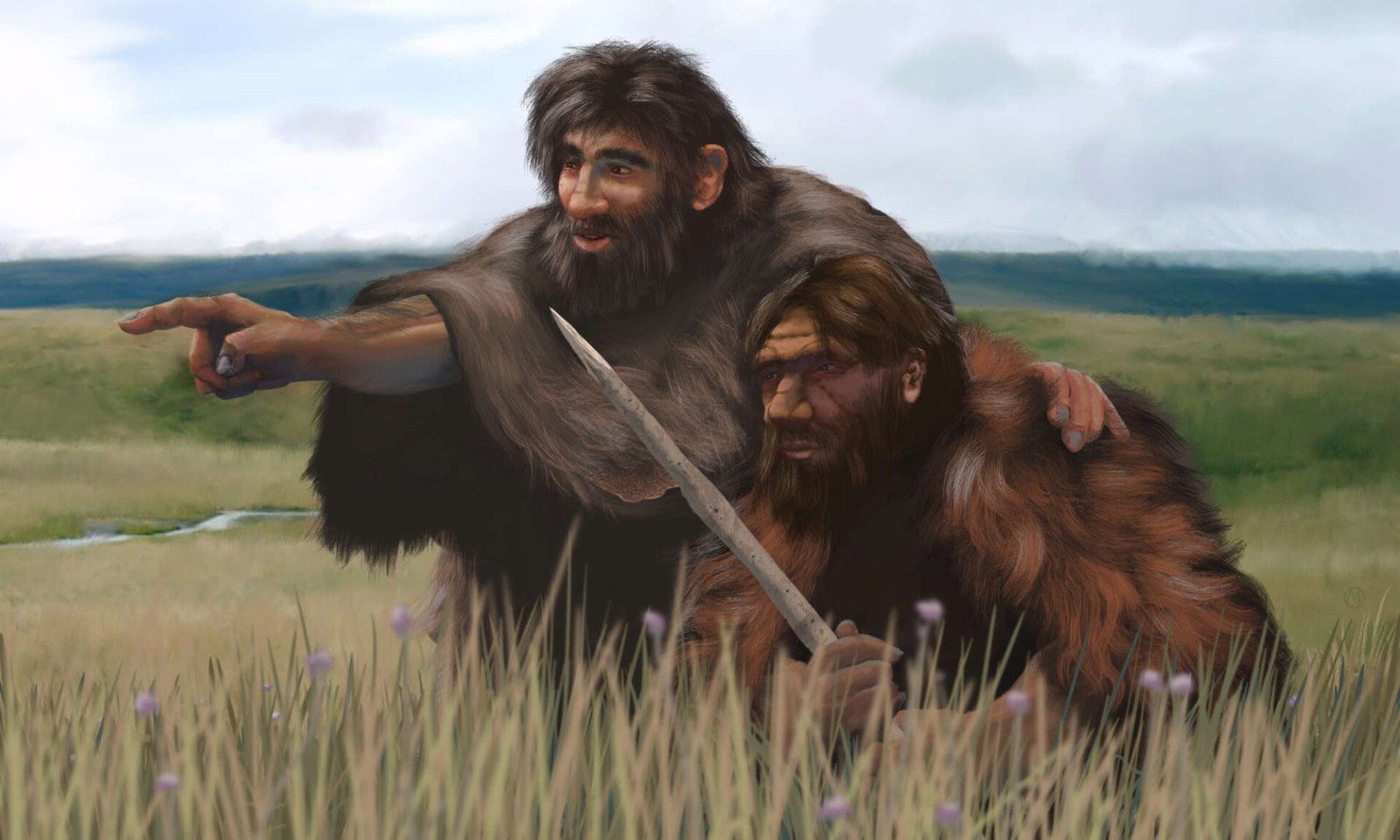

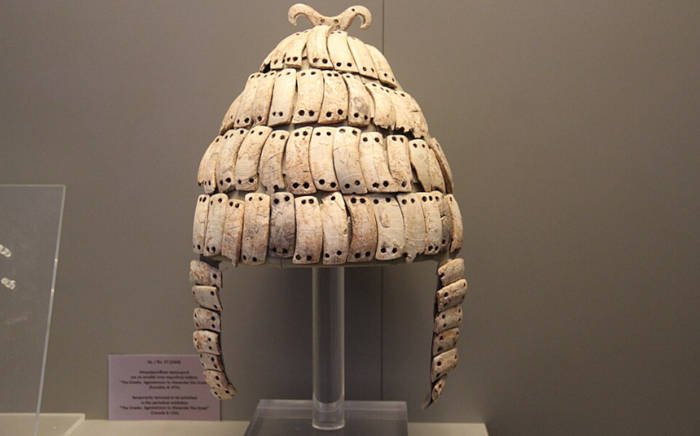
Archaeologists in southern Greece have uncovered Boar Tusk Helmets — rare 3,500-year-old protective headgear — in a Mycenaean tomb complex near the ancient city of Pylos, officials said. The find, dating to around 1500 BC, offers fresh insight into warfare, elite society, and technological innovation in Bronze Age Greece.
Table of Contents
Ancient 3,500-Year-Old Boar Tusk Helmets
| Key Fact | Detail/Statistic |
|---|---|
| Age of artifacts | About 3,500 years old (circa 1500 BC) |
| Civilization | Mycenaean Greece, Late Bronze Age |
| Material | Leather helmet covered with wild boar tusk plates |
Boar Tusk Helmets Discovery Near Pylos
The helmets were discovered inside a chamber tomb near Pylos in the southwestern Peloponnese, a major political center of the Mycenaean civilization. The area lies close to the Palace of Nestor, one of the best-preserved administrative complexes from prehistoric Europe.
Archaeologists said the burial structure contained multiple individuals, ceremonial vessels, jewelry, and weapons, suggesting a high-status family or warrior lineage.
According to Greece’s Ministry of Culture, the helmets were constructed from carefully cut boar tusk plates stitched onto a leather or textile cap. Because organic materials rarely survive burial conditions, intact examples are uncommon.
Archaeologist Dr. Maria Papadopoulou described the preservation as exceptional.
“Organic armor normally disappears over millennia. The survival of these helmets allows us to reconstruct the appearance of Mycenaean fighters in unprecedented detail,” she said.
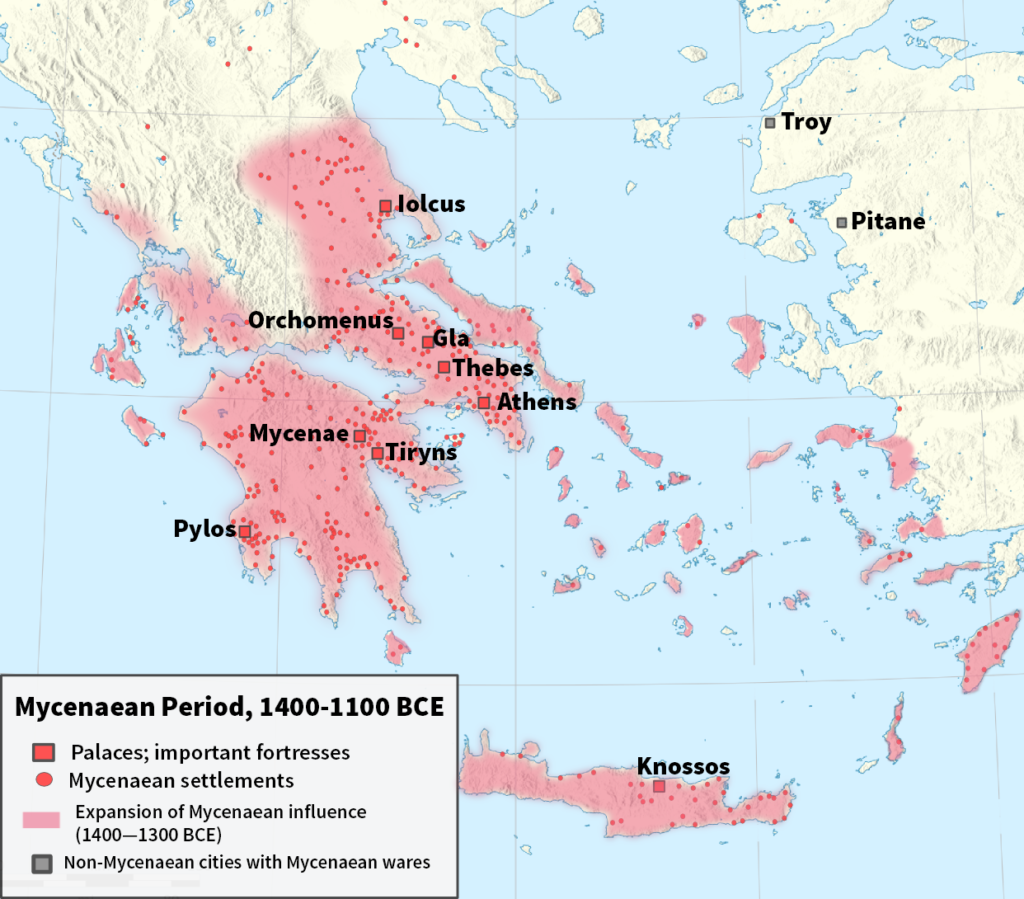
Why the Helmets Matter to Historians
Evidence of Elite Warrior Status
Researchers say the helmets likely belonged to high-ranking warriors. Constructing one required many wild boar tusks, obtained through organized hunts — dangerous activities that also carried symbolic meaning.
The helmets therefore served two purposes: protection and prestige.
Dr. James Wright of Bryn Mawr College notes that Mycenaean elites expressed power through warfare.
“Military identity was central to authority. These burials reflect leaders who derived status not only from wealth but also from combat reputation.”
The tomb’s grave goods — including swords and drinking vessels — reinforce this interpretation.
Early Military Technology
Before widespread metal helmets appeared, composite armor filled the gap. The tusk plates acted like overlapping scales, absorbing impact and deflecting cutting blows.
Modern experiments by experimental archaeologists show the design could reduce the force of bronze sword strikes.
This places the helmets among the earliest examples of engineered ancient Greek armor.
Connection to Ancient Literature
The find also strengthens links between archaeology and literature.
In Homer’s Iliad, Odysseus borrows a helmet made of boar tusks. For centuries, historians debated whether the poet invented the description.
Now, the helmets confirm that the epic likely preserved authentic memory from the Late Bronze Age, transmitted through oral storytelling before being written centuries later.
Scholars believe such details indicate that early Greek poetry preserved historical fragments of Mycenaean culture.
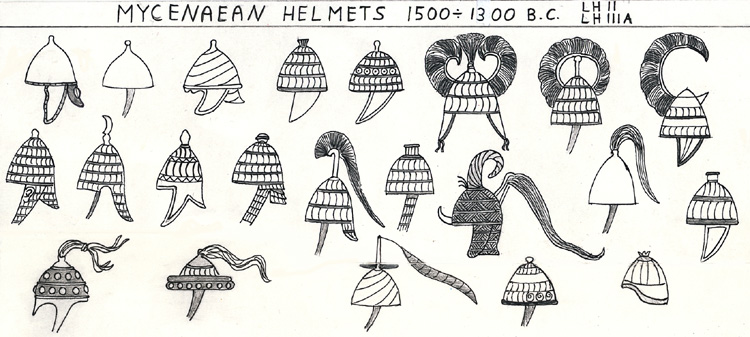
Understanding Mycenaean Greece
The Mycenaeans dominated mainland Greece from roughly 1600 to 1100 BC. They built fortified citadels, maintained trade routes across the Mediterranean, and kept administrative records on clay tablets written in Linear B script.
Tablets discovered at Pylos record inventories of chariots, weapons, and bronze, showing centralized control over military production.
Archaeologist Dr. Sharon Stocker has emphasized the importance of such finds.
“We see a society organized around palace centers. Warfare, trade, and governance were coordinated at a state level, far more complex than once believed.”
Burial Customs and Warrior Identity
The tomb where the helmets were found was not a simple grave. It was a chamber tomb cut into bedrock and sealed with a stone entrance passage known as a dromos.
Mycenaean burial practices often included:
- Weapons placed beside the deceased
- Drinking vessels for ritual feasts
- Jewelry indicating rank
- Imported objects from foreign lands
Archaeologists believe burial ceremonies reinforced social memory and political legitimacy.
The presence of armor suggests the dead were remembered as protectors of their community.
Trade Networks and Materials
The helmets also reveal trade and environmental conditions in the Late Bronze Age.
Wild boars were common in Greece’s forests at the time, but ivory-like tusks required skilled shaping and polishing. Tools used to cut the plates likely came from bronze workshops controlled by palace administrations.
Mycenaean trade networks connected Greece to:
- Anatolia (modern Turkey)
- Egypt
- Cyprus
- The Levant
Bronze itself required imported tin, a rare resource, showing that warfare technology depended on international commerce.
Comparing Boar Tusk Helmets With Later Greek Armor
The helmets predate the famous Corinthian helmets worn by classical Greek hoplites by about 700 years.
| Period | Helmet Type | Material |
|---|---|---|
| Mycenaean (1500 BC) | Boar tusk helmet | Leather + tusk plates |
| Archaic Greece (700 BC) | Early bronze helmets | Hammered bronze |
| Classical Greece (500 BC) | Corinthian helmet | Solid bronze casting |
This evolution reflects changes in battlefield tactics. Earlier warriors fought in small groups or chariot units, while later Greek armies fought in dense infantry formations called phalanxes.
Broader Archaeological Impact
The discovery supports a growing view that Bronze Age Greece was not culturally isolated but part of an international system.
Artifacts from Mycenaean sites have been found in Egyptian tombs, while Egyptian objects appear in Greek burials. This indicates diplomatic exchange, not just trade.
Archaeologists also compare Mycenaean warrior burials with those of the Hittites in Anatolia and the New Kingdom Egyptians, showing similar elite military classes across the eastern Mediterranean.
Scientific Analysis Underway
Conservation specialists are stabilizing the fragile tusk fragments in laboratories. Researchers will use:
- Microscopy to study tool marks
- Residue analysis to detect dyes or adhesives
- Isotope testing to determine animal habitat
Scientists may also identify whether the boars were hunted locally or obtained through trade.
The analysis could reconstruct hunting traditions and environmental conditions in prehistoric Greece.
What Happens Next
Excavations at the tomb complex will continue over several seasons. Archaeologists expect additional burials, pottery, and possibly chariot equipment.
The helmets will eventually be displayed in a Greek museum after conservation.
A Ministry of Culture spokesperson said:
“Each artifact allows us to tell a human story about people who lived three thousand years ago. These discoveries bring prehistoric society closer to the modern public.”
Final Paragraph
Researchers say further excavations near Pylos may reveal more warrior burials and provide a clearer picture of leadership and conflict in the Mycenaean world, as scholars continue connecting archaeological evidence with the earliest traditions of Greek history.
FAQs About Ancient 3,500-Year-Old Boar Tusk Helmets
What are Boar Tusk Helmets?
Protective headgear made from leather caps covered with plates cut from wild boar tusks, used by Mycenaean warriors.
Why are they rare?
Organic materials decay quickly, so most examples disappeared over time.
Why is Pylos important?
It was a major palace center of the Mycenaean civilization with written administrative records.
Do they prove the Trojan War happened?
No, but they show Homer described real equipment from the Bronze Age.