
Stand on a hill during a windy day and you can actually feel energy moving around you. For decades we’ve captured that power using giant spinning blades, but a surprising new direction in renewable technology is changing the conversation.
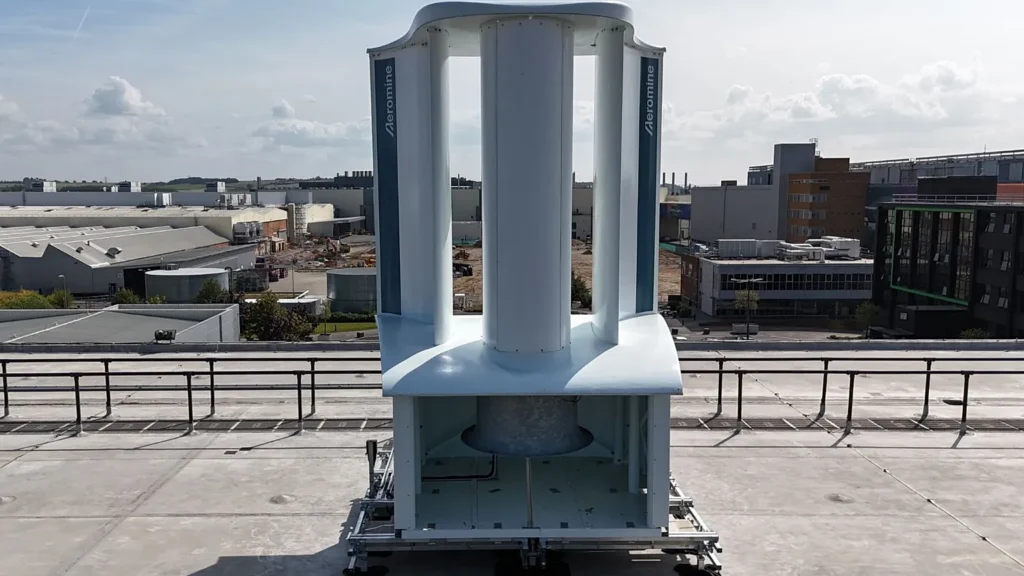
Engineers are now exploring wind power without turbines, and it’s not science fiction anymore. The idea behind wind power without turbines is simple. Instead of forcing the air to rotate machinery, let the air move structures naturally and convert that motion into electricity. The concept matters right now because renewable energy demand is rising faster than infrastructure can expand. Cities need quieter, safer and more flexible systems than massive wind farms. Many communities support clean energy but resist large towers, noise, and visual impact. This is where the new approach fits. Instead of building fewer huge generators, researchers want to place many small energy devices in everyday spaces.
Wind power without turbines works by harnessing vibration rather than rotation. When wind flows around a vertical structure, it creates rhythmic pressure waves that make the object sway. Scientists design slender masts or cylindrical structures that intentionally oscillate in a controlled motion. That gentle movement powers a generator placed at the base, producing electricity continuously. Because there are no spinning blades, the system produces almost no noise and is far safer for wildlife. Unlike conventional wind farms, these devices can function in turbulent city airflow and low wind speeds. As a result, wind power without turbines may expand renewable energy into urban environments where installation was previously impossible.
Table of Contents
Breakthrough Vibration Energy Research
| Key Aspect | Details |
|---|---|
| Energy Principle | Aeroelastic vibration and vortex-induced oscillations |
| Moving Parts | Flexible mast or cylinder with no spinning blades |
| Conversion Method | Piezoelectric or electromagnetic generators |
| Noise Level | Extremely low compared to traditional turbines |
| Wildlife Impact | Minimal risk to birds and bats |
| Maintenance | Lower due to fewer mechanical components |
| Installation Sites | Rooftops, urban areas, bridges, highways |
| Power Output | Lower per unit than turbines but scalable in arrays |
| Development Stage | Experimental and prototype testing |
The future of clean electricity may not always involve bigger machines. Sometimes innovation comes from understanding nature differently. Wind power without turbines takes a phenomenon engineers once tried to eliminate and turns it into a useful resource. It will not immediately replace traditional wind farms, but it offers something equally valuable. It makes renewable energy accessible in places where large turbines cannot operate. Cities, roads, buildings and remote monitoring systems could all benefit. Instead of massive rotating blades dominating skylines, energy may come from quiet structures gently swaying in the breeze. You may eventually pass one every day and never notice it while it steadily produces electricity around the clock.
How The Technology Works
The science behind this system comes from something engineers have known for decades. When air flows around an object, it does not move smoothly. Instead, it forms alternating swirls of pressure. These swirls push and pull the structure repeatedly. Normally engineers try to stop this motion because vibration damages bridges, towers, and cables. Now scientists are intentionally designing structures that move safely instead of resisting movement. In wind power without turbines, a flexible mast is anchored to the ground. As air passes around it, the mast begins to sway back and forth in a predictable rhythm. Inside the base sits a generator that converts this movement into electricity.
- Two main technologies are used.
- Piezoelectric materials produce electricity when bent or compressed. Every tiny sway creates a small electric charge.
- Electromagnetic induction works differently. Magnets move across copper coils as the structure vibrates. That movement generates electric current continuously.
- The motion is small, often just a few centimeters, but it happens constantly. Continuous motion means continuous power generation.
Why Scientists Are Interested
Traditional turbines are impressive machines but also complicated. They rely on heavy rotating blades, gearboxes, lubrication systems and frequent inspections. Even minor mechanical problems can stop production. Wind power without turbines removes many of those challenges.
- First is simplicity. The structure has far fewer moving parts. Less complexity means fewer breakdowns and easier maintenance.
- Second is noise reduction. One of the biggest complaints about wind farms is the low humming sound created by rotating blades. A vibrating mast is nearly silent.
- Third is location flexibility. Conventional turbines need wide open land and steady wind patterns. Cities rarely provide ideal conditions. Ironically, chaotic wind actually helps vibration systems because changing airflow keeps the structure moving.
- Fourth is wildlife protection. Bird and bat collisions with turbine blades have been a long standing environmental concern. A stationary mast almost eliminates that risk.
Power Generation Potential
- The obvious question is whether it produces enough electricity to matter. Individually, each unit generates less energy than a large turbine. However, the idea is not to replace a giant machine with one smaller machine. The idea is to use many small generators together.
- Think of solar panels. A single panel does very little. Hundreds power a building. Wind power without turbines works the same way. Arrays of vibration generators could be installed across rooftops, parking lots, industrial areas and transportation corridors.
- Another advantage is lower wind requirements. Turbines need a certain wind speed before they begin generating electricity. Vibration systems can start operating in lighter breezes, meaning they work more hours throughout the year. Consistency becomes a major benefit. Instead of peaks and stops, the system provides steady energy.
Challenges And Limitations
- The technology is promising but still developing.
- Energy density remains one limitation. Each device produces modest power, so large numbers are required for grid level electricity.
- Material fatigue is another concern. Continuous movement stresses materials over time. Engineers are testing flexible composites and advanced polymers designed to bend repeatedly without cracking.
- Efficiency tuning is also important. The structure must match local wind patterns. If it is too stiff or too flexible, energy output drops significantly.
- Energy storage is another factor. Because production is small but steady, pairing systems with batteries will help maximize usefulness.
- Researchers are actively addressing these issues, and improvements in material science are helping quickly.
Possible Real World Applications
- This technology becomes especially exciting when looking at where it can be installed.
- Urban rooftops could generate supplemental electricity for apartment buildings and offices.
- Highways are another opportunity. Passing vehicles create constant airflow. Installing devices along road dividers could harvest energy from traffic wind.
- Smart infrastructure also benefits. Traffic sensors, cameras and environmental monitoring stations require small continuous power sources. Vibration generators could run them independently without wiring.
- Remote locations are ideal as well. Agricultural sensors, weather stations and pipeline monitors often sit far from electrical grids. A small vibration generator provides reliable local power.
- Instead of replacing wind farms, the system fills gaps traditional renewables cannot reach.
Environmental Impact
The environmental advantages are significant.
- There is no blade shadow flicker affecting nearby homes.
- There are no massive concrete foundations.
- The visual footprint is minimal.
- Wildlife risks are extremely low.
Urban planners appreciate how unobtrusive the structures are. Many people might not even notice them, especially if integrated into lighting poles or building designs. Compared to many renewable technologies, land use is tiny. In crowded cities where land is valuable, this matters greatly.
What Comes Next
- Right now most installations are prototypes and demonstration projects. The next step is long term field testing across different climates and seasons.
- Engineers are experimenting with shapes to improve vibration response. Some designs use tapered poles while others explore flexible panels. The goal is maximizing movement while maintaining durability.
- Manufacturers are also working toward mass production. Because the devices are simple, they can potentially be produced faster and cheaper than traditional turbine components.
- Renewable energy will likely become a mix of technologies. Solar panels provide daytime power. Wind farms produce high output energy. Wind power without turbines could provide steady distributed energy everywhere else.
FAQs on Wind Power Without Turbines May Be Possible
What is wind power without turbines
It is a renewable energy technology that generates electricity from wind induced vibration instead of rotating blades.
Is the technology available commercially
Large scale commercial deployment has not started yet, but pilot projects and prototypes are already being tested.
Can it replace traditional wind turbines
Not completely. It is designed to complement wind farms by providing distributed local energy.
Where will it be used first
Urban buildings, highways, smart infrastructure and remote monitoring stations are expected to adopt it first because installation is simple and quiet.