
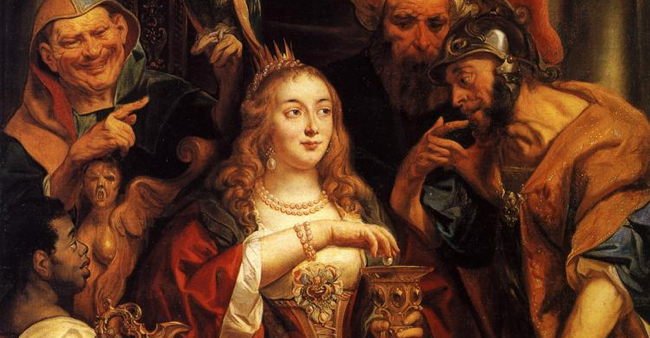
For centuries, the Roman Story — the claim that Queen Cleopatra dissolved a priceless pearl in vinegar and drank it — has been repeated as one of antiquity’s most dramatic displays of wealth. Modern historians, archaeologists, and chemists now argue the account likely contains truth mixed with exaggeration, suggesting Roman political writers reshaped a real event into a powerful legend.
Table of Contents
Did Cleopatra Really Dissolve A Pearl
| Key Fact | Detail |
|---|---|
| Ancient Source | Written by Roman author Pliny the Elder around 77 CE |
| Chemical Reality | Pearls are calcium carbonate and react with acids |
| Historical Debate | Many scholars see the story as ancient Rome propaganda |
Today historians view the pearl banquet less as a literal event and more as a symbolic narrative shaped by politics. The Roman Story reveals how reputations are constructed as much by writers as by rulers, leaving a legacy that continues to shape perceptions of Cleopatra more than two thousand years after her death.
Origins of the Roman Story
The account comes primarily from Pliny the Elder, a Roman scholar and naval commander writing roughly a century after Cleopatra’s death in 30 BCE. In his encyclopedia Natural History, Pliny described a wager between Cleopatra VII Philopator and Roman general Mark Antony. Cleopatra, he said, promised to host the most expensive banquet ever prepared.
At the climax, she removed one pearl earring, placed it into vinegar, waited for it to dissolve, and drank the mixture.
Pliny claimed the pearl was one of the largest known in the world and that the act demonstrated Egypt’s wealth exceeded Rome’s power.
Yet historians emphasize that Pliny was not an eyewitness. His account relied on earlier Roman sources now lost, making the Roman Story part historical report and part literary tradition.
The story later appeared in writings by Roman historians and poets, which helped preserve it across centuries.
Political Context: Rome’s War of Narratives
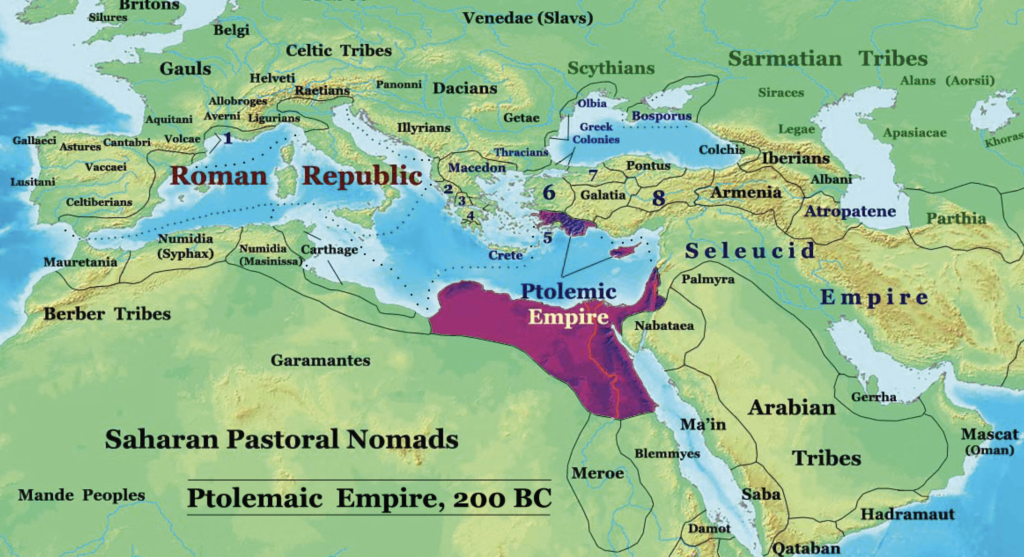
Cleopatra ruled Egypt during the final years of the Roman Republic. Her alliances with Julius Caesar and later Mark Antony placed her directly inside Roman politics.
After Antony’s defeat, his rival Octavian — the future Emperor Augustus — launched a major propaganda campaign. Roman writers began portraying Cleopatra as manipulative, extravagant, and morally dangerous.
Scholars studying ancient Rome propaganda note a pattern. Roman authors often described foreign rulers as luxurious and decadent to contrast with Roman discipline.
The pearl banquet perfectly served that purpose. It illustrated a foreign queen who could casually consume a fortune in a single drink, supposedly corrupting a Roman leader.
In reality, Egyptian rulers were not uniquely extravagant. Archaeological evidence suggests Roman elites themselves hosted extremely lavish feasts, sometimes costing vast sums. The Roman Story, therefore, likely reflected political rivalry more than economic reality.
Scientific Examination: Could It Actually Happen?
Chemistry Behind the Legend
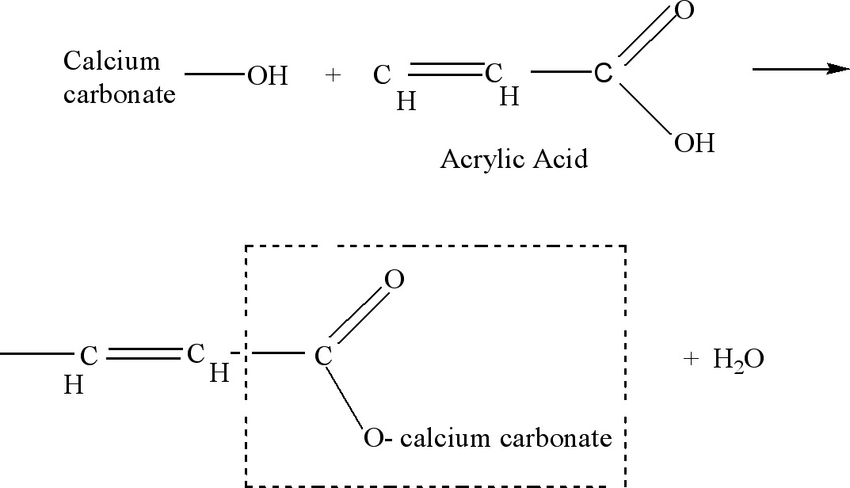
A pearl consists mostly of calcium carbonate. Vinegar contains acetic acid. When combined, the substances react, producing bubbles of carbon dioxide gas.
Modern laboratory demonstrations confirm the chemistry works. The reaction is real and observable.
Experiments replicating the Cleopatra pearl experiment show a crushed pearl dissolves relatively quickly. Ancient scientists, including Greek natural philosophers, were aware acids could dissolve shells and limestone.
This means the story was not chemically impossible.
The Timing Problem
The difficulty lies in speed. A large intact pearl dissolves extremely slowly.
Scientific recreations show a whole pearl might require many hours to dissolve, sometimes longer than a full day. A dinner audience would not see an immediate transformation.
Therefore, historians conclude one of three things occurred:
- the pearl was crushed beforehand
- the mixture was prepared earlier
- or Roman writers dramatized the event
The last explanation remains widely accepted among scholars.
The Economic Meaning of the Pearl
The story’s impact depends on how valuable the pearl actually was.
Ancient sources describe Cleopatra’s pearls as nearly priceless. Using Roman currency estimates, historians calculate one pearl may have equaled the annual wages of several thousand soldiers.
In modern terms, some economists estimate its value could rival tens of millions of dollars today.
Pearls were among the most desired luxury items in the Roman world. They came mainly from the Persian Gulf and Indian Ocean trade routes. Egypt, controlling Red Sea ports, played a major role in this commerce.
Therefore, the banquet — whether literal or symbolic — also advertised Egypt’s trade power.
Archaeology and Material Evidence
Archaeologists have never found Cleopatra’s actual pearls, but excavations in Alexandria reveal her court was indeed wealthy.
Recovered items include:
- imported marble statues
- fine glassware
- luxury perfumes
- gold jewelry
- Mediterranean trade goods
These findings support the idea that Cleopatra used spectacle as diplomacy. Royal banquets functioned as political theater, demonstrating economic strength to visiting dignitaries.
In this sense, the Roman Story may reflect a real diplomatic performance, later retold dramatically.
Medicine, Cosmetics, and Ancient Science
Ancient medical texts provide another explanation. Greek and Egyptian physicians sometimes used powdered pearls in remedies.
Medical writers believed pearls strengthened the body and improved vitality. Some recipes dissolved minerals in acidic liquids before consumption.
Cleopatra herself was known for interest in cosmetics and chemistry. Later authors even credited her with writing treatises on beauty treatments.
Therefore, she may not have been wasting wealth at all. She may have been performing a known scientific or medicinal preparation in a theatrical way.
Alternative Explanations
Researchers propose several plausible scenarios:
1. Pre-Prepared Demonstration
A prepared solution containing pearl powder could have produced bubbling when poured into wine or vinegar, creating a dramatic moment.
2. Diplomatic Theater
Royal banquets in the ancient world often included staged spectacles, music, and demonstrations of luxury.
3. Roman Literary Embellishment
Roman historians may have amplified the story to create a memorable moral lesson about excess.
Cultural Impact and Lasting Myth
The story deeply influenced Cleopatra’s image. Renaissance artists painted the banquet repeatedly. Shakespeare referenced her grandeur in Antony and Cleopatra. Later films adopted the scene as a symbol of opulence.
The narrative also shaped how later generations understood Egypt and Rome. Instead of a capable political ruler, Cleopatra became associated with glamour and extravagance.
Modern historians studying Cleopatra history now emphasize her administrative skill, multilingual education, and political intelligence.
What Experts Agree On Today
Most scholars now agree on three conclusions:
- The banquet probably occurred
- The chemical reaction is possible
- The dramatic instant dissolution likely did not happen
The Roman Story appears to combine fact, science, and political storytelling.
Why the Story Still Matters
The legend shows how history can be shaped by surviving sources. Nearly all written records about Cleopatra come from Roman authors — her political enemies.
Egyptian papyri from her reign are scarce. As a result, historians must reconstruct events using archaeology, science, and comparative literature.
The pearl episode demonstrates how propaganda can influence memory for thousands of years.
FAQs About Did Cleopatra Really Dissolve A Pearl
Did Cleopatra really drink a pearl?
Possibly in powdered form, but almost certainly not by instantly dissolving a whole pearl.
Why would Romans exaggerate it?
To portray her as decadent and weaken support for Mark Antony.
Was Cleopatra actually wealthy?
Yes. Egypt was one of the richest states in the Mediterranean due to agriculture and trade.
Why is the story still famous?
Because Roman literature survived and was copied through medieval Europe, preserving the tale.