
Rare Night View Of Mars: and yep, partner, this ain’t science fiction. It’s a real photograph taken on the surface of Mars in actual darkness, lit not by the Sun but by a robot’s built‑in lamps. For folks who grew up staring at a desert sky on a quiet American night, this image feels familiar and strange all at once — like campfire glow on red sand that just happens to sit 140+ million miles away. As someone who’s spent years teaching space science to students and working alongside educators who partner with NASA outreach programs, I’ll tell you straight: this photo matters. It’s not just cool wallpaper. It’s geology, engineering, and exploration rolled into one. And it shows how modern planetary science is starting to explore Mars not just during the day — but around the clock.
Table of Contents
Rare Night View Of Mars
This nighttime image from Curiosity isn’t just a neat picture — it marks a shift in how humanity studies other worlds. We’ve gone from flybys to landings to full‑time robotic fieldwork on another planet. Using its own lights, the rover turned the Martian surface into a geology lab after dark, revealing rock textures and environmental clues hidden from sunlight. It’s a quiet milestone, but a meaningful one — the moment Mars stopped being a distant object and became a workplace.
| Topic | Details |
|---|---|
| Mission | Mars Science Laboratory — Curiosity Rover |
| Landing Date | August 5, 2012 (Gale Crater, Mars) |
| Night Image | Captured December 2025 using MAHLI LEDs |
| Cameras Used | Mars Hand Lens Imager (MAHLI) + Mastcam |
| Main Goal | Determine whether Mars once supported microbial life |
| Distance from Earth | ~140–250 million miles depending on orbit |
| Operating Agency | NASA Jet Propulsion Laboratory (JPL) |
| Official Website | https://science.nasa.gov/mission/msl-curiosity/ |
What Actually Happened On Mars That Night?
Most Mars photos you see come from sunlight reflecting off dust and rock. But this time, the rover switched on the white LEDs mounted near its robotic arm camera — the Mars Hand Lens Imager (MAHLI) — and another camera on the mast photographed the scene.
Picture this: Mars at night is darker than almost anywhere on Earth. No city lights. No highways. No airplanes. The sky glows faintly with stars, but the ground is pitch black. The rover essentially used a flashlight to inspect a rock target nicknamed Nevado Sajama.
NASA engineers designed MAHLI like a geologist’s field magnifier. On Earth, a scientist kneels down and examines rock layers with a hand lens. On Mars, Curiosity bends its robotic arm and does the same thing.
Why Rare Night View Of Mars Is A Big Deal?
Here’s the kicker: daytime Mars photography actually creates problems for scientists.
Bright sunlight creates harsh shadows. Think about trying to read a book outside at noon — glare everywhere. The Martian sun, though weaker than Earth’s, still washes out fine textures. When Curiosity turns on its own lights, scientists can control illumination just like a lab experiment.
That means:
- clearer mineral layers
- better identification of sediment
- improved chemical analysis targets
And those clues tell us whether Mars once had lakes, rivers, and possibly microscopic life.
The Science Goal — Was Mars Ever Alive?
Curiosity’s mission is simple to say but huge to answer: Did Mars ever support life?
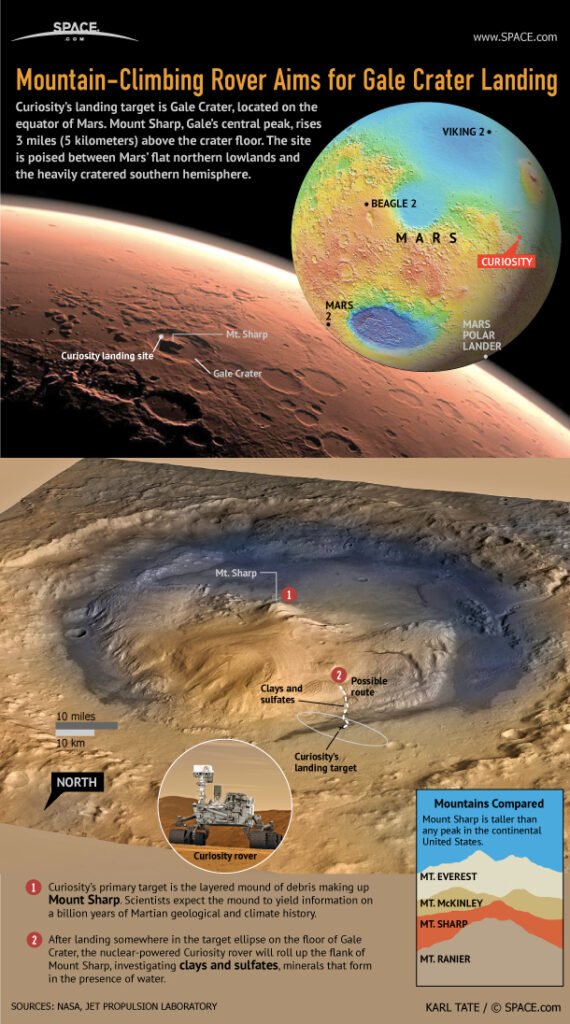
NASA’s research already confirmed Gale Crater once held an ancient lake system. Clay minerals and sulfate deposits found there form only in the presence of water.
Here’s what scientists look for in illuminated drill holes:
1. Sedimentary Layers
Layers act like history pages. Each band equals a different environmental condition.
2. Organic Molecules
Curiosity previously detected complex carbon molecules — the building blocks of life — in Martian rock samples.
3. Mineral Chemistry
Certain salts and clays only form in water. No water, no formation. Simple as frybread dough — no water, no bread.
Rare Night View Of Mars: How The Rover Works (Kid‑Friendly Breakdown)
Let’s keep it plain enough a 10‑year‑old can follow.
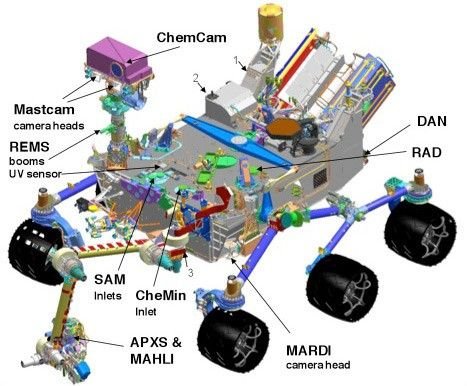
Curiosity is basically a remote‑controlled science truck the size of a small SUV. But instead of a steering wheel, it has:
- lasers
- chemistry labs
- weather station
- cameras
- drill
- robotic arm
Scientists send commands from Earth. The signal takes about 5 to 20 minutes to arrive depending on planetary alignment. That means nobody is “driving” it live — the rover makes limited decisions on its own using onboard software.
Why Rare Night View Of Mars Are So Cold And Dark?
Mars has a very thin atmosphere — about 1% the thickness of Earth’s. Because of that, heat escapes quickly once the sun sets.
Typical nighttime temperature near the equator:
−70°C (−94°F)
That’s colder than Alaska winters and colder than most of Antarctica.
Without air to scatter light, darkness hits fast. Imagine stepping outside your cabin in the American Southwest — then remove all moisture, clouds, and towns. That’s Mars night.
What Scientists Learn From Artificial Lighting?
This night image gives researchers something they rarely get on another planet: controlled lighting conditions.
Controlled lighting allows scientists to:
- analyze grain size in rock
- see crystal structures
- locate drilling targets
- check instrument health
In simple terms: it turns Mars into a field lab instead of a guess‑and‑hope expedition.
Careers Inspired By This Discovery
I tell students this all the time — space exploration isn’t just astronauts. If you can fix a pickup truck, code a game, or draw landscapes, there’s a role in planetary science.
Real jobs on the Curiosity mission include:
Engineers
Design wheels, motors, and power systems.
Planetary Geologists
Interpret rocks and environmental history.
Chemists
Study sample composition using onboard labs.
Software Developers
Write navigation and autonomy code.
Camera Specialists
Plan imaging sequences and analyze photos.
How Students And Educators Can Follow The Mission (Step‑By‑Step Guide)
Step 1 — Track the Rover Daily
Visit the raw image gallery:
https://mars.nasa.gov/msl/multimedia/raw-images/
Step 2 — Watch Command Updates
NASA posts rover activity reports weekly on its mission blog:
https://mars.nasa.gov/msl/mission-updates/
Step 3 — Use Classroom Resources
NASA STEM tools and lesson plans:
https://www.nasa.gov/stem
Step 4 — Try Citizen Science
Projects allow the public to help analyze planetary data:
https://www.zooniverse.org/
Why This Rare Night View Of Mars Photo Matters Historically?
This may become one of the landmark images in planetary exploration — like Apollo Earthrise. Not because it’s flashy, but because it shows operational maturity. Humanity now explores another planet even after sunset.
In exploration terms, that’s huge. It means future astronauts won’t just visit Mars. They’ll work shifts, run labs, and operate around the clock.
NASA Encounters an Unexpected Obstacle Just Before the Artemis II Countdown Rehearsal
NASA Reveals How a Command Mistake Temporarily Shut Down the TESS Planet Hunter
Hair Samples Across a Century Show the Impact of the Leaded Gasoline Ban