
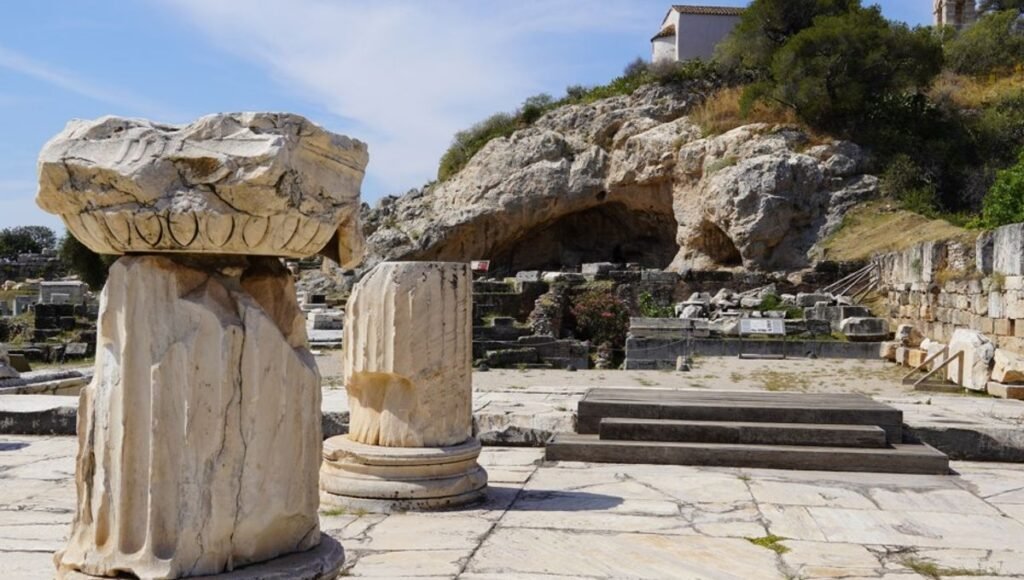
Researchers say the Eleusinian Mysteries — an ancient Greek initiation rite practiced for nearly two millennia — may have involved a carefully prepared psychoactive drink, according to interdisciplinary studies released in 2026. By combining archaeology, ancient texts, and chemistry, scholars propose participants consumed a barley beverage altered with fungal compounds, potentially explaining historical accounts of powerful visions and emotional transformation.
Table of Contents
Eleusinian Mysteries
| Key Fact | Detail |
|---|---|
| Ritual duration | Practiced roughly 1500 BCE – 392 CE |
| Central drink | Kykeon, a barley-based ceremonial beverage |
| New theory | Treated ergot fungus may have produced altered perception |
What Were the Eleusinian Mysteries?
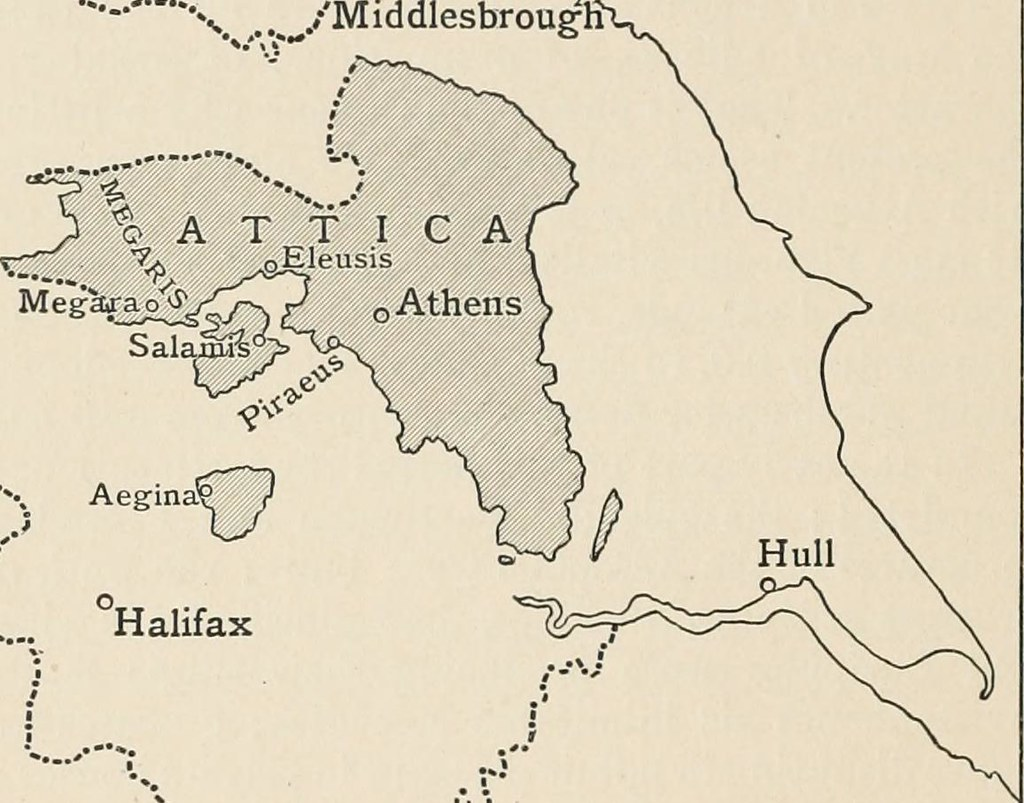
The Eleusinian Mysteries were initiation ceremonies held annually near Athens at Eleusis. They honored the agricultural goddesses Demeter and Persephone and were among the most important religious rites in the ancient Mediterranean world.
Participation was unusually inclusive for antiquity. Men, women, foreigners, and enslaved people could all be initiated if they spoke Greek and had not committed murder. Historians note this openness contributed to the ceremony’s widespread influence across the Greek-speaking world and later the Roman Empire.
Ancient authors rarely described the rituals directly because initiates swore secrecy. Violating the oath could result in prosecution or exile under Athenian law.
Still, indirect testimony survives. Classical sources consistently reported that participants emerged profoundly changed.
“The initiates did not simply learn something; they underwent an experience,” wrote the ancient historian Plutarch, in passages widely cited by modern scholars.
The Myth Behind the Ritual
The ceremony reenacted the myth of Demeter searching for her abducted daughter Persephone. According to Greek mythology, Persephone’s annual return from the underworld marked the arrival of spring and agricultural renewal.
Historians say this narrative was central to the rite’s emotional impact. The ritual symbolized death and rebirth — a theme closely tied to ancient anxieties about mortality.
Scholars believe initiates were promised hope for a blessed afterlife, a rare assurance in Greek religion, which traditionally offered only a shadowy existence after death.
The Sacred Procession
The ceremonies were not confined to a single night. They formed a nine-day festival beginning in Athens.
Participants gathered in the city, purified themselves in the sea, fasted, and then walked approximately 14 miles to Eleusis along the Sacred Way. Archaeologists have identified shrines, wells, and markers along this route.
The pilgrimage was intentionally structured. Scholars say ritual fatigue, anticipation, and fasting likely heightened emotional sensitivity before initiation.
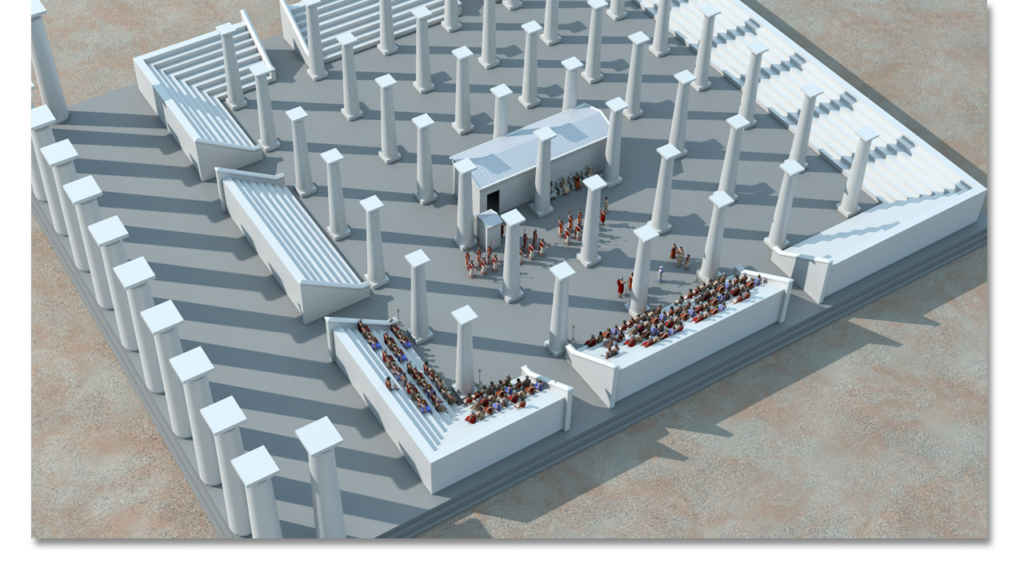
Upon arrival, initiates entered a massive hall called the Telesterion. Inside, torches illuminated the darkened space while priests performed symbolic acts that remain unknown.
The Kykeon: A Ritual Drink at the Center
Ancient Beverage and Archaeochemistry
Ancient writings describe a ceremonial drink called kykeon, made from barley, water, and mint. On its own, the mixture appears nutritionally modest.
Modern researchers suspect the beverage was chemically altered.
Recent studies suggest barley grains may have been infected by ergot, a fungus that naturally grows on cereals. Ergot produces alkaloids chemically related to compounds that affect perception.
Scientists propose priests could have soaked or treated the infected barley using alkaline substances such as ash or lime, removing toxic elements while preserving psychoactive ones.
Such a process would require empirical knowledge, not theoretical chemistry. Researchers believe the technique may have developed gradually through agricultural observation.
Why Scholars Think Visions Occurred
Ritual Experience and Altered Consciousness
Ancient testimonies describe overwhelming emotional reactions: joy, fear, light phenomena, and encounters with divine imagery.
Researchers point to a combination of factors:
- fasting before the ritual
- darkness and torchlight
- rhythmic chanting and music
- psychological anticipation
- communal setting
Even without chemicals, these conditions can produce powerful experiences. A psychoactive drink could intensify them.
Archaeologists note that participants reported losing fear of death afterward, a psychological effect consistent with transformative experiences documented in modern religious studies.
Evidence From Ancient Texts
References to the ritual appear in the Homeric Hymn to Demeter, composed around the 7th century BCE. The text specifically describes Demeter breaking her fast with kykeon — a detail scholars consider significant because initiates also consumed the drink after fasting.
Later Roman writers including Cicero praised the ceremony. He wrote that Athens gave humanity “nothing better than these mysteries,” suggesting initiates believed the rite revealed fundamental truths about life and death.
Skepticism and Debate
Competing Interpretations
Not all historians accept the psychoactive hypothesis.
Some scholars argue theatrical staging explains the experience. The sudden appearance of sacred objects, blazing light in darkness, and coordinated chanting could create overwhelming emotional responses without chemical substances.
Archaeologists also note there is no confirmed chemical residue in ritual vessels proving active compounds.
Others caution against modern projections onto ancient cultures. They argue ancient participants interpreted events symbolically rather than neurologically.
The debate remains active within classical studies, archaeology, and religious anthropology.
Comparison With Other Ancient Cultures
Anthropologists observe similar initiation rites worldwide. Some Indigenous American, Central Asian, and African ceremonies historically used plants to induce altered states during religious experiences.
However, the Eleusinian Mysteries were unique because they occurred within a large urban society and continued for centuries under state supervision.
The Athenian government officially managed the sanctuary. Priests were hereditary officials, and the city protected the rite legally and financially.
This institutional backing suggests authorities considered the ceremony socially beneficial.
Why the Ritual Ended
The Eleusinian Mysteries continued into the Roman era. Several Roman emperors, including Hadrian, were initiated.
The rites ended in the late 4th century CE after imperial decrees under Emperor Theodosius I restricted pagan religious practices across the empire. Shortly afterward, the sanctuary was damaged during invasions.
The tradition disappeared, leaving only scattered descriptions and ruins.
Modern Scientific Techniques
Today researchers use residue analysis, pollen studies, and soil chemistry to investigate ritual sites. Even microscopic traces preserved in pottery could reveal plant compounds.
Advances in molecular archaeology allow scientists to detect ancient organic molecules thousands of years old. Researchers say Eleusis may eventually provide definitive evidence.
Scholars caution results may take years because contamination and environmental degradation complicate testing.
Why the Research Matters Today
The investigation extends beyond classical history. Researchers studying religion, psychology, and neuroscience see the rites as an early structured method for inducing profound personal experiences.
The Eleusinian Mysteries may illustrate how ancient societies addressed existential fears — death, loss, and uncertainty — through shared ritual.
Some historians argue the ceremony helped maintain social cohesion. Citizens from different classes participated equally, reinforcing collective identity.
Looking Ahead
Excavations and chemical analyses continue at Eleusis. Scientists hope residue testing, combined with textual study, will eventually clarify whether psychoactive compounds were present.
For now, the Eleusinian Mysteries remain one of history’s most enduring religious enigmas — remembered less for its teachings than for the life-changing experience initiates claimed to encounter.
FAQs About Eleusinian Mysteries
What was the Eleusinian Mysteries ceremony?
An initiation ritual in ancient Greece honoring Demeter and Persephone, offering spiritual insight and hope for a positive afterlife.
Did participants take a drug?
Possibly. A major theory suggests a processed fungal compound in the ritual drink, though proof is still incomplete.
Why were the rites secret?
Participants swore an oath of silence. Ancient law protected the ritual’s sacred status.
Why is the discovery important?
It may help historians understand how early civilizations approached religion, psychology, and human consciousness.