
An international group of evolutionary biochemists says Life’s Earliest Building Blocks may have formed through overlapping chemical systems rather than a neat step-by-step progression. The 2026 research, based on genetic reconstruction of ancient proteins, suggests early Earth hosted a complex chemical environment where several molecular networks competed before the first living cells emerged.
Table of Contents
Life’s Earliest Building Blocks
| Key Fact | Detail/Statistic |
|---|---|
| Study focus | Evolutionary history of protein domains |
| Main finding | Amino acids did not appear in predicted chemical order |
| Implication | Life likely emerged from interacting chemical networks |
The research does not settle the origin-of-life question, but it broadens it. Scientists increasingly view biology not as a single chemical accident, but as the outcome of persistent molecular organization. As planetary missions and laboratory experiments advance, researchers hope evidence will reveal whether such processes occur elsewhere in the universe.
The Life’s Earliest Building Blocks: A Long-Standing Scientific Assumption
For more than half a century, most scientific explanations of life’s origin followed a relatively clear sequence. Simple molecules formed naturally on early Earth. Those molecules produced amino acids. Amino acids formed proteins, and eventually genetic systems appeared.
This narrative developed after laboratory breakthroughs demonstrated that biological ingredients could form without life.
In 1953, American chemists Stanley Miller and Harold Urey simulated lightning in a primitive atmosphere of methane, hydrogen, ammonia, and water vapor. Within days, the experiment produced amino acids, the core components of proteins.
“That experiment fundamentally changed biology,” said Dr. Meera Patel, an astrobiologist at the University of Chicago. “It showed nature itself could manufacture the raw materials for life.”
Scientists later discovered that certain RNA molecules can act as both genetic carriers and catalysts. This led to the RNA world hypothesis, a central concept in origins-of-life research suggesting RNA existed before DNA and proteins.
Under that framework, early life progressed logically from chemistry to biology. However, the new research questions whether such a tidy timeline ever existed.
Study Reconstructs Ancient Proteins
Evidence From Modern Genomes
Instead of examining ancient rocks, researchers examined genetic information inside modern organisms. They analyzed protein domains — structural components within proteins that are shared by bacteria, plants, and animals.
By comparing these domains across species, scientists can estimate which amino acids biological systems relied on earliest.
“Our results indicate the earliest biochemistry was not sequential,” said lead author Dr. Artem Volkov in a university release. “The molecules most common today were not necessarily the first ones life used.”
The team discovered certain chemically complex amino acids became widespread later because they enhanced biological stability. Simpler molecules did not always appear first, contradicting previous assumptions in prebiotic chemistry.
Multiple Chemistries, Not One
Researchers now propose early Earth contained a dynamic mixture of molecular reactions. Several chemical pathways may have existed simultaneously, interacting and competing.
Eventually, one network gained stability and self-replication capability, marking the beginning of biological evolution.
“This suggests life emerged from cooperation between molecular systems,” said Dr. Laura Simmons, a molecular evolution researcher at the Massachusetts Institute of Technology. “Instead of one origin event, there may have been many chemical attempts before one succeeded.”
Historical Context: How Scientists Study the Origin of Life
Understanding Life’s Earliest Building Blocks is difficult because physical evidence is extremely scarce. Earth formed about 4.5 billion years ago, and the oldest widely accepted fossils are roughly 3.5 billion years old.
Between those dates lies a gap of nearly one billion years — a period scientists call the “prebiotic era.”
Because rocks from that time were destroyed by geological activity, researchers use indirect approaches:
Three main research methods
- Laboratory simulations of early Earth chemistry
- Genetic reconstruction using modern organisms
- Meteorite and planetary chemical analysis
Meteorites have proven particularly important. In 1969, the Murchison meteorite that fell in Australia contained more than 70 amino acids. Many were never produced by living organisms on Earth.
“Space chemistry shows these molecules form naturally throughout the universe,” said NASA astrobiologist Dr. Daniel Cho. “That means Life’s Earliest Building Blocks may not be unique to Earth.”
Why the Findings Matter
Rethinking the Origin of Life
The new research affects three major scientific theories:
- RNA world hypothesis
- Metabolism-first hypothesis
- Protein-first hypothesis
Instead of supporting one, the findings support a hybrid model sometimes called a chemical network theory.
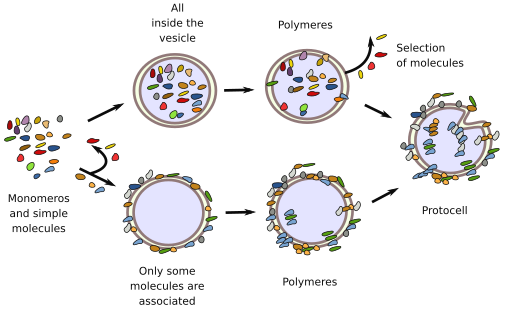
In this view, lipids formed primitive membranes, minerals drove energy reactions, RNA-like molecules stored information, and amino acids stabilized structures simultaneously.
“It looks less like a single invention and more like a natural selection of chemistry,” Simmons said.
Implications for Astrobiology
The search for extraterrestrial life, known as astrobiology, depends heavily on assumptions about life’s origin. For decades scientists searched for planets closely resembling Earth.
This research suggests life might form in a wider range of environments.
Possible locations now considered viable include:
- Subsurface oceans on Jupiter’s moon Europa
- Methane lakes on Saturn’s moon Titan
- Underground Mars environments
Organic molecules have already been detected in interstellar dust clouds and comet material.
“If life can begin through multiple pathways, then the universe could host many forms of pre-life chemistry,” Cho said.
Scientific Debate Continues
Some experts urge caution. Reconstructing ancient biology from modern genomes requires interpretation and cannot directly observe events billions of years old.
“Genetic analysis gives strong clues but not a full record,” said Dr. Andrew Keller, a geobiologist at the University of Washington. “We still need geological confirmation.”
Other scientists note multiple origin theories remain compatible with the new findings. Rather than replacing older ideas, the research integrates them.
The study reframes the central question. Instead of asking which molecule came first, researchers ask which chemical system became stable enough to evolve.
Broader Implications for Evolution
The findings also affect evolutionary biology. If early chemistry already involved complex interactions, the transition from non-living matter to biology may have been gradual rather than sudden.
Researchers now think early Earth may have hosted “proto-ecosystems” — chemical environments resembling primitive ecological systems before life existed.
In these environments:
- Molecules competed for resources
- Some reactions reinforced others
- Stability increased over time
Eventually, one system achieved heredity — the ability to pass information to the next generation.
That moment likely marked the true beginning of evolution.
What This Means for Science and Society
Understanding Life’s Earliest Building Blocks extends beyond academic interest. It shapes how scientists define life itself.
Space agencies use definitions of life to design spacecraft instruments. Medical researchers use origin-of-life chemistry to study how cells function and how diseases disrupt cellular processes.
The research may also help synthetic biology, a field attempting to design artificial cells.
“If we understand how nature assembled life, we can better understand how it fails,” Patel said. “That has implications for aging, cancer, and biotechnology.”
Looking Ahead
Researchers are now planning experiments recreating interacting chemical networks under controlled laboratory conditions. The goal is to determine whether self-organizing molecular systems can evolve spontaneously.
Future missions to Mars, Europa, and Enceladus will also search for prebiotic molecules.
Volkov said the ultimate objective is to determine how common life may be in the cosmos.
“If life formed through flexible pathways,” he said, “then biology may be a natural outcome of planetary chemistry rather than a rare accident.”
FAQs About Order of Life’s Earliest Building Blocks
What are Life’s Earliest Building Blocks?
They are the first molecules that led to living systems, including amino acids, RNA-like molecules, lipids, and energy-driven chemical reactions.
Does this discovery prove how life began?
No. It provides strong evidence about molecular evolution but does not directly observe early Earth events.
Why is this important for space exploration?
It suggests life could form in many environments, expanding where scientists search for extraterrestrial organisms.
Could life start again on Earth today?
Scientists say conditions on modern Earth are very different, making spontaneous origin unlikely, but laboratory simulations are ongoing.