

Early Retirees Allowed Higher Side Income: Early retirees allowed higher side income without reducing Social Security benefits is a topic that’s getting a lot of attention across the United States — and for good reason. More Americans are retiring early, starting at age 62, but they’re not necessarily done working. Some want to stay busy. Others need the income because, let’s be honest, groceries, gas, and healthcare aren’t getting any cheaper. The good news? The rules allow you to earn more money than many people realize without permanently hurting your Social Security check. If you’ve ever sat at the kitchen table with a calculator wondering, “If I work part-time, will Social Security punish me?” — you’re not alone. I’ve advised retirees, small business owners, and working professionals for years, and one thing is clear: misunderstanding the Social Security earnings test costs people peace of mind and sometimes real money. Let’s clear it up in plain English.
The Social Security Administration (SSA) has specific rules about working while collecting benefits before reaching Full Retirement Age (FRA). These rules are called the earnings test, and they determine how much you can earn before benefits are temporarily withheld.
Table of Contents
Early Retirees Allowed Higher Side Income
Early retirees allowed higher side income without reducing Social Security benefits provides flexibility for millions of Americans navigating retirement. Understanding the earnings test, income limits, taxation rules, and Full Retirement Age empowers retirees to make informed decisions. Benefits withheld before FRA are not permanently lost, and after FRA, earnings are unlimited. With thoughtful planning, retirees can confidently balance work, income, and long-term financial security.
| Topic | Details |
|---|---|
| 2026 Earnings Limit (Under FRA) | $24,480 per year |
| Reduction Rule | $1 withheld for every $2 above the limit |
| Year You Reach FRA Limit (2026) | $65,160 before FRA month |
| After Full Retirement Age | No earnings limit |
| Income That Counts | Wages & net self-employment income only |
| Average 2024 Retired Worker Benefit | $1,907 per month |
Understanding the Social Security Earnings Test
The Social Security earnings test applies only if you claim retirement benefits before reaching your Full Retirement Age.
Here’s how it works in detail.
If you are under Full Retirement Age for the entire year in 2026, you can earn up to $24,480 without any reduction in benefits. Once your earnings exceed that amount, the SSA withholds $1 in benefits for every $2 you earn above the threshold.
For example, if you earn $28,480 — which is $4,000 above the limit — SSA will withhold $2,000 in benefits.
This withholding typically happens by pausing monthly payments until the withheld amount is recovered. It’s not a fine. It’s not a permanent cut. It’s a temporary adjustment.
Official guidance can be found directly on the SSA website:
SSA Earnings Test Overview
What Happens in the Year You Reach Full Retirement Age?
The year you reach Full Retirement Age is treated differently — and more generously.
In 2026, the earnings limit jumps to $65,160 for the months before you reach FRA. If you exceed that amount, SSA withholds $1 for every $3 above the limit.
Once you hit the month of your FRA birthday, the earnings limit disappears entirely. That means you could earn $10,000 per month, $100,000 per year, or more — and your Social Security benefits would not be reduced due to earnings.
What Is Full Retirement Age?
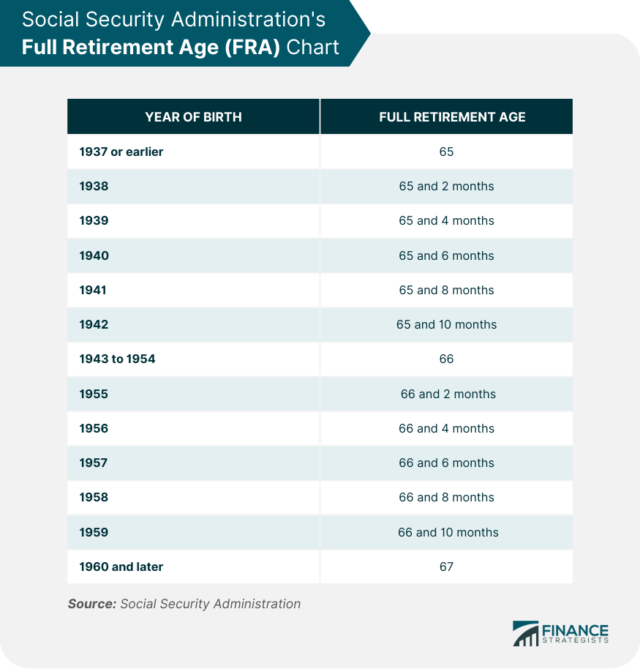
Your Full Retirement Age (FRA) depends on your birth year. For Americans born in 1960 or later, FRA is 67.
You can confirm your specific FRA using the SSA’s official chart:
SSA Full Retirement Age Chart
This age matters because claiming before FRA permanently reduces your base benefit amount. The earnings test is separate from that reduction.
Important Clarification: Early Retirees Allowed Higher Side Income
One of the biggest misconceptions in retirement planning is the belief that working early permanently reduces Social Security benefits.
That is not true.
If benefits are withheld because you exceeded the earnings limit, the SSA recalculates your benefit at Full Retirement Age. They adjust your monthly payment upward to account for months in which benefits were withheld.
In other words, it’s more like deferred payment than lost income.
What Income Counts — And What Does Not
Only earned income counts toward the earnings limit.
This includes:
- W-2 wages from employment
- Net earnings from self-employment
This does NOT include:
- Pension payments
- IRA withdrawals
- 401(k) distributions
- Investment income (stocks, dividends, capital gains)
- Rental property income
- Annuities
This distinction is crucial for retirees who rely on diversified income streams. Someone earning $50,000 from investments but only $10,000 in wages will not exceed the earnings limit.
Real-World Example of Early Retirees Allowed Higher Side Income
Let’s say Maria retires at 62 and begins collecting $1,900 per month in Social Security benefits. That equals $22,800 annually.
She works part-time as a consultant and earns $35,000 per year.
Here’s how the math works in 2026:
Earnings limit: $24,480
Maria’s earnings: $35,000
Excess earnings: $10,520
Amount withheld: $10,520 ÷ 2 = $5,260
SSA would withhold $5,260 in benefits during the year.
But once Maria reaches Full Retirement Age, her monthly benefit is recalculated to reflect those withheld months.
Why Many Americans Continue Working?
According to the U.S. Bureau of Labor Statistics, about 19% of Americans age 65 and older were still participating in the labor force in 2023.
Source:
BLS Labor Force Statistics
Reasons include:
- Rising healthcare costs
- Inflation
- Desire for social engagement
- Supporting family members
- Delaying withdrawals from retirement accounts
The average retired worker benefit in 2024 was approximately $1,907 per month, according to the SSA.
Source:
SSA Benefit Data
For many households, that alone doesn’t cover total expenses.
Tax Implications of Working While Collecting Social Security
This is where professionals need to pay attention.
Social Security benefits may become taxable depending on your combined income, which includes:
- Adjusted gross income
- Nontaxable interest
- Half of your Social Security benefits
If combined income exceeds certain thresholds ($25,000 for single filers, $32,000 for married couples filing jointly), up to 50% or 85% of benefits may be taxable.
More information can be found at:
IRS Publication 915
This taxation is separate from the earnings test.
Strategic Planning Considerations of Early Retirees Allowed Higher Side Income
From a financial planning standpoint, deciding whether to claim early and continue working involves multiple factors:
Longevity Expectations
If you expect to live into your 80s or 90s, delaying benefits may provide higher lifetime income.
Employment Stability
If your work income is unpredictable, early claiming may provide financial stability.
Healthcare Costs
If you retire before 65, you’ll need to secure private insurance until Medicare begins.
Spousal Benefits
Married couples must consider how early claiming affects survivor benefits.
Delayed Retirement Credits
If you delay claiming beyond Full Retirement Age, your benefit increases by approximately 8% per year until age 70.
That’s a guaranteed increase backed by federal law.
Source:
SSA Delayed Retirement Credits
For high earners still working full-time, delaying may produce significantly larger lifetime payouts.
Special Rule for the First Year of Retirement
There’s also something called the monthly earnings test, which can help retirees who retire mid-year.
If you retire in July but earned above the annual limit earlier in the year, SSA may apply a monthly test allowing benefits for months where earnings fall below the monthly limit.
Early Retirees Allowed Higher Side Income: Common Mistakes to Avoid
- Not reporting earnings changes promptly to SSA.
- Assuming all income counts toward the limit.
- Forgetting about taxation thresholds.
- Claiming early without understanding permanent base reduction.
- Overlooking spousal coordination strategies.
Why Social Security Worries Are Growing Among Baby Boomers
A Hidden Tax Could Reduce Social Security Benefits in 2026 — What to Plan Now
Next Round of February Social Security Payments Is Near — Check Eligibility Criteria
Professional Perspective
From years of working with retirement planning cases, I can tell you this: the earnings test sounds scarier than it is. For many early retirees, part-time work improves financial flexibility, reduces portfolio withdrawals, and enhances quality of life.
But for high-income professionals still earning strong salaries, delaying benefits may produce better long-term outcomes.
The key is coordination — Social Security, taxes, healthcare, and investment strategy must work together.