

Possible Substance Used in the Eleusinian Mysteries: Researchers Revisit the Possible Substance Used in the Eleusinian Mysteries, and this time, they’re bringing hard science to a question that’s been whispered about in lecture halls and debated in archaeology circles for decades. If you’ve ever wondered whether ancient spiritual experiences were purely symbolic—or possibly enhanced by chemistry—you’re not alone. Scholars, chemists, historians, and neuroscientists have all been digging into this mystery.
For nearly 2,000 years, the Eleusinian Mysteries stood as one of the most sacred and tightly guarded religious rites of the ancient world. People traveled from across Greece and later the Roman Empire to participate. They swore oaths of secrecy. They described life-changing revelations. And they all drank something called kykeon. Now, thanks to new laboratory research published in Scientific Reports (Nature Portfolio), we have stronger scientific evidence than ever that this drink may have contained a carefully processed psychoactive compound derived from ergot fungus. Before we go any further, let’s ground this conversation in facts, context, and clarity.
Table of Contents
Possible Substance Used in the Eleusinian Mysteries
Researchers Revisit the Possible Substance Used in the Eleusinian Mysteries, and their findings mark a meaningful step forward in understanding one of history’s most guarded rituals. The 2026 laboratory study published in Scientific Reports demonstrates that ancient methods could have transformed toxic ergot fungus into a safer, psychoactive preparation containing Lysergic Acid Amide.
While definitive historical proof remains out of reach, the chemical feasibility is now supported by experimental evidence. This bridges archaeology, neuroscience, and cultural history in a way that deepens—not diminishes—our respect for ancient knowledge systems. The Eleusinian Mysteries remind us that humanity’s search for meaning has always involved courage, curiosity, and careful preparation. And sometimes, the past still has lessons to teach.
| Topic | Details |
|---|---|
| Ritual Name | Eleusinian Mysteries |
| Location | Eleusis, Greece |
| Duration | Approx. 1500 BCE – 392 CE |
| Central Ritual Drink | Kykeon |
| Proposed Psychoactive Source | Claviceps purpurea (ergot fungus) |
| Psychoactive Compound Identified | Lysergic Acid Amide (LSA) |
| 2026 Study Journal | Scientific Reports |
| Official Journal Website | https://www.nature.com/srep/ |
| Original Theory (1978) | Wasson, Hofmann, Ruck |
| Relevant Modern Research | Johns Hopkins Psychedelic Research |
| Hopkins Website | https://www.hopkinsmedicine.org/psychiatry/research/psychedelics-research.html |
Understanding the Eleusinian Mysteries in Historical Context
The Eleusinian Mysteries were annual initiation ceremonies held in Eleusis, a city about 14 miles northwest of Athens. The rites honored Demeter and Persephone—figures central to Greek mythology and agricultural life.
Demeter represented grain and fertility. Persephone’s descent into the underworld symbolized seasonal cycles. To ancient Greeks, agriculture wasn’t just economics—it was survival. These rituals tied directly to the rhythms of life and death.
Participants went through days of fasting, purification, processions, and sacred storytelling. Then came the climactic moment inside a sacred hall called the Telesterion. After drinking kykeon, initiates reportedly experienced something profound—so profound that many ancient writers claimed it removed their fear of death.
The Roman statesman Cicero wrote that the Mysteries taught people “not only how to live joyfully, but also how to die with better hope.”
That’s powerful testimony.
What Exactly Was Kykeon?
Ancient texts describe kykeon as a mixture of barley, water, and mint. That sounds simple enough. But researchers have long suspected there was more going on.
Barley, under certain environmental conditions, can become infected with ergot fungus (Claviceps purpurea).
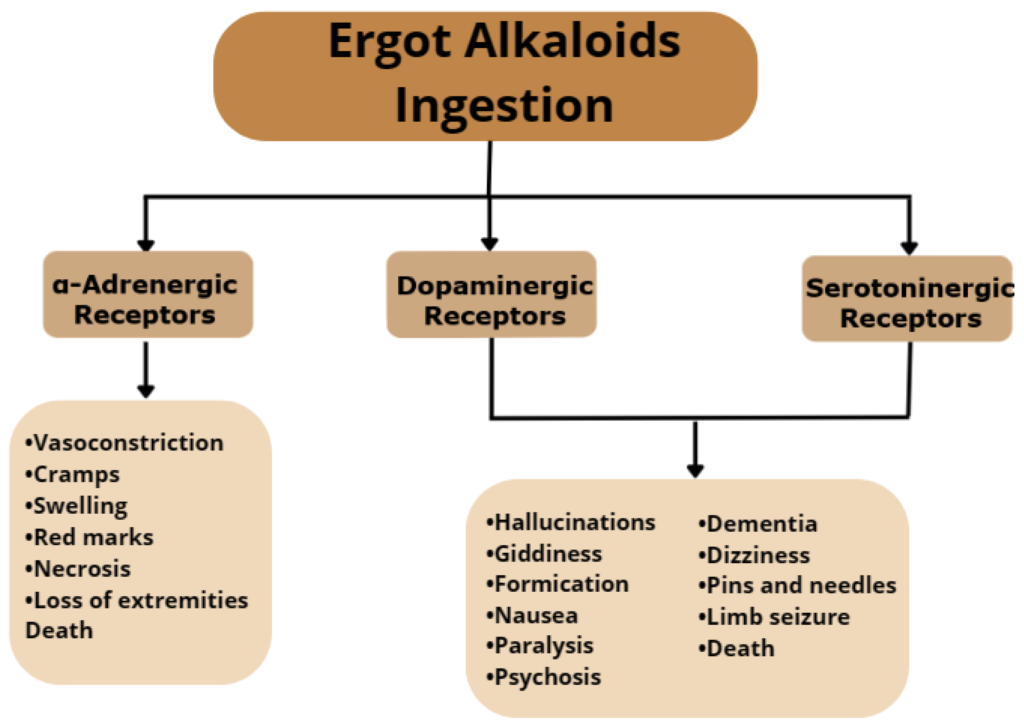
Ergot produces alkaloids that affect blood vessels and the nervous system. In high amounts, it causes ergotism—a condition that historically led to hallucinations, convulsions, and even gangrene.
But here’s where things get interesting.
In 1938, Swiss chemist Albert Hofmann synthesized LSD from ergot derivatives. Decades later, Hofmann collaborated with ethnomycologist Robert Gordon Wasson and scholar Carl A. P. Ruck. Their 1978 book The Road to Eleusis proposed that the ancient Greeks may have discovered a way to process ergot safely, extracting psychoactive properties without lethal toxicity.
At the time, critics dismissed the idea as speculative.
Until now.
The 2026 Scientific Study: Bringing Lab Evidence to the Table
In 2026, researchers revisited the hypothesis using modern analytical chemistry techniques.
The scientists recreated ancient-style preparation techniques. They treated ergot-infected grain with an alkaline solution and applied gentle heating—methods that would have been accessible in ancient Greece.
Using Nuclear Magnetic Resonance (NMR) spectroscopy and mass spectrometry, they analyzed the chemical results.
The findings showed that toxic ergot alkaloids were significantly reduced. Meanwhile, they detected the presence of Lysergic Acid Amide (LSA)—a naturally occurring compound structurally similar to LSD.
LSA interacts with serotonin receptors in the brain. It can produce altered perception, introspection, and mild psychedelic effects.
This doesn’t prove definitively that kykeon contained LSA—but it demonstrates chemical feasibility. And that’s a major shift from speculation to experimental support.
Possible Substance Used in the Eleusinian Mysteries: Why the Agricultural Context Matters
Eleusis was an agricultural center. Barley was widely cultivated. Ergot infections were common in damp climates.
Given the agricultural realities of ancient Greece, ergot contamination would not have been rare. The real question becomes: did ancient priestesses intentionally select infected grain, or was it accidental?
The study suggests intentional preparation is plausible.
This is where interdisciplinary thinking comes in. Archaeologists have found traces of ergot spores in ancient Greek sites. While not conclusive, the evidence aligns with the hypothesis.
How Ancient Preparation May Have Worked?
Let’s break down how this could have functioned step-by-step:
- Infected barley was harvested.
- Grain was ground or steeped in water.
- Alkaline materials—possibly ash or lime—were introduced.
- Gentle heating altered the chemical profile.
- Toxic compounds degraded.
- Psychoactive lysergamides remained in low, manageable doses.
From a chemical standpoint, this isn’t far-fetched. Ancient cultures mastered fermentation, metallurgy, and herbal medicine. They weren’t naive.
In fact, traditional medicine systems worldwide often involved careful preparation to transform toxic plants into therapeutic agents.
Possible Substance Used in the Eleusinian Mysteries: Comparing Ancient Ritual to Modern Clinical Research
Fast-forward to today.
Clinical trials have shown promising results for psilocybin in treating depression, anxiety, and PTSD.
The National Institutes of Health reports growing evidence that psychedelic compounds may enhance neural plasticity
Notice something familiar?
Preparation. Supervision. Ritual structure.
Ancient Eleusis required fasting, purification, and group ceremony. Modern clinical trials require screening, therapeutic guidance, and safe settings.
The framework may differ—but the underlying principles show surprising parallels.
What Professionals Should Consider?
For historians:
Reexamine ancient literary accounts in light of biochemical feasibility.
For neuroscientists:
Study naturally occurring lysergamides like LSA and their receptor activity.
For chemists:
Continue experimental archaeology to test ancient preparation methods.
For mental health professionals:
Explore the historical use of structured altered states in community settings.
For educators:
Use this case as a model of interdisciplinary research connecting humanities and sciences.
The more fields collaborate, the clearer the picture becomes.
Addressing Safety and Misinterpretation
Let’s be clear.
Ergot can be dangerous. Historical outbreaks of ergotism—sometimes called “St. Anthony’s Fire”—caused severe suffering in medieval Europe.
But dosage and preparation are everything.
Modern medicine still uses ergot derivatives in controlled settings for migraines and other conditions.
The point is not to romanticize substances. The point is to understand how knowledge evolves.
Ancient ritual context likely minimized risk. Modern research emphasizes the same principle: safe environment, proper preparation, professional oversight.
Cultural and Ethical Responsibility
The Eleusinian Mysteries were sacred. They were not casual events. Initiates prepared mentally and physically.
This research should be handled with respect—not sensational headlines.
Ancient societies integrated spirituality, agriculture, and community identity. Their practices deserve careful scholarly treatment.
At the same time, science should not shy away from evidence.
Balancing respect with rigorous inquiry—that’s how we honor both history and truth.
New Research Questions the Order of Life’s Earliest Building Blocks
Breakthrough Vibration Energy Research Suggests Wind Power Without Turbines May Be Possible
Researchers Analyse a 500-Year-Old Drawing to Trace Leonardo da Vinci’s DNA
The Broader Implications for Society
This research doesn’t just rewrite a footnote in ancient history. It reshapes how we understand human consciousness.
For thousands of years, people have sought transformative experiences—through prayer, fasting, music, meditation, and ritual.
The Eleusinian Mysteries may represent one of the earliest structured approaches to induced altered states.
Modern neuroscience now confirms that certain compounds can temporarily increase neural connectivity and emotional openness.
That’s not mysticism. That’s measurable brain activity.
And yet, the ancient Greeks framed it within story, myth, and agricultural cycles.
Science and spirituality aren’t always rivals. Sometimes, they’re describing the same phenomenon from different angles.