
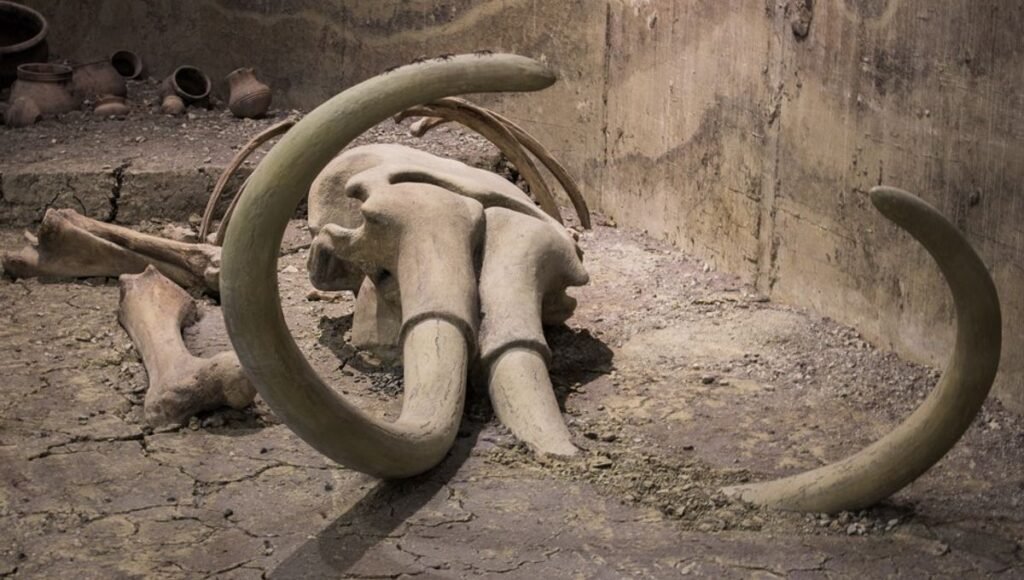
Scientists studying Mammoths in Alaska uncovered an unexpected mystery when fossils long believed to belong to the extinct animals were identified as marine whale remains located roughly 250 miles (400 kilometers) from the nearest ocean. The finding, confirmed through genetic sequencing and chemical testing, is prompting new research into Ice Age environments, museum collections, and prehistoric human movement across North America.
Table of Contents
Fossil Hunters Searching for Mammoths
| Key Fact | Detail |
|---|---|
| Original assumption | Bones cataloged as young woolly mammoth fossils |
| New identification | DNA showed minke whale and right whale species |
| Distance inland | About 400 km from the Bering Sea coastline |
Investigators Expected Mammoths — Not Ocean Giants
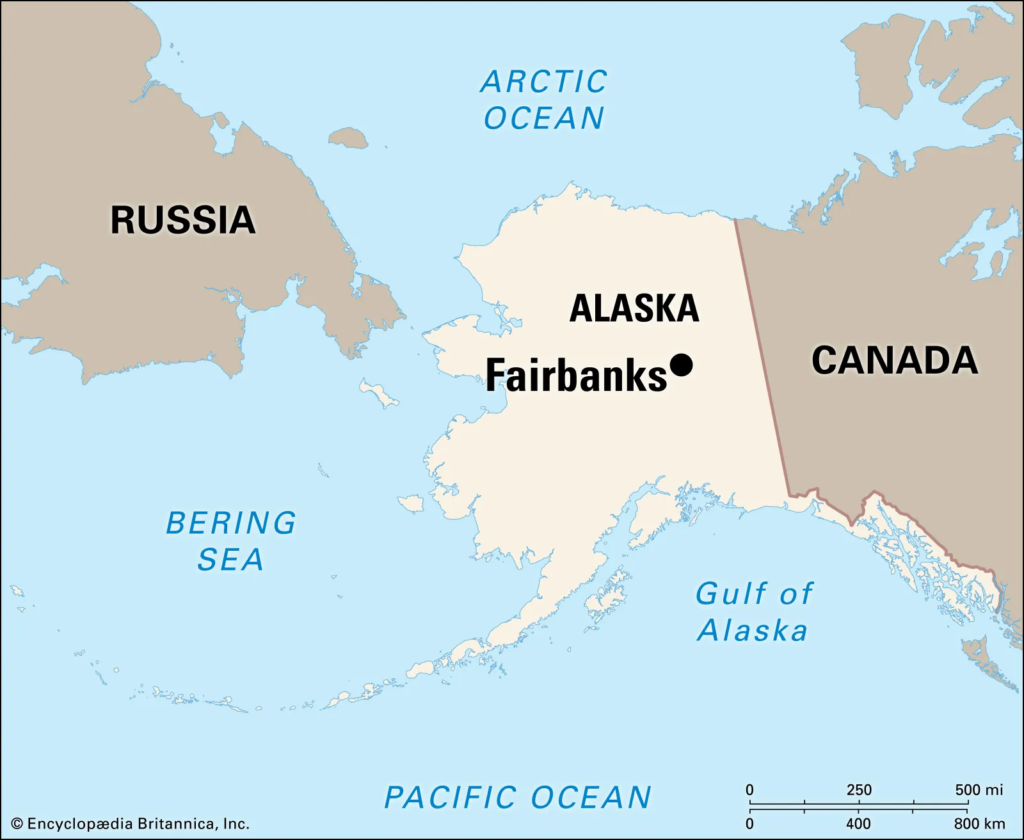
The fossil material was originally collected during geological surveys in the 1950s near Fairbanks, Alaska. The region is one of the richest deposits of Ice Age fossils in North America. Permafrost preserves bones exceptionally well, allowing paleontologists to reconstruct ancient ecosystems in detail.
Researchers initially revisited the specimens because they appeared unusually recent. When scientists performed radiocarbon dating, the results suggested the animals lived about 2,000 years ago. That was a major anomaly.
Woolly mammoths disappeared from mainland North America around 10,000 years ago, near the end of the last glacial period. Only isolated island populations survived slightly longer, and none were known from mainland Alaska during this timeframe.
“That date did not fit established extinction timelines,” one researcher explained in a university statement. “We had to question whether the identification was correct.”
DNA and Isotope Testing Revealed the Truth
Scientists extracted preserved genetic material from the bone fragments and sequenced mitochondrial DNA. The results were decisive: the bones belonged to whales, not land mammals.
Further confirmation came from isotope chemistry. Stable carbon and nitrogen isotopes reveal an animal’s diet and habitat.
Land herbivores such as mammoths show chemical signatures associated with grasses and tundra plants. Marine whales, however, display patterns linked to ocean plankton food webs.
The marine signature was unmistakable.
“Chemical analysis showed these animals lived entirely in saltwater ecosystems,” researchers reported. “They could not have lived in interior Alaska.”
Why the Inland Location Is So Puzzling
Fairbanks lies in Alaska’s interior basin, surrounded by mountains and river valleys. Geological records show the region has not been covered by ocean waters for tens of thousands of years. Therefore, natural deposition from the sea is extremely unlikely.
Scientists are evaluating several explanations.
Possible Human Transport Along Ancient Trade Routes
Archaeologists now consider prehistoric transport the leading hypothesis. Indigenous coastal communities used whale bones extensively for tools, building frames, carvings, and ceremonial objects.
Evidence shows early populations maintained long-distance ancient trade routes across Alaska and into interior river systems. Rivers such as the Yukon connected coastal and inland cultures.
Transporting bones upriver by sled or boat over generations is plausible. In Arctic archaeology, whale bone artifacts have been found far from coastal settlements.
If confirmed, the fossils could become rare physical proof of interaction between coastal whalers and inland hunter-gatherers.
River Transport — Scientifically Unlikely
Scientists also examined whether whales could have traveled inland via rivers. Modern marine mammals occasionally enter estuaries, but right whales depend on microscopic marine plankton.
Freshwater rivers lack this food source. A whale could not survive long enough to travel hundreds of miles inland.
Hydrological studies further show river depths and seasonal freezing would prevent such a journey.
Museum Labeling Error
Another possibility is historical cataloging mistakes. Fieldwork in the mid-20th century relied on handwritten notes, and collections were often transported long distances before storage.
Specimens collected near the coast may have been mistakenly associated with interior sites. Paleontologists say such errors were not uncommon before modern digital archiving.
“Collections are scientific time capsules,” a museum curator noted. “They are invaluable, but they reflect the recording practices of their era.”
Understanding Mammoths and Their Extinction
The research has renewed public interest in mammoths themselves.
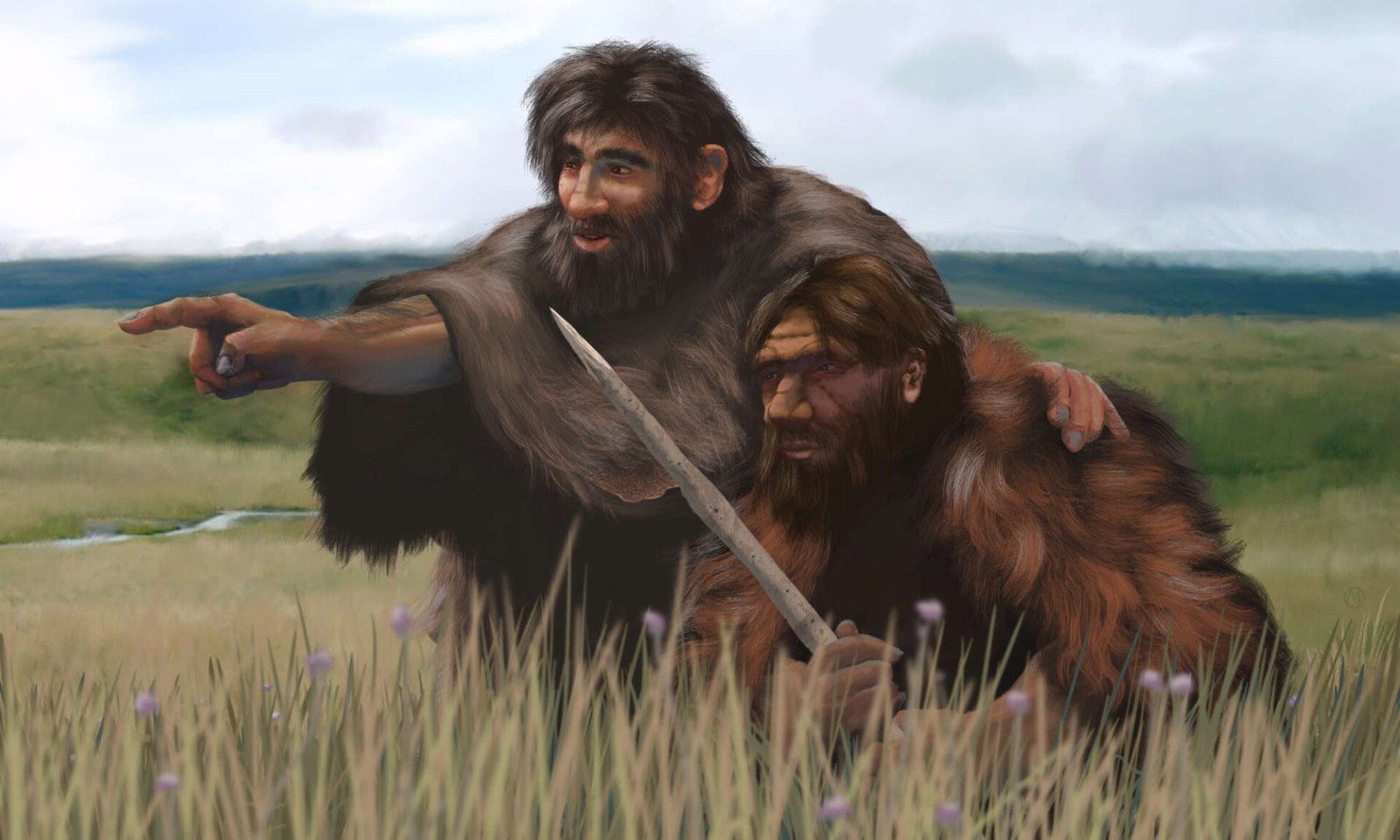
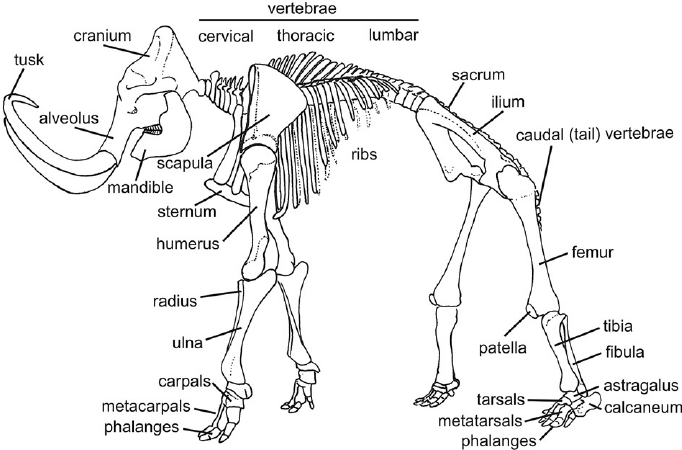
Woolly mammoths (Mammuthus primigenius) were large herbivores adapted to cold grasslands known as the mammoth steppe. Covered in fur and equipped with curved tusks, they were closely related to modern elephants.
Scientists believe mammoths disappeared due to a combination of rapid climate warming and human hunting pressures at the end of the last Ice Age. As glaciers retreated, grasslands transformed into forests and wetlands, reducing suitable habitat.
This discovery does not change the extinction timeline. Instead, it demonstrates how easily fragmentary fossils can be misidentified.
Why the Finding Matters to Science
Even without a surviving mammoth population, the discovery is significant in several scientific fields.
1. Museum Collections as Scientific Resources
Thousands of specimens in museums worldwide were classified decades ago. Modern tools — DNA sequencing, isotope chemistry, and 3D imaging — allow reanalysis.
Researchers say many collections likely contain overlooked discoveries.
2. Human Migration Research
If humans transported the whale bones inland, the fossils provide material evidence of complex social networks in ancient Arctic societies. Anthropologists have long suspected cultural exchange across Alaska but rarely had direct proof.
3. Scientific Verification
The episode highlights the importance of verification in paleontology.
“Extraordinary claims require rigorous evidence,” one paleontologist said. “Without testing, we might have announced a dramatic extension of mammoth survival.”
Broader Climate and Environmental Context
The Ice Age environment of Alaska differed sharply from today’s forests. During glacial periods, dry grasslands stretched from Siberia to Canada across the Bering land bridge.
This corridor enabled migration of animals and humans between Asia and North America. Mammoths, bison, horses, and early humans crossed this region over thousands of years.
As temperatures rose about 11,700 years ago, melting glaciers altered river systems and vegetation. Large grazing animals declined rapidly.
Understanding these transitions helps scientists study modern climate change. Paleontological data offers long-term ecological records unavailable from modern observation alone.
The Role of Radiocarbon Dating
Radiocarbon dating played a central role in solving the mystery.
The method measures decay of carbon-14 isotopes in organic material. Because marine animals absorb carbon differently from land animals, scientists must adjust measurements — a factor called the “marine reservoir effect.”
When researchers recognized the reservoir effect in the samples, they suspected a marine origin. DNA testing then confirmed it.
The case is now being used as a teaching example in university paleontology courses.
Continuing Research
Researchers are reviewing additional specimens previously labeled as mammoths across regional museums. The project has expanded into a multi-institution collaboration involving geneticists, archaeologists, and geochemists.
Future studies may include excavations along prehistoric travel corridors and isotope testing of artifacts from archaeological sites.
Scientists hope to determine whether ancient communities intentionally transported whale materials inland or if mislabeling remains the explanation.
Forward Look
Researchers emphasize the discovery shows scientific knowledge evolves through re-examination rather than single breakthroughs. New technology often changes conclusions drawn decades earlier.
“The lesson is simple,” one scientist said. “Preserve evidence carefully. Future science may understand it better than we can today.”
FAQs About Fossil Hunters Searching for Mammoths
Were mammoths actually alive recently?
No. The fossils were whales, so mammoth extinction timelines remain unchanged.
Why were they mistaken?
Fragmented whale bones can resemble large land mammals, especially when weathered.
What happens next?
Scientists will test more museum fossils and investigate possible prehistoric trade networks.