

The 2027 Social Security COLA is already drawing attention from retirees and economists months before official calculations begin. Early projections suggest a modest increase in benefits as inflation cools across the United States. Analysts say the outlook could reduce federal spending pressure but may leave older Americans struggling to keep pace with healthcare, housing, and food costs.
Table of Contents
2027 Social Security COLA
| Key Fact | Detail/Statistic |
|---|---|
| What COLA is based on | Inflation measured using the Consumer Price Index for Urban Wage Earners (CPI-W) |
| When it’s decided | Based on July–September inflation data each year |
| Expected range | Roughly 2%–3% estimated for 2027 |
For now, policymakers and beneficiaries must wait for decisive inflation data. The next series of economic reports will determine whether the adjustment remains modest or surprises forecasters, shaping retirement finances for millions of Americans approaching 2027.
What the 2027 Social Security COLA Means
The Social Security Administration (SSA) adjusts benefits annually to preserve purchasing power. The agency calculates the change using the Consumer Price Index for Urban Wage Earners and Clerical Workers (CPI-W), a federal inflation gauge compiled by the U.S. Bureau of Labor Statistics (BLS).
The adjustment affects more than 70 million Americans, including retirees, disabled workers, and survivors. Benefits change automatically every January if inflation rises during the previous year’s third quarter, according to SSA policy statements.
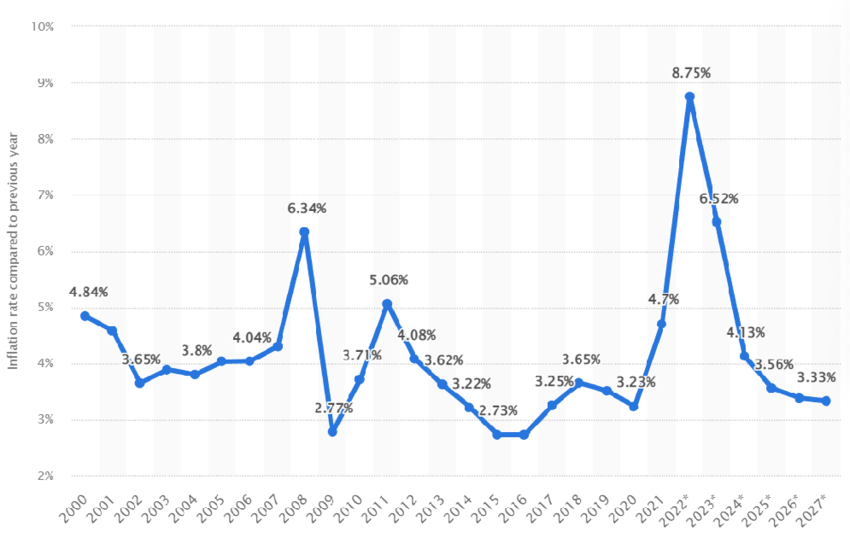
Experts monitoring early price data now expect a smaller increase than those seen after the pandemic-era inflation surge. In 2023, benefits jumped 8.7%, the largest rise in four decades. By contrast, economists say the 2027 Social Security COLA will likely resemble pre-pandemic norms, when adjustments averaged about 2% annually.
Mary Johnson, a policy analyst at the Senior Citizens League, said in a public briefing, “Inflation has slowed significantly compared with 2022 levels. That usually translates into a lower cost-of-living adjustment.”
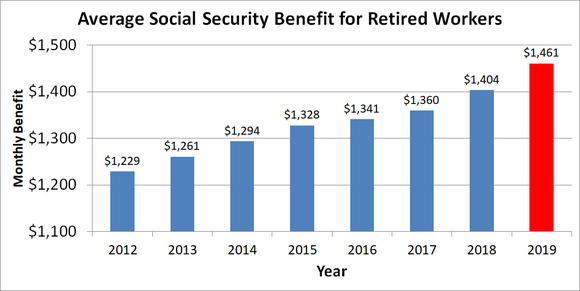
The average retired worker currently receives a monthly benefit slightly above $1,900, according to SSA statistical reports. Even small percentage changes therefore have a measurable effect on household budgets.
Why Inflation Matters for Retirees
Social Security benefits are designed to maintain purchasing power, not increase income. The formula ties payments directly to inflation.
Economists describe this as a stabilization mechanism. During high inflation, benefits rise quickly. During stable prices, increases slow.
However, retirees do not spend money like working households. Seniors typically devote a larger share of their budgets to healthcare and housing, categories that often rise faster than general inflation.
The Centers for Medicare & Medicaid Services (CMS) has repeatedly found that medical spending growth exceeds overall consumer price inflation in many years. As a result, the COLA may technically keep pace with inflation but still fail to cover real expenses faced by older adults.
Housing and Healthcare Pressures
Housing remains a major financial burden. Data from the U.S. Department of Housing and Urban Development (HUD) shows rent costs remain elevated even as overall inflation slows.
“If inflation averages 2.5% but healthcare rises 5%, seniors effectively lose purchasing power,” said retirement economist Alicia Munnell of the Center for Retirement Research at Boston College in a recent policy analysis.
Prescription drug prices, assisted living services, and long-term care insurance premiums have all risen faster than the CPI-W index used in COLA calculations.
For many retirees, Medicare Part B premiums are deducted directly from Social Security payments. A higher premium can offset most of a COLA increase, leaving little net gain.
Why Forecasters Are Uncertain
The official adjustment will not be known until October 2026. The SSA calculates the increase using inflation data from July, August, and September of that year.
Because those figures are not yet available, current estimates rely on economic models.
Federal Reserve Interest Rates
The Federal Reserve influences inflation through interest-rate policy. Higher borrowing costs typically slow consumer demand and reduce price increases. That can limit Social Security benefit growth.
Lower rates, however, can stimulate spending and raise inflation — producing a larger COLA.
Energy Prices and Global Risks
Energy markets also play a significant role. Oil and natural gas prices directly affect transportation, heating, and food distribution costs.
Geopolitical tensions, supply chain disruptions, or extreme weather events could quickly change inflation forecasts and therefore the final COLA.
Historical Context: How COLA Has Changed
The COLA system began in 1975 to prevent benefits from losing value during inflation. Before that year, Congress had to manually approve benefit increases, often resulting in political delays.
During the high inflation of the late 1970s and early 1980s, adjustments exceeded 10% annually. By the 1990s and early 2000s, inflation stabilized and COLAs averaged around 2% to 3%.
There have also been years with no adjustment at all. In 2010, 2011, and 2016, inflation was too low to trigger a COLA increase.
The 2027 Social Security COLA is expected to fall near the historical average rather than the unusually large pandemic-era increases.
Long-Term Social Security Financing
The discussion around the 2027 Social Security COLA connects to broader concerns about the program’s finances.
According to annual reports from the Social Security Trustees, the retirement trust fund could face depletion in the early 2030s without legislative action. If that occurs, payroll taxes would still fund benefits, but payments could be reduced to roughly 75–80% of scheduled amounts unless Congress reforms the program.
Policy proposals under discussion include:
- Raising payroll taxes
- Increasing the retirement age
- Adjusting the COLA formula
- Expanding taxable wage caps
Economists note modest COLAs slightly reduce system costs but do not solve long-term funding issues.
Debate Over the Inflation Measure
Some advocacy groups argue the CPI-W index does not reflect senior spending patterns.
They support using the Consumer Price Index for the Elderly (CPI-E), which places greater weight on healthcare costs.
Proponents say switching indexes would better protect retirees. Critics counter that it would increase federal spending significantly.
The policy debate remains unresolved, but it has gained renewed attention as the 2027 Social Security COLA approaches.
International Comparison
The United States is not alone in adjusting retirement benefits for inflation.
- The United Kingdom links state pension increases to inflation, wage growth, or 2.5%, whichever is highest.
- Canada indexes benefits to the Consumer Price Index annually.
- Germany adjusts pensions based on wage growth rather than consumer prices.
These systems highlight different policy choices. The U.S. approach focuses narrowly on inflation protection rather than income growth.
What Retirees Should Watch Next
Financial advisors recommend retirees monitor three indicators during 2026:
- Monthly inflation reports from the Bureau of Labor Statistics
- Energy price movements
- Medicare premium announcements
Medicare Part B premiums are especially important because they directly affect the real increase retirees receive.
Savings withdrawals and part-time employment decisions may also depend on the final COLA percentage.
Forward Outlook
The 2027 Social Security COLA will ultimately depend on inflation data recorded late in 2026. Until then, forecasts remain tentative.
Johnson of the Senior Citizens League summarized the uncertainty: “It’s too early to know the final adjustment, but retirees should prepare for a modest increase rather than a large one.”
FAQs About 2027 Social Security COLA
When will the 2027 COLA be announced?
October 2026 after third-quarter inflation data is finalized.
Who receives the adjustment?
Retirees, disabled workers, and survivor beneficiaries receiving Social Security.
Will a smaller COLA reduce benefits?
No. Benefits will still increase, but by a smaller percentage.
Why does healthcare matter so much?
Medical costs often grow faster than inflation, reducing effective purchasing power.
Can Congress change the formula?
Yes. Lawmakers can revise how COLA is calculated, but doing so requires federal legislation.