
Few archaeological discoveries manage to reshape how historians understand an entire region’s past. The Elite Tomb with Gold Artifacts Discovered At El Caño in Panama has done exactly that. Hidden beneath the soil of central Panama for more than a thousand years, this burial site has revealed evidence of power, ritual, and social organization that few expected to find at this scale.
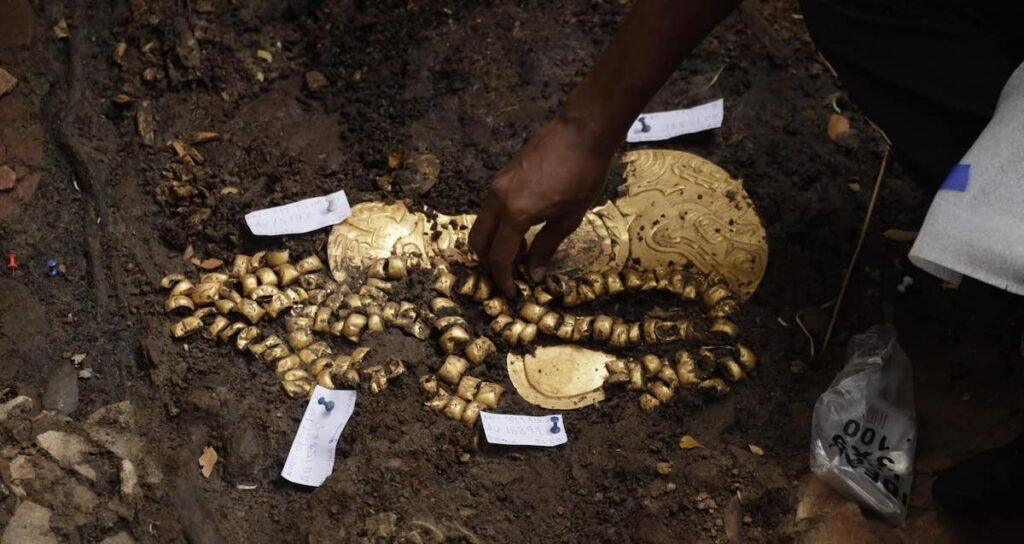
When archaeologists began uncovering gold ornaments arranged with striking precision, it became clear that this was no ordinary grave. The Elite Tomb with Gold Artifacts Discovered At El Caño in Panama tells a story far richer than gold alone. It speaks of leadership structures, ceremonial traditions, and beliefs about death and the afterlife. More importantly, it challenges outdated ideas that complex societies in the Americas were limited to a handful of famous civilizations. Panama, it turns out, had its own powerful leaders, skilled artisans, and deeply symbolic rituals long before European contact.
The Elite Tomb with Gold Artifacts Discovered At El Caño in Panama is now recognized as one of the most significant archaeological finds in Central America in recent decades. The tomb belonged to a high-ranking leader, most likely a chief of the Gran Coclé culture, and dates back to roughly 750 to 1000 CE. What sets this burial apart is the sheer quantity and quality of gold objects placed with the deceased. These artifacts were not scattered or casually deposited. They were carefully arranged around the body, suggesting a highly ritualized burial process. The presence of additional human remains within the same tomb further indicates strong social hierarchy and ceremonial practices tied to leadership and power. Together, these details provide rare insight into a society that valued symbolism, authority, and continuity beyond death.
Table of Contents
Elite Tomb with Gold Artifacts Discovered
| Key Detail | Information |
|---|---|
| Location | El Caño Archaeological Park, Coclé Province, Panama |
| Cultural Tradition | Gran Coclé culture |
| Estimated Date | Approximately 750 to 1000 CE |
| Type Of Burial | Elite ceremonial tomb |
| Main Artifacts | Gold breastplates, belts, bracelets, earrings, pendants |
| Additional Burials | Multiple individuals buried with the leader |
| Historical Importance | Evidence of political power and ritual hierarchy |
| Archaeological Value | Proof of advanced goldworking and social organization |
The Elite Tomb with Gold Artifacts Discovered At El Caño in Panama is far more than an impressive collection of ancient gold. It is a powerful window into a society that valued leadership, ceremony, and symbolism. The burial reveals how authority was expressed, honored, and preserved through ritual and craftsmanship. This discovery reminds us that history is broader and more diverse than traditional narratives often suggest. Long before European contact, Panama was home to complex societies with rich cultural traditions. As research continues, El Caño is likely to remain a key site for understanding the depth and sophistication of ancient Central American civilizations.
The Site Of El Caño
- El Caño is a ceremonial complex located in Panama’s Coclé province, an area long known to archaeologists for its stone monuments and burial grounds. Before the discovery of the Elite Tomb with Gold Artifacts Discovered At El Caño in Panama, the site was already considered important, but it’s true significance was not fully understood.
- The area features upright stone pillars arranged in circular formations. These structures were likely used for ceremonies, public gatherings, or ritual events. When an elite burial was found beneath such a setting, it confirmed that El Caño was not just a ceremonial space but also a political and religious center. Leaders buried here were likely figures of authority whose influence extended across surrounding communities.
Description Of The Tomb
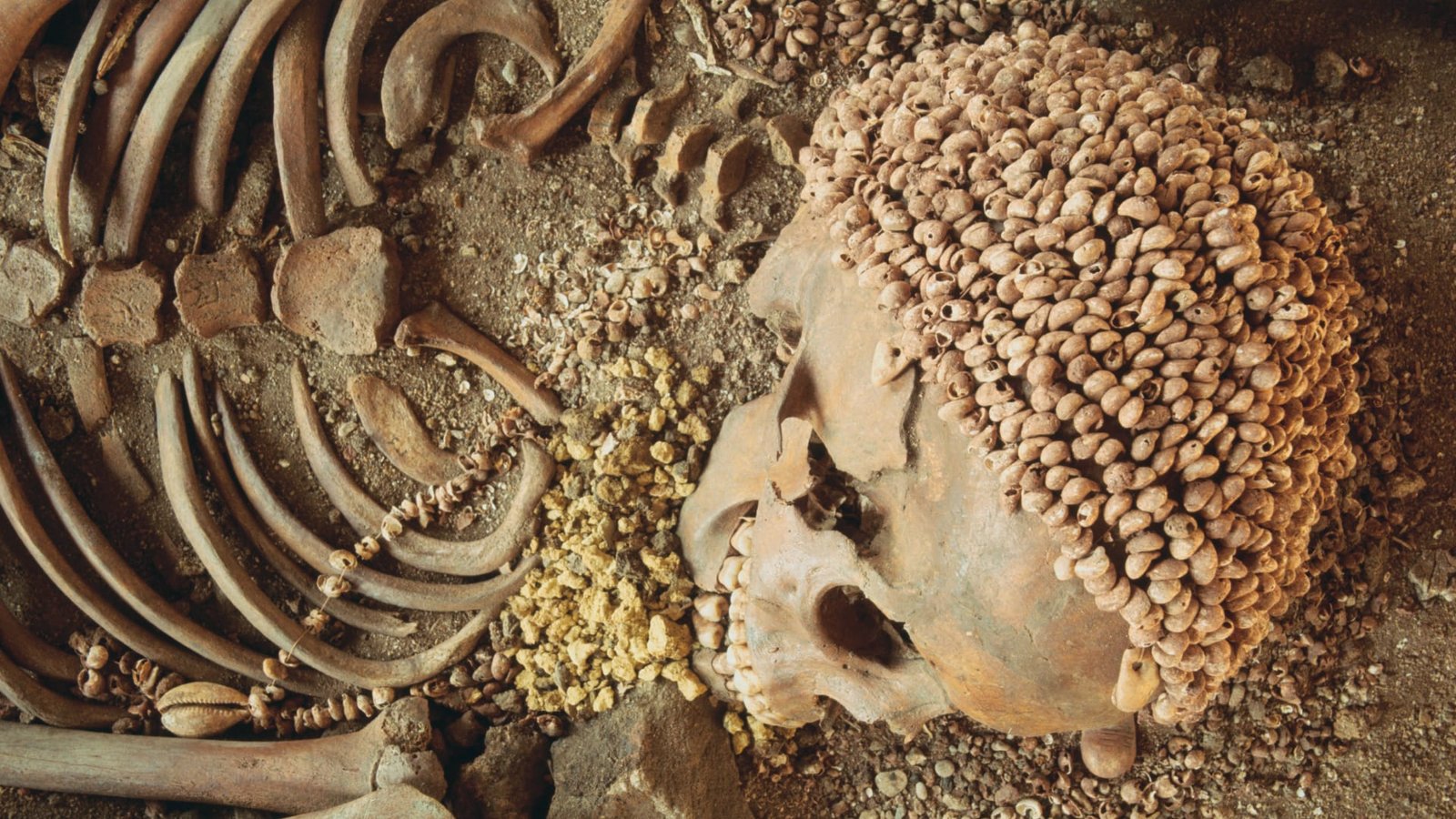
- The tomb itself was carefully constructed and deliberately arranged. The main burial contained the remains of an adult male, believed to be a powerful chief. His body was placed in a specific orientation, suggesting ritual meaning rather than convenience.
- Gold plates covered the chest, while jewelry adorned the arms, legs, and head. The layout was symmetrical and intentional, reinforcing the idea that burial was a ceremonial act designed to honor status and identity. One of the most striking elements of the Elite Tomb with Gold Artifacts Discovered At El Caño In Panama is the presence of other individuals buried alongside the leader.
- These accompanying burials were not accidental. Archaeologists believe they may have been attendants, companions, or ritual sacrifices meant to serve the chief in the afterlife. This practice strongly indicates social stratification and beliefs centered on leadership continuity beyond death.
The Gold Artifacts
- The gold artifacts found in the Elite Tomb with Gold Artifacts Discovered At El Caño in Panama are remarkable not only for their quantity but also for their craftsmanship. Items recovered include large breastplates, intricately linked belts, bracelets, anklets, earrings, and animal-shaped pendants.
- The designs often depict birds, crocodiles, and other animals, which likely held spiritual or symbolic meaning. In many ancient cultures, such animals represented power, transformation, or a connection between worlds. Gold, in this context, was not currency. It was a sacred material associated with authority, ritual, and divine favor.
- The level of skill involved in shaping thin gold sheets and detailed ornaments suggests the existence of specialized artisans. These craftsmen likely worked under elite patronage, producing ceremonial regalia rather than everyday objects.
Who Was Buried There
Based on the burial’s richness and location, researchers believe the individual in the Elite Tomb With Gold Artifacts Discovered At El Caño in Panama was a regional ruler. He likely controlled land, resources, and trade routes, and held both political and spiritual authority. The way the gold ornaments were placed on the body suggests they mirrored ceremonial clothing worn during life. This implies that the burial was designed to present the individual as a leader even in death. The presence of multiple accompanying individuals reinforces the idea of a hierarchical society where elite figures were served and honored far beyond their lifetime.
Dating And Cultural Context
Radiocarbon analysis and artifact study place the Elite Tomb with Gold Artifacts Discovered At El Caño In Panama between the 8th and 10th centuries CE. This period aligns with the Gran Coclé culture, known for its pottery, trade networks, and ceremonial centers. This discovery is important because it challenges earlier assumptions that societies in Panama were small or loosely organized. Instead, the tomb reveals a structured community with centralized leadership and established ritual traditions. It also shows that complex societies developed independently across Central America, not only within famous empires.
Excavation Methods
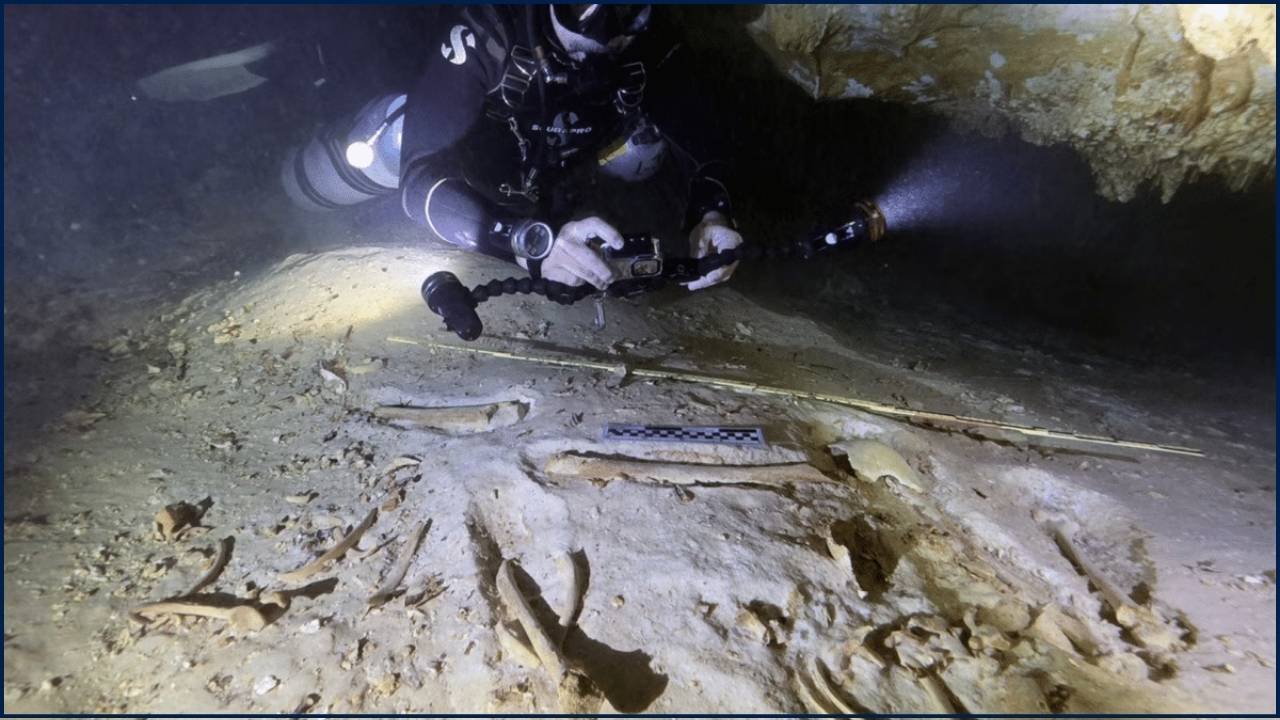
- Excavating the Elite Tomb with Gold Artifacts Discovered At El Caño in Panama required patience and precision. Archaeologists removed soil slowly, documenting each layer and the exact position of every object. This careful process allowed researchers to reconstruct the burial sequence and understand how the tomb was assembled.
- Gold artifacts, though durable, can be fragile after centuries underground. Conservation specialists cleaned each piece using controlled techniques to prevent damage. Some objects were fused together by mineral deposits and had to be separated in laboratory conditions.
- Human remains are also being studied to determine age, health, diet, and possible causes of death. These analyses may provide clues about whether accompanying individuals were sacrificed or died naturally.
Significance For Panamanian History
- The Elite Tomb with Gold Artifacts Discovered At El Caño in Panama has reshaped how historians view Panama’s pre-Columbian past. It demonstrates that societies here were not isolated or simple. They were organized, hierarchical, and culturally rich.
- This discovery highlights political leadership, religious authority, skilled craftsmanship, and long-distance trade. It strengthens Panama’s cultural heritage by showing that its history extends far beyond colonial narratives. For modern audiences, it offers a deeper appreciation of indigenous achievements and social complexity.
Preservation And Future Research
- Archaeologists believe the tomb may be part of a larger burial complex. The Elite Tomb with Gold Artifacts Discovered At El Caño in Panama could represent only one of several elite graves still hidden beneath the site.
- Future research will focus on DNA testing, isotopic analysis, and mapping additional structures within the ceremonial area. Many of the artifacts will eventually be displayed in museums once conservation work is complete. Ongoing studies are expected to reveal even more about leadership, trade, and ritual practices in ancient Panama.
FAQs About Elite Tomb with Gold Artifacts Discovered
What Makes The El Caño Tomb Unique
The tomb contains an unusually large number of gold artifacts arranged in a ceremonial pattern, indicating elite status and complex burial rituals.
Why Were Other Individuals Buried with The Chief
They were likely attendants or ritual companions meant to accompany the leader into the afterlife.
Was Gold Used as Money in This Culture
No, gold symbolized power, spiritual authority, and leadership rather than economic exchange.
What Culture Built The El Caño Tomb
The burial is associated with the Gran Coclé culture of pre-Columbian Panama.