

Millions of Americans who expected relief from student debt are now confronting a new financial burden: taxes. Beginning in 2026, Borrowers Face Tax Bills after a temporary federal tax exemption expired, turning many forgiven student loans into taxable income and raising concern among financial planners, economists, and consumer advocates across the United States.
Table of Contents
Tax Bills on Forgiven Student Loans
| Key Fact | Detail |
|---|---|
| Tax rule expired | Federal tax-free treatment ended after Dec. 31, 2025 |
| Most affected | Income-Driven Repayment forgiveness borrowers |
| Exception | Public Service Loan Forgiveness remains tax-free |
For now, relief from student debt does not always mean relief from financial obligations. As Borrowers Face Tax Bills in 2026, financial planning and legislative debate are likely to intensify, leaving borrowers, policymakers, and lenders watching closely for future changes to the nation’s student loan system.
Why Forgiveness Can Become Taxable Income
For decades, U.S. tax law has treated canceled debt as income. The Internal Revenue Service (IRS) considers forgiven loans a financial benefit because a borrower is released from repayment.
From 2021 through 2025, Congress temporarily suspended that rule under pandemic-era relief legislation. The American Rescue Plan Act shielded most forgiven federal student loans from taxation. According to the U.S. Department of the Treasury, that protection expired at the beginning of 2026.
Borrowers who receive forgiveness now often receive an IRS 1099-C form, which reports canceled debt as taxable earnings.
“Under standard tax principles, cancellation of indebtedness is income,” said higher-education finance expert Mark Kantrowitz. “The surprise comes from timing. Borrowers anticipate relief but not the tax event attached to it.”
The issue is widely referred to by advisers as a student loan forgiveness tax liability.
How Large the Tax Liability Could Be
The tax depends on both income and the size of forgiveness.
For example:
- Annual salary: $60,000
- Forgiven loan: $80,000
- Taxable income reported: $140,000
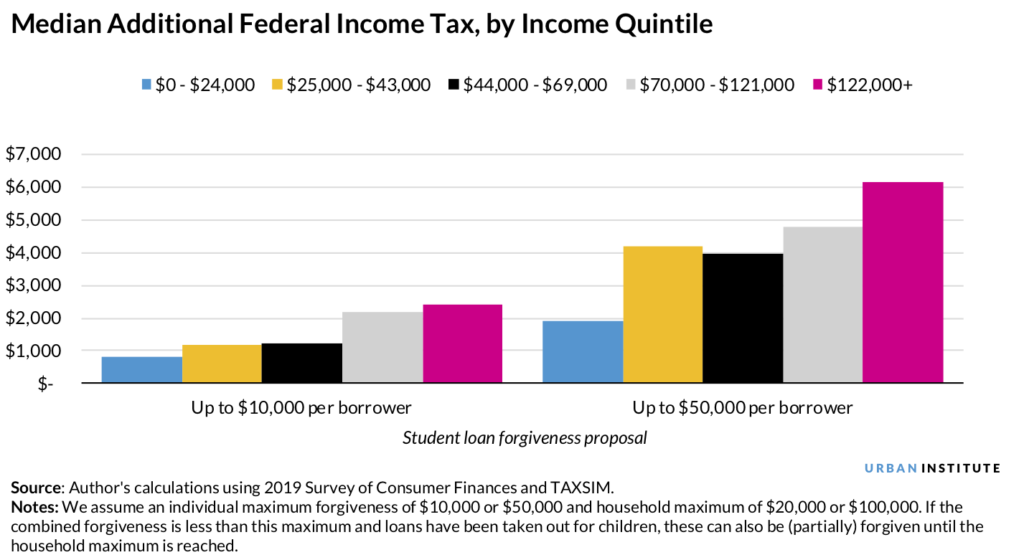
That single event may push borrowers into a higher tax bracket.
Financial planners call this a “tax bomb” year because the entire forgiven balance counts as income at once rather than spread over years.
According to modeling by the Urban Institute, borrowers on long-term repayment plans may see especially large forgiven balances because unpaid interest accumulates over decades.
Who Is Affected — and Who Is Not
Taxable forgiveness programs
Borrowers most affected are those in Income-Driven Repayment (IDR) plans. These programs adjust monthly payments to earnings and forgive remaining balances after 20 to 25 years.
Many borrowers enrolled in IDR owe more than their original loan due to accumulated interest.
Tax-free programs
The Public Service Loan Forgiveness (PSLF) program remains tax-exempt. Teachers, public defenders, nonprofit workers, and military personnel who qualify will not owe federal taxes on forgiven balances.
“The statute specifically exempts PSLF from federal taxation,” a U.S. Department of Education policy official confirmed in a guidance briefing.
Discharges related to death or total permanent disability also remain tax-free.
Real-World Example: A Borrower’s Situation
Consider a hypothetical borrower, Maria Lopez, a social services administrator earning $52,000 annually with $95,000 in remaining student debt.
If she qualifies for PSLF after ten years of nonprofit work, she owes no tax.
If she instead receives forgiveness through IDR after 25 years, she could receive a 1099-C reporting $95,000 income. Depending on deductions and filing status, her federal tax bill could exceed $12,000 in a single year.
Financial counselors say this scenario is common.
Financial Planning and Policy Debate
Consumer advocates warn many borrowers are unaware of the upcoming tax exposure.
Persis Yu of the Student Borrower Protection Center said borrowers have focused on monthly payment relief, not tax consequences.
“The relief exists on paper, but without preparation it can create financial stress,” she said.
Some lawmakers propose making tax-free treatment permanent. Others argue forgiveness without taxation effectively transfers costs to taxpayers who did not attend college.
Economists say the debate reflects broader questions about higher education financing.
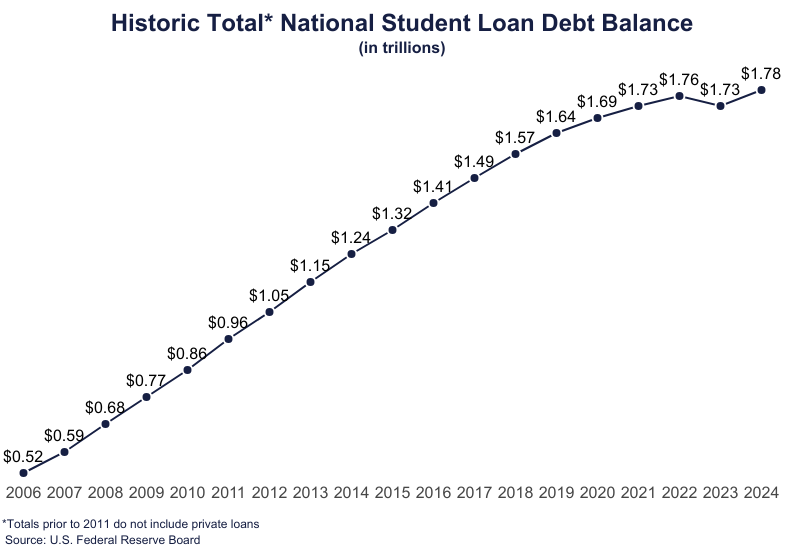
According to the Federal Reserve, Americans collectively hold more than $1.6 trillion in student loan debt.
Policy Timeline: How the Rule Changed
Understanding the timeline helps explain why borrowers are surprised.
2007: Public Service Loan Forgiveness created
2010: Income-driven repayment expanded
2020: Pandemic payment pause begins
2021–2025: Forgiveness made tax-free temporarily
2026: Tax treatment resumes
Many borrowers entered repayment expecting the pandemic-era rule to remain.
Possible Ways Borrowers Can Reduce the Tax
Tax professionals recommend preparation years in advance.
Insolvency exclusion
If debts exceed assets when forgiveness occurs, borrowers may exclude some debt from taxable income under IRS insolvency provisions.
Timing income
Lower earnings in the forgiveness year may reduce tax liability.
Withholding adjustments
Increasing payroll tax withholding before forgiveness helps spread the cost over time.
Dedicated savings
Advisers often recommend creating a “tax reserve fund” during repayment.
Broader Economic Context
Researchers say the tax issue may influence career choices. Some borrowers may move into government or nonprofit roles to access tax-free PSLF.
Higher-education economist Dr. Sandy Baum said repayment behavior could shift.
“Taxes influence decision-making. Borrowers may change jobs or repayment strategy based on tax exposure rather than income,” she explained.
There is also concern about retirement planning. Many IDR borrowers reach forgiveness age in their late 40s or 50s, a period when savings are critical.
International Comparison
The United States is unusual in taxing loan forgiveness.
In the United Kingdom, student loans function more like a payroll contribution, and remaining balances are automatically canceled after a fixed period without tax consequences.
Australia’s income-contingent repayment system similarly avoids taxation on forgiven balances.
Policy analysts say these systems treat education debt more like a public investment than a private liability.
State Taxes and Additional Costs
Federal taxes are only part of the issue. Some states treat forgiven debt as taxable even if federal policy changes.
Tax professionals warn borrowers must consider both jurisdictions when planning student debt relief 2026 strategies.
Additionally, forgiven debt can affect:
- eligibility for tax credits
- Medicare premium calculations
- financial aid for dependents
FAQs About Tax Bills on Forgiven Student Loans
Will every borrower owe taxes after forgiveness?
No. PSLF and disability discharges remain tax-free.
What document reports forgiveness?
The IRS 1099-C form.
Can I avoid taxes legally?
Possibly, through insolvency rules or timing strategies.
Could the law change again?
Yes. Congress may revise the student loan forgiveness tax treatment.