
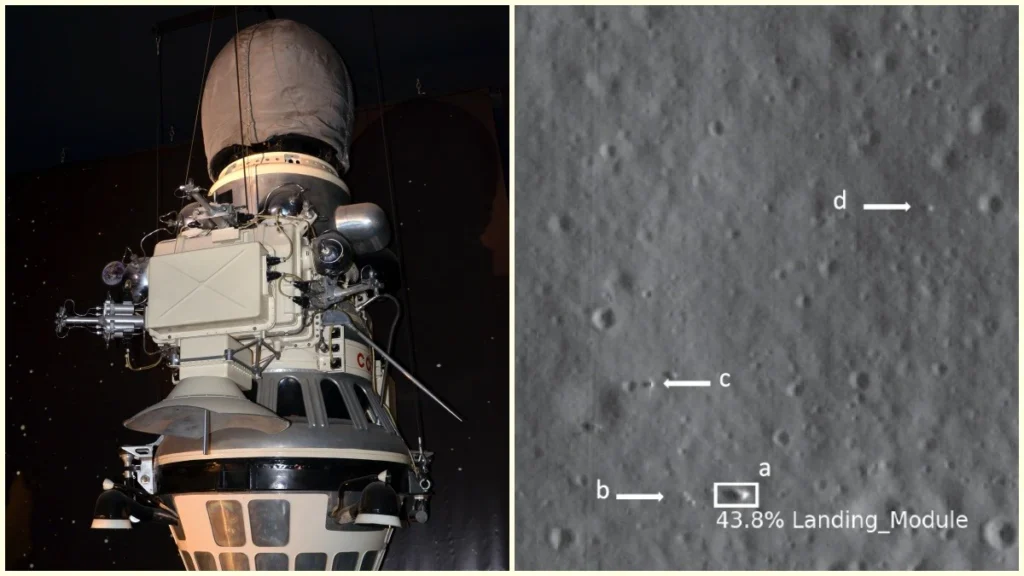
Scientists say the Luna 9 Mission has likely been pinpointed on the Moon after researchers used artificial intelligence to analyze satellite imagery. The spacecraft, launched by the Soviet Union in 1966, made humanity’s first successful soft landing beyond Earth, but its precise resting place remained uncertain for nearly six decades. The finding connects modern computing power with one of the earliest achievements of space exploration.
Table of Contents
Exact Spot of the Luna 9 Mission
| Key Fact | Detail |
|---|---|
| First soft landing | Occurred Feb. 3, 1966 in Oceanus Procellarum |
| Method used | Machine-learning analysis of NASA orbital images |
| Significance | First surface photographs from another world |
| Modern importance | Helps preserve lunar heritage sites |
The rediscovery of the Luna 9 Mission underscores how modern analysis continues to reshape understanding of early space exploration. As new missions prepare to land on the Moon in the coming decade, scientists say documenting and preserving humanity’s earliest extraterrestrial achievements may become an essential part of space policy.
What Researchers Found About the Luna 9 Mission
A team of planetary scientists examined high-resolution images from NASA’s Lunar Reconnaissance Orbiter (LRO), which has mapped the Moon since 2009. Using pattern-recognition software, the researchers searched for small objects consistent with the probe’s separated components.
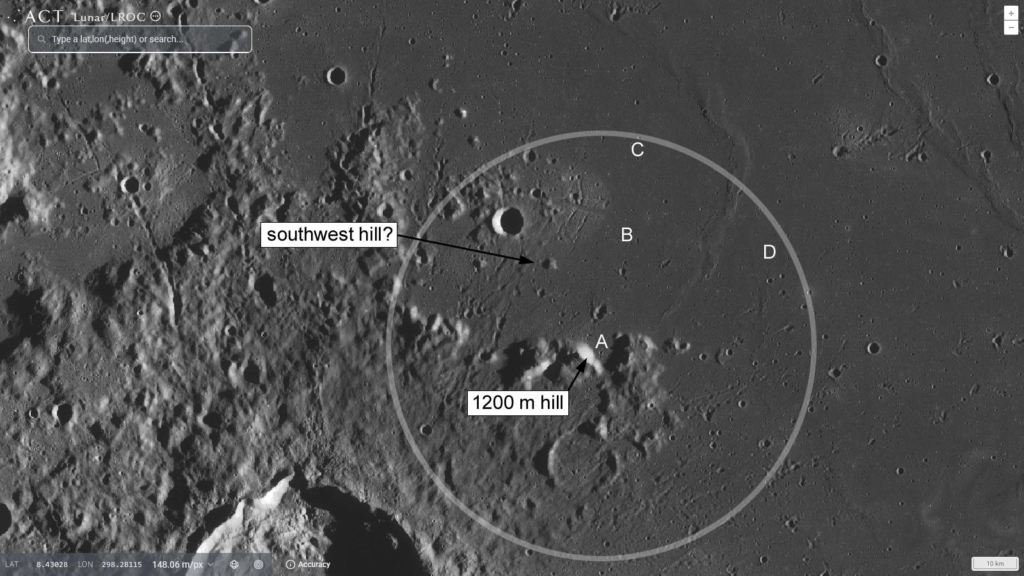
They identified a cluster of unusual shapes and shadows within a few kilometers of the coordinates historically reported by Soviet engineers. The objects appear consistent with the lander capsule, protective shell, and antenna equipment.
“The algorithm detected features that match the expected size and distribution of the lander and its deployed equipment,” the study’s authors wrote in a peer-reviewed paper in npj Space Exploration.
Why the Location Was Uncertain
The Soviet Union released only approximate coordinates in 1966. Navigation relied on radio tracking from Earth, and lunar mapping was incomplete.
At the time, even large craters had imprecise measurements. Scientists knew the probe landed in Oceanus Procellarum, a vast volcanic plain, but could not narrow the site further.
A Turning Point in Space Exploration
The Luna 9 Mission marked a decisive moment in the Cold War space race between the Soviet Union and the United States. Earlier missions, including several Soviet attempts and NASA’s Ranger probes, had impacted the Moon at high speed.
Luna 9 demonstrated controlled landing.
The probe transmitted panoramic images to Earth over several days. Those images showed a rocky but stable surface. Before this, many scientists feared the Moon was covered in deep powdery dust that could swallow spacecraft.
NASA historians later noted the photographs influenced planning for crewed missions. Engineers designing the Apollo lander gained confidence astronauts could stand safely on the lunar surface.
The Technology Behind the 1966 Lander
The spacecraft itself was small, weighing about 100 kilograms (220 pounds). Yet it used innovative engineering.
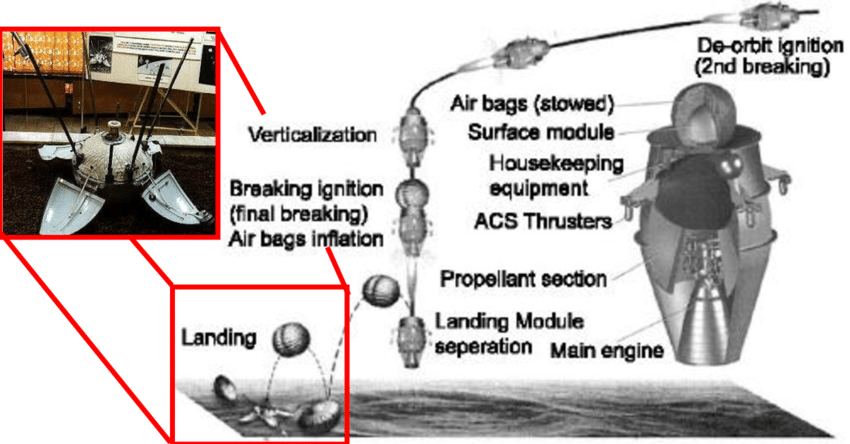
The lander was enclosed in a protective sphere equipped with airbags. After rocket braking slowed the descent, the craft fell onto the surface and bounced several times before settling upright. Panels opened like petals to expose antennas and cameras.
The images were transmitted using a radio signal received by ground stations in the Soviet Union and later detected by observatories in Western Europe.
British radio astronomers at the Jodrell Bank Observatory reportedly intercepted the signals and reconstructed the photographs before official Soviet publication. This episode became a famous moment of scientific competition during the Cold War.
How Artificial Intelligence Solved a Space-Age Mystery
Researchers trained a system specializing in artificial intelligence in space image recognition to analyze lunar terrain. They compared known Apollo landing sites — where discarded equipment is visible — with unexplored regions.
The software searched for:
- circular bounce marks created by the landing system
- small reflective metallic components
- unusual shadow patterns indicating artificial objects
Because the capsule bounced multiple times, scientists expected scattered hardware rather than a single object. The AI model examined thousands of images faster than a human analyst could.
The technique is similar to how Earth-observing satellites identify ships at sea or vehicles in disaster zones. In this case, the challenge was greater: objects were only a few meters wide on a body 384,000 kilometers away.
Why It Matters Today
Experts say the discovery has implications beyond history.
Dr. James Head, a planetary geologist at Brown University, said identifying old spacecraft is important for lunar exploration planning. Future robotic and human missions must avoid damaging historic sites.
“Early landing sites are the equivalent of archaeological monuments,” he said in a university commentary.
Scientists increasingly call this field space archaeology — the study of human artifacts beyond Earth. Researchers have already cataloged Apollo footprints, rover tracks, and discarded equipment.
Preservation discussions are expanding. Space law specialists argue that while no nation owns the Moon, historic locations should be protected similarly to UNESCO heritage sites on Earth.
A Broader Scientific Benefit
The study also shows how AI can assist planetary science in practical ways.
Future landers may use onboard computer vision to:
- identify hazards such as boulders
- find scientifically valuable rocks
- choose landing areas autonomously
NASA and private companies are developing such systems for upcoming missions. Autonomous landing is considered essential for missions to Mars, asteroids, and icy moons where communication delays make manual control difficult.
International Context
Interest in the Moon is increasing rapidly.
The United States plans crewed landings under NASA’s Artemis program. China is building a long-term lunar research station concept. India’s Chandrayaan-3 successfully landed in 2023, demonstrating precision descent technology.
Mapping historic landing sites supports international discussions about heritage protection. The United Nations Office for Outer Space Affairs has begun examining how to safeguard human artifacts in space.
Space policy experts say future agreements may designate protected zones around early landing locations, including the Luna 9 Mission.
What Comes Next
Researchers caution the identification remains a strong candidate rather than final proof. Higher-resolution images from future orbiters or nearby robotic missions could confirm the objects.
Some scientists have proposed a dedicated heritage survey mission to photograph early spacecraft sites. Such a mission would document humanity’s earliest steps beyond Earth.
If verified, the finding would close one of the longest-standing mysteries of early spaceflight.
“We are combining 21st-century technology with 20th-century exploration,” the study authors wrote. “Modern data allows us to rediscover the first milestones of humanity’s presence beyond Earth.”
FAQs About Exact Spot of the Luna 9 Mission
What was the Luna 9 Mission?
A 1966 Soviet spacecraft that achieved the first controlled landing on the Moon and sent back the first surface photographs.
Why couldn’t scientists find it earlier?
Navigation systems lacked precise mapping and early lunar charts were incomplete.
How did AI help?
Algorithms analyzed high-resolution orbital images to detect shapes and shadows matching spacecraft components.
Why is it important today?
It helps protect historic landing sites and improves planning for future missions.
Could astronauts visit the site?
Future missions might photograph it more closely, but preservation rules could restrict direct exploration.