
Dogs Listen Closely to Owners to Pick Up New Words: Study Shows Dogs Listen Closely to Owners to Pick Up New Words is more than a feel-good headline making the rounds online. It’s a peer-reviewed scientific finding that challenges how we understand canine intelligence and communication. Researchers have demonstrated that certain dogs can learn the names of new objects simply by overhearing conversations between humans — even when no one is speaking directly to them.
Now let’s slow down and talk straight, the way we would around a kitchen table. For generations across Native communities and throughout rural America, folks have said, “Dogs are always listening.” Turns out, science is backing that up. This study shows that some dogs aren’t just reacting to tone or hand signals — they are forming mental links between words and objects in ways that look surprisingly similar to human toddlers. Before we go calling every family dog a four-legged genius, it’s important to understand what the research actually found and what it didn’t.
Table of Contents
Dogs Listen Closely to Owners to Pick Up New Words
The headline Study Shows Dogs Listen Closely to Owners to Pick Up New Words reflects a meaningful advancement in canine cognition research. While only a rare group of Gifted Word Learner dogs demonstrated the ability to learn object names through overhearing, the implications reach far beyond a laboratory setting. From service dog training to everyday family life, this research reminds us that dogs are attentive, socially tuned companions whose cognitive abilities deserve both respect and careful study. Communication matters. Consistency matters. And sometimes, your dog might understand more than you think.
| Category | Details |
|---|---|
| Study Topic | Dogs learning new object names by overhearing human speech |
| Lead Institution | Eötvös Loránd University |
| Journal | Scientific Reports (Nature Portfolio) |
| Dog Type Studied | “Gifted Word Learner” dogs |
| Key Comparison | Similar to 18-month-old toddlers’ word learning |
| U.S. Pet Context | 65+ million U.S. households own dogs (APPA) |
| Official Reference | Nature Portfolio |
What the Research Actually Found?
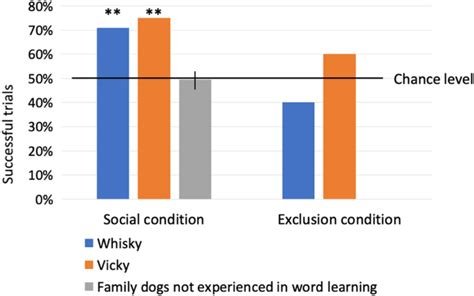
The study was conducted by scientists at Eötvös Loránd University in Hungary, a research group that has spent years studying canine cognition. Their focus was on a small group of dogs already identified as having exceptional vocabulary skills — referred to as Gifted Word Learner (GWL) dogs.
These weren’t average pets who just knew “sit” and “stay.” These dogs already recognized dozens of toy names. Some could correctly identify over 100 objects by name.
The researchers designed two test conditions:
Direct Teaching Condition
In this setup, the owner introduced a new toy to the dog and clearly named it while directly engaging with the animal.
Overhearing Condition
In this scenario, the dog watched two humans talk to each other about a new toy. The dog was present but not addressed directly.
Later, the dog was asked to retrieve the toy by name.
Here’s the important part: The gifted dogs performed nearly as well in the overhearing condition as they did in direct teaching.
That means they learned a new word-object association simply by listening to humans talk.
The findings were published in Scientific Reports, part of the respected Nature Portfolio of scientific journals.
Why Dogs Listen Closely to Owners to Pick Up New Words Matters for Dog Owners in the United States?
According to the American Pet Products Association (APPA), over 65 million U.S. households own at least one dog. Americans spend more than $140 billion annually on pet care, food, and services. That tells you something — dogs are family here.
If dogs are capable of this level of listening and learning, it affects:
- Training practices
- Service dog development
- Law enforcement K-9 programs
- Therapy dog certification
- Everyday pet ownership
Organizations like the American Kennel Club (AKC) emphasize that consistent communication is key in dog training. This new research adds depth to that advice. It suggests that even casual conversation around dogs may shape their understanding.
That should make us pause and think about how we speak around our animals.
Understanding Canine Language Processing
To understand what makes this discovery so meaningful, we need to break down how dogs typically learn.
Most dogs rely heavily on:
- Repetition
- Tone of voice
- Body language
- Context cues
When you say “ball” while holding a ball, your dog builds an association. That’s called associative learning.
But what the study suggests is that gifted dogs may engage in something closer to fast mapping, a term used in child psychology. Fast mapping refers to the ability to form a quick initial association between a word and its meaning after limited exposure.
The National Institute on Deafness and Other Communication Disorders (NIDCD) explains that toddlers often learn words by overhearing conversations between adults. That’s considered a milestone in language development.
Seeing similar patterns in dogs suggests that some aspects of social learning may not be uniquely human.
How Rare Are Gifted Word Learner Dogs?
Here’s where we need to stay grounded.
Gifted Word Learner dogs are rare.
Most dogs do not demonstrate this ability to learn object names by overhearing. The study focused on a very small number of dogs already identified for exceptional vocabulary performance.
Many of these dogs were breeds known for high cognitive engagement, such as:
- Border Collies
- Golden Retrievers
- Poodles
But researchers are careful not to say that breed alone determines this ability. Environment, early training exposure, and individual personality all play roles.
The American Veterinary Medical Association (AVMA) notes that intelligence in dogs appears in different forms — problem solving, scent tracking, obedience, and social awareness. Vocabulary is just one dimension.
Practical Applications for Dog Trainers and Professionals
If you’re a professional trainer, this study may encourage you to rethink how you structure exposure to language in early training programs.
For example:
Service Dog Training
Organizations such as Assistance Dogs International maintain high standards for communication and task performance. If dogs are learning from overheard speech, structured conversational exposure could enhance task vocabulary development.
Therapy Dog Programs
Therapy dogs working in hospitals or schools are constantly surrounded by human speech. Understanding how dogs process overheard words may improve environmental conditioning.
Police and Military K-9 Units
Precise command language is critical. Knowing that dogs may be picking up unintended cues could refine handler communication protocols.
This research doesn’t rewrite training manuals overnight, but it opens doors.
What Dogs Listen Closely to Owners to Pick Up New Words Means for Everyday Dog Owners?
Let’s bring this back home.
If you’re a parent with kids and a family dog, here’s what this might mean:
Your dog may be absorbing more language than you realize.
That doesn’t mean you need to whisper secrets. But it does mean consistency matters.
Here’s a simple, actionable guide:
Use consistent object names.
If you call it “rope toy” one day and “tug” the next, your dog may struggle with clarity.
Limit clutter during learning.
Introduce new toy names when distractions are low.
Reinforce gently.
When your dog retrieves the correct object, reward calmly but clearly.
Observe patterns.
Some dogs may surprise you.
Even if your dog isn’t gifted, strengthening communication builds trust and engagement.
Broader Implications in Animal Cognition Research
This study contributes to a larger field called comparative cognition, which compares mental processes across species.
The National Science Foundation (NSF) funds research into animal cognition to better understand evolution, neuroscience, and behavior.
The idea that certain social learning abilities predate human language is significant. It suggests that cognitive building blocks for language may exist in other species.
From an Indigenous worldview, this isn’t shocking. Many Native traditions have long recognized animals as intelligent relatives capable of deep perception.
Science is now documenting what traditional knowledge has long respected — animals are aware, observant, and responsive in ways we are still uncovering.
Dogs Listen Closely to Owners to Pick Up New Words: Clearing Up Misconceptions
It’s important not to oversell this research.
Dogs are not understanding grammar.
They are not interpreting abstract conversations.
They are not forming complex symbolic language systems.
What they may be doing — in rare cases — is linking a sound (word) with an object after limited exposure.
That’s impressive.
But it’s not the same as human language.
Precision matters when discussing cognitive research.
Researchers Work to Restore the American Chestnut Tree
Atlantis Debate Returns as Researchers Compare Evidence and Myth
Researchers Document an Unusual Starfish Species Found in the Atlantic
Ethical Considerations and Responsible Interpretation
With any cognitive research, there’s a temptation to anthropomorphize — to project human traits onto animals.
Responsible interpretation means:
- Avoiding exaggerated claims
- Respecting species differences
- Using research to improve welfare
The Humane Society of the United States emphasizes humane, evidence-based training approaches. Positive reinforcement remains the gold standard.
This research reinforces something trainers already know: communication is a two-way street.
The Bigger Picture
When we say dogs listen closely to owners to pick up new words, we’re recognizing that communication is more nuanced than simple command-and-response.
For professionals, this study encourages:
- Structured language exposure
- Careful command consistency
- Further research into canine cognition
For everyday families, it encourages:
- Patience
- Respect
- Mindful communication
At the end of the day, whether you’re running a professional K-9 program in Texas or tossing a rope toy in your backyard in Montana, one thing’s clear:
Your dog is paying attention.