
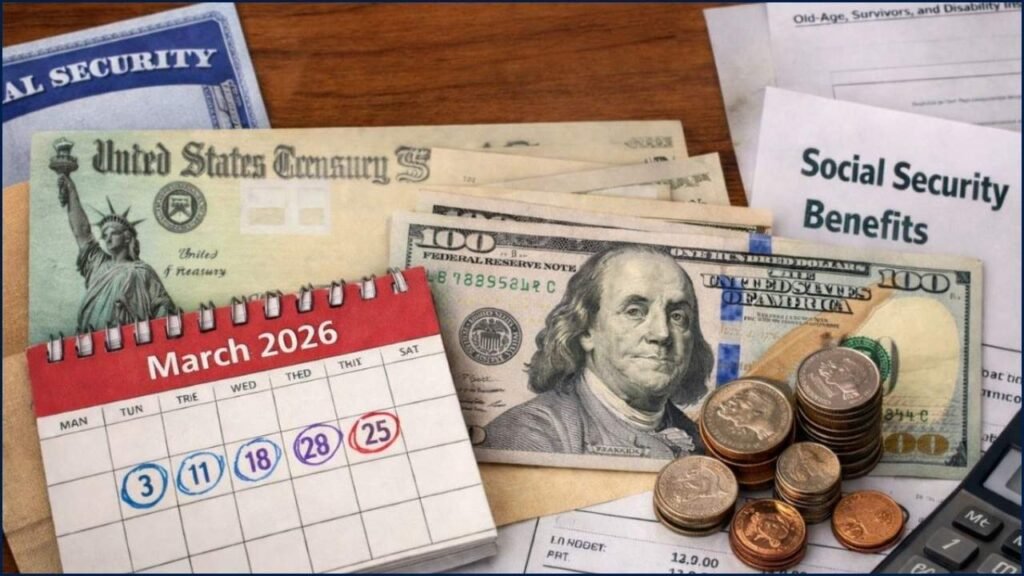
March Social Security Payments will follow the standard distribution calendar set by the U.S. Social Security Administration (SSA), with retirement, disability, and survivor benefits arriving on staggered Wednesdays and Supplemental Security Income (SSI) issued early because the first of the month falls on a weekend. The schedule affects nearly 72 million Americans who rely on Social Security benefits for core living expenses, according to the SSA’s most recent annual statistical report.
The March timeline does not reflect a policy change. Instead, it follows long-standing administrative rules designed to ensure predictable benefit distribution. Even so, experts say understanding the exact payment schedule is critical for retirees, disabled workers, and low-income households managing fixed monthly budgets.
Table of Contents
March Social Security Payments
| Key Fact | Detail |
|---|---|
| SSI Payment for March | Issued early on last business day of February due to weekend |
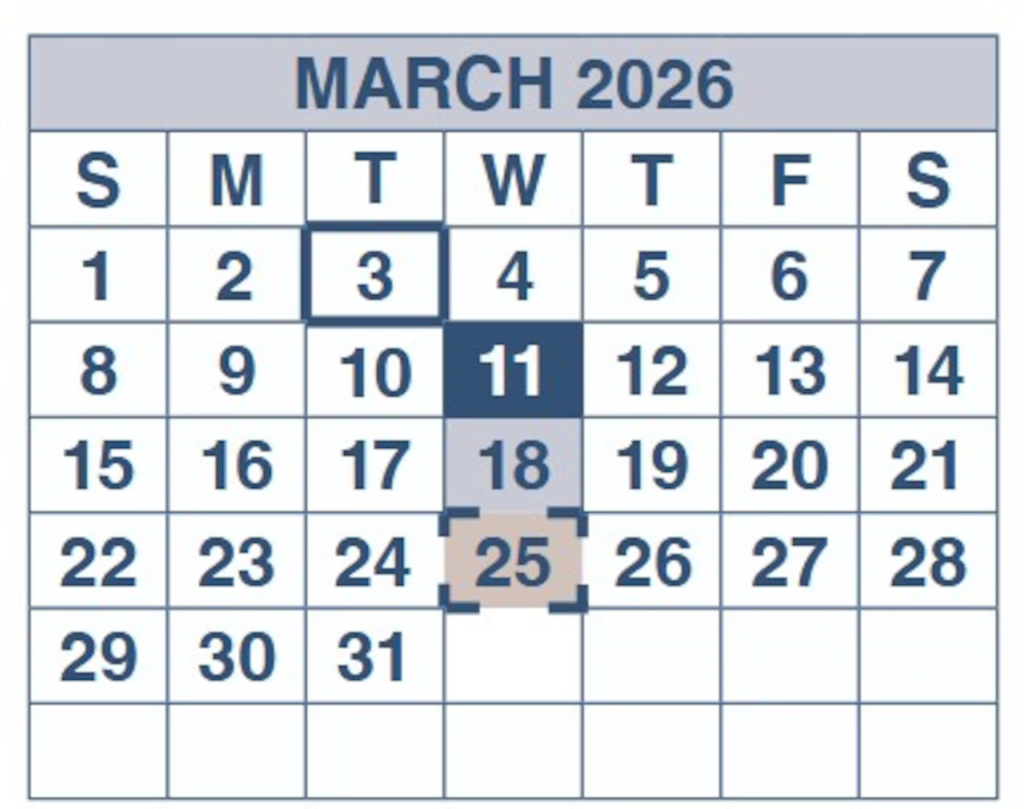
| Pre-May 1997 Beneficiaries | Paid March 3 |
| Birthdays 1–10 | Paid Second Wednesday of March |
| Birthdays 11–20 | Paid Third Wednesday of March |
| Birthdays 21–31 | Paid Fourth Wednesday of March |
| Total Beneficiaries Nationwide | ~72 million |
March Social Security Payments: Who Gets Paid and When
The structure of March Social Security Payments follows a staggered system implemented in 1997 to spread administrative workload more evenly throughout the month.
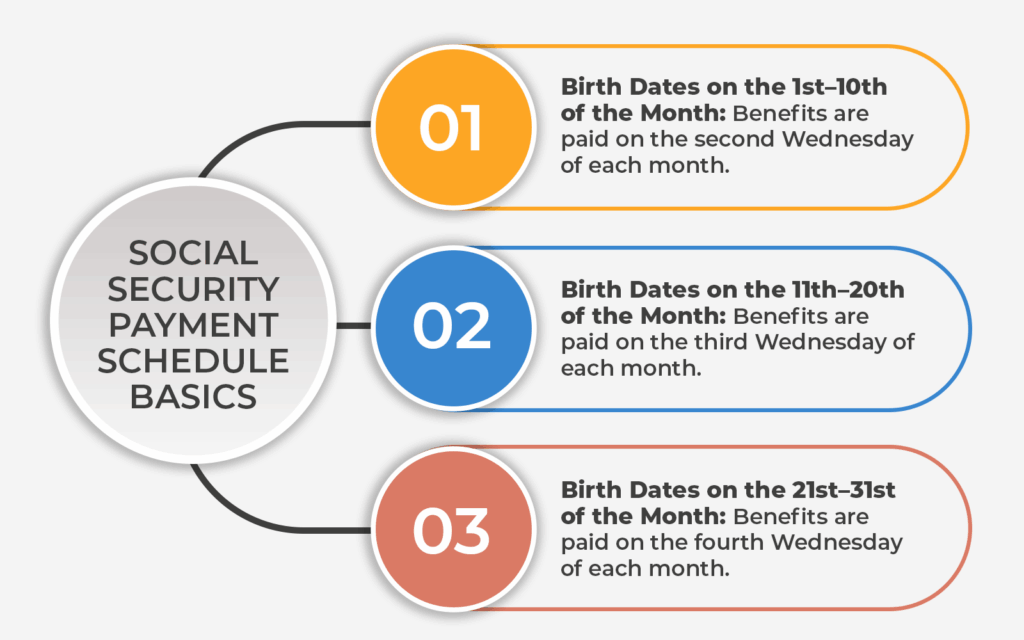
If a person began receiving retirement, Social Security Disability Insurance (SSDI), or survivor benefits after May 1997, their payment date is determined by their birth date.
Payment Dates by Birth Range
- Birthdays 1st–10th: Paid on the second Wednesday of March
- Birthdays 11th–20th: Paid on the third Wednesday of March
- Birthdays 21st–31st: Paid on the fourth Wednesday of March
Recipients who started receiving benefits before May 1997 are paid on March 3, regardless of birth date. Individuals who receive both Social Security and SSI also follow this earlier fixed-date schedule.
According to the SSA, this staggered calendar reduces processing bottlenecks and helps ensure timely electronic deposits across millions of accounts each month.
Why SSI Payments Arrive Early in March
Supplemental Security Income (SSI) is designed to support older adults and individuals with disabilities who have limited income and resources. Unlike retirement benefits, SSI payments are generally scheduled for the first day of each month.
When that date falls on a weekend or federal holiday, the SSA sends the payment on the preceding business day. For March benefits, SSI recipients receive their payment in late February because March 1 falls on a weekend.
The SSA notes on its official website that early payments do not represent extra funds. Instead, they are simply shifted forward to prevent delays.
Financial counselors say this timing often creates confusion. Some beneficiaries may see two deposits within the same calendar month when a payment is issued early. However, one of those deposits covers the following month’s benefit.
How Much Are March Social Security Payments?
The amount beneficiaries receive in March depends on their earnings history, claiming age, and benefit type.
According to the SSA:
- The average retired worker benefit exceeds $1,900 per month.
- Disabled workers receive an average monthly benefit of roughly $1,500.
- The maximum monthly retirement benefit for someone retiring at full retirement age is significantly higher, depending on lifetime earnings.
These figures reflect annual cost-of-living adjustments (COLA), which are tied to inflation. The most recent COLA increased benefits modestly, following a period of elevated inflation in previous years.
Economists note that while COLA adjustments help preserve purchasing power, rising housing and healthcare costs continue to strain many retirees.
Dr. Kathleen Romig, director of Social Security and disability policy at the Center on Budget and Policy Priorities, has stated in public briefings that “Social Security provides a foundation of income security, but it was never designed to cover all retirement expenses.”
Direct Deposit, Processing Times, and Banking Delays
Nearly all federal benefit payments are delivered electronically through direct deposit or prepaid debit cards, as required by the U.S. Department of the Treasury.
While the SSA issues payments on scheduled dates, banks may post deposits at different times depending on internal processing systems. Some financial institutions make funds available early, while others release funds on the official payment date.
The SSA advises recipients to wait at least three mailing days before reporting a missing payment. Beneficiaries can check payment status through their online “my Social Security” account.
Financial planners recommend aligning major recurring bills with confirmed deposit dates rather than projected early availability. This approach can help reduce overdraft risks for households with limited cash reserves.
Social Security Benefits and Inflation Pressures
The purchasing power of Social Security benefits has become a growing concern in recent years. The annual COLA adjustment is calculated using the Consumer Price Index for Urban Wage Earners and Clerical Workers (CPI-W).
Some advocacy groups argue that this index does not fully reflect the spending patterns of older Americans, who often spend more on healthcare and prescription drugs.
Mary Johnson, an independent Social Security policy analyst, has previously written that inflation affects retirees differently than working-age households. Housing costs, Medicare premiums, and out-of-pocket medical expenses can reduce the effective impact of COLA increases.
Despite these concerns, March Social Security Payments reflect the latest COLA already enacted for the year and will not change month-to-month unless Congress passes new legislation.
The Broader Role of Social Security in the U.S. Economy
Social Security remains one of the most significant anti-poverty programs in the United States. According to research from the Urban Institute and the SSA:
- Social Security lifts millions of older Americans above the federal poverty line each year.
- Without benefits, poverty rates among seniors would be substantially higher.
The program also injects billions of dollars into local economies each month. Economists note that Social Security payments support consumer spending in rural communities and small towns, where retirees may represent a large share of residents.
Because March Social Security Payments are issued nationwide on predictable dates, they create a steady flow of consumer activity, particularly in sectors such as housing, utilities, food services, and healthcare.
Long-Term Funding Outlook and Congressional Debate
Although March Social Security Payments proceed as scheduled, policymakers continue to debate the program’s long-term solvency.
The Social Security Trustees Report projects that the retirement trust fund could face depletion in the mid-2030s if no legislative changes occur. At that point, incoming payroll taxes would cover roughly three-quarters of scheduled benefits.
Lawmakers have proposed several potential solutions, including:
- Increasing the payroll tax rate
- Raising or eliminating the taxable earnings cap
- Adjusting benefit formulas
- Modifying the full retirement age
These proposals remain politically sensitive. Any changes would require congressional approval and presidential signature.
For now, the SSA confirms that monthly payments, including March Social Security Payments, continue without interruption.
Looking Ahead
The SSA publishes a full annual calendar each year so beneficiaries can plan ahead. Future payments will continue to follow the established Wednesday rotation unless federal scheduling rules require minor adjustments.
For millions of retirees, disabled workers, and low-income households, March Social Security Payments represent more than a routine deposit. They are a cornerstone of financial stability in an economy facing rising costs and ongoing policy debates.
While Congress considers long-term reforms, the monthly payment structure remains intact. As federal officials have emphasized, beneficiaries will continue to receive their scheduled payments under current law.
FAQs About March Social Security Payments
Why did I receive two payments in one month?
This typically occurs when SSI is issued early due to a weekend or holiday. One payment covers the current month; the other covers the next.
Can payment dates change unexpectedly?
Payment dates follow a published annual calendar. Changes generally occur only if the scheduled date conflicts with a federal holiday or weekend.
How can I verify my payment amount?
Beneficiaries can log into their official SSA account to view payment history, benefit statements, and direct deposit details.
Are Social Security benefits taxable?
Some beneficiaries may owe federal income tax on a portion of their benefits, depending on total income. The Internal Revenue Service (IRS) provides guidelines on taxable thresholds.