
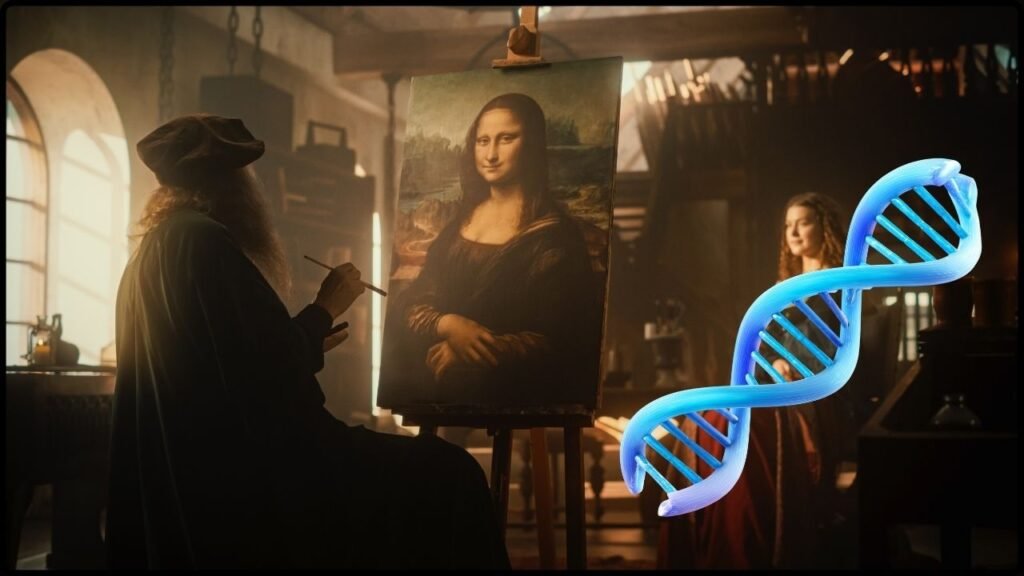
500-Year-Old Drawing to Trace Leonardo da Vinci’s DNA: In a groundbreaking blend of art, science, and forensic investigation, researchers analyzed a 500-year-old drawing to trace Leonardo da Vinci’s DNA, sparking what could become one of the most remarkable genetic quests in history. This isn’t science fiction — it’s real science digging into the past to potentially reshape our understanding of the Renaissance’s most legendary genius. This initiative, led by the Leonardo da Vinci DNA Project, combines forensic DNA extraction, historical genealogy, and cutting-edge sequencing to explore the biological fingerprints left behind on da Vinci-related artifacts. And yes, this includes ancient letters, disputed drawings, and even what may be a centuries-old lock of his hair.
Table of Contents
500-Year-Old Drawing to Trace Leonardo da Vinci’s DNA
The journey to trace Leonardo da Vinci’s DNA through a 500-year-old drawing is a historic endeavor that blends science, history, and art in a way we’ve never seen before. It’s a testament to human curiosity, innovation, and our deep desire to understand the minds that shaped our world. Whether or not the DNA is definitively Leonardo’s, the project is already breaking scientific ground — setting a new standard for how we explore history and honor genius.
| Topic | Details |
|---|---|
| Subject | DNA analysis of a 500-year-old artwork linked to Leonardo da Vinci |
| Lead Project | Leonardo da Vinci DNA Project |
| Primary Artifact | “Holy Child” — a red chalk drawing possibly by Leonardo |
| DNA Sources | Drawing, 15th-century family letters, and other heritage items |
| Key Findings | Y-chromosome DNA sequences matching da Vinci’s region (Tuscany) |
| Scientific Method | Arteomics – recovery of biological material from cultural objects |
| Challenges | No direct descendants; disturbed graves; contamination risk |
| Implications | Art authentication, cognitive trait exploration, forensic history |
| Official Resource | Leonardo da Vinci DNA Project |
The Origin of a 500-Year-Old Drawing to Trace Leonardo da Vinci’s DNA
The spark behind this ambitious endeavor was simple yet powerful: Could we ever find the DNA of Leonardo da Vinci? A man whose ideas were centuries ahead of his time — sketching flying machines and dissecting cadavers in an era when most people thought Earth was flat — surely left more than just masterpieces behind.
Yet despite da Vinci’s fame, his final resting place is uncertain, his grave possibly disturbed during the French Revolution, and he left no direct heirs. But the genius touched parchment, handled books, and likely left traces of his DNA on the materials he worked with.
This gave birth to an idea — if Leonardo’s DNA survived somewhere, it might be hiding in plain sight.
What is Arteomics?
Let’s unpack this term. Arteomics is the application of modern genomics to artworks and historical artifacts. It involves extracting DNA from ancient paper, canvas, parchment, and other materials to learn about the people who interacted with them.
This goes beyond fingerprints and paint analysis — scientists are now reconstructing biological evidence from the Renaissance.
In da Vinci’s case, the research team applied arteomics to “Holy Child,” a red chalk sketch dating back to the 1500s. Though not universally recognized as a da Vinci original, some experts suspect it came from his hand. If true, it might hold microscopic evidence of his biology.
They also studied a 15th-century letter written by da Vinci’s great-great-uncle, preserved in the state archives of Florence, to provide a family-line DNA reference.
DNA Collection Without Damage
One of the coolest parts of this research is how they get the DNA without harming these priceless objects.
Here’s how they did it:
- Sterile Swabs – Scientists swabbed areas of the drawing likely touched by human hands centuries ago.
- Controlled Lab Conditions – All sampling was done under strict environmental control to prevent contamination.
- DNA Isolation – The team then isolated trace DNA, separating human genetic material from environmental DNA like bacteria or fungi.
- Y-Chromosome Sequencing – Because Leonardo had no children, researchers focused on Y-DNA, passed virtually unchanged through the male line of his family.
According to forensic expert Dr. Rhonda Roby, who’s worked on identifying 9/11 victims and the Romanovs, the recovery process is “low biomass,” meaning only trace amounts of DNA can be extracted — but those traces can still speak volumes.
What Did the Scientists Discover: 500-Year-Old Drawing to Trace Leonardo da Vinci’s DNA
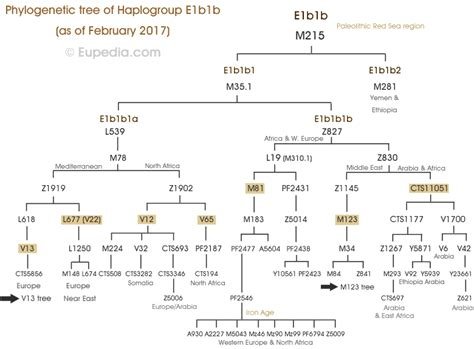
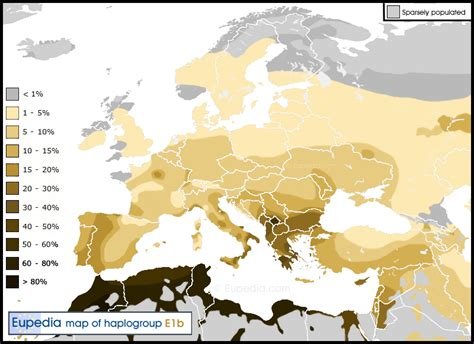
From the Holy Child drawing and the 15th-century letter, researchers recovered Y-chromosome haplogroup E1b1b, a genetic lineage common in Tuscany, the region where Leonardo was born in 1452.
This is a compelling lead. It aligns with the DNA of 15 living male relatives believed to descend from da Vinci’s paternal lineage — discovered through archival genealogical research tracing back over 21 generations.
However, it’s not yet definitive. Without authenticated remains or a pristine DNA sample, researchers must triangulate evidence through relatives, ancestral documents, and possibly bones from da Vinci’s extended family.
The final Y-chromosome sequencing from these living relatives is expected to complete by late 2026, potentially offering the most solid evidence to date of Leonardo’s genetic signature.
Why Does Finding Leonardo’s DNA Matter?
This project goes far beyond solving a historical mystery. If Leonardo’s DNA is confirmed, it could have major ripple effects across art history, genetics, neuroscience, and even education.
1. Art Authentication
- DNA found on disputed drawings could help confirm authorship.
- It can be a tie-breaker in debates where stylistic analysis is inconclusive.
2. Understanding Artistic Genius
- Leonardo might have had exceptional visual processing, possibly perceiving 100+ frames per second, based on descriptions of his work.
- Scientists are curious whether his brain was wired differently — possibly reflecting neurodivergence, synesthesia, or other rare traits.
- Genetic evidence could hint at neurological and sensory variations common to exceptional creative thinkers.
3. Historical Forensics
- If proven effective, this approach could be used on other figures — think Shakespeare, Mozart, or Michelangelo.
- It also opens the door to solving long-standing genealogical mysteries and studying hereditary health conditions from the past.
A Timeline of the Leonardo DNA Project
| Year | Milestone |
|---|---|
| 2016 | Initial plan proposed by art historians and forensic scientists |
| 2018 | Identification of 15 living male relatives of da Vinci |
| 2020 | DNA extracted from historical letter written by da Vinci’s great-great-uncle |
| 2023 | Swabbing of “Holy Child” drawing and DNA recovery |
| 2025 | Ongoing sequencing of Y-chromosome from male relatives |
| 2026 | Full comparative analysis expected; potential announcement of match or mismatch |
Ethical Considerations of 500-Year-Old Drawing to Trace Leonardo da Vinci’s DNA
Like all historical-genetic projects, this one comes with concerns:
- Consent & ownership: Who owns the recovered DNA? The current owner of the artwork, or the public?
- Cultural sensitivity: Is it ethical to extract DNA from bones or disturb graves — even for scientific purposes?
- Reliability of samples: Can we ever be 100% sure the recovered DNA is from da Vinci and not a student, collector, or restorer?
The researchers behind the project have stated they follow non-invasive protocols and involve multiple institutions to maintain ethical transparency.
What’s Next?
The future of this research is bright — and full of possibilities.
Upcoming developments include:
- Finalizing the Y-chromosome profile from da Vinci’s living male-line relatives
- Possibly gaining access to other authenticated da Vinci works, like notebooks or tools, for non-invasive DNA testing
- Expanding arteomic methods to trace biological links in works by other Renaissance masters
And maybe, just maybe — cracking the ultimate historical case: Was da Vinci truly touched by biological genius, or did he train himself into greatness?
Did Ancient Egypt Use Disease as a Weapon Against the Assyrians?
A 67,800-Year-Old Cave Handprint May Be the Earliest Human Artwork Ever Found
A Hidden Lead Pipe in Petra Is Rewriting What We Know About Ancient Water Systems