

Millions of Americans approaching retirement may see Social Security Benefits in 2026 reduced in real value by a little-known tax rule dating back decades. Economists say the so-called “hidden tax” is not a new policy but a result of inflation and unchanged income thresholds, which now pull more retirees into federal taxation and higher Medicare premium deductions.
Table of Contents
Hidden Tax Could Reduce Social Security Benefits in 2026
| Key Fact | Detail / Statistic |
|---|---|
| Tax thresholds | $25,000 single, $32,000 married income triggers taxation |
| Taxable portion | Up to 85% of benefits may be taxed |
| Medicare impact | Premiums deducted directly from benefit checks |
Congress has not announced changes to the taxation formula, and analysts say the issue will likely grow more visible as the population ages. “This isn’t a sudden reduction,” Johnson said, “but a gradual shift that retirees notice only when their deposited payment is smaller than expected.”
What the “Hidden Tax” Means for Social Security Benefits in 2026
The phrase “hidden tax” refers to federal taxation of retirement benefits once income crosses certain levels. Congress introduced the rule in 1983 to help stabilize the Social Security trust fund after a major financing crisis.
The thresholds — $25,000 for individuals and $32,000 for couples — were never indexed to inflation. As wages, pensions, and savings withdrawals increased over four decades, more retirees began crossing those limits.
According to the Social Security Administration (SSA), up to 50% of benefits become taxable above the first threshold and as much as 85% above higher income levels. The Internal Revenue Service (IRS) counts “combined income,” which includes adjusted gross income, tax-free interest, and half of Social Security payments.
Economists call this “bracket creep.” Without any legislative change, inflation alone increases tax exposure.
“Because the thresholds are frozen, more retirees are pulled into taxation each year,” said retirement policy analyst Mark Miller. “The impact becomes more visible when cost-of-living adjustments raise benefits but not purchasing power.”
In practical terms, retirees do not see an official benefit cut. Instead, they experience a smaller deposit after taxes — a change that often comes as a surprise during their first full retirement year.
Why 2026 Is Drawing Attention
The issue is not new, but analysts say 2026 highlights the problem because several forces are converging at the same time.
Cost-of-Living Adjustment (COLA increase)
Social Security payments are adjusted annually to offset inflation. The adjustment is tied to the Consumer Price Index for Urban Wage Earners and Clerical Workers (CPI-W), calculated by the U.S. Bureau of Labor Statistics (BLS).
Higher benefits increase retirees’ reported income. That can push them above the tax thresholds even if their purchasing power remains unchanged.
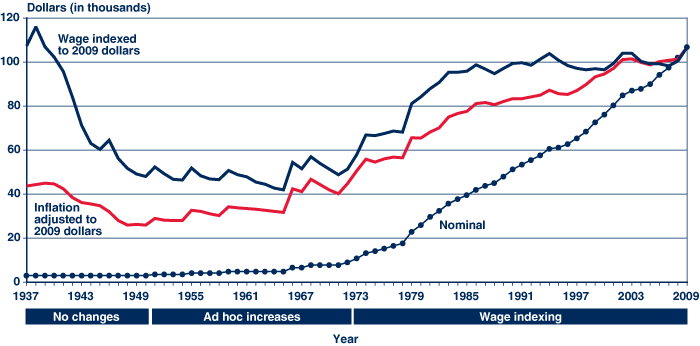
In recent years, inflation spikes led to larger COLA adjustments than historically typical. While intended to protect retirees, these increases inadvertently expose more households to taxation.
Medicare Premium Deductions
Another factor affecting Social Security Benefits in 2026 is Medicare.
The Centers for Medicare & Medicaid Services (CMS) deducts Medicare Part B premiums directly from monthly benefit payments. Higher-income retirees also pay an Income-Related Monthly Adjustment Amount (IRMAA), a surcharge tied to tax returns from two years earlier.
“When income rises, retirees can face both taxation and higher Medicare premiums at the same time,” explained Social Security policy analyst Mary Johnson. “That combination can shrink the net benefit they actually receive.”
For some retirees, Medicare premium deductions alone can absorb a large share of their annual COLA increase.
How Retirement Withdrawals Affect Taxes
Withdrawals from traditional retirement accounts — including 401(k)s and Individual Retirement Accounts (IRAs) — count toward taxable income. Financial planners say this is a key driver behind the hidden tax effect.
A retiree who withdraws savings to cover expenses may unintentionally trigger taxation on benefits.
Combined Income Formula
The IRS defines combined income as:
- Adjusted gross income
- Plus tax-free interest
- Plus half of Social Security benefits
Even modest withdrawals can move retirees into higher taxation brackets.
Financial advisors increasingly recommend tax diversification — balancing taxable accounts, tax-deferred savings, and Roth accounts — as a central part of retirement planning strategies.
A Short Historical Timeline
Understanding the hidden tax requires looking back.
1935: Social Security created as a pension safety net during the Great Depression. Benefits were not taxed.
1983 Reform: Facing insolvency, Congress passed bipartisan legislation under President Ronald Reagan. For the first time, some benefits became taxable, but only for higher-income retirees.
1993 Expansion: Congress increased the taxable portion to 85% for upper-income retirees.
Today: Inflation has pushed middle-income retirees into thresholds originally designed for wealthier households.
This gradual shift explains why policymakers did not call it a tax increase — yet the effect functions similarly.
Policy Debate and Expert Perspectives
The taxation rule was originally designed to support the Social Security trust funds after funding concerns in the early 1980s. Revenue from benefit taxation goes partly into the Old-Age and Survivors Insurance Trust Fund and partly into Medicare financing.
However, advocacy groups argue the system now affects middle-income retirees rather than only high earners.
The Congressional Research Service (CRS) has noted in policy analysis that inflation has steadily expanded the number of households subject to taxation since the thresholds were created.
Some lawmakers have proposed indexing the thresholds to inflation, but Congress has not enacted a change.
Supporters of the current system argue taxation helps maintain program solvency. Critics say it reduces predictability for retirees and complicates retirement income planning.
Economist Alicia Munnell of the Center for Retirement Research has previously warned that retirees often underestimate taxes in retirement. Many assume benefits are tax-free because payroll taxes funded them during working years.
International Context
The United States is unusual among developed countries because it taxes retirement pension benefits based on income thresholds rather than a flat rule.
For comparison:
- The United Kingdom generally taxes state pension income as ordinary income but offers a broader personal allowance.
- Canada taxes pension income but provides senior tax credits.
- Some countries, such as Australia, provide tax-advantaged retirement withdrawals under specific conditions.
Policy analysts say the U.S. system is particularly complex because it combines income tax, retirement savings withdrawals, and Medicare premium deductions.
What Retirees Can Do Now
Financial planners suggest several strategies to reduce exposure to the retirement income tax impact.
1. Manage Withdrawal Timing
Spreading withdrawals across years may reduce combined income in any single tax year.
2. Consider Roth Conversions
Tax-free withdrawals from Roth accounts typically do not count toward combined income calculations.
3. Monitor Medicare Surcharges
Because Medicare surcharges rely on earlier tax returns, one-time income spikes can affect future benefit checks.
4. Delay Benefits If Possible
Waiting to claim Social Security increases monthly payments and can reduce reliance on taxable withdrawals early in retirement.
5. Use Qualified Charitable Distributions
Individuals aged 70½ and older may transfer funds directly from IRAs to charities. These withdrawals are excluded from taxable income, reducing combined income exposure.
Real-World Example
Consider a retiree receiving $2,200 per month in Social Security. The retiree withdraws $20,000 annually from a traditional IRA.
That withdrawal increases combined income and may make up to 85% of benefits taxable. The retiree may also cross Medicare income thresholds, raising premiums two years later.
The result is not a benefit reduction on paper — but a noticeable decline in spendable income.
Broader Context: Long-Term Social Security Pressures
The hidden tax debate comes amid broader concerns about Social Security financing. The Social Security Trustees Report has warned the retirement trust fund could face depletion within the next decade without legislative changes.
If depletion occurs, payroll tax revenue would still cover a majority of benefits, but payments could be reduced unless Congress intervenes.
Lawmakers therefore face policy choices:
- Increase payroll taxes
- Reduce benefits
- Raise retirement age
- Adjust taxation rules
Many analysts expect reform discussions to intensify before 2035.
FAQs About Hidden Tax Could Reduce Social Security Benefits in 2026
Why is it called a hidden tax?
Because Congress did not raise tax rates. Instead, frozen thresholds allow inflation to make more benefits taxable.
Will benefits be cut directly in 2026?
No. Payments are still issued, but taxes and Medicare premium deductions may reduce the net amount retirees receive.
Who is most affected?
Middle-income retirees with pensions or retirement account withdrawals are most exposed.
Does everyone pay tax on Social Security?
No. Lower-income retirees typically owe no federal tax on benefits.