
A remarkably preserved fossil discovered in northern Kenya is reshaping scientific understanding of human origins. The discovery, known as the Newly Found Skeleton, shows that one of the earliest members of the genus Homo lived about two million years ago but still possessed a body adapted for climbing. Researchers say the remains reveal early humans looked and moved far less like modern people than scientists long believed.
Table of Contents
What Scientists Found
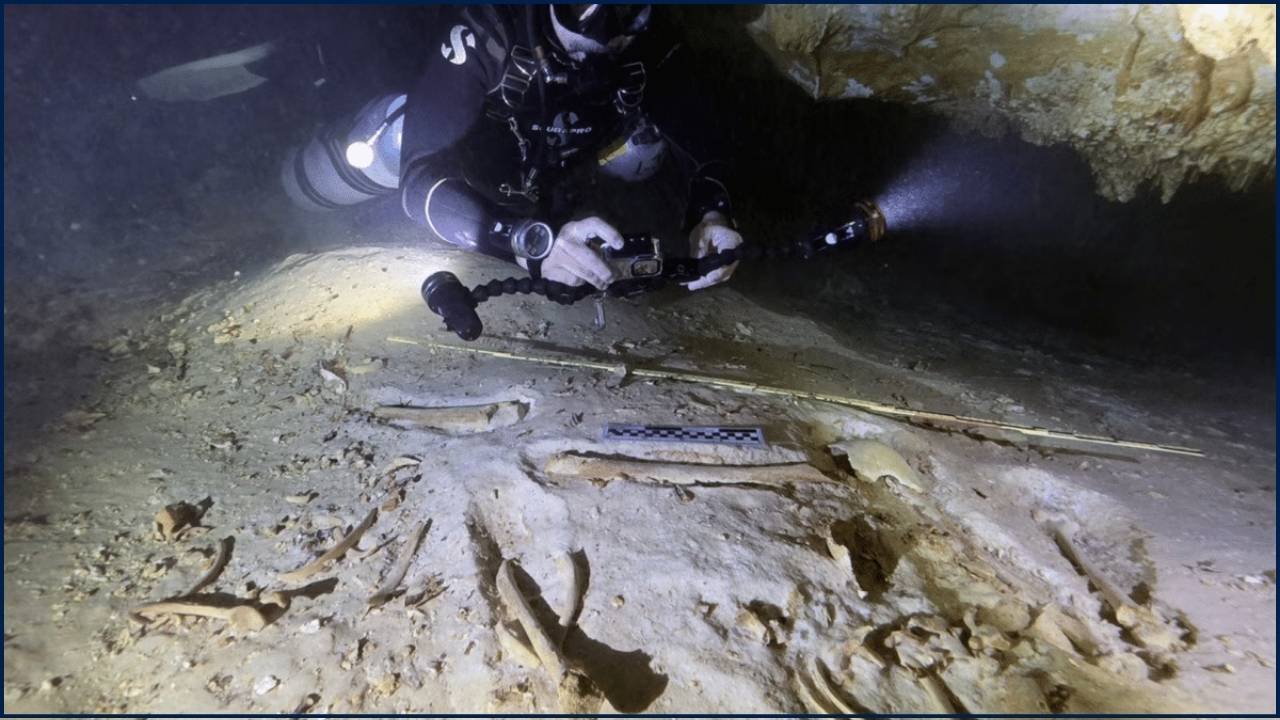
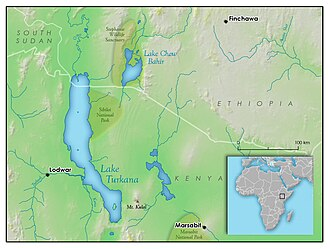
The fossil, recovered near Lake Turkana in Kenya’s Turkana Basin, belongs to Homo habilis, one of the earliest known species within the human lineage. Geological dating places the remains at approximately 2.0 to 2.1 million years old.
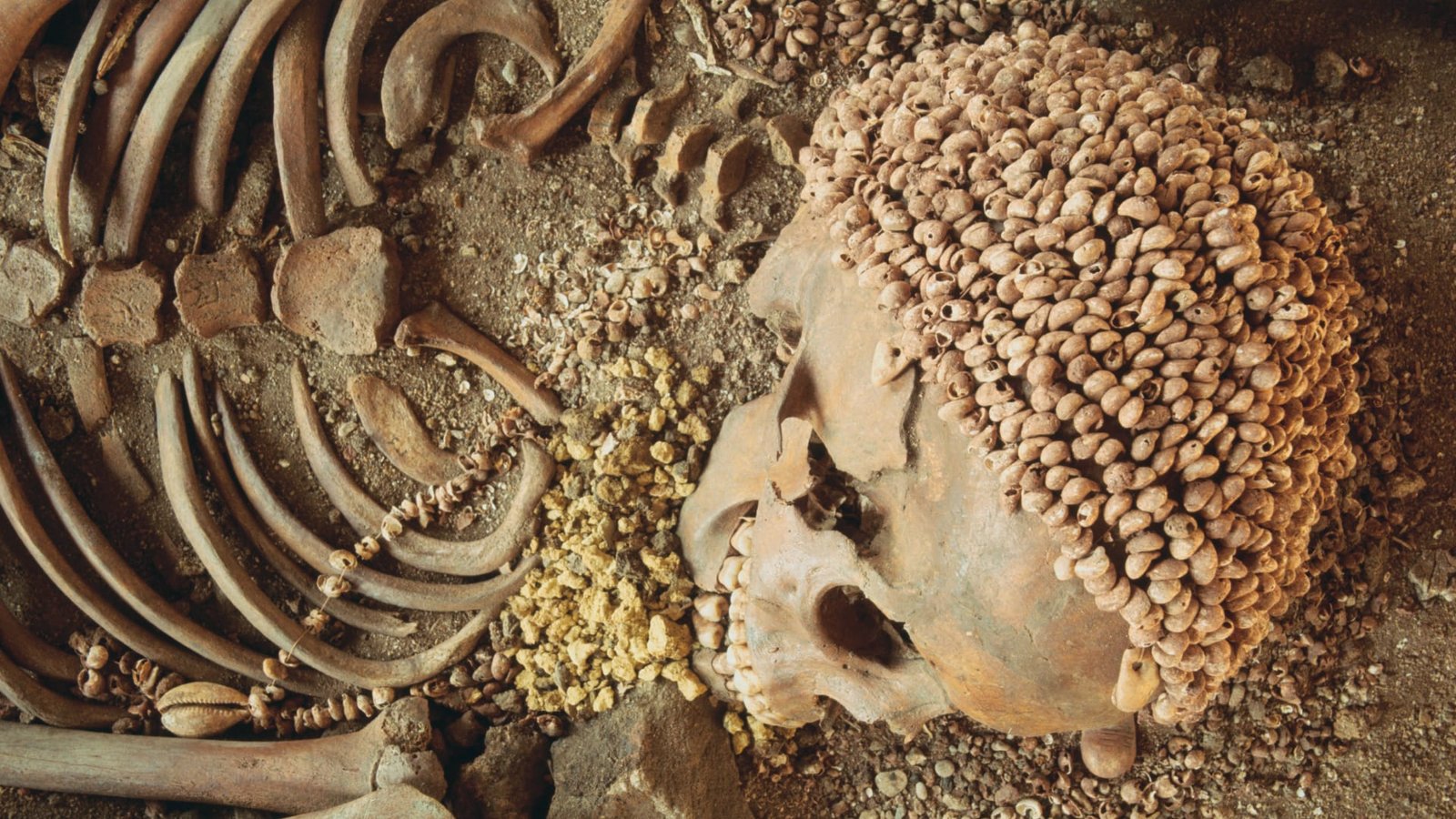
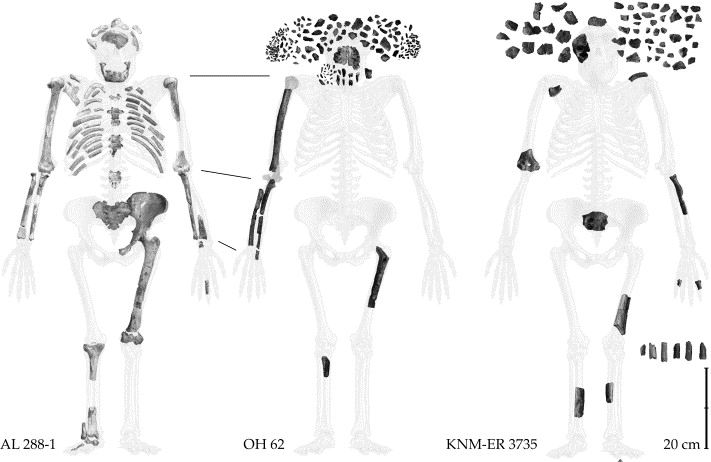
The Newly Found Skeleton stands out because it preserves large portions of the body rather than only skull fragments. Paleoanthropologists rarely recover complete early human remains due to erosion, scavenging, and the fragile nature of bones over long time spans.
“This is the first opportunity to examine how the earliest Homo species was actually built,” said paleoanthropologist Dr. Fred Spoor of University College London, part of the international research team. “The body was not fully human in structure. It retained primitive characteristics.”
The skeleton includes parts of the spine, rib cage, pelvis, shoulders, and limbs. These features allow scientists to reconstruct posture and movement — something previously impossible for early Homo.
Researchers immediately noticed unusual proportions. The arms were relatively long, the legs comparatively short, and the shoulder joints pointed upward, not sideways like in modern humans.
Why the Newly Found Skeleton Matters
The significance of the Newly Found Skeleton lies in how it challenges a decades-old assumption in human evolution research.
Scientists long believed that the appearance of the genus Homo marked the point when ancestors became fully adapted to life on the ground. The new evidence suggests that change happened much more gradually.
The fossil shows several traits associated with earlier hominins, including curved finger bones and mobile shoulders. These are classic features of animals that climb.
This means the first members of our genus still relied heavily on trees.
Researchers now conclude that walking upright developed earlier than the fully human body shape. Efficient long-distance walking likely evolved later in Homo erectus.
The finding changes how textbooks may describe the transition from ancient apes to modern humans.
Mixed Lifestyle: Ground and Trees
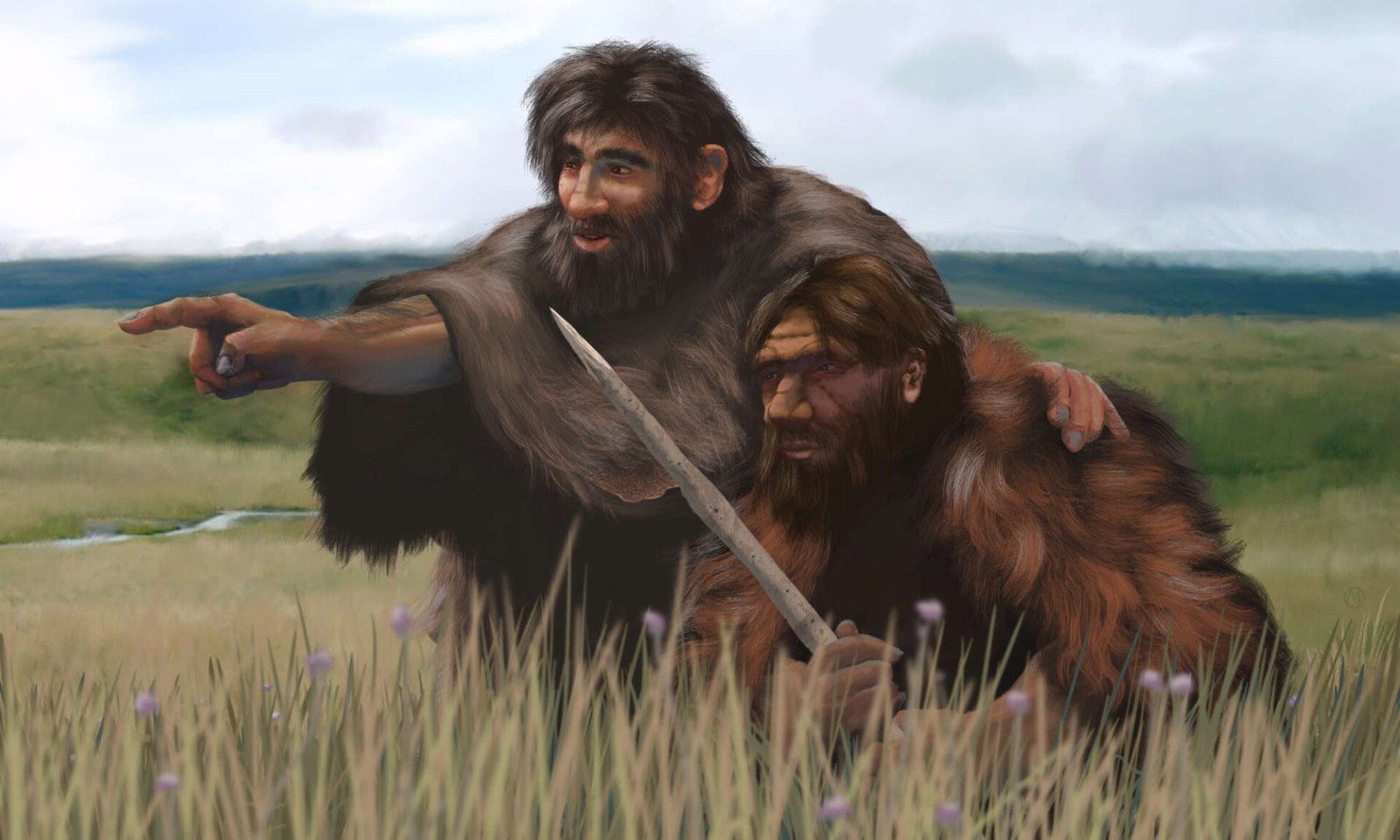
Two million years ago, East Africa was not a uniform savanna. Climate records show a patchwork of woodland, river corridors, and open grassland.
The Newly Found Skeleton suggests early humans adapted to this mixed environment.
“They were both walkers and climbers,” said Kenyan paleoanthropologist Dr. Meave Leakey, whose family has conducted research in the region for three generations. “Trees likely provided protection from predators and safe sleeping locations.”
Predators at the time included saber-toothed cats, giant hyenas, and crocodiles near waterways. Climbing ability would have been a critical survival trait.
At the same time, walking upright allowed early humans to travel longer distances, search for food, and carry objects.
This combination of behaviors explains why early humans retained features from both tree-dwelling primates and ground-walking mammals.
Tools and Behavior
The species Homo habilis is often called the “handy man,” a name derived from Latin referring to tool use. Archaeologists have found simple stone tools — known as Oldowan tools — in layers dating to the same period.
These tools were made by striking stones together to produce sharp flakes. They were likely used to cut meat, scrape hides, and break bones to reach marrow.
The Newly Found Skeleton supports this interpretation. The hand structure appears capable of precision grip, a major evolutionary step.
Tool use may also have influenced diet. Evidence from fossilized teeth and animal bones suggests early humans began consuming more meat, which provided higher energy and nutrients.
Some researchers believe this dietary shift eventually supported the development of larger brains.
A More Complex Human Family Tree
The Newly Found Skeleton also strengthens a growing scientific consensus: human evolution was not a simple progression.
Instead of a straight line from ape to modern human, the process resembled a branching tree with many related species living simultaneously.
Around two million years ago, East Africa hosted several hominin species:
- Homo habilis
- Homo rudolfensis
- early Homo erectus
- late Australopithecus
These species likely competed for food and territory.
According to the Smithsonian Institution’s Human Origins Program, environmental changes — including fluctuating rainfall and expanding grasslands — encouraged adaptation and diversification.
Some species adapted successfully and spread beyond Africa. Others disappeared.
What This Means for Modern Humans
The discovery clarifies how modern human features evolved in stages rather than appearing suddenly.
Scientists now believe the evolutionary order looked roughly like this:
Stage 1: Upright walking
Stage 2: Tool making
Stage 3: Increased brain size
Stage 4: Language and complex culture
Modern humans (Homo sapiens) appeared about 300,000 years ago — long after the Newly Found Skeleton individual lived.
This gap shows human characteristics developed over millions of years.
The fossil demonstrates that belonging to the genus Homo did not immediately mean looking human.
Scientific Debate Continues
Although the discovery is widely welcomed, researchers emphasize caution.
Fossils are rare, and a single individual cannot represent an entire species.
Some anthropologists question whether Homo habilis belongs in the genus Homo at all. They argue it may be closer to earlier australopithecines.
Future discoveries could refine the classification.
Still, most researchers agree the Newly Found Skeleton fills a major gap in the fossil record.
Broader Impact on Anthropology
The discovery has implications beyond anatomy. It affects how scientists interpret migration, behavior, and intelligence.
For example, if early humans were still climbers, they may have spent more time in forested environments than previously believed. This changes assumptions about diet, social structure, and daily activity.
It may also influence models of early human dispersal out of Africa. Efficient long-distance walking — necessary for migration — likely developed later than once thought.
How Fossils Are Dated
Scientists determined the age of the Newly Found Skeleton using volcanic ash layers surrounding the fossil. The Turkana Basin contains preserved sediments from ancient eruptions.
Researchers use radiometric dating, measuring the decay of potassium into argon gas within volcanic minerals. Because decay occurs at a known rate, scientists can calculate age accurately.
This method is widely considered reliable for fossils millions of years old.
Looking Ahead
Excavations continue in Kenya and neighboring Ethiopia, regions often called the cradle of humanity. New technologies, including CT scanning and 3D modeling, allow scientists to analyze fossils without damaging them.
Researchers hope to find additional skeletons from the same period to confirm their conclusions.
“Every fossil changes the story,” Spoor said. “We are still uncovering how we became human.”
FAQs About A Newly Found Skeleton Maps
Q1: Was this fossil a direct ancestor of humans?
Possibly, but scientists cannot confirm. It may represent a close relative rather than a direct ancestor.
Q2: Why did early humans still climb trees?
Trees offered safety, food sources, and sleeping locations away from predators.
Q3: What species first looked modern?
Most anthropologists consider Homo erectus the first species with a largely human-like body shape.
Q4: Where was it found?
Near Lake Turkana in Kenya, one of the world’s most important fossil regions.