
A newly tracked Space Object, often described as a quasi-moon, may be a fragment blasted off Earth’s Moon millions of years ago, according to astronomers analyzing its orbit and composition. The Space Object has drawn scientific attention because its motion closely follows Earth around the Sun while its mineral signature resembles lunar rock rather than a typical near-Earth asteroid.
Table of Contents
A Newly Tracked Space Object
| Key Fact | Detail |
|---|---|
| Object classification | Near-Earth quasi-satellite sharing Earth’s solar orbit |
| Scientific significance | Reflectance spectrum similar to lunar minerals |
| Origin theory | Debris ejected from a large lunar impact crater |
Astronomers plan further observations during upcoming favorable viewing periods. Researchers say the Space Object may remain near Earth for centuries, offering a rare opportunity to study material possibly launched from the Moon long before human civilization. Future spacecraft missions could determine whether it truly represents ancient lunar debris and reveal new details about the violent history of our planetary neighborhood.
What Scientists Found
Astronomers studying near-Earth objects reported that the Space Object travels around the Sun, not Earth, but remains gravitationally synchronized with our planet. Such bodies are called quasi-satellites, a rare orbital arrangement.
“This object looks like it is circling Earth, but it is actually orbiting the Sun,” said a planetary dynamicist involved in near-Earth orbit modeling at a major university observatory. “Its path keeps it near our planet for long periods.”
The discovery was made using automated sky surveys that scan the heavens nightly for faint moving points of light. Observatories compare successive images of the sky to detect movement against the background of distant stars. The object’s unusual motion quickly distinguished it from common asteroids.
Scientists say only a few quasi-moons are known. Their orbits are delicate gravitational balances involving the Sun and Earth, a phenomenon sometimes described as a cosmic dance.
Evidence From Light Signatures
Researchers analyzed reflected sunlight using spectroscopy, a technique that reveals surface composition. The reflected wavelengths matched silicate minerals common on the Moon’s surface and differed from most asteroids.
According to planetary scientists publishing in peer-reviewed research, the reflectance pattern resembles lunar regolith — the fine dust covering the Moon. Typical asteroids in similar orbits show darker, carbon-rich signatures.
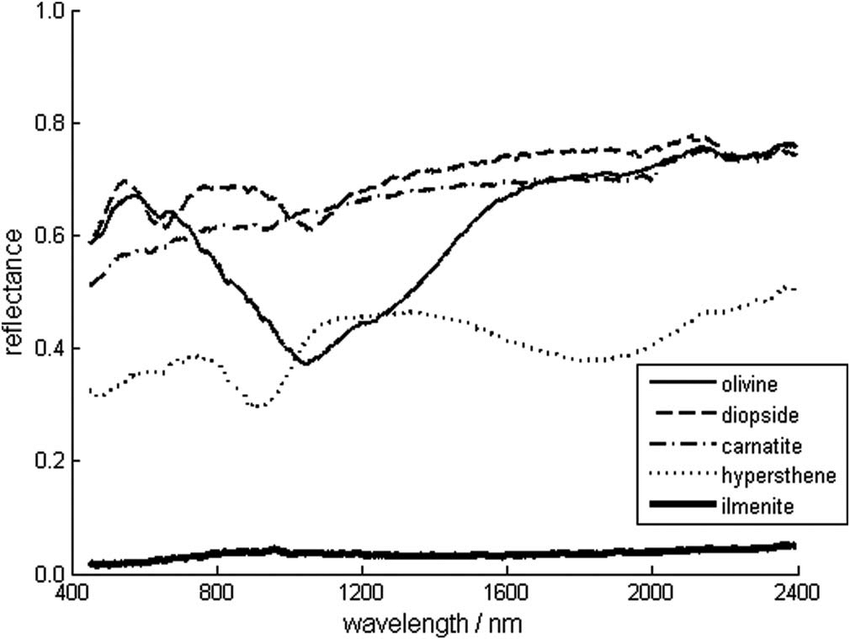
Scientists compare these measurements with samples collected during the Apollo missions. Those samples remain the most important reference for identifying lunar material in space.
“This is essentially remote geology,” one astronomer explained. “We cannot touch the rock, but light carries chemical information.”
How Lunar Debris Could Reach Space
Scientists say a powerful asteroid impact on the Moon can eject rock fragments at escape velocity. The Moon’s gravity is only about one-sixth that of Earth, making it easier for debris to leave its surface.
Computer simulations indicate that some fragments would enter independent solar orbits similar to Earth’s path around the Sun. A small fraction could become long-term companions.
“We already have lunar meteorites on Earth,” a researcher in planetary geology explained. “This is the same process, except the material stayed in space instead of falling to Earth.”
Over millions of years, gravitational forces from the Sun and planets can stabilize these fragments into predictable paths. Some may remain in Earth-like orbits for centuries or longer.
A Possible Source Crater
Researchers have suggested that a relatively young lunar crater could have launched the fragment. Impact modeling shows that debris from such collisions can survive in near-Earth space for millions of years.
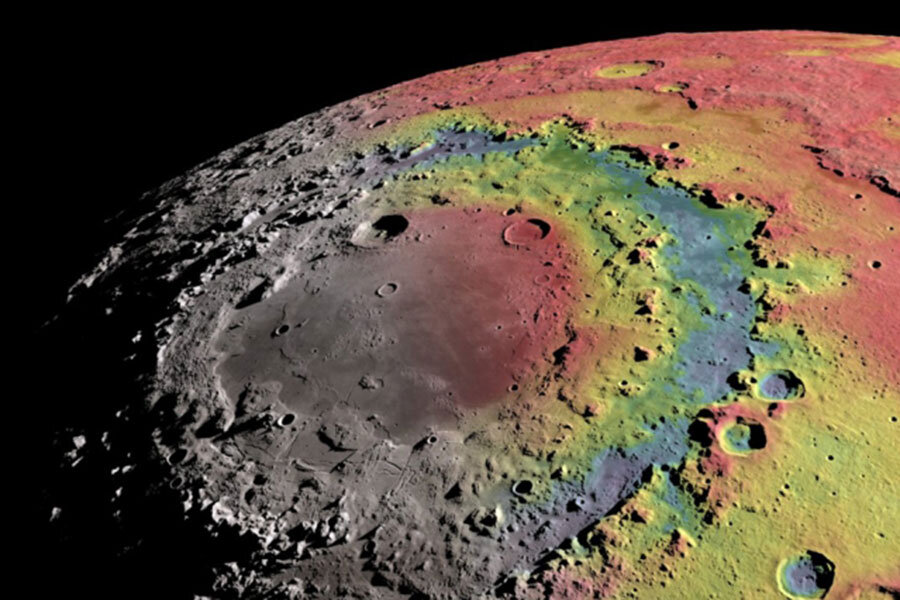
The Moon has no atmosphere to slow incoming asteroids. As a result, impacts there are more violent than on Earth. Without wind or rain, the scars remain visible for millions of years.
Why the Discovery Matters
The finding affects more than astronomy textbooks. Scientists say it could reshape understanding of the Earth-Moon system.
Easier Sample Collection
Space agencies view quasi-moons as accessible targets. Missions to them require less fuel than landing on the Moon because spacecraft do not need to descend into a strong gravitational field.
A mission could retrieve pristine lunar material without landing on the lunar surface. Researchers say this could reveal the timing of ancient impacts.
Such missions are increasingly considered by international agencies because robotic probes can reach small bodies more cheaply than full lunar landings.
Planetary Defense
Tracking such objects also helps distinguish harmless companions from potential hazards. Near-Earth object monitoring programs constantly evaluate collision risks.
Officials at the National Aeronautics and Space Administration (NASA) have said cataloging small bodies improves early warning systems and refines impact probability calculations.
NASA’s Planetary Defense Coordination Office maintains a catalog of thousands of objects that pass near Earth each year. Most are harmless, but astronomers emphasize that continued observation is essential.
What Makes a Quasi-Moon Different
Despite public descriptions, the object is not a second Moon. True moons orbit planets directly due to gravity. A quasi-satellite instead shares Earth’s orbital period around the Sun.
The distinction is important because Earth occasionally captures temporary “mini-moons,” which stay only months or years. Quasi-satellites can remain near Earth for centuries.
Astronomers have identified only a handful of similar companions so far, making each discovery valuable for orbital mechanics research.
In simple terms:
- A moon: orbits Earth
- A mini-moon: temporarily captured
- A quasi-moon: shares Earth’s solar orbit
Historical Context: Earth Has Had Companions Before
This is not the first time scientists discovered a companion near Earth. Earlier objects classified as quasi-moons have been tracked for decades.
One such object remained near Earth since at least the late 20th century. Researchers later found its composition also differed from typical asteroids.
These discoveries helped astronomers realize that the Earth-Moon system extends beyond the visible Moon itself. Instead, it may include a family of small objects formed by ancient impacts.
The idea supports a broader theory: that violent collisions shaped the early solar system. Scientists believe the Moon itself formed after a Mars-sized body struck the early Earth around 4.5 billion years ago.
Scientific Debate Continues
Some researchers caution that the lunar-origin hypothesis remains under investigation. Additional observations and spacecraft missions would provide confirmation.
“Spectroscopy gives strong clues, but direct sampling would settle the question,” said a planetary scientist involved in asteroid composition studies.
Astronomers must also consider alternate explanations. Some rare asteroids have mineral compositions similar to lunar rock. These could form elsewhere in the inner solar system.
For now, researchers say the evidence strongly suggests a lunar origin but does not yet prove it definitively.
Observatories worldwide are continuing to track the object as its orbit evolves.
Public Interest and Future Exploration
The discovery has attracted attention because it changes how people imagine Earth’s surroundings. Instead of a single Moon, our planet may have temporary companions over long periods of time.
Scientists say studying such bodies could answer major questions:
- How often does the Moon experience large impacts?
- How much material escapes into space?
- Could similar debris reach Earth in the future?
Space agencies are also considering whether astronauts could one day visit a quasi-moon. The weak gravity would allow easier landing and departure than on the Moon.
Researchers believe a crewed mission to a near-Earth asteroid could serve as preparation for future missions to Mars.
FAQs About A Newly Tracked Space Object
Is the object dangerous?
No. Current orbital calculations show no collision risk with Earth.
Is it a second Moon?
No. It does not orbit Earth; it orbits the Sun while staying near our planet.
Why is it important?
It may provide access to ancient lunar material and improve understanding of impact history.
Can it be seen with a telescope?
Only large professional telescopes can detect it. It is far too faint for naked-eye viewing.
Could it become Earth’s moon someday?
Very unlikely. Its orbit is controlled mainly by the Sun, not Earth.