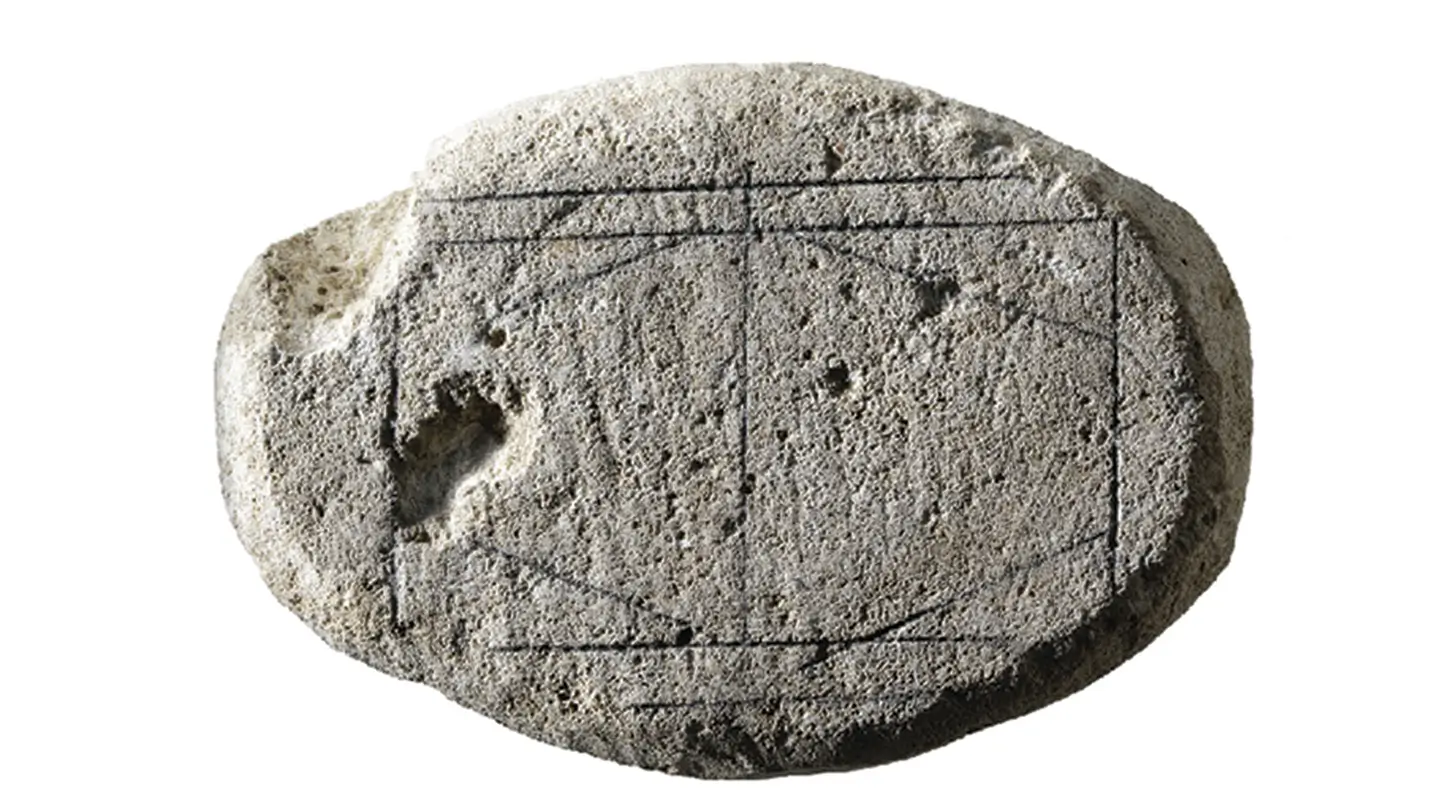

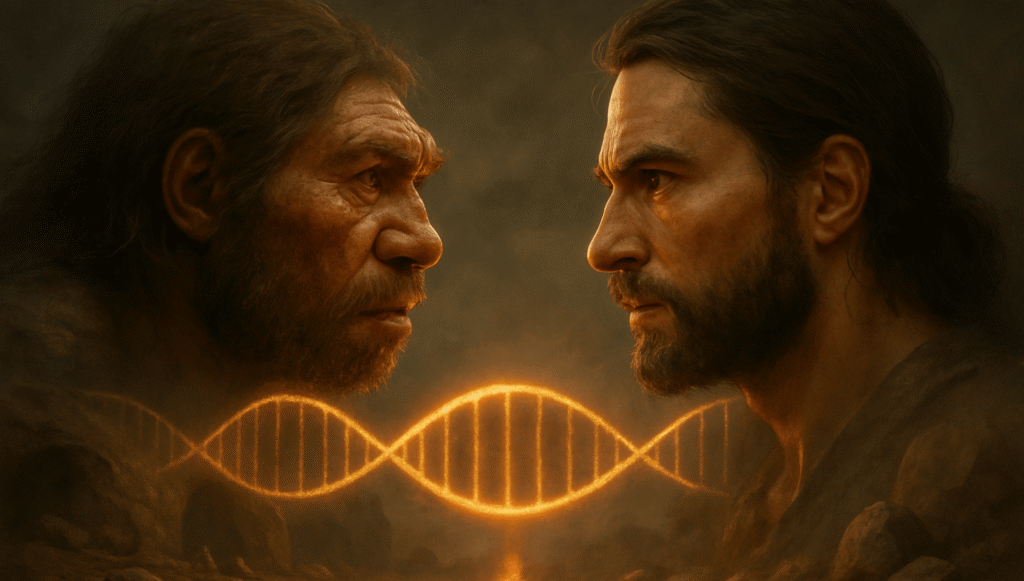
Across social media and image-generation platforms, AI Images of Neanderthals have surged in popularity. But archaeologists now say many of those visuals repeat long-abandoned stereotypes about human evolution. A recent academic assessment comparing AI outputs with current archaeological evidence found that widely shared depictions often conflict with modern research about Neanderthals’ appearance, behavior, and culture.
Table of Contents
AI Images of Neanderthals Are Popular
| Key Fact | Detail |
|---|---|
| AI outputs inaccurate | About half of AI descriptions conflicted with current research |
| Common error | Stooped “caveman” posture based on early 1900s reconstruction |
| Cultural ability | Evidence shows tools, pigments, and social care |
Why Neanderthals in AI Images Are Drawing Scrutiny
Archaeologists examined scenes generated by several leading artificial-intelligence image models and compared them with established research in human evolution. The results showed a consistent pattern: AI often produced ape-like figures with hunched backs, heavy body hair, and primitive behavior.
Those traits reflect scientific thinking from the early 20th century rather than the present consensus in paleoanthropology.
“The systems reproduce illustrations people have seen for decades,” said one study author involved in the review. “But our understanding of Neanderthals has changed dramatically in the past 30 years.”
The issue highlights a broader concern in AI archaeology: image generators learn from existing visual material, including outdated textbooks and artistic paintings, not only modern research papers.
Researchers say the problem stems from training data. Publicly available imagery often includes popular culture depictions, films, and old museum displays. By contrast, updated academic reconstructions appear mainly in specialized journals and curated exhibitions.
The “Stooped Caveman” Myth
The widely recognized caveman posture originated from a 1908 skeleton discovered in France. Scientists later determined the individual suffered severe arthritis. The bent posture therefore reflected illness rather than normal anatomy.
Modern anatomical analysis shows Neanderthals stood upright and walked much like modern humans. Their bodies were shorter and stockier, likely an adaptation to Ice Age climates that helped retain body heat.
They possessed large noses, prominent brow ridges, and robust limbs. But their brain volume was comparable to — and sometimes larger than — that of modern humans.
Paleoanthropologists emphasize that Neanderthals were not a primitive animal but a close human relative, Homo neanderthalensis, sharing a common ancestor with modern humans about 500,000–700,000 years ago.
What Archaeology Reveals About Real Neanderthal Life
Intelligence and Social Behavior
Excavations across Europe and western Asia have revealed complex behavior inconsistent with crude depictions seen in human evolution misconceptions.
Researchers have found:
- carefully shaped stone tools
- controlled use of fire
- possible burial practices
- care for injured individuals
Some skeletons show healed fractures and missing teeth, yet the individuals lived many years afterward.
“Survival with significant trauma implies social support,” archaeologists commonly note in paleoanthropological research.
This evidence suggests cooperation, shared resources, and possibly emotional bonds.
Culture, Clothing, and Symbolic Activity
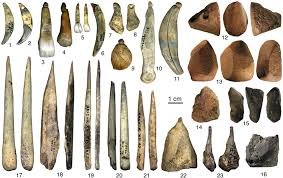
Archaeological discoveries indicate Neanderthals used pigments, possibly for body decoration or hide preparation. Some cave sites also contain arranged objects interpreted as symbolic activity.
They manufactured advanced stone tools known as the Mousterian toolkit. These tools required planning and skill, indicating teaching and knowledge transfer.
While they did not produce metal objects or cities, researchers believe they wore animal hides and organized coordinated hunting strategies for large animals such as bison and deer.
Genetics: The Discovery That Changed Everything
One of the most important developments in modern paleoanthropology came from DNA research. In 2010, scientists sequenced the Neanderthal genome.
The results showed Neanderthals and modern humans interbred.
Today, people outside Africa carry roughly 1–2% Neanderthal DNA. Certain genes influence immune responses, skin characteristics, and even adaptation to cold environments.
This finding transformed the scientific view of Neanderthals. Rather than evolutionary losers replaced by superior humans, they were populations that interacted and merged.
Why AI Systems Make These Errors
AI models generate images by learning patterns from massive internet datasets. The problem is that historical misconceptions are widely available online.
Modern research publications are harder for machines to access and interpret. As a result, AI training data may overrepresent outdated imagery.
Experts in digital anthropology say the technology reflects human cultural memory rather than scientific reality.
In other words, AI is not discovering the past — it is reproducing humanity’s past interpretations of the past.
Climate and the Disappearance of Neanderthals
Neanderthals lived across Europe and western Asia during the Ice Age. Their environment shifted repeatedly due to rapid climate change.
Around 40,000 years ago, they disappeared. Scientists do not attribute this to a single cause. Instead, several factors likely combined:
- competition with modern humans
- climate instability
- small population sizes
- genetic mixing
Many researchers believe Neanderthals were absorbed into human populations rather than completely wiped out.
Scientific Implications and Public Understanding
The popularity of AI visuals matters because images shape how people understand science.
For more than a century, Neanderthals were portrayed as unintelligent cavemen. Modern research contradicts that narrative.
Anthropologists say misleading imagery risks reinforcing outdated education.
“People imagine a brute,” an evolutionary anthropologist explained. “In reality, they were another kind of human.”
The Broader Debate Over AI and Scientific Accuracy
The debate reaches beyond archaeology. Scientists across fields worry about artificial intelligence producing authoritative-looking but inaccurate educational content.
Historians have raised similar concerns about AI images of ancient cities. Paleontologists report comparable issues with dinosaur reconstructions.
Researchers say collaboration between technologists and academics could reduce errors. Curated datasets containing peer-reviewed material may improve accuracy.
Museums Respond
Museums increasingly use forensic reconstruction techniques, combining:
- skeletal analysis
- muscle mapping
- genetic data
- climate modeling
These approaches produce more realistic depictions of Neanderthals.
Institutions also use interactive displays to explain uncertainty, showing visitors that reconstructions are scientific interpretations, not photographs.
Ethical Questions About AI Knowledge
The controversy has sparked wider discussion about educational responsibility.
If students learn prehistory through automated images, incorrect depictions may shape understanding for years.
Educators now stress media literacy — teaching audiences to question visually convincing material.
Researchers emphasize that artificial intelligence can still be valuable. It can help visualize archaeological sites, simulate migration routes, and analyze artifacts — when guided by expert input.
What Happens Next
Researchers plan further evaluations of AI-generated content covering other extinct human relatives, including Denisovans and early Homo sapiens populations.
The goal is to measure how often technology repeats historical misconceptions.
For now, archaeologists welcome public interest in the past but urge caution interpreting generated imagery.
“Curiosity is positive,” one researcher said. “But we should not let technology rewrite prehistory inaccurately.”
FAQs About AI Images of Neanderthals Are Popular
Did Neanderthals talk?
Researchers believe they likely had speech capabilities. Fossil throat bones and genetic evidence suggest language ability, though the exact sound of their speech remains unknown.
Were Neanderthals smarter than humans?
They were not less intelligent. Their brain size was comparable, and their survival strategies required planning and cooperation.
Why are they often shown as hairy?
That image came from early artistic interpretations before genetic and anatomical evidence became available.