
Ancient Greek Myths Explained Where Humans Came From: Ever wonder where we came from — before telescopes, test tubes, and DNA tests? Long before modern science took the wheel, the Ancient Greeks used powerful stories to explain the origins of humans and the world around them. These myths weren’t just entertainment; they were belief systems that laid the foundation for how ancient civilizations understood life, death, suffering, and the divine. In this article, we’ll unpack how Ancient Greek myths explained where humans came from, how those tales shaped early views of humanity, and why they still echo in our modern world. Whether you’re a curious student, a mythology buff, or a professional in literature, psychology, or cultural studies, this guide offers accessible insights with practical takeaways.
Table of Contents
Ancient Greek Myths Explained Where Humans Came From
Ancient Greek myths offer a window into how early civilizations made sense of their world. Through epic stories like Prometheus, Pandora, and the Five Ages of Man, the Greeks explored questions we still ask today: Where did we come from? Why do we suffer? What drives us to create, even when it risks everything? These myths weren’t just for temples — they were tools to understand human nature, society, and the unknown. And in a world still shaped by ambition, curiosity, and hope, they remain as relevant today as they were on Mount Olympus.
| Key Topic | Details |
|---|---|
| Creation Origin | Humans were said to be formed from clay by Prometheus and brought to life with the breath of Athena. |
| Pandora’s Box | The first woman, Pandora, unleashed suffering upon humanity, but also left hope behind. |
| Timeline of Creation Myths | Chaos → Gaia → Titans → Prometheus → Pandora → Ages of Man |
| The Five Ages of Man | Hesiod describes five races of humans: Golden, Silver, Bronze, Heroic, Iron, each reflecting a decline in human virtue. |
| Symbolism & Psychology | Prometheus = innovation; Pandora = curiosity and unintended consequences; Ages = cycles of rise and fall. |
| Modern Relevance | Greek creation myths still influence psychology, ethics, storytelling, philosophy, and even tech ethics today. |
| Career Applications | Useful for educators, students, writers, psychologists, historians, and cultural theorists. |
| Sources | Theoi.com, History.com, Perseus Tufts, Britannica |
From Chaos to Cosmos: The Big Bang, Greek-Style
In Greek mythology, the universe didn’t start with a bang — it started with Chaos, a vast, shapeless void. There was no Earth, no sky, no sea, no gods. Just emptiness. From that void emerged the first primordial beings:
- Gaia (Earth)
- Tartarus (the Abyss)
- Eros (Love)
- Nyx (Night)
- Erebus (Darkness)
These entities weren’t gods as we think of them now. They were cosmic forces, personified to explain how the Earth formed, how time moved, and how life began.
Eventually, Gaia gave birth to Uranus (Sky), and together they produced the Titans — giant, god-like beings that ruled before the Olympians. From this point, the world evolved rapidly, introducing conflict, structure, and hierarchy, all of which laid the foundation for the emergence of mankind.
Prometheus: The Titan Who Made Us
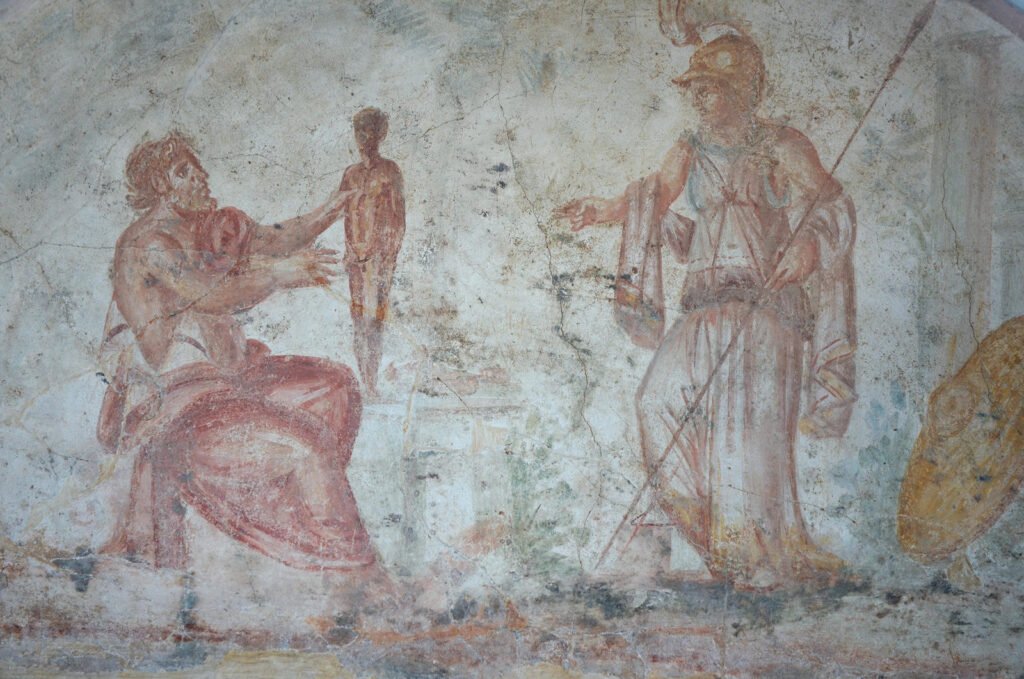
One of the most powerful myths in explaining human origin centers on Prometheus, a Titan known for his intelligence and foresight.
According to Hesiod and other sources, Prometheus:
- Shaped humans from clay, forming them in the image of the gods
- Gave them upright posture, so they could look toward the heavens
- Stole fire from Mount Olympus, which symbolized enlightenment and technological advancement
Prometheus didn’t just make humans — he empowered them. Fire, in ancient Greece, was not just for warmth or cooking. It represented knowledge, creativity, and independence. With fire, humans could craft tools, build shelters, and create civilizations.
But Prometheus’s gift came with a cost. Zeus, the king of the gods, considered fire divine property. He saw Prometheus’s act as treason and punished him with one of the most brutal sentences in mythology:
Chained to a rock, Prometheus suffered as an eagle devoured his liver daily — only for it to regenerate and be devoured again.
This myth shows a deep tension: innovation vs. control, rebellion vs. obedience, and the eternal human cost of progress.
Pandora and the Origin of Suffering
To punish humanity for accepting the fire Prometheus gave them, Zeus devised a clever counter: Pandora. She was the first woman, created by the gods, each giving her a gift: beauty from Aphrodite, charm from Hermes, music from Apollo, and curiosity from Hera.
She was given a sealed jar (later mistranslated as a “box”) and told never to open it.
But, like all good myths, temptation won.
When Pandora opened the jar, out came:
- Disease
- Death
- Hatred
- Greed
- Pain
- Jealousy
All the evils that plague humanity today.
But hope remained — stuck at the bottom of the jar. This part of the myth is heavily debated. Some scholars see it as a consolation prize. Others believe hope was the worst curse of all, encouraging humans to persevere in a world filled with suffering.
For young readers and seasoned professionals alike, the lesson is timeless: actions have consequences, and even in darkness, there’s hope.
The Five Ages of Man: Ancient Greek Myths Explained Where Humans Came From Timeline
Greek poet Hesiod, in his famous work Works and Days, described a mythological evolution of mankind through five races or ages. Each age represented a shift in morality, power, and divine favor:
- Golden Age
- Humans lived in peace and harmony
- No war, no suffering, no aging
- Ruled during Cronus’s reign
- Silver Age
- People were foolish and disobedient
- Lived long lives but were ungrateful to gods
- Zeus destroyed them
- Bronze Age
- Strong and violent; obsessed with war
- Wiped themselves out through self-destruction
- Heroic Age
- The only noble age post-Golden
- Includes heroes like Hercules and Achilles
- Rewarded with places in the afterlife
- Iron Age (our current age)
- Full of toil, injustice, dishonesty
- Each generation worse than the last
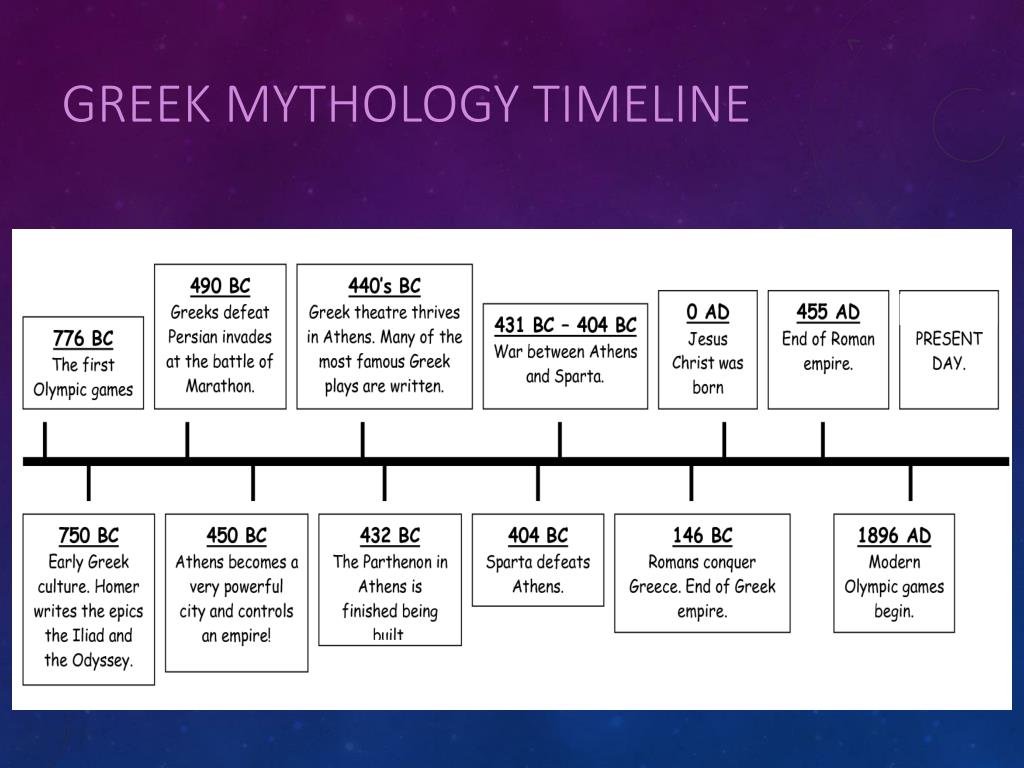
This myth served as social commentary. The Greeks believed society was on a moral decline, which mirrored their growing political instability and social changes.
Symbolism and Deeper Meanings
Greek myths weren’t just about storytelling — they were rich in metaphor and moral instruction.
- Prometheus symbolizes human ingenuity and the dangers of unchecked ambition.
- Pandora represents temptation, curiosity, and the duality of human nature.
- The Ages of Man reflect the cyclical rise and fall of civilizations.
- The presence of hope amidst suffering reinforces resilience as a core human trait.
These themes show up in everything from ancient Greek plays to modern movies like The Matrix and Oppenheimer.
Modern Relevance: Why Ancient Greek Myths Explained Where Humans Came From Still Matter
You don’t have to wear a toga to see the value in these myths today. Their influence is everywhere:
- Psychology: Freud, Jung, and others used mythological figures like Prometheus and Oedipus to understand the human mind.
- Literature: Writers from Mary Shelley (Frankenstein) to modern sci-fi authors use Greek themes to explore creation and consequence.
- Ethics: Debates around AI, cloning, and genetic engineering often mirror Prometheus’s dilemma — just because we can, should we?
Myths give us language and structure to tackle tough topics — power, suffering, invention, and morality — in both personal and professional life.
Real-World Uses and Career Relevance
These myths aren’t just for the classroom. They matter for:
- Teachers explaining themes like creation, fall, and morality
- Therapists exploring archetypes and subconscious drives
- Writers crafting meaningful, layered characters
- Historians and Anthropologists interpreting ancient culture
- Philosophers examining human nature and ethics
- Theologians and Classicists linking myths to religion and spirituality
They also offer cultural literacy, helping professionals engage across disciplines and understand references in literature, art, and pop culture.
Did Ancient Egypt Use Disease as a Weapon Against the Assyrians?
Mummy CT scans Reveal What Daily Life Did to Ancient Egyptian Priests
A Hidden Lead Pipe in Petra Is Rewriting What We Know About Ancient Water Systems