
Archaeologists have identified the oldest poisoned arrows ever discovered, dating to approximately 60,000 years ago, after detecting toxic plant residues on stone arrowheads from South Africa. The finding provides the earliest direct evidence that early humans deliberately used chemical poisons in hunting, revealing a level of scientific knowledge and technological planning far earlier than previously confirmed.
Table of Contents
Oldest Poisoned Arrows
| Key Fact | Detail |
|---|---|
| Estimated age | ~60,000 years |
| Location | Umhlatuzana Rock Shelter, South Africa |
| Key discovery | Plant-based poison residue on arrowheads |
| Broader significance | Earliest confirmed chemical weapon use |
The Discovery That Rewrites Early Human History
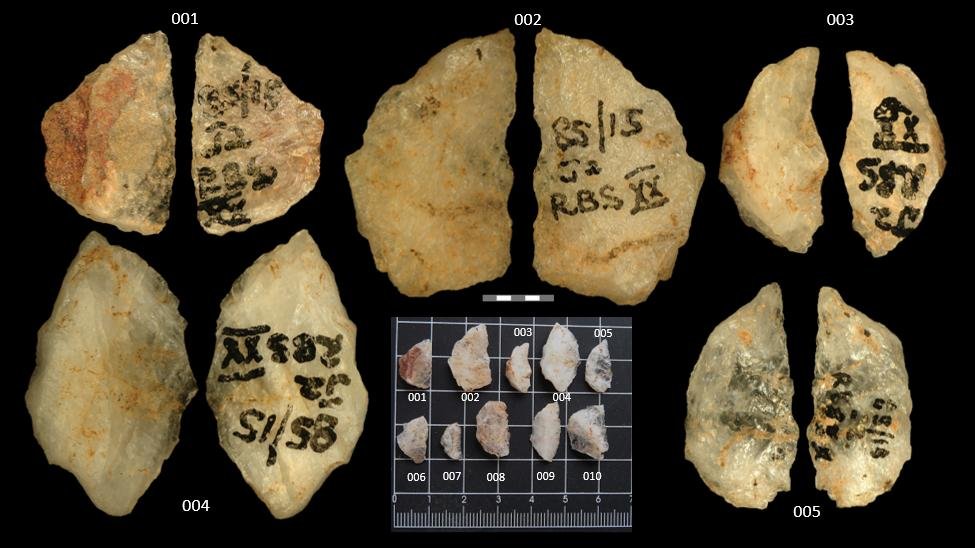
The confirmation of the oldest poisoned arrows comes from a new study published in Science Advances, where researchers applied modern chemical techniques to stone tools excavated decades earlier. The arrowheads, originally recovered in the 1980s, were reanalyzed using high-resolution mass spectrometry capable of detecting microscopic traces of ancient organic compounds.
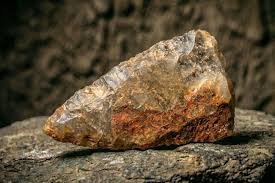
The artifacts were found at Umhlatuzana Rock Shelter, a site long known for its rich Middle Stone Age deposits. While archaeologists had previously suspected that some of the finely crafted quartz tips were arrowheads, the presence of poison had never been conclusively demonstrated.
“This study provides the first direct chemical evidence that poisoned arrows were used this early,” said Dr. Marlize Lombard, an archaeologist at the University of Johannesburg and a lead author of the research. “It shows that these were not simple weapons. They were part of a complex technological system.”
How Scientists Identified the Poison
Researchers examined residue on several stone tips using liquid chromatography–mass spectrometry, a method capable of isolating molecular signatures preserved over tens of thousands of years. The analysis revealed alkaloid compounds consistent with Boophone disticha, a highly toxic flowering plant native to southern Africa.
Boophone disticha, sometimes referred to as a “poison bulb,” contains toxins that can induce paralysis, hallucinations, or fatal heart failure when introduced into the bloodstream. Ethnographic records show that the plant has been used historically by southern African communities for hunting and medicinal purposes.
The chemical signatures were found in concentrations and patterns inconsistent with accidental contamination, researchers said. Instead, the evidence points to deliberate extraction, processing, and application of the poison to arrow tips.
“This is not something that happens by chance,” Lombard said. “It requires careful handling and a deep understanding of the plant’s properties.”
Why Poisoned Arrows Matter
The use of poisoned arrows represents a major leap in hunting strategy. Unlike spears or clubs, arrows tipped with poison do not rely on immediate lethality. Instead, they allow hunters to wound animals from a distance and track them as the toxin takes effect.
This approach offers several advantages. It reduces the risk of injury to hunters, allows smaller groups to bring down large prey, and compensates for the relatively light impact force of early projectile weapons.
According to the researchers, the technology implies advanced planning and delayed-return thinking. Hunters needed to anticipate that an animal would not collapse immediately and might travel significant distances before succumbing.
“This reflects a sophisticated understanding of cause and effect over time,” said Dr. Jessica Thompson, a biological anthropologist at Yale University who was not involved in the study. “It’s a clear indicator of complex cognition.”
Technological Complexity in the Middle Stone Age
The oldest poisoned arrows did not exist in isolation. They were part of a broader technological toolkit that included carefully shaped stone points, adhesive compounds for hafting, and likely early bows or spear-throwers.
Archaeological evidence from southern Africa suggests that bow-and-arrow technology may have emerged as early as 65,000 to 70,000 years ago. Poison would have made these lightweight weapons far more effective.
To produce a functional poisoned arrow, early humans had to master multiple steps: selecting the right stone, shaping it precisely, attaching it securely to a shaft, sourcing the poison, extracting it safely, and applying it in a way that preserved its potency.
Each step required skill and knowledge passed down through generations, likely through teaching and social learning.
Botanical Knowledge and Early Science
One of the most striking aspects of the discovery is the implied understanding of plant chemistry. Boophone disticha is highly toxic, and improper handling can be fatal. Identifying the plant, extracting its poison, and surviving the process suggests systematic experimentation and accumulated knowledge.
“This is early biochemistry,” Thompson said. “They understood which plants were dangerous, how to use them, and how to avoid harming themselves.”
The finding challenges long-held assumptions that complex chemical knowledge emerged only with agriculture or settled societies. Instead, it shows that hunter-gatherers were capable of sophisticated scientific reasoning tens of thousands of years earlier.
How This Compares to Other Ancient Weapons
Before this discovery, the oldest confirmed evidence of poisoned arrows dated to about 7,000 years ago, from sites in Africa and Asia. Earlier claims of poison use had been based on indirect evidence, such as ethnographic analogy or wear patterns on tools.
The new findings push back that timeline by more than 50,000 years and provide the first direct chemical proof of poison application.
“This fundamentally changes our understanding of when humans began manipulating natural toxins for technological purposes,” said Lombard.
It also places Africa at the center of early weapons innovation, reinforcing the continent’s role as a key driver of behavioral and technological evolution.
Implications for Human Migration and Survival
Researchers say poisoned arrows may have played a critical role in the survival and expansion of Homo sapiens. As early humans moved into new environments, the ability to hunt efficiently and safely would have been a major advantage.
Poisoned weapons allow hunters to exploit a wide range of prey species, including animals that would otherwise be too dangerous or difficult to kill with simple tools.
“This kind of technology likely contributed to the success of modern humans as they spread across the globe,” Thompson said.
Ethical and Scientific Caution
While the discovery has generated excitement, researchers caution against drawing overly simplistic conclusions. The presence of poison on some arrowheads does not mean all Middle Stone Age hunters used such weapons, nor that the practice was widespread.
Archaeologists also emphasize the importance of avoiding present-day biases when interpreting ancient behavior.
“These people were not ‘primitive,’ but they were also not modern scientists,” Lombard said. “Their knowledge was embedded in cultural practices we are still trying to understand.”
What Future Research May Reveal
The study’s authors believe similar residue analysis could reveal poison use at other archaeological sites, potentially extending the timeline even further back. Advances in analytical chemistry are allowing scientists to detect organic compounds once thought impossible to preserve.
“There are thousands of stone tools sitting in collections around the world,” Lombard said. “Many of them may still hold chemical secrets.”
Future research may also identify additional plant species used for hunting poisons, offering deeper insight into ancient ecological knowledge.
The Broader Significance
The identification of the oldest poisoned arrows adds to a growing body of evidence that early humans were technologically inventive, cognitively complex, and deeply knowledgeable about their environments.
Together with discoveries of early art, symbolic behavior, and long-distance trade, the finding contributes to a more nuanced picture of human origins—one that recognizes innovation as a defining trait from an early stage.
“This discovery reminds us that intelligence and creativity are not recent developments,” Thompson said. “They are fundamental to who we are as a species.”
Looking Ahead
Researchers say the discovery underscores the importance of reexamining old collections with new tools. As analytical techniques improve, long-held assumptions about early human capabilities are likely to continue evolving.
“We are only beginning to understand the full extent of early human ingenuity,” Lombard said. “Each new finding brings us closer to appreciating how sophisticated our ancestors truly were.”
FAQ
What makes this discovery unique?
It provides the earliest direct chemical evidence of poison use on weapons, rather than indirect or circumstantial clues.
Where were the oldest poisoned arrows found?
At Umhlatuzana Rock Shelter in KwaZulu-Natal, South Africa.
Why is poison use significant in archaeology?
It demonstrates advanced planning, botanical knowledge, and technological complexity among early humans.