
Command Mistake Temporarily Shut Down the TESS Planet Hunter: In January 2026, NASA’s Transiting Exoplanet Survey Satellite (TESS)—a cornerstone mission in the search for alien worlds—was temporarily knocked offline due to a command error that misaligned its solar panels. The mishap pushed the spacecraft into safe mode, suspending operations for several days until engineers restored full functionality. The incident, while short-lived, serves as a reminder of the delicate balance between automation and human oversight in modern space missions. Even with multiple layers of engineering safety, space remains a high-stakes, high-risk domain where the smallest mistake can sideline billion-dollar science.
Table of Contents
Command Mistake Temporarily Shut Down the TESS Planet Hunter
NASA’s recent TESS glitch wasn’t a failure—it was a test of resilience, engineering foresight, and mission control responsiveness. It highlighted how one overlooked detail can impact an entire spacecraft, but also how well-designed systems and expert teams can recover quickly. With the issue resolved, TESS is once again scanning the skies, continuing its mission to expand humanity’s understanding of the universe. The lessons learned here will ripple through engineering practices, space operations, and science education for years to come.
| Topic | Details |
|---|---|
| Incident | TESS entered safe mode due to solar panel misalignment during a command-driven slew |
| Impact | Power loss, science data disruption, paused comet observations |
| What Went Wrong | Earth command did not prevent solar panels from turning away from the Sun |
| Cause | Lack of solar orientation checks in command logic |
| Response Time | Recovery completed within days |
| Scientific Loss | Observations of interstellar comet 3I/ATLAS possibly lost |
| Professional Insight | Highlights need for real-time validation, redundancy, and systems integration |
| Official Resource | NASA TESS Mission Page |
What Is TESS, and Why Is It a Big Deal?
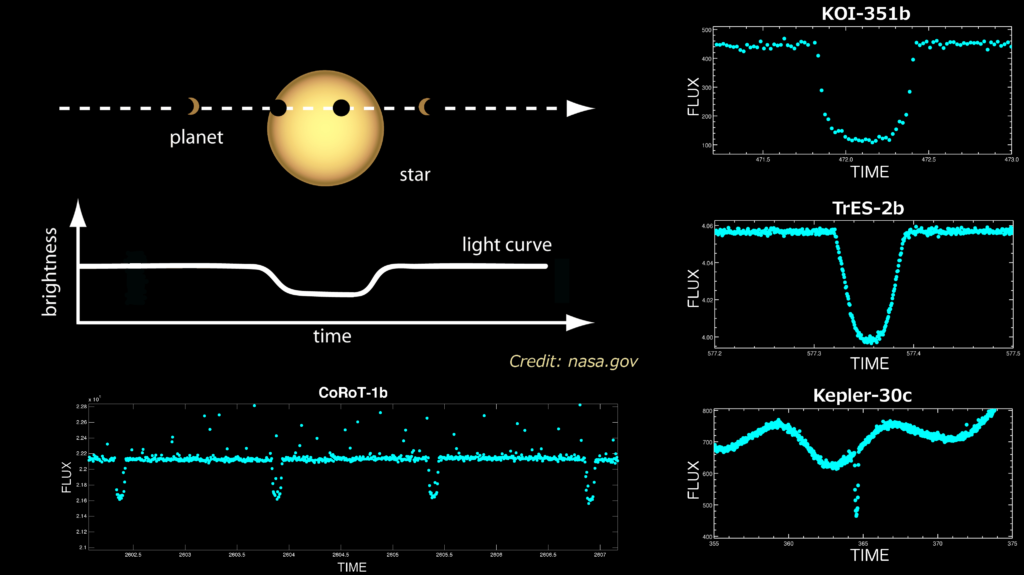
TESS is NASA’s flagship exoplanet-hunting spacecraft, launched in 2018 aboard a SpaceX Falcon 9 rocket. It’s designed to scan the entire sky, sector by sector, identifying exoplanets—worlds orbiting distant stars—by observing transits or brief dips in starlight.
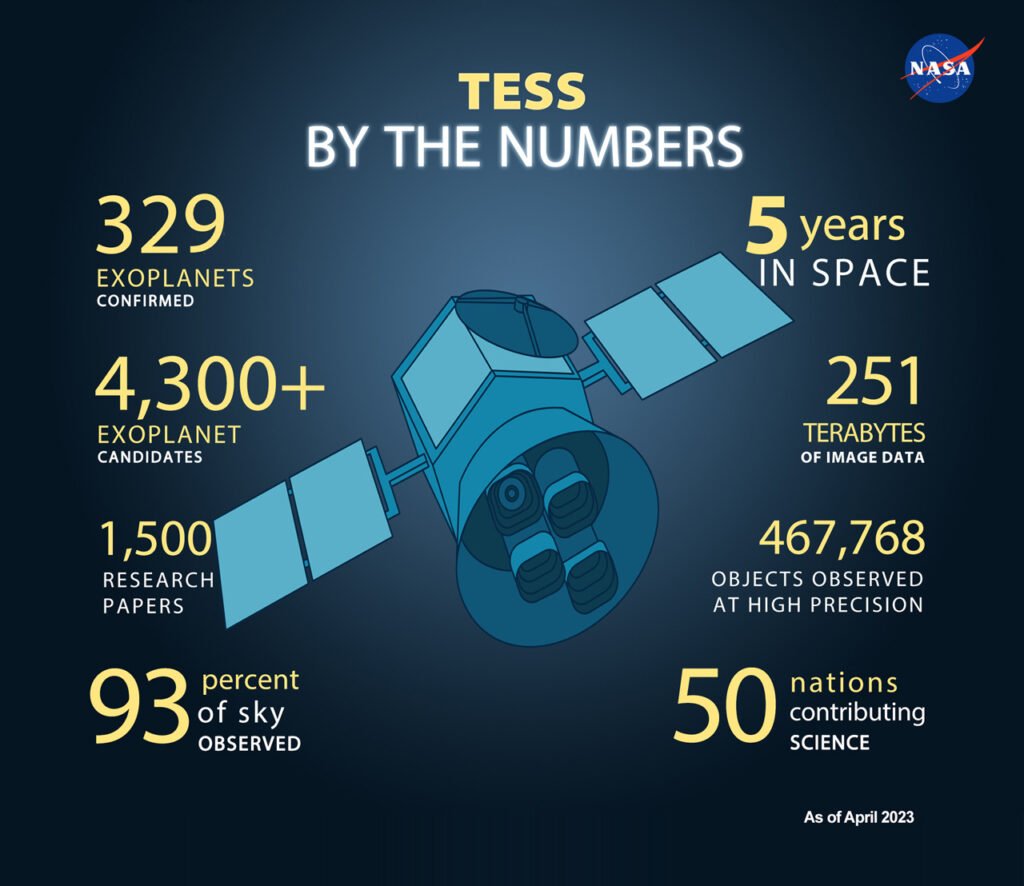
Its high-sensitivity cameras have helped catalog more than 6,400 planetary candidates so far, with over 400 confirmed exoplanets, according to the NASA Exoplanet Archive. Some of these planets lie in the habitable zone, raising hopes of finding Earth-like conditions beyond our solar system.
TESS also supports time-sensitive observations of supernovae, variable stars, and interstellar objects—like comet 3I/ATLAS, which it was targeting at the time of the error.
Command Mistake Temporarily Shut Down the TESS Planet Hunter: What Exactly Went Wrong?
During a routine slew maneuver on January 21, 2026, TESS was instructed to rotate its position in space to observe a new target: comet 3I/ATLAS, only the third interstellar object ever observed entering our solar system.
Here’s how things spiraled:
- The command initiated a slew, a standard maneuver to reorient the spacecraft.
- This maneuver unintentionally pointed TESS’s solar panels away from the Sun.
- The spacecraft could no longer recharge its batteries, rapidly losing power.
- Once the onboard system detected low-voltage thresholds, it triggered safe mode.
- Safe mode shut down all non-essential systems, including scientific instruments.
How Spacecraft Slewing Works?
Slewing refers to rotating a spacecraft to aim its instruments at new celestial targets. The maneuver uses reaction wheels and gyroscopes for smooth repositioning. While routine, such maneuvers must factor in several constraints:
- Thermal safety: Preventing sensitive components from overheating or freezing
- Sun vector alignment: Ensuring solar panels remain exposed to sunlight
- Communications: Keeping the high-gain antenna aimed at Earth
In TESS’s case, sun vector constraints were overlooked in the command, causing the solar panels to lose exposure—akin to unplugging a phone while running apps.
What Is Safe Mode?
Every spacecraft has a built-in defense mechanism called safe mode—a minimal power state that protects the spacecraft’s critical systems until mission control can respond.
In safe mode:
- The spacecraft stops scientific observations.
- It focuses solely on power conservation, thermal regulation, and basic communication.
- All non-critical systems and instruments are powered off.
- The spacecraft typically points its solar arrays at the Sun to maximize power intake.
Thanks to this mode, TESS avoided permanent damage and gave engineers time to troubleshoot the error remotely.
NASA’s Swift Response and Restoration Timeline
NASA engineers were alerted to the anomaly via telemetry and quickly diagnosed the problem. Over the next 48–72 hours, the team:
- Reestablished communication with TESS.
- Issued commands to reorient the spacecraft, restoring solar exposure.
- Allowed batteries to recharge to safe operating levels.
- Conducted system health checks and confirmed no hardware damage.
- Gradually brought the spacecraft back to full science mode.
Within a few days, TESS resumed operations, continuing its mission of scanning the cosmos for distant planets and unusual objects.
What Caused the Command Error?
While no software bug or hardware fault was found, the command error was caused by a procedural oversight. Specifically:
- The command sent to TESS was valid in format and execution.
- However, it did not include constraints ensuring the solar panels remained Sun-facing during the slew.
- The procedures lacked automated validation checks for solar array orientation risk.
In NASA’s words, “The operational fault occurred due to a missing procedural check rather than a spacecraft malfunction.”
Lessons for Mission Control and Aerospace Professionals
This incident is a goldmine of insights for professionals in aerospace operations, mission planning, and systems engineering. Here are some key takeaways:
1. Integrated Systems Thinking Is Critical
Even a valid command can have unintended consequences if broader system dependencies (like solar power) aren’t accounted for. This calls for holistic testing and cross-system impact analysis before commands are uplinked.
2. Command Validation Protocols Need Continuous Evolution
No command should be treated as “safe” just because it worked before. Mission control needs real-time validation tools that factor in:
- Spacecraft orientation
- Solar incidence angle
- Energy budget prediction
3. Fail-Safe Modes Are Vital
TESS’s survival reinforces the importance of:
- Watchdog timers
- Threshold triggers
- Automatic safe mode triggers
These mechanisms act faster than human intervention could—especially important when dealing with multi-minute communication delays in deep space.
4. Training and Simulations Save Missions
NASA will likely update its simulation and training environments to include this scenario, training new controllers and validating future software updates.
Spacecraft Failure Stats: Putting the Risk in Perspective
According to the NASA Office of Safety and Mission Assurance, about 1 in 5 space missions face significant anomalies. While most are recoverable, 15% of space science missions experience downtime due to procedural or software-based faults.
In commercial satellite operations, anomalies related to attitude control systems and power generation are among the top five causes of mission interruptions.
These stats underscore why continuous failure analysis, root cause tracking, and procedural updates are critical throughout a mission’s life cycle.
Historical Context: NASA’s Evolution in Risk Management
NASA’s approach to failure has evolved dramatically since early mission losses like:
- Apollo 1 (1967): Cabin fire during a test killed three astronauts.
- Challenger (1986): O-ring failure caused shuttle disintegration.
- Mars Climate Orbiter (1999): A unit conversion error caused mission loss.
Each incident led to sweeping changes in:
- Safety protocols
- Command verification
- Interdisciplinary collaboration
The TESS anomaly—though minor—will likely inspire further enhancements to automated pre-command simulations, perhaps even AI-based anomaly detection in future missions.
What’s Next for TESS?
TESS has resumed operations and is now back to observing new targets. While the brief downtime might have disrupted observation of 3I/ATLAS, the mission’s primary science goals remain unaffected.
NASA has confirmed:
- No onboard damage occurred.
- Future command protocols will include mandatory solar orientation checks.
- Engineers will analyze telemetry data to refine risk prediction models.
The mission is funded through at least 2027, with international collaboration ongoing. TESS’s discoveries continue feeding missions like the James Webb Space Telescope (JWST) for follow-up.
Educational Angle: Teaching Kids About Space Safety
This story is also a great tool for STEM education. Teachers and parents can use this real-world example to explain:
- The importance of sunlight for solar-powered machines.
- How robots can “sleep” to protect themselves.
- Why space jobs require teamwork and precision.
NASA Is Offering $3 Million for Help Solving a Dangerous Moon Problem
Mummy CT scans Reveal What Daily Life Did to Ancient Egyptian Priests
China’s Space Program Faces Trouble as Astronauts Remain Stuck Amid Debris Risks