
Early Writing Theory — the question of whether humans created meaningful symbolic systems 40,000 years ago — has returned to the center of scientific discussion. New archaeological analyses of Ice Age cave art suggest prehistoric people repeatedly used structured signs to record information. Researchers stress this does not mean writing existed at that time, but it may show complex communication began tens of thousands of years before civilization.
Table of Contents
Early Writing Theory
| Key Fact | Detail |
|---|---|
| Earliest known writing | Around 3200 BCE in Mesopotamia |
| Age of cave symbols | About 40,000 years |
| Earlier symbolic behavior | 70,000+ years |
Researchers say the key question is no longer whether prehistoric people used symbols. Instead, scientists are investigating how sophisticated those symbols were and how they ultimately enabled writing systems. As new caves are discovered and technologies improve, the Early Writing Theory will likely remain a central topic in understanding human intellectual evolution.
Early Writing Theory: What Scientists Actually Found
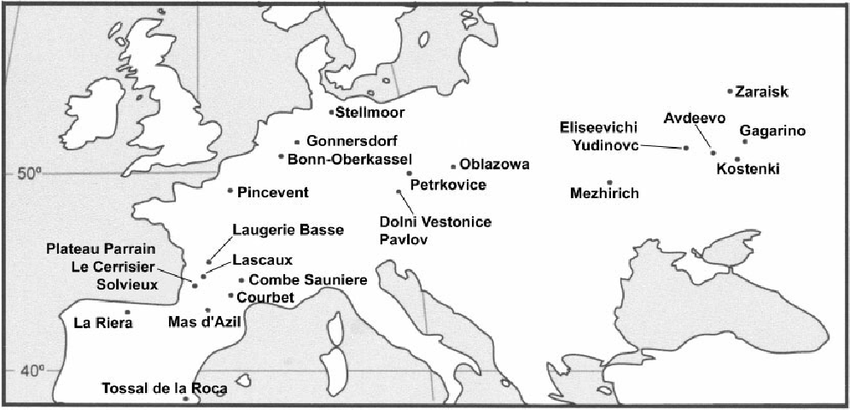
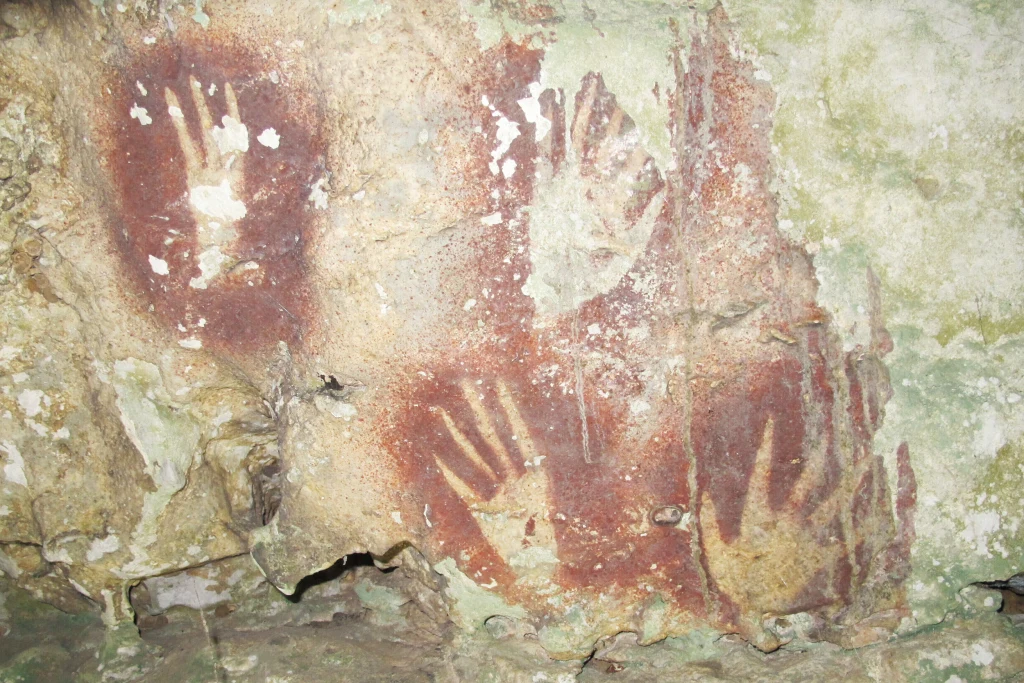
Archaeologists have documented recurring geometric signs in Ice Age caves across Europe. These include dots, ladder shapes, hand stencils, zigzags, and branching lines. The same signs appear in caves separated by thousands of kilometers.
Archaeologist Dr. Genevieve von Petzinger, who examined hundreds of sites, identified about 30 repeated symbols shared across regions. She has argued in research presentations that the consistency indicates intentional communication rather than decoration.
Researchers call this proto-writing — a system conveying meaning without representing spoken language sounds. In other words, the signs likely communicated information, but not sentences.
Proto-Writing vs. True Writing
Modern writing systems encode speech. Readers can reconstruct spoken language, grammar, and syntax. The earliest confirmed writing, Sumerian cuneiform, appeared around 5,000 years ago.
The cave symbols do not meet that standard. Scientists cannot translate them into spoken language.
Instead, researchers believe the signs likely served practical functions:
- tracking seasonal animal migrations
- counting hunts
- marking territories
- recording rituals or shared knowledge
Linguists compare them to memory tools or pictograms, similar to calendars or tally marks.
Cognitive archaeologists view this as a crucial step in human evolution. Humans were not yet writing stories, but they had begun storing information outside the brain — a major cognitive development known as symbolic communication.
Earlier Than Expected: Possible Neanderthal Contribution
The debate intensified after dating research suggested some cave markings predate modern humans in parts of Europe. Certain Spanish cave paintings date to more than 60,000 years ago, when Neanderthals occupied the region.
If accurate, symbolic behavior may not be exclusive to Homo sapiens.
Anthropologists say this finding challenges earlier assumptions about intelligence in human evolution. It suggests multiple human species possessed abstract thinking abilities.
Why the Theory Is Being Revisited Now
Recent studies used statistical analysis on engraved bones and portable objects discovered in Ice Age settlements. Researchers identified sequences of marks that appeared structured rather than decorative.
A 2023 study compared the marks to early accounting systems used in agricultural societies. The patterns resembled basic record-keeping, not artwork.
Historians emphasize this does not change when writing began. Instead, it changes how writing emerged.
Writing may have developed gradually from prehistoric symbolic traditions rather than appearing suddenly in cities.
The Evolution of Communication
Experts now propose a gradual progression:
- Decorative marks
- Shared symbols
- Memory recording
- Accounting systems
- Writing
Anthropologists link this to growing social complexity. As human groups expanded, they needed reliable ways to preserve information beyond oral storytelling.
Cultural Context: Why Ice Age People Needed Symbols
Prehistoric societies depended heavily on cooperation. Hunting large animals required planning across groups and seasons. Oral communication alone had limits.
Symbols offered a solution. They could preserve knowledge when storytellers were absent or when groups separated.
Researchers believe symbols may have recorded migration routes, safe shelter locations, and hunting timing. Some scholars propose early lunar calendars used to predict animal breeding cycles.
This makes prehistoric markings less mysterious. They may represent practical survival tools.
Connections to Later Civilizations
Early agricultural societies used clay tokens to track goods and trade. Archaeologists have found tokens in Mesopotamia that later evolved into written cuneiform characters.
Many researchers now suspect a conceptual connection. Humans already understood symbolic recording long before agriculture began.
Writing may therefore represent refinement rather than invention.
Cognitive Development and the Human Brain
Neuroscientists study symbolic communication because it reflects how the human brain organizes abstract thought. Recording information visually requires memory planning and shared meaning between individuals.
Scholars note that children today learn similar skills in development. Drawing pictures to represent objects precedes learning letters.
Some researchers compare cave symbols to the earliest stages of literacy — not writing, but preparation for writing.
How Researchers Study Ancient Symbols
Scientists use multiple modern techniques:
- radiometric dating to determine age
- pigment chemistry to identify materials
- 3D scanning to analyze engravings
- pattern recognition software to compare symbols
Artificial intelligence now helps identify repeating structures across caves. Researchers hope computational analysis may detect grammar-like patterns in the future.
Ongoing Debate Among Experts
Some archaeologists remain cautious. They argue ritual art may explain repeated symbols. Religious or ceremonial meaning does not require record-keeping.
Others say structured repetition suggests shared conventions. Even simple record systems use limited symbols.
The disagreement centers on definition. When does a symbol system become writing?
Linguists generally require representation of spoken language. By that definition, cave symbols remain proto-writing.
What This Means for Human History
The Early Writing Theory changes how historians view civilization. Writing was not an isolated invention. It was a culmination of long cognitive development.
Human societies practiced external information storage long before cities, farming, or trade networks.
Civilization may have depended on symbolic thinking rather than symbolic thinking arising from civilization.
Broader Impact on Modern Understanding
The study also affects education and anthropology. It suggests literacy rests on deep biological foundations.
Modern communication — books, computers, and digital media — builds on abilities that evolved tens of thousands of years ago.
Some scholars call cave symbols humanity’s first data recording technology.
Future Research Directions
Researchers are building global databases of prehistoric art. Comparing sites across continents may reveal shared patterns in early communication.
New discoveries continue. Caves in Indonesia and Africa have revealed equally ancient art, suggesting symbolic culture developed worldwide.
Future findings may clarify whether early humans shared communication traditions through migration.
FAQ
Did humans invent writing 40,000 years ago?
No. They created meaningful symbols, but true writing encoding speech appeared around 3200 BCE.
What is proto-writing?
A symbolic system that records information but does not represent spoken language.
Why is the Early Writing Theory important?
It shows complex thinking and communication developed far earlier than civilization.