

The 2027 Social Security COLA Forecast indicates American retirees will likely receive a modest benefit increase, reflecting easing inflation after several years of economic turbulence. Analysts currently estimate the adjustment at roughly 2.3% to 2.8%, suggesting price growth is cooling while the broader economy stabilizes.
The projected change, though smaller than recent increases, remains significant for millions of older Americans who rely heavily on Social Security payments to meet everyday expenses.
Table of Contents
Early 2027 Social Security COLA Forecast
| Key Fact | Detail/Statistic |
|---|---|
| Estimated 2027 increase | About 2.3%–2.8% |
| Calculation method | Based on CPI-W inflation index |
| Final announcement | October 2026 |
What the 2027 Social Security COLA Forecast Shows
The Social Security Administration adjusts payments annually through a cost-of-living adjustment (COLA) to protect retirees against rising prices. The adjustment relies on the Consumer Price Index for Urban Wage Earners and Clerical Workers (CPI-W), a government inflation measure calculated by the U.S. Bureau of Labor Statistics (BLS).
Policy analysts tracking early inflation data estimate the 2027 adjustment will be near 2.5%. The figure could still change because the government bases the final calculation on inflation readings between July and September 2026.
Mary Johnson, a Social Security policy analyst with The Senior Citizens League, said projections remain preliminary but informative.
“COLA reflects the real world. If the inflation rate falls, the increase naturally declines,” she said. “This year we are seeing normalization after unusually volatile years.”
The official figure will be released in October 2026.
Why the Increase Is Likely Smaller
The smaller increase stems largely from a decline in U.S. inflation. Prices surged in 2021 and 2022 due to pandemic supply disruptions, labor shortages, and strong consumer demand. The Federal Reserve responded by raising interest rates to cool the economy.
Those policies appear to be working.
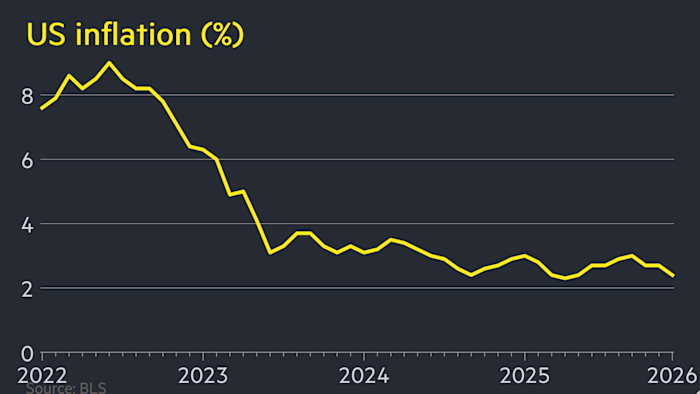
When inflation rises quickly, retirees receive larger increases. In 2023, beneficiaries received an 8.7% adjustment — the largest since 1981. By comparison, the 2026 increase was 2.8%.
Teresa Ghilarducci, a retirement economist at The New School, said a smaller COLA can signal stability.
“Lower inflation is generally good news for households,” she said. “But seniors experience inflation differently because healthcare and housing costs rise faster than the overall index.”
How Benefits Are Calculated
Understanding the Cost-of-Living Adjustment Formula
The government determines the cost-of-living adjustment through a structured process:
- The Bureau of Labor Statistics measures price changes across consumer categories.
- The Social Security Administration compares the third quarter inflation average to the previous highest level.
- If prices rise, retirement benefits increase accordingly.
If inflation falls, benefits do not decrease. U.S. law prevents Social Security payments from being reduced due to deflation.
The formula was adopted in 1975 to automatically adjust benefits and avoid the need for congressional approval every year.
Historical Context: How 2027 Compares
The projected 2027 increase fits historical patterns. Over the past four decades, the average Social Security COLA has been about 2.6%.
| Year | COLA Increase |
|---|---|
| 2023 | 8.7% |
| 2024 | 3.2% |
| 2025 | 3.0% |
| 2026 | 2.8% |
| 2027 (forecast) | ~2.5% |
The data suggests the United States is returning to typical inflation conditions after a post-pandemic spike.
Impact on Retirees and Household Budgets
Social Security supports more than 70 million Americans. According to the Social Security Administration, about 40% of retirees depend on the program for the majority of their income.
A 2.5% increase would raise the average monthly payment by roughly $50–$60, based on current average benefits near $1,900.
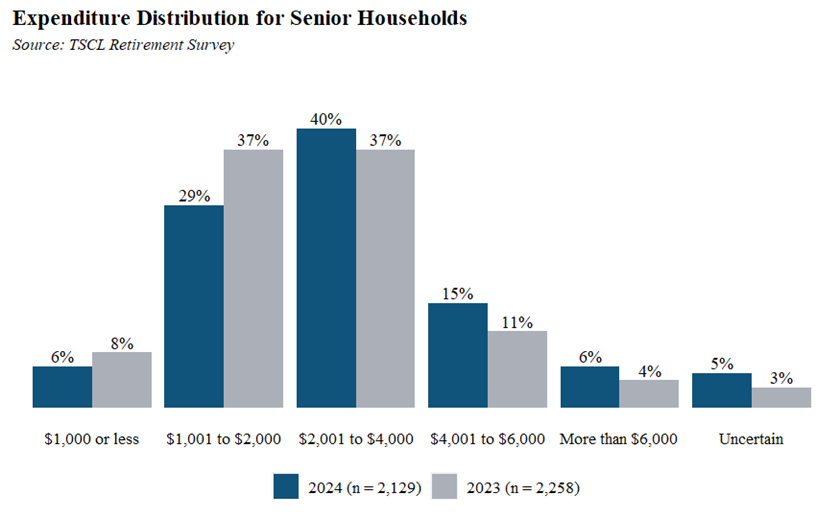
However, retirees face costs not fully reflected in the CPI-W index. Medical spending tends to rise faster than overall consumer prices. Medicare premiums, prescription drugs, and long-term care services often grow more expensive each year.
The nonpartisan Kaiser Family Foundation has found healthcare spending represents a disproportionately large share of senior household budgets. As a result, some retirees may still experience declining purchasing power despite a benefit increase.
Practical Effects on Everyday Life
The 2027 Social Security COLA Forecast will influence routine decisions for retirees:
- Grocery purchasing habits
- Housing affordability
- Medication budgeting
- Utility and heating payments
Financial planners often recommend retirees adjust withdrawal rates from savings depending on the inflation rate.
Certified financial planner Carolyn McClanahan said predictable increases help retirees plan.
“The biggest risk to retirees is unexpected inflation,” she explained. “Even a small, reliable adjustment helps people make sustainable long-term financial decisions.”
Broader Economic Meaning
Economists view Social Security adjustments as a real-time indicator of inflation trends. Because the benefit formula is tied directly to price growth, it reflects real consumer conditions.
Mark Zandi, chief economist at Moody’s Analytics, said the forecast carries broader implications.
“A modest COLA suggests inflation is approaching the Federal Reserve’s target,” he said. “That affects interest rates, housing markets, and government borrowing costs.”
Lower inflation often supports stock markets and stabilizes mortgage rates, but it reduces growth in fixed payments such as pensions and Social Security.
Global and Financial Market Implications
While Social Security is a domestic program, its signals reach global markets. The United States remains the world’s largest economy, and inflation expectations influence international investment flows.
A stable U.S. inflation rate can:
- Strengthen confidence in the dollar
- Influence central bank policy worldwide
- Affect gold and bond prices
- Shape pension fund investment strategies
Financial analysts say a moderate adjustment supports Forward guidance expectations from the Federal Reserve, reducing uncertainty for investors.
Political and Policy Debate
Social Security faces long-term financing challenges. Trustees have warned the program’s trust fund could be depleted in the early 2030s without legislative changes.
Some policymakers propose modifying the COLA formula to better reflect retirees’ expenses. One idea is adopting the Consumer Price Index for the Elderly (CPI-E), which gives greater weight to healthcare costs.
Supporters say it would more accurately protect retirees. Critics warn it could increase federal spending significantly.
When the Final Number Arrives
The Social Security Administration will announce the official COLA in October 2026 after reviewing summer inflation data. Payments reflecting the increase will begin in January 2027.
Until then, projections remain estimates. Unexpected energy price changes, housing costs, or economic shocks could still alter the outcome.
The Senior Citizens League plans monthly updates as new inflation figures are released.
FAQs About Early 2027 Social Security COLA Forecast
What is a COLA?
A yearly adjustment to benefits designed to offset price increases caused by inflation.
Can benefits ever be reduced?
No. Federal law prevents Social Security payments from decreasing.
Who receives it?
Retirees, disabled workers, and Supplemental Security Income recipients.
Why does it change every year?
Because the inflation rate changes annually.
Final Outlook
The 2027 Social Security COLA Forecast suggests a return to normal economic conditions rather than financial stress. Inflation appears to be stabilizing, though many retirees still face rising healthcare and housing costs.
Economists say the coming year will test whether inflation truly remains contained. As Johnson noted, “The final number will depend on what happens with prices this summer. Until then, retirees and policymakers will be watching every inflation report closely.”