
Most of us trust the clock without ever questioning it. A day is 24 hours, simple, reliable, predictable. But in reality, our planet does not rotate with perfect precision. Scientists have discovered that Earth’s rotation is gradually slowing, and this tiny change is quietly reshaping how we measure time.
You won’t notice it when you wake up tomorrow morning, yet it’s happening right now and has been happening for hundreds of millions of years. What makes this fascinating is that Earth’s rotation is gradually slowing not because of anything humans are doing, but because of a natural cosmic interaction between our planet and the Moon. Modern satellite measurements and atomic clocks allow scientists to track Earth’s motion to fractions of milliseconds. That level of precision has revealed something surprising: the 24-hour day we rely on is actually a moving target.
When scientists talk about the length of a day, they don’t mean the number printed on your watch. They mean the exact time Earth takes to complete one full rotation relative to the Sun. And that value isn’t fixed. The reason Earth’s rotation is gradually slowing is mainly tidal friction created by the Moon’s gravitational pull on our oceans. As ocean water moves, it drags against coastlines and the seafloor, slowly draining rotational energy from the planet. This shift is extremely small, about 1.7 milliseconds per century, but it accumulates. Hundreds of millions of years ago, days were significantly shorter. Ancient fossil records and modern atomic timekeeping confirm that the length of a day continues to increase, forcing scientists to occasionally adjust our clocks so solar time and clock time remain aligned.
Table of Contents
Earth’s Rotation Is Gradually Slowing
| Key Aspect | Details |
|---|---|
| Current day duration | About 24 hours average solar day |
| Rate of change | Increasing around 1.7 milliseconds per century |
| Primary cause | Tidal friction caused by Moon’s gravity |
| Ancient day length | Around 22 hours about 400 million years ago |
| Moon’s movement | Drifting away about 3.8 cm per year |
| Evidence sources | Fossils, sediment layers, atomic clocks |
| Time adjustment | Leap seconds added to global time |
| Recent trend | Occasional short term faster rotation days detected |
Earth’s rotation is gradually slowing, and while the change is subtle, it reveals something profound. The rhythms of our daily life, sunrise, sunset, and the ticking clock, are linked to deep cosmic forces. Our sense of time is not fixed but evolving along with the planet itself.
Why Earth’s Spin Is Slowing
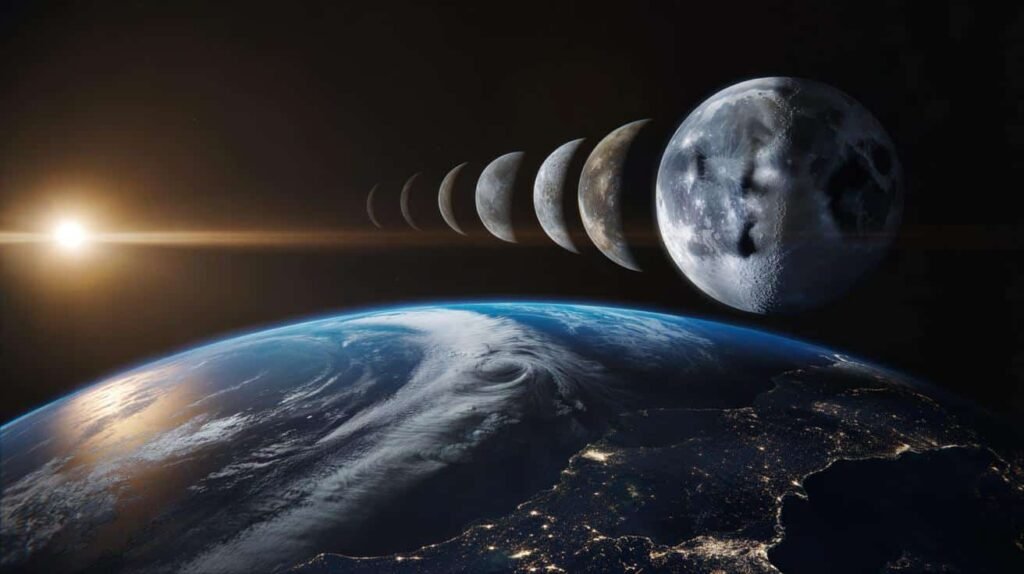
At its birth 4.5 billion years ago, Earth spun much faster. The early planet completed a rotation in less than half a modern day. Over time, gravitational forces began interfering with this motion. The largest factor is the Moon. The Moon’s gravity pulls on Earth’s oceans, creating tides. Because Earth rotates faster than the Moon orbits, the tidal bulges form slightly ahead of the Moon’s position. The Moon pulls backward on those bulges, acting like a gentle brake. This interaction slowly removes energy from Earth’s spin. While the change is tiny from day to day, over millions of years it becomes dramatic. The reason Earth’s rotation is gradually slowing is therefore not a sudden shift but a continuous cosmic tug of war between Earth and its natural satellite.
The Moon’s Role And Tidal Friction
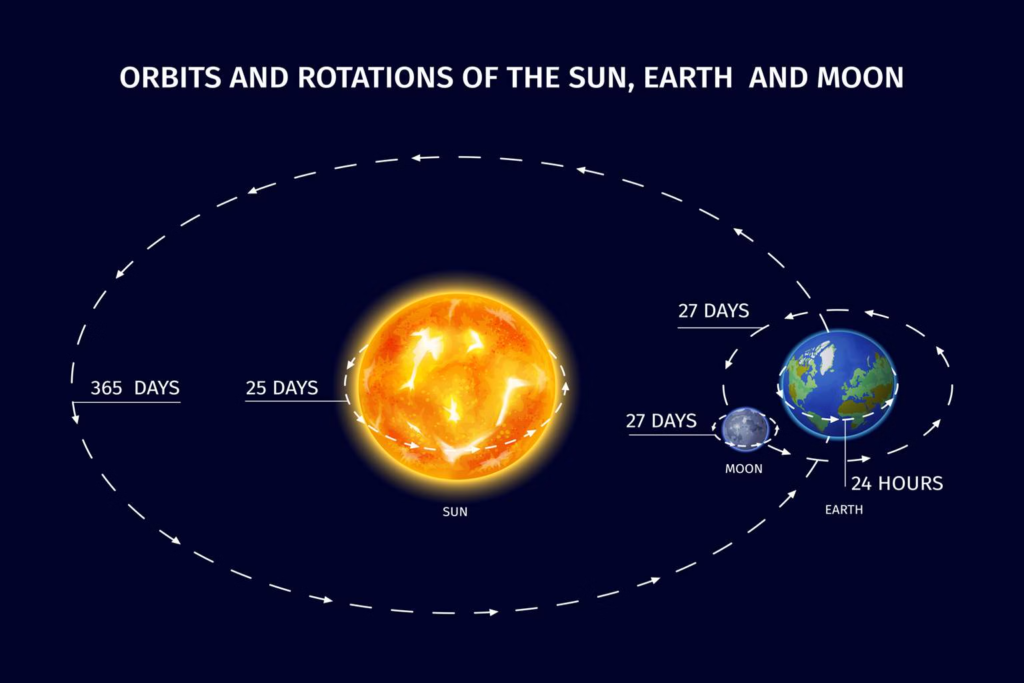
- Imagine spinning while dragging your hand through water. The resistance would gradually slow you down. Earth experiences a similar effect.
- The Moon raises ocean tides, and the water constantly moves across the planet’s surface. As tides rise and fall, water rubs against coastlines and the ocean floor. That friction converts rotational energy into heat. The energy lost from Earth’s spin transfers into the Moon’s orbit.
- Because of this, the Moon is slowly moving farther away from Earth. Today it recedes at roughly 3.8 centimeters per year. Laser measurements bounced off reflectors left on the Moon have confirmed this beyond doubt.
- So while Earth’s rotation is gradually slowing, the Moon’s orbit is expanding. The two processes are permanently connected.
Evidence From Rocks and Fossils
- Scientists did not discover this change only through satellites. Earth itself preserved a record long before humans existed.
- Ancient coral fossils contain daily growth rings similar to tree rings. By counting how many daily layers appear inside a yearly band, researchers determined how many days existed in a year long ago. Around 400 million years ago, a year contained roughly 400 days.
- Since Earth’s orbit around the Sun has not significantly changed, that means each day must have been shorter. Calculations show ancient days lasted about 22 hours.
- Rock formations called tidal rhythmites also record tidal cycles. These repeating patterns confirm that Earth’s rotation is gradually slowing over geological time.
Measuring Time: Atomic Clocks Vs. Astronomical Time
- Today, timekeeping no longer depends on the sky. Instead, it depends on physics.
- Atomic clocks measure time using the steady vibration of cesium atoms. They are so precise that they would lose less than a second over millions of years. Earth, however, is not nearly that consistent.
- Its rotation varies due to earthquakes, melting glaciers, seasonal winds, ocean currents, and even movements in the liquid outer core. Because of these factors, Earth’s rotation is gradually slowing but also fluctuates slightly from year to year.
- This creates a mismatch. Atomic time remains perfectly steady while Earth’s rotation changes.
Leap Seconds and the Debate
- To keep clocks aligned with the Sun, scientists occasionally add a leap second to global time. This adjustment prevents noon from slowly drifting into the afternoon over centuries. Since 1972, 27 leap seconds have been added. The most recent was in 2016.
- However, leap seconds create technical complications. Satellite systems, banking networks, and internet servers require perfectly continuous time signals. Because Earth’s rotation is gradually slowing, the need for corrections continues, yet some organizations want to eliminate leap seconds and allow civil time to drift slightly from solar time. The discussion is still ongoing among international timekeeping agencies.
Short Term Wobbles and Surprises
Interestingly, Earth does not slow in a perfectly smooth way. In recent years scientists observed some days that were slightly shorter than expected. Between 2020 and 2024, measurements showed milliseconds faster rotation on certain days. These variations occur because Earth is a dynamic system. Shifting air masses, ocean circulation, and movements deep inside the planet redistribute weight across the globe. The effect is similar to a spinning skater pulling their arms inward, briefly speeding up rotation. Even so, the long term trend remains clear. Earth’s rotation is gradually slowing over centuries.
What It Means For Everyday Life
- For daily human experience, nothing changes. You will not notice longer afternoons or delayed sunrises in your lifetime.
- However, precise technology depends heavily on accurate timekeeping. GPS navigation, spacecraft guidance, aviation timing systems, and communication networks all require extreme precision. Even a one second error could produce major navigation problems.
- Because Earth’s rotation is gradually slowing, international observatories and timekeeping centers constantly monitor the planet’s spin and update official global time accordingly.
Looking Far Ahead
- If we project far into the future, the consequences become remarkable. Hundreds of millions of years from now, days will grow longer than 24 hours. Eventually, Earth could become tidally locked with the Moon, always showing the same face toward it, just as the Moon currently does to Earth.
- This would take billions of years and will likely occur long after the Sun itself changes dramatically. For now, the slowdown serves as a reminder that our planet is active and evolving.
- A day feels permanent because human life is short. Yet on cosmic timescales, even something as basic as sunrise and sunset is part of a slow, ongoing transformation.
FAQs on Earth’s Rotation Is Gradually Slowing
How Much Longer Is A Day Becoming
A day lengthens by about 1.7 milliseconds every century. The change is too small to notice directly but measurable with modern instruments.
Why Is the Moon Moving Away from Earth
Tidal friction transfers energy from Earth’s rotation into the Moon’s orbit, pushing the Moon outward slightly every year.
Will We Eventually Have 25 Hour Days
Yes, but only after hundreds of millions of years. The process is extremely gradual.
What Is a Leap Second
A leap second is a one second adjustment added to global timekeeping to keep clocks aligned with Earth’s actual rotation.