


The phrase Refunds Rising Over 10 Percent reflects new federal filing statistics showing Americans are receiving significantly larger tax refunds at the beginning of the 2026 U.S. tax season. Early data released by the Internal Revenue Service (IRS) indicates the average refund has increased compared with the same period last year, though officials stress the numbers remain preliminary as millions of returns are still pending.
Table of Contents
IRS Data Shows Refunds Rising Over 10 Percent
| Key Fact | Detail/Statistic |
|---|---|
| Average refund | About $2,290 early in the season |
| Increase | Roughly 10–11% higher than last year |
| Expected filings | About 160 million tax returns |
The filing season remains in its early stages, and refund averages may shift as more taxpayers submit returns before the April deadline. For now, Refunds Rising Over 10 Percent suggests many households will receive larger payments than last year, but officials advise taxpayers to focus less on refund size and more on filing accurately and securely.
Early Filing Data Shows Larger Checks
The IRS opened the 2026 tax filing season in late January and began processing electronic returns immediately. Within weeks, preliminary data showed a noticeable rise in the average refund amount.
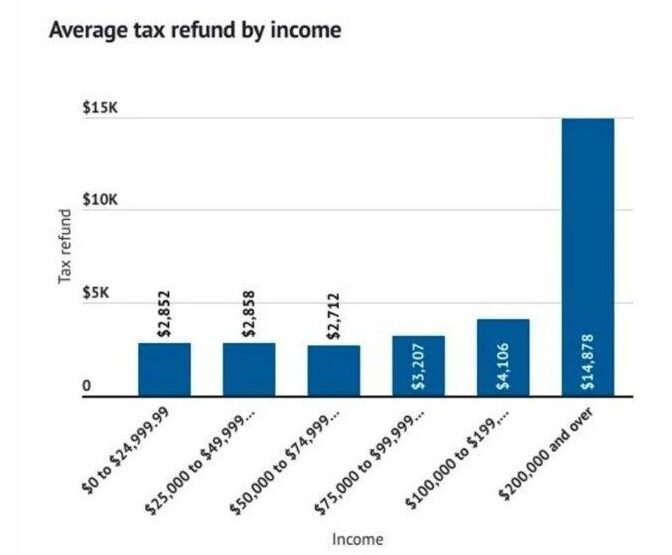
Tax economists caution the increase must be interpreted carefully. Early filers are not representative of all taxpayers. Lower-income households, retirees with simple returns, and taxpayers expecting refunds often file first.
“The composition of early filers tends to skew the averages,” analysts at policy research institutions routinely note in seasonal filing reports. Once higher-income households file closer to the April deadline, refund levels often adjust.
The IRS anticipates approximately 160 million individual returns this year, meaning current statistics reflect only a small share of final filings.
Why Refunds Are Increasing
Adjustments to Tax Credits and Withholding
The most important reason behind Refunds Rising Over 10 Percent involves refundable tax credits and paycheck withholding patterns.
Credits such as:
- Earned Income Tax Credit (EITC)
- Additional Child Tax Credit (ACTC)
can significantly boost refunds because eligible households receive payments even if they owe little or no income tax.
Federal anti-fraud rules require the IRS to delay refunds connected to these credits until mid-February. As a result, many payments appear in late February and March.
Wage Changes and Payroll Withholding
Employers withhold federal taxes from employee paychecks throughout the year. When withholding exceeds actual tax liability, the taxpayer receives a refund.
A combination of wage growth, inflation adjustments to tax brackets, and payroll withholding formulas contributed to larger refunds for some households this year.
Tax specialists frequently explain the concept in simple terms: a refund is not a bonus payment. Instead, it represents taxes already paid.
“A refund means the taxpayer overpaid during the year,” accountants often note in consumer guidance publications. “It is a settlement of the annual tax account.”
What Taxpayers Should Expect Next
The IRS states that most taxpayers who e-file and select direct deposit receive refunds within 21 days. However, several factors may delay processing:
- Identity verification checks
- Employer reporting delays
- Errors on tax forms
- Paper returns
- Amended filings
The agency also recommends taxpayers track payments using the official “Where’s My Refund?” system, updated daily during filing season.
Why Early Numbers Can Be Misleading
Refund averages typically fluctuate during February and March. The first filers often include people expecting refunds, while taxpayers who owe money usually file later.
As a result, early data frequently overstates the average payment.
Tax preparers emphasize that individuals should not compare personal refunds with national averages because returns vary widely.
Refund size depends on:
- Filing status
- Dependents
- Income level
- Retirement contributions
- Deductions
- Tax credits
- Withholding accuracy
Broader Economic Context
The phenomenon of Refunds Rising Over 10 Percent also matters to the broader U.S. economy.
Economists often describe tax refunds as a “seasonal stimulus.” Many households use refunds to:
- Pay down credit card debt
- Catch up on rent or utilities
- Cover medical expenses
- Make major purchases
- Build savings
Retailers historically see higher sales during refund season, especially in late winter. Electronics, home goods, and automobile down payments frequently rise in March and April.
The U.S. Department of the Treasury has noted in past reports that tax refund spending can temporarily boost consumer activity.
How Inflation Plays a Role
Inflation indirectly influences refund amounts through tax bracket indexing. The federal tax system adjusts income thresholds annually to account for rising prices. Without those adjustments, taxpayers could move into higher brackets simply because wages rose with inflation.
Because of these bracket adjustments:
- Some taxpayers paid less tax during the year
- Others withheld more than required
- Refunds increased for certain income groups
However, higher refunds do not necessarily mean households are financially better off. Inflation may have increased living costs faster than refunds.
Impact on Different Types of Taxpayers
Lower-Income Households
Families qualifying for refundable credits may receive the largest relative increase in refunds.
Middle-Income Workers
Refund changes typically reflect withholding accuracy. Those who adjusted payroll withholding may see smaller refunds.
High-Income Taxpayers
Higher earners are less likely to receive refunds because they often manage estimated tax payments more precisely.
Self-Employed Workers
Freelancers and business owners frequently owe taxes rather than receive refunds due to quarterly estimated payments.
Filing Risks and Common Mistakes
The IRS warns taxpayers about frequent filing errors:
- Incorrect Social Security numbers
- Mismatched employer wage data
- Missing income forms (1099s)
- Duplicate dependent claims
- Calculation errors
Identity theft also remains a concern. Fraudsters sometimes attempt to file returns using stolen personal information to claim refunds.
To prevent this, the IRS may delay refunds if a return triggers fraud detection filters.
International Perspective
While the U.S. relies on annual tax filing, many countries operate “pay-as-you-earn” systems where tax is settled automatically.
For example:
- The United Kingdom calculates most employee taxes through payroll withholding.
- Canada and Australia still require filing but often pre-fill tax forms.
The U.S. system produces large refund checks partly because taxpayers reconcile taxes once a year rather than continuously.
What the IRS Advises Taxpayers
The agency encourages taxpayers to:
- File electronically
- Use direct deposit
- Keep records of income statements
- Double-check dependent information
- Avoid filing before receiving all wage forms
Officials also recommend reviewing withholding using IRS withholding calculators to avoid overpayment next year.
FAQs About IRS Data Shows Refunds Rising Over 10 Percent
Are refunds actually bigger this year?
Yes. Early IRS data shows Refunds Rising Over 10 Percent, though final averages may change.
Does a bigger refund mean lower taxes?
No. It usually means you overpaid taxes during the year.
When will refunds arrive?
Typically within 21 days for electronic filers using direct deposit.
Why are some refunds delayed?
Credit claims, identity verification, errors, or paper filing can slow processing.
Can refunds affect the economy?
Yes. Economists say refund season often increases consumer spending temporarily.