

Filing taxes is rarely anyone’s favorite task, but the refund that follows often becomes the highlight of the season. Every year, millions of taxpayers plan bills, savings, or purchases around their expected refund, and the biggest question remains the same: When will my refund arrive?
For 2026, the answer isn’t a single official calendar date. The U.S. tax system doesn’t publish an exact payout schedule, yet the processing system follows a very predictable pattern. By understanding how the process works and how returns move through the system, you can estimate your refund date with surprising accuracy. Instead of guessing or repeatedly checking your bank account, you can calculate a realistic window using the IRS processing timeline. Once you know what triggers delays and what speeds things up, you can avoid common mistakes and even shorten the waiting period.
The IRS Refund Schedule 2026 is based on one key factor: the day the tax authority accepts your return. Many people think the countdown begins when they click “submit,” but that is not correct. The timeline starts only after the return is officially accepted into the processing system, which typically happens within 24 to 48 hours of e-filing.
After acceptance, most refunds follow a fairly steady pace. Direct deposit returns usually take around two to three weeks, while mailed paper returns can take more than a month. Understanding this difference is essential because filing method alone can change your refund arrival date by weeks.
Table of Contents
IRS Refund Schedule 2026
| Factor | Typical Timeline |
|---|---|
| Tax season opening | Late January 2026 |
| E-file acceptance | 1–2 days after submission |
| Direct deposit refund | About 10–21 days after acceptance |
| Paper return refund | Around 6 weeks or longer |
| EITC/ACTC refunds | Late February to early March |
| Tracker updates | Daily (Where’s My Refund tool) |
| Contact threshold | 21 days after e-file or 6 weeks after paper |
Understanding the 3 Processing Stages
Every tax refund moves through three identical steps:
1. Return Accepted
The system receives your tax return and confirms basic information such as Social Security numbers and filing status.
2. Refund Approved
At this stage, the return has passed verification checks. The IRS finishes its internal review and prepares payment.
3. Refund Sent
Your money is issued through direct deposit or mailed as a paper check.
You can track these stages using the official refund tracking tool, which updates daily and shows exactly where your return sits in the process.
The 21-Day Rule (The Golden Predictor)
The most reliable estimate is simple:
Most e-filed refunds arrive about 21 days after acceptance.
This has been consistent for years and remains the single best prediction method. Some refunds arrive earlier — even within 10 business days — but the three-week estimate is the safest expectation.
Direct deposit speeds up processing because it removes printing and mailing time. Paper checks add several additional weeks.
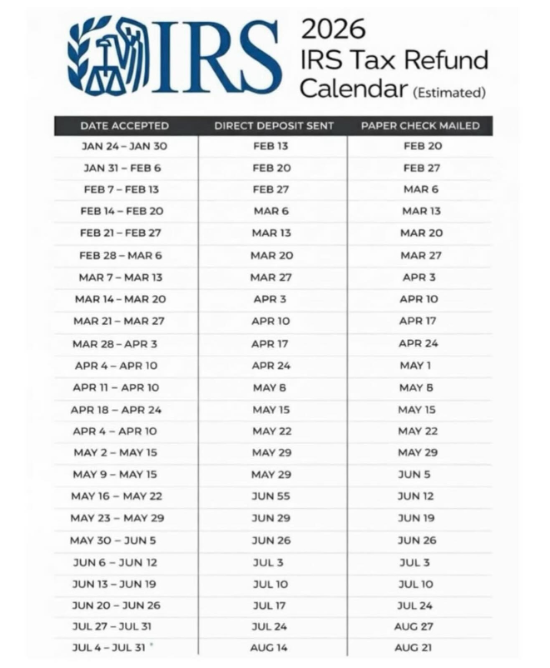
Estimated Refund Date Chart (2026)
Although there is no official calendar, refunds usually follow this predictable pattern:
| Acceptance Week | Likely Refund Window |
|---|---|
| Late January | Early February |
| Early February | Mid February |
| Mid February | Late February |
| Late February | Early March |
| Early March | Mid March |
| Mid March | Late March |
These windows assume there are no errors or verification requests.
Special Rule for EITC and Child Tax Credits
Some taxpayers notice their refunds always arrive later than others. This is usually because they claimed:
- Earned Income Tax Credit (EITC)
- Additional Child Tax Credit (ACTC)
Federal anti-fraud law requires extra verification on these returns. Even if you file early, the payment cannot be released before mid-February. As a result, many families receive refunds between late February and early March.
This delay is not a problem with your return — it is a mandatory processing hold.
How to Estimate Your Personal Refund Date
You can calculate your refund timing yourself.
Step-by-Step Method
- Check when your return was accepted (not filed).
- Add 10–14 days for an early estimate.
- Add 21 days for a safe estimate.
Example
Accepted on February 5
Early estimate: February 18
Most likely arrival: February 26
This method works for the majority of electronically filed returns.
Common Reasons Refunds Get Delayed
Refunds rarely get delayed randomly. Most hold-ups are caused by small but critical issues:
- Incorrect Social Security number
- Missing tax forms (W-2 or 1099)
- Claiming dependents with mismatched records
- Identity verification checks
- Paper filing
- Amended returns
Even a minor typo can push a return into manual review, which slows processing significantly.
Fastest Way to Get Your Refund
There is a clear winning combination:
E-file + direct deposit = fastest refund
Electronic filing allows the system to process your return automatically, while direct deposit avoids postal delays. In contrast, a mailed paper return requires manual handling and can add more than a month to the wait.
When You Should Be Concerned
There are specific timeframes when action becomes necessary:
- More than 21 days after e-file
- More than 6 weeks after paper filing
- Tracker requests identity verification
If the tracking tool asks you to call or verify your identity, the system has paused your refund until confirmation is completed.
Final Thoughts
The IRS may not publish an official refund calendar, but its system operates in a predictable pattern every year. The acceptance date — not the filing date — determines your timeline. Most taxpayers receive their refund within two to three weeks when they file electronically and choose direct deposit.
If you claim certain tax credits, expect a slightly longer wait due to mandatory fraud prevention checks. By avoiding common errors, filing electronically, and tracking your acceptance date, you can estimate your refund arrival with reasonable confidence.
Understanding the refund schedule removes uncertainty and allows better financial planning. Rather than guessing, you can use the processing timeline as a practical tool — and know approximately when your money will reach your account.