
The Strangest Place in the Universe may not be a distant galaxy or a black hole, but something far more elusive: a hidden dimension woven into the fabric of reality. Recent theoretical work by physicists suggests that an unseen fifth dimension could help explain long-standing mysteries such as dark matter, challenging conventional ideas about space, matter, and the structure of the cosmos.
Table of Contents
Rethinking What “Place” Means in the Universe
For most of human history, the strangest places in the universe were thought to be physical locations. Ancient astronomers marveled at wandering planets. Modern scientists focus on black holes, neutron stars, and distant galaxies where known laws of physics are pushed to extremes.
Yet theoretical physicists now argue that the Strangest Place in the Universe may not be somewhere you can travel to. Instead, it could exist everywhere at once—embedded within space itself, invisible to human senses and conventional instruments.
This idea challenges everyday intuition. Space is commonly understood as three dimensions—length, width, and height—combined with time. However, advanced mathematics allows for additional dimensions that are compact, hidden, or warped in ways that make them difficult or impossible to observe directly.
The Fifth Dimension: An Old Idea With New Relevance
The concept of extra dimensions is not new. Early twentieth-century physicists proposed additional dimensions as a way to unify gravity with electromagnetism. In later decades, theories involving multiple dimensions became central to efforts to reconcile quantum mechanics with gravity.
What is new is how these ideas are being used to address specific observational problems in modern astronomy.
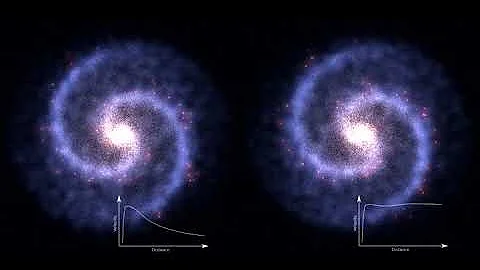
One of the most significant is dark matter, the unseen substance believed to account for roughly 85 percent of the universe’s matter. Although it has never been directly detected, its gravitational influence is evident in the way galaxies rotate and how light bends as it travels through space.
Some researchers now propose that dark matter may not be entirely contained within the familiar dimensions of space. Instead, it could exist partly in an additional dimension—making it effectively invisible while still exerting gravitational influence.
Why Dark Matter Remains One of Science’s Greatest Mysteries
Dark matter has been studied for decades, yet it continues to defy explanation. Experiments designed to detect new particles have repeatedly come up empty. Observatories searching for signals from dark matter interactions have reported no definitive results.
This absence has forced scientists to confront an uncomfortable possibility: the problem may not be experimental failure, but a flawed assumption about where dark matter exists.
If dark matter particles interact weakly—or not at all—with ordinary matter because they extend into a hidden dimension, their apparent invisibility becomes easier to understand. In this view, dark matter is not missing. It is simply not fully present in the same dimensional space as everything else we can observe.
Warped Space and the Geometry of the Universe
Central to this hypothesis is the idea that space itself may be warped in complex ways. In certain models, the extra dimension is not flat but curved, allowing gravity to spread into it more easily than other forces.
This could explain why gravity appears unusually weak compared with electromagnetism or nuclear forces. If gravitational effects leak into an additional dimension, their strength in ordinary space would be diluted.
Under such models, particles associated with dark matter could be localized closer to the hidden dimension, while ordinary matter remains confined to familiar space. The result would be a universe where two forms of matter coexist but rarely interact directly.
Is the Fifth Dimension a Real Place?
Despite frequent use of the word “dimension,” scientists caution against imagining the fifth dimension as a parallel world or alternate universe. It is not a separate realm populated by exotic landscapes or hidden civilizations.
Instead, it is better understood as a mathematical extension of space—real in a physical sense, but inaccessible in everyday experience. Much like time was once an abstract concept before becoming central to modern physics, extra dimensions may simply lie beyond human perception.
This distinction is crucial. Sensational descriptions of “portals” or “gateways” can mislead the public, obscuring the rigorous, cautious nature of scientific inquiry.
How Scientists Search for Evidence Without Seeing It
Because extra dimensions cannot be observed directly, researchers rely on indirect tests. These include:
- Measuring gravity at extremely small distances to detect deviations from known laws
- Studying the behavior of particles at high energies
- Observing cosmic phenomena where gravity dominates, such as black hole mergers
- Analyzing gravitational waves for unexpected patterns
Each approach seeks subtle discrepancies that could indicate the presence of additional dimensions.
So far, no experiment has provided conclusive evidence. However, the absence of proof has not ruled out the possibility. Instead, it has sharpened theoretical predictions and refined experimental techniques.
Scientific Skepticism and Healthy Debate
Not all physicists are convinced that extra dimensions offer the best explanation for dark matter. Some argue that unknown particles within ordinary space could still account for the observations. Others suggest that gravity itself may behave differently at large scales.
This skepticism is not a weakness but a strength of the scientific process. Competing hypotheses are tested against evidence, and only those that survive rigorous scrutiny endure.
Many researchers emphasize that extra-dimensional theories must make clear, testable predictions to remain scientifically viable. Without experimental confirmation, they remain intriguing but speculative.
Why the Idea Captures Public Imagination
The notion of a hidden dimension resonates beyond physics because it touches on fundamental questions about reality. Humans have long wondered whether the universe contains more than meets the eye.
The Strangest Place in the Universe narrative appeals to this curiosity, offering a vision of a cosmos richer and more complex than previously imagined.
Yet scientists stress that fascination must be tempered with accuracy. Extra dimensions are not science fiction settings. They are mathematical tools used to describe phenomena that current theories struggle to explain.
Implications Beyond Dark Matter
If a fifth dimension exists, its implications would extend far beyond dark matter. It could reshape understanding of gravity, influence theories about the universe’s origin, and alter how physicists search for a unified theory of nature.
Some models suggest extra dimensions played a role in the early universe, affecting how it expanded moments after the Big Bang. Others explore whether hidden dimensions could stabilize fundamental constants that appear finely tuned.
These possibilities remain theoretical, but they highlight why the idea continues to attract serious scientific attention.
Communicating Uncertainty in Science
One challenge for researchers is communicating complex, uncertain ideas without overstating conclusions. The language of possibility and probability can be misinterpreted as claims of discovery.
Responsible scientists emphasize what is known, what is hypothesized, and what remains unknown. In the case of extra dimensions, the distinction is especially important.
There is no confirmed evidence of a fifth dimension. What exists is a growing body of mathematical work suggesting it could explain unresolved observations more elegantly than existing models.
What Comes Next in the Search
Future progress will depend on both theoretical advances and technological innovation. More sensitive instruments, more precise measurements, and clearer predictions will determine whether the idea survives.
Upcoming experiments in particle physics, astronomy, and gravitational research are expected to probe conditions where extra-dimensional effects might appear.
Even if the fifth dimension is ultimately ruled out, the effort to test it will deepen understanding of the universe’s fundamental structure.
Why the Question Still Matters
Asking whether the Strangest Place in the Universe is hidden within reality itself reflects humanity’s enduring drive to understand existence at its deepest level.
Throughout history, ideas once considered implausible—from a moving Earth to curved spacetime—have reshaped science when evidence emerged. Extra dimensions may follow a similar path, or they may fade as better explanations arise.
Either outcome advances knowledge.
Final Perspective
For now, the fifth dimension remains a hypothesis—compelling, controversial, and unproven. It stands as a reminder that the universe may be far stranger than human intuition allows.
As one physicist summarized in recent discussions, the goal is not to confirm a preferred theory, but to follow evidence wherever it leads—even if that path points toward the strangest place of all: the unseen structure of reality itself.
FAQs About the Strangest Place in the Universe
Q: Is the fifth dimension proven to exist?
No. It is a theoretical concept supported by mathematics, not direct observation.
Q: Does this mean dark matter comes from another universe?
Not necessarily. The theory suggests dark matter may extend into a hidden dimension within our own universe.
Q: Can humans ever access a fifth dimension?
Current physics provides no mechanism for direct access or travel.
Q: Why take the idea seriously without evidence?
Because it offers a coherent explanation for observations that existing theories struggle to explain.