
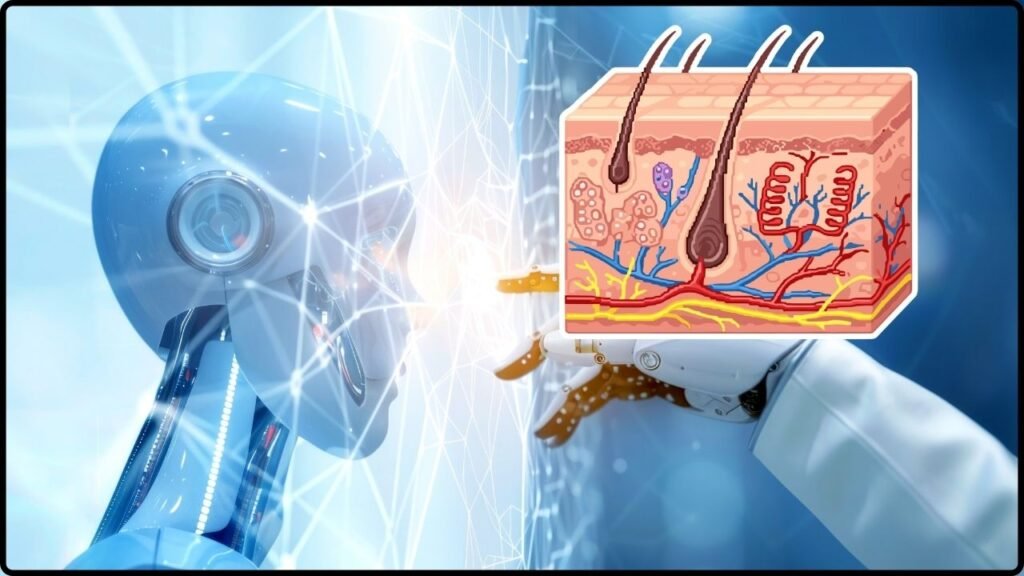
Neuromorphic Artificial Skin for Robots: Scientists Develop Neuromorphic Artificial Skin for Robots is not just another headline floating around the tech world—it represents a meaningful step toward machines that interact with humans more safely, naturally, and intelligently. For decades, robotics engineers have worked to give machines better vision and better movement. But touch—the most human of senses—has been one of the hardest challenges to solve. Now, with the rise of neuromorphic artificial skin, researchers are bringing robots closer to human-like sensory awareness.
Let’s keep this simple and grounded. When you touch something hot, your hand jerks back almost instantly. You don’t sit there and “think” about it first. That’s because your nervous system is wired with reflex loops. Scientists are now building robotic skin that works in a similar way—using brain-inspired circuits to detect and respond to touch in milliseconds. That shift from slow, centralized processing to fast, local reflex action is what makes this development so important.
Table of Contents
Neuromorphic Artificial Skin for Robots
Scientists Develop Neuromorphic Artificial Skin for Robots marks a defining moment in modern robotics. By mimicking the human nervous system through spike-based neural processing, this breakthrough allows machines to react faster, use less energy, and operate more safely around people. From prosthetics and healthcare to manufacturing and AI research, the impact spans industries. For engineers, students, and policymakers alike, neuromorphic e-skin represents both opportunity and responsibility in shaping the future of intelligent machines.
| Feature | Details |
|---|---|
| Technology Name | Neuromorphic Artificial Skin (E-Skin) |
| Developed By | Researchers at City University of Hong Kong |
| Scientific Principle | Brain-inspired spiking neural networks |
| Response Speed | Millisecond-level reflex activation |
| Energy Efficiency | Lower power consumption vs traditional tactile sensors |
| Market Relevance | Robotics market projected to exceed $74B globally by 2026 (International Federation of Robotics) |
| Applications | Healthcare, prosthetics, manufacturing, AI robotics |
| Research Publications | Peer-reviewed journals indexed via Nature and IEEE |
Understanding Neuromorphic Artificial Skin for Robots
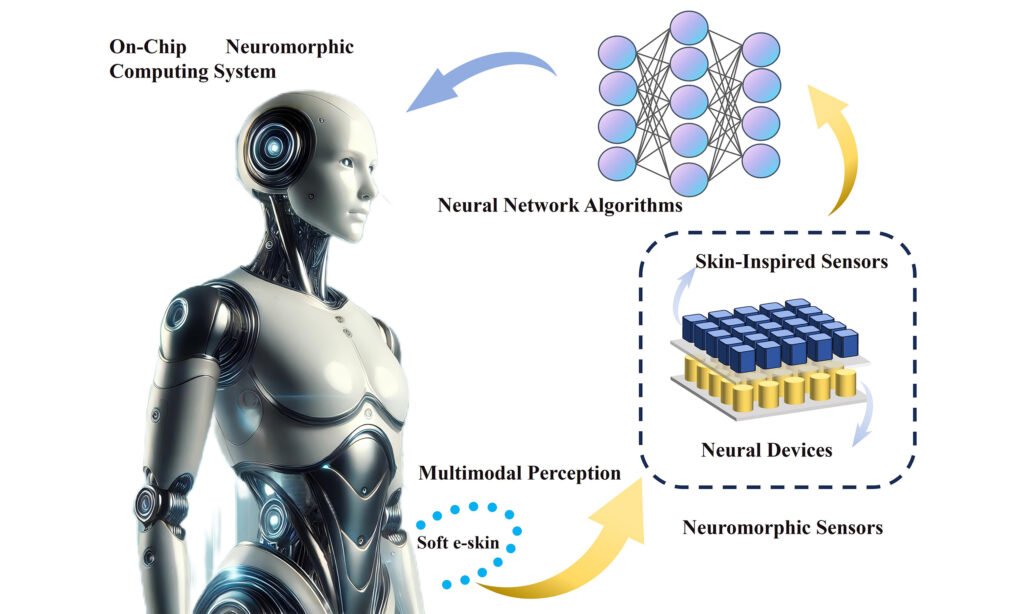
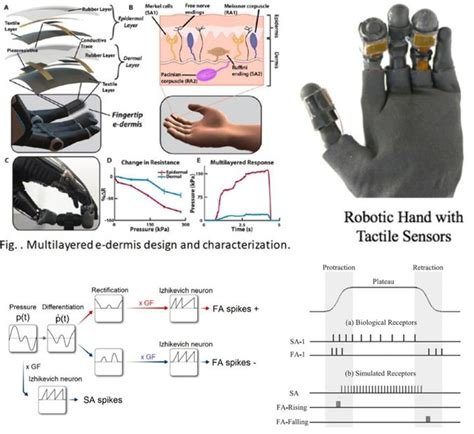
At its core, neuromorphic artificial skin is a flexible electronic material filled with sensors and microcircuits that behave like human nerve cells. Instead of sending continuous streams of numbers to a robot’s main computer, it uses spike-based electrical pulses—just like neurons do.
The human nervous system communicates using what neuroscientists call “action potentials.” According to the National Institute of Neurological Disorders and Stroke, these are rapid electrical impulses that travel along nerve fibers. Neuromorphic systems replicate that pattern digitally.
Traditional robotic skin works like this:
- Sensor detects pressure.
- Signal goes to central processor.
- Processor interprets it.
- Robot responds.
Neuromorphic skin works like this:
- Sensor detects pressure.
- Signal converts into neural-like spike.
- Local circuit evaluates intensity.
- Immediate reflex triggers if necessary.
That local processing reduces delay and improves safety.
The Science Behind Spiking Neural Networks
Let’s talk about what makes this possible: Spiking Neural Networks (SNNs).
Unlike traditional artificial neural networks used in machine learning, SNNs process information only when needed. They transmit data as discrete spikes rather than continuous values. According to research indexed by ScienceDirect, spike-based systems significantly reduce energy usage compared to conventional digital signal processing.
Why does that matter?
Energy efficiency is huge. The U.S. Department of Energy reports that data centers account for roughly 2% of U.S. electricity consumption. Any technology that reduces computing load is a long-term win for sustainability.
In professional terms, neuromorphic systems offer:
- Lower latency
- Reduced power draw
- Improved edge computing
- Scalable modular integration
In everyday terms? They’re quicker and smarter without burning extra electricity.
Materials and Engineering Design of Neuromorphic Artificial Skin for Robots
Neuromorphic e-skin is typically built using flexible polymers combined with conductive nanomaterials. These materials can stretch and bend without losing sensitivity. Engineers often use layered architectures:
- Protective outer layer
- Pressure-sensitive conductive layer
- Signal processing layer
- Reflex circuit interface
Some designs incorporate memristors—electronic components that “remember” past electrical activity. According to the IEEE Xplore Digital Library, memristors are particularly useful for mimicking synaptic behavior in artificial neural systems.
This layered approach ensures durability while preserving high sensitivity.
Why This Matters for Robotics in the United States?
The U.S. robotics industry continues to expand rapidly. The International Federation of Robotics reports consistent annual growth in industrial robot installations across North America. With collaborative robots (cobots) working side-by-side with humans, tactile intelligence becomes critical.
Consider manufacturing. According to the U.S. Bureau of Labor Statistics, millions of Americans work in manufacturing and warehouse roles. Robots handling fragile goods—like electronics or medical supplies—need to adjust grip strength dynamically.
Neuromorphic skin allows robots to:
- Detect micro-pressure variations
- Adjust force in real time
- Avoid crushing delicate items
- Withdraw instantly from hazardous contact
That’s not science fiction—that’s practical workplace safety.
Healthcare and Prosthetics: A Human-Centered Impact
One of the most meaningful applications lies in medical technology.
The U.S. Department of Veterans Affairs invests heavily in advanced prosthetic research. Artificial limbs with neuromorphic skin could provide:
- More natural grip control
- Feedback sensitivity
- Damage prevention from excessive force
Imagine a prosthetic hand that can gently hold a paper cup without crushing it. That’s the difference tactile intelligence makes.
Surgical robotics also benefits. According to the U.S. Food & Drug Administration, robotic-assisted surgical systems require strict safety performance. Enhanced tactile sensing can reduce surgical errors and improve patient outcomes.
Practical Implementation Guide for Engineers
For professionals interested in integrating this technology, here is a structured approach:
Step 1: Evaluate Application Requirements
Determine:
- Required sensitivity range
- Environmental conditions
- Safety compliance needs
Medical devices must follow FDA standards. Industrial systems must align with OSHA regulations.
Step 2: Choose Appropriate Materials
Select flexible substrates with proven durability. Ensure compatibility with conductive nanomaterials and memristive components.
Step 3: Integrate Edge Processing
Design local processing units capable of handling spike-based signals without overloading the central processor.
Step 4: Implement Reflex Threshold Calibration
Define:
- Safe touch range
- Warning threshold
- Reflex activation threshold
Testing under real-world stress conditions is essential.
Step 5: Conduct Regulatory Review
For U.S. deployment, consult:
- FDA (medical applications)
- OSHA (workplace robotics)
- ANSI/RIA safety standards
Compliance ensures market readiness.
Economic and Workforce Implications
This technology is not just about machines—it’s about people.
According to the U.S. Bureau of Labor Statistics, engineering roles in robotics and AI frequently exceed $100,000 in median annual salary. Demand continues to grow as automation expands.
Emerging job roles include:
- Neuromorphic hardware engineer
- AI sensor integration specialist
- Robotics safety compliance consultant
- Biomedical systems engineer
Educational institutions across the U.S., including MIT and Stanford, now offer coursework in neuromorphic computing and bio-inspired robotics.
For students entering STEM fields, this area offers strong long-term potential.
Ethical and Cultural Considerations
From a Native American perspective, technology must align with balance, responsibility, and respect. Innovation should not overpower humanity—it should serve it.
Neuromorphic robotics enhances safety and harmony between humans and machines. Faster reflexes mean fewer accidents. Smarter sensing means better cooperation. That balance reflects responsible innovation.
Technology, when guided by wisdom and ethics, strengthens communities rather than replacing them.
An Always-On Energy Technology Could Reduce Future Power Outages
Researchers Report Tea Plants Successfully Grown in Lunar Soil Samples
Study Identifies ALK7 Receptor Linked to Rapid Pancreatic Cancer Spread
The Future of Brain-Inspired Robotics
Neuromorphic artificial skin represents just one branch of a broader movement toward brain-inspired computing. Companies and research labs are investing heavily in edge AI systems that mimic biological efficiency.
Future developments may include:
- Multi-sensory integration (temperature, vibration, texture)
- Self-healing materials
- Wireless neural communication modules
- Enhanced human-machine interfaces
As robotics continues evolving, tactile intelligence will become standard rather than experimental.