

Taxes are a significant part of personal finances, and understanding available deductions can make a meaningful difference when filing a return. One deduction that has gained widespread attention is the $10,000 tax deduction tied to the State and Local Tax (SALT) deduction.

This provision allows taxpayers to reduce their federal taxable income by deducting certain state and local taxes they have paid throughout the year. For homeowners and individuals living in areas with higher local taxes, this deduction can provide noticeable tax relief.
While the concept may sound complicated at first, the rule itself is relatively straightforward. The deduction mainly applies to people who pay state income taxes, property taxes, or certain local taxes and choose to itemize deductions instead of taking the standard deduction. Over the past few years, the SALT deduction has been a major topic in tax policy discussions because the amount taxpayers can deduct has been limited. Understanding who qualifies and how to claim the deduction helps taxpayers determine whether they can benefit from it when filing their federal tax return.
Table of Contents
New $10,000 Tax Deduction
| Key Detail | Information |
|---|---|
| Deduction Name | State and Local Tax (SALT) Deduction |
| Maximum Deduction | $10,000 per year |
| Introduced Limit | Tax Cuts and Jobs Act (2017) |
| Taxes Included | State income tax, local income tax, property tax, or sales tax |
| Filing Requirement | Must itemize deductions |
| Form Used | Schedule A (Form 1040) |
| Who Benefits Most | Homeowners and taxpayers in higher-tax states |
Understanding the $10,000 SALT Tax Deduction
The $10,000 SALT tax deduction refers to the maximum amount taxpayers can deduct for certain state and local taxes on their federal income tax return. This deduction was limited under the Tax Cuts and Jobs Act introduced in 2017, which set a cap of $10,000 per year for individuals and married couples filing jointly.
The SALT deduction allows taxpayers to subtract specific taxes they paid to state or local governments from their federal taxable income. This helps reduce the total income subject to federal tax. However, taxpayers must choose itemized deductions on their federal tax return to take advantage of this benefit.
What the $10,000 Tax Deduction Is
The State and Local Tax (SALT) deduction allows taxpayers to deduct certain taxes paid to state or local governments from their federal income tax. The deduction applies to several types of taxes commonly paid during the year.
These include:
- State income taxes
- Local income taxes
- Property taxes on real estate
- State or local sales taxes (as an alternative to income tax)
Before the deduction was capped, taxpayers could deduct the full amount of these taxes without limits. However, after the tax reforms implemented in 2017, the deduction was limited to $10,000 annually.
This means that even if a taxpayer paid more than $10,000 in combined state and local taxes, the maximum deduction allowed is still $10,000. The change primarily affected taxpayers in regions with higher property taxes or state income taxes.
Who Qualifies for New $10,000 Tax Deduction
Not every taxpayer can claim this deduction. Certain conditions must be met in order to qualify.
First, the taxpayer must have paid eligible state or local taxes during the tax year. These taxes must fall within the categories recognized under the SALT deduction rules.
Second, the taxpayer must choose to itemize deductions rather than take the standard deduction. Many taxpayers opt for the standard deduction because it is simpler and often larger. However, those who have significant deductible expenses—including taxes, mortgage interest, and charitable contributions—may benefit more from itemizing.
Third, the deduction only applies to taxes actually paid during the year, not taxes owed or unpaid.
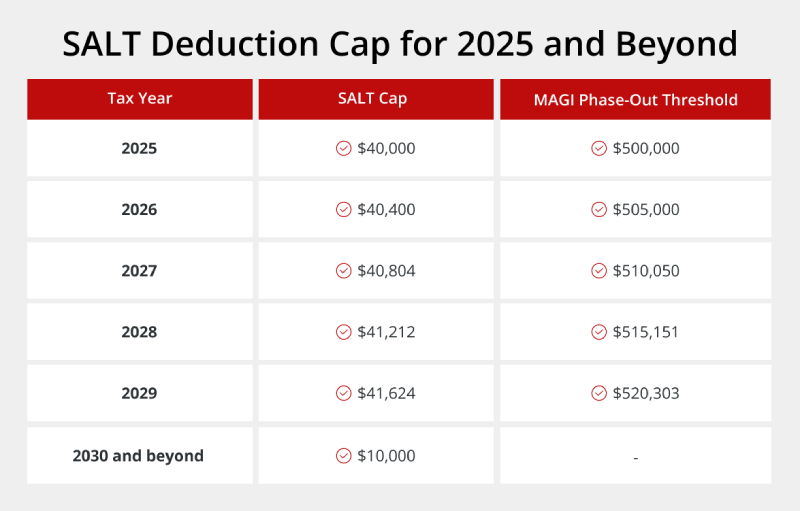
Another important factor is income level. Some newer proposals and adjustments have suggested expanding the cap for households with certain income thresholds. In some cases, households earning below specific limits may qualify for higher deduction caps under revised legislation.
How to Claim the Deduction
Claiming the SALT deduction involves a few steps during the tax filing process. Taxpayers must ensure they follow the correct procedure to include the deduction in their federal tax return.
1. Choose Itemized Deductions
The first step is deciding whether to take the standard deduction or itemize deductions. If itemized deductions are greater than the standard deduction, it may be beneficial to itemize.
2. Use Schedule A (Form 1040)
Taxpayers must complete Schedule A, which is used to list itemized deductions. This form includes sections for various deductible expenses, including state and local taxes.
3. Enter Eligible Taxes
On Schedule A, taxpayers can include:
- State or local income taxes paid
- Property taxes paid on real estate
- State or local sales taxes (if chosen instead of income tax)
However, taxpayers cannot claim both income tax and sales tax. They must choose one.
4. Apply the $10,000 Cap
Once the eligible taxes are totaled, the deduction is limited to $10,000. Even if the combined taxes exceed this amount, the deduction cannot surpass the cap.
For example, if a taxpayer paid:
- $7,000 in state income taxes
- $4,000 in property taxes
The total equals $11,000. However, because of the SALT cap, only $10,000 can be deducted.
Who Benefits the Most
Although the SALT deduction is available to many taxpayers, it tends to benefit certain groups more than others.
Homeowners
People who own homes often pay property taxes each year. These taxes can be substantial, especially in certain areas. Because property taxes are included in the SALT deduction, homeowners often benefit more than renters.
Residents of High-Tax Areas
Taxpayers living in states or cities with higher income taxes or property taxes are more likely to reach the $10,000 deduction limit. For them, the SALT deduction can significantly reduce taxable income.
Higher-Income Households
Higher-income taxpayers are also more likely to benefit because they tend to itemize deductions rather than take the standard deduction. Their total deductible expenses often exceed the standard deduction threshold.
Why the SALT Deduction Is Important
The SALT deduction plays a key role in the U.S. tax system because it helps reduce the burden of paying taxes at multiple levels of government. Without it, taxpayers would effectively pay federal taxes on income that was already used to pay state and local taxes.
However, the $10,000 cap has been controversial. Supporters argue that the limit helps balance federal revenue and simplify tax rules. Critics believe the cap disproportionately affects taxpayers in areas with higher local taxes.
Because of this debate, the SALT deduction has been the subject of ongoing legislative discussions, with some proposals suggesting higher deduction limits in future years.
Final Thoughts
The $10,000 SALT tax deduction remains an important feature of the U.S. tax system. By allowing taxpayers to deduct certain state and local taxes from their federal income, the deduction can help reduce overall tax liability. However, the benefit is only available to those who itemize deductions and have eligible taxes to claim.
Understanding the rules behind this deduction—what taxes qualify, who can claim it, and how it is applied—can help taxpayers make better financial decisions when preparing their returns. For homeowners and individuals living in areas with higher taxes, the SALT deduction may still provide valuable tax relief despite the existing cap.