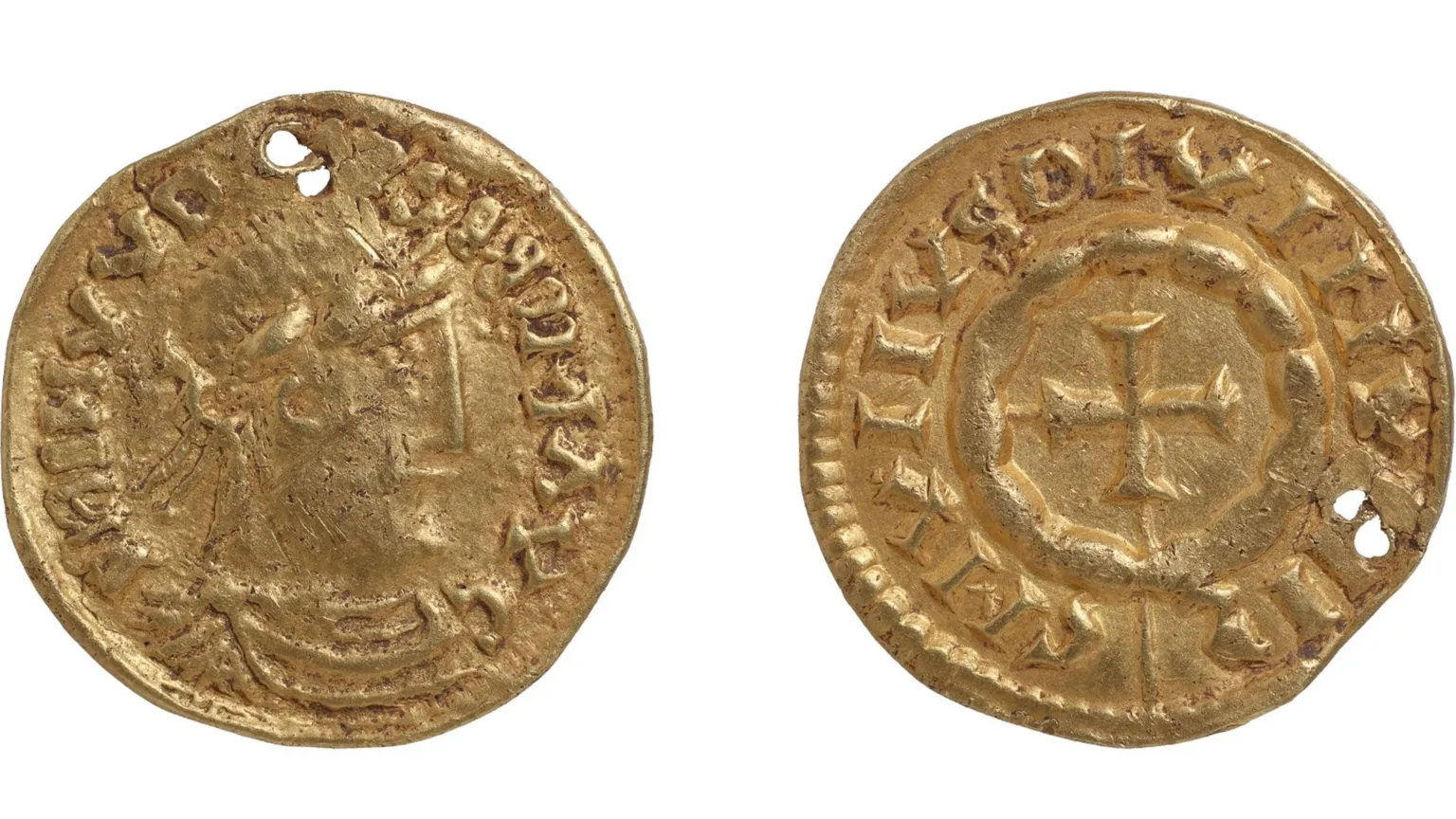

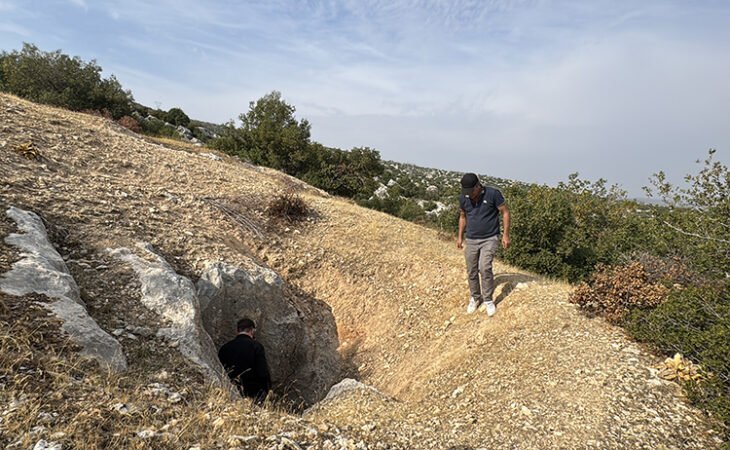
A recently analyzed inscription known as the Newly Found Greek Text is reshaping historical understanding of a Roman religious center in Syria. Researchers say the carved dedication, identified inside a mosque in Homs and formally studied in 2026, may pinpoint the original sanctuary linked to Emperor Elagabalus, who served there as a priest before ascending to Rome’s throne.
Table of Contents
Newly Found Greek Text
| Key Fact | Detail/Statistic |
|---|---|
| Location | Found inside the Great Mosque of Homs, ancient Emesa |
| Historical Figure | Linked to Roman Emperor Elagabalus (reigned 218–222 CE) |
| Significance | Suggests mosque stands above pagan sanctuary |
Understanding the Newly Found Greek Text Discovery
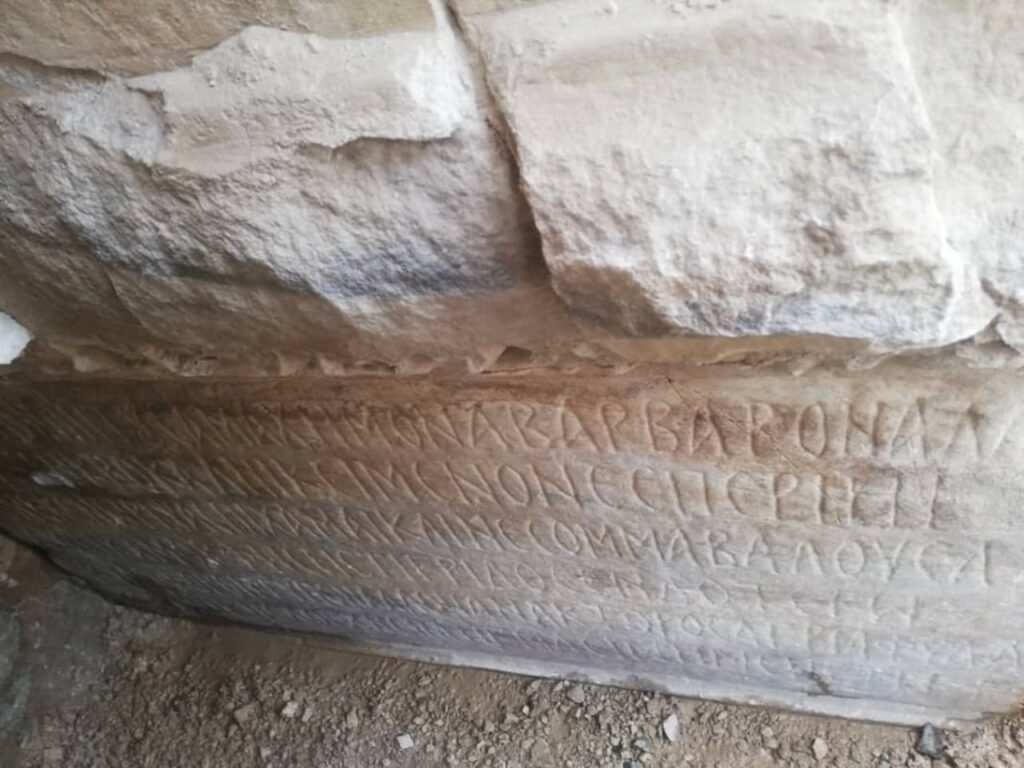
Archaeologists identified the Newly Found Greek Text carved into a granite column base incorporated into the structure of the Great Mosque of Homs. The Syrian city, known in antiquity as ancient Emesa, was a major religious center during the Roman Empire.
The inscription was discovered during restoration work after structural damage caused by years of conflict. Specialists in ancient Greek writing later examined photographs and rubbings of the carving. Their translation indicates a formal dedication connected to a sacred cult and likely commissioned by a civic or priestly authority.
Unlike casual graffiti or funerary markers, the wording follows the structure of temple dedications common across Roman provincial cities. That observation suggests the column once stood within a monumental public sanctuary.
Historians have searched for the precise location of the Elagabalus temple for decades. Until now, evidence relied mostly on Roman texts rather than archaeology.
What the inscription says
Researchers report the language references divine honor and ritual patronage. While parts of the text are damaged, the phrasing aligns with religious inscriptions used in sanctuaries dedicated to solar deities across the eastern Roman provinces.
That pattern strongly associates the find with the Roman sun cult worshipped in Emesa.
Historical Context: The Emperor and the Cult
Elagabalus, born Varius Avitus Bassianus, ruled the Roman Empire between 218 and 222 CE. Before his reign, he held the hereditary office of high priest of the local sun god.
The deity — often called Elagabal — was represented by a sacred black stone housed inside the Elagabalus temple. Ancient historian Cassius Dio wrote that the object was paraded during rituals and treated as the physical embodiment of divine power.
When Elagabalus became emperor, he brought the stone to Rome and installed it in a new temple. According to Roman accounts, he required members of the Senate to attend ceremonies honoring the foreign deity.
Modern historians caution that Roman writers often portrayed eastern religious practices as exotic or improper. Even so, their descriptions confirm Emesa’s temple was politically important.
Dr. Michael Sommer, a historian of the Roman Near East, has argued that the priesthood of Emesa formed a local ruling dynasty. The emperor’s rise demonstrates how provincial elites could influence imperial politics during periods of military instability.
A City at the Crossroads of Empires
Ancient Emesa sat along major trade routes linking the Mediterranean coast with Mesopotamia and Arabia. Merchants, soldiers, and pilgrims traveled through the city.
Because of this location, religious ideas spread rapidly. Archaeological finds from the region include Roman coins, Aramaic inscriptions, and later Byzantine mosaics.
The Newly Found Greek Text supports the idea that Emesa’s sanctuary attracted regional pilgrims. Large temples often functioned not only as religious centers but also as economic hubs. Visitors brought offerings, financed festivals, and supported local markets.
Some researchers believe annual celebrations may have resembled later pilgrimage traditions seen elsewhere in the Middle East.
Layers of Sacred Space
The site also reveals a long pattern of religious continuity.
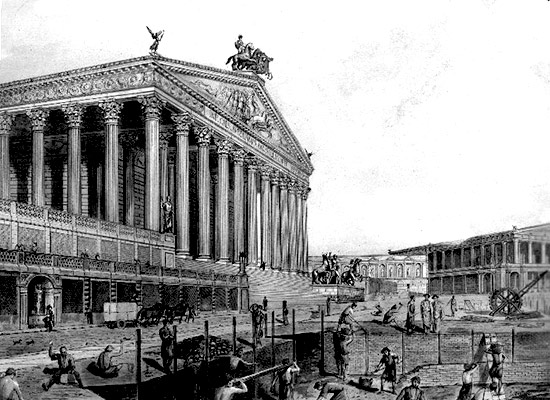
Historical records indicate a Christian church stood on the location during the Byzantine period. After the Islamic conquest in the 7th century, builders converted or replaced earlier structures to create the present mosque.
Such reuse was common throughout the Mediterranean world. Temples in cities like Damascus, Jerusalem, and Rome underwent similar transformations.
Archaeologists say sacred places often remained sacred even as religions changed. Communities preserved the location’s importance while adapting its meaning.
Expert Views and Caution
Scholars emphasize the inscription alone cannot confirm the full layout of the temple complex. Excavating beneath a functioning religious building is highly unlikely because of cultural and legal protections.
However, architectural reuse offers clues. Large column bases rarely traveled far due to their weight. Therefore, the stone likely originated within the same immediate site.
Archaeologist Dr. Rubina Raja notes that reused architectural blocks frequently preserve urban history when excavation is impossible. The find, she suggests, is comparable to discoveries in cities like Palmyra, where inscriptions clarified temple locations without exposing foundations.
Religion and Politics in the Roman Empire
The discovery also sheds light on Roman religious policy.
Roman emperors traditionally supported multiple cults. However, Elagabalus attempted to elevate one deity above others. Some historians consider this an early attempt at religious centralization.
His policies failed. After his assassination in 222 CE, Roman authorities restored traditional worship practices and removed the sacred stone from Rome.
Yet the Roman sun cult continued elsewhere. Solar worship later influenced imperial symbolism, including imagery used by Emperor Aurelian decades later.
Archaeology in a Post-Conflict Landscape
The find also highlights challenges facing archaeology in modern Syria.
Years of conflict damaged historic structures and limited research access. Restoration projects often uncover previously hidden remains. In this case, repairs revealed architectural fragments long concealed within later buildings.
International preservation organizations have increasingly relied on digital documentation and non-invasive scanning. Scholars say technologies such as 3D modeling and ground-penetrating radar may eventually map underground structures without disturbing the mosque.
Ongoing Questions
Despite the importance of the Newly Found Greek Text, many questions remain:
- How large was the sanctuary complex?
- Did the temple include a ceremonial courtyard?
- Where is the sacred stone described in Roman histories?
- Are additional inscriptions embedded within surrounding buildings?
Future surveys may provide answers, but full excavation appears unlikely.
Cultural Significance Today
Local historians say the discovery matters beyond academic debate. It highlights the deep historical continuity of Homs, a city that has existed for millennia.
Communities today live above layers of civilizations — Aramaean, Roman, Byzantine, and Islamic. The site illustrates how urban spaces preserve memory across cultures.
Researchers stress that the finding does not challenge the religious importance of the current mosque. Instead, it documents the long history of worship at the same location.
Conclusion
Researchers now consider the Newly Found Greek Text the strongest evidence yet identifying the historic sanctuary in ancient Emesa. While definitive excavation may never occur, the inscription narrows a debate that has lasted more than a century and illustrates how sacred landscapes endure across changing civilizations.
As one researcher summarized in a project statement, the discovery shows “not a lost temple rediscovered, but a continuous place of devotion understood more clearly.”
FAQs About Newly Found Greek Text
Who was Elagabalus?
A Roman emperor from 218–222 CE and hereditary priest of a Syrian solar deity before his rule.
What is the Newly Found Greek Text?
An ancient Greek inscription carved on a reused stone column base discovered in Homs, Syria.
Why is it important?
It likely identifies the location of a major Roman sanctuary and helps historians understand religious change in Late Antiquity.
Can archaeologists excavate the site?
Probably not fully, because the mosque is an active religious building protected by heritage laws.