

Every year, millions of Americans discover they owe federal taxes they cannot immediately afford. Taxes in 2026 are expected to follow that same pattern, and the Internal Revenue Service (IRS) says taxpayers still have legal options. Through structured relief programs, the agency allows delayed payments, installment agreements, or temporary hardship status instead of immediate enforcement.
Table of Contents
Owe Taxes in 2026
| Key Fact | Detail |
|---|---|
| Filing matters most | Not filing penalties are significantly higher than non-payment penalties |
| Installment plans | Many taxpayers qualify for IRS payment plans under $50,000 |
| Hardship relief | Collections can pause during financial hardship |
Why the IRS Urges Filing Even Without Payment
The IRS consistently delivers one message each tax season: file your return on time.
According to the IRS Taxpayer Advocate Service, the penalty for not filing a return is typically five times higher than the penalty for not paying the tax owed. Interest still accrues, but filing prevents the most severe financial consequences.
“Taxpayers should always file, even if they cannot pay in full,” the agency states in official guidance. “The IRS has several programs designed to help.”
The policy reflects a practical reality. The U.S. tax system relies on voluntary compliance. Enforcement actions — such as wage garnishment — usually occur only after extended non-response.
Federal officials also emphasize another reason: communication keeps accounts out of automated collections. Once a taxpayer files and contacts the IRS, the account is usually transferred to a negotiated repayment track rather than enforcement.
IRS Payment Options Available in 2026
Short-Term Payment Extension
Taxpayers who expect to pay soon can request additional time — typically up to 180 days — to pay their balance.
No monthly plan is required. However, interest and late-payment penalties continue during the extension period.
For smaller balances, this is the simplest solution. Officials describe it as a temporary grace period rather than a relief program.
A Treasury Department publication notes that a large portion of short-term extensions are resolved within three months as taxpayers receive bonuses, refunds from state taxes, or seasonal income.
Monthly Installment Agreements
The most widely used program related to Taxes in 2026 is the installment agreement IRS program.
Taxpayers make fixed monthly payments over several years. The IRS generally allows streamlined approval for debts under $50,000.
“The IRS would rather receive consistent payments than pursue enforcement,” said Nina Olson, former National Taxpayer Advocate, in congressional testimony explaining collection policy.
Key features:
- Payments can last up to 72 months
- Setup fees may apply
- Credit scores are not affected
Unlike private debt, tax liabilities do not appear on consumer credit reports unless a federal tax lien is filed.
Financial planners say these plans function similarly to structured government loans. However, the IRS has broader legal authority than private creditors, including wage withholding powers if agreements fail.
Currently Not Collectible
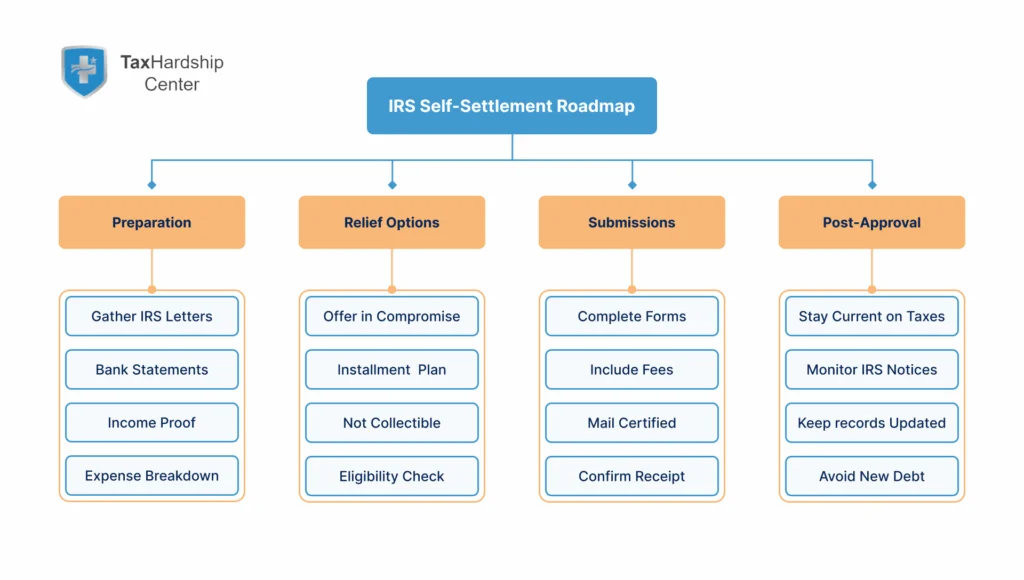
When a taxpayer cannot meet basic living expenses, the IRS may classify the account as Currently Not Collectible (CNC).
In this status:
- Collection activity pauses
- Wage garnishments stop
- Levies are suspended
However, the debt remains. Interest continues to accumulate.
The IRS reviews income, housing costs, and necessary expenses before approving hardship status.
“This designation protects taxpayers from economic harm while preserving the government’s right to collect later,” the Taxpayer Advocate Service explains.
Tax professionals often describe CNC as a “pause button,” not forgiveness. Every one to two years the IRS reviews financial circumstances to determine whether payments can resume.
Offer in Compromise
An Offer in Compromise (OIC) allows some taxpayers to settle tax debt relief obligations for less than the full amount owed.
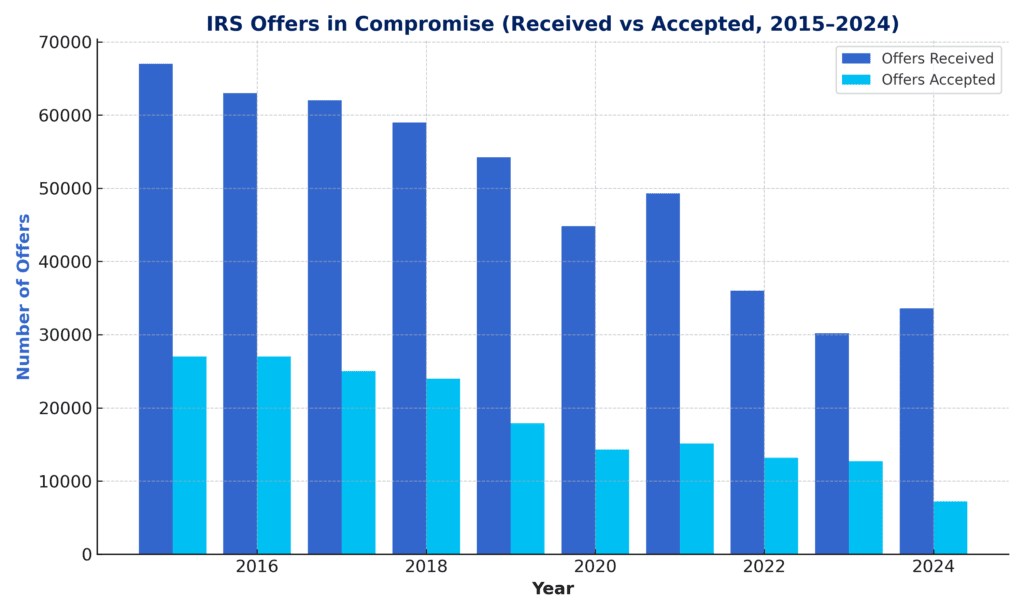
Despite widespread advertising, approvals are limited. The IRS accepts an offer only when it determines it is unlikely to collect the full debt.
Applicants must disclose:
- Income
- Assets
- Bank accounts
- Property ownership
The agency evaluates what it calls “reasonable collection potential.”
In practice, this means a taxpayer with steady employment and property rarely qualifies, while someone facing long-term disability or unemployment may.
What Happens If You Ignore the Debt
If taxpayers neither pay nor contact the IRS, the collection process escalates gradually.
Typical timeline:
- Notices and reminders
- Federal tax lien
- Wage garnishment
- Bank levy
The IRS usually sends multiple written notices before enforcement begins. Officials emphasize collection is a last resort.
A federal tax lien legally secures the government’s claim to property. It does not take property immediately, but it can complicate selling a home or refinancing a mortgage.
Why Interest and Penalties Add Up
The IRS charges two separate costs:
- Late payment penalty (generally 0.5% monthly)
- Compounded interest based on federal rates
Penalties can reach 25% of the original tax bill if unresolved.
Experts note this is why even small partial payments matter.
“Pay what you can, when you can,” IRS guidance states. Partial payments directly reduce interest growth.
Real-Life Scenarios Taxpayers Face
Job Loss
One of the most common reasons people struggle with Taxes in 2026 is unemployment. A taxpayer who loses income after withholding taxes incorrectly may owe several thousand dollars at filing time.
Self-Employed Workers
Gig workers, freelancers, and independent contractors face higher risk because taxes are not automatically withheld. Missing quarterly estimated payments often produces unexpected tax bills.
Retirement Withdrawals
Early withdrawals from retirement accounts can trigger both income tax and penalties, creating sudden liabilities for older taxpayers.
Broader Context: Why the Programs Exist
The United States collects roughly 95% of federal taxes voluntarily, according to Treasury Department compliance studies. Payment plans help maintain that system.
Economists say aggressive immediate enforcement would be counterproductive.
“Flexible collection increases compliance because taxpayers stay engaged with the system,” said a policy analysis published by the Urban-Brookings Tax Policy Center.
The IRS processes more than 160 million individual tax returns annually.
International Comparison
The U.S. approach is relatively lenient compared with many developed nations.
- Canada allows installment arrangements but applies faster interest penalties.
- The United Kingdom’s HM Revenue & Customs uses automated collections sooner.
- Some European countries withhold more taxes directly from wages, reducing filing balances.
Tax policy experts say the American system depends more heavily on individual reporting, making IRS payment plans necessary.
What Tax Professionals Recommend
Accountants and tax attorneys broadly agree on three steps:
- File the return
- Pay something immediately
- Contact the IRS early
Waiting, they say, is the most costly decision.
“The IRS is easier to work with than most creditors if you communicate,” said a certified public accountant interviewed by financial advisory organizations.
They also recommend adjusting withholding after resolving a tax bill to prevent repeat debt.
Future Policy Changes Affecting Taxes in 2026
Several policy discussions in Congress may affect taxpayers. Lawmakers are considering expanded digital reporting rules for gig economy income and increased IRS staffing funded in recent federal budgets.
The IRS has said improved technology may allow faster payment plan approvals and more automated communication with taxpayers.
Tax analysts say the agency is shifting toward earlier intervention — contacting taxpayers sooner to arrange payment rather than enforcing collections later.
Final Outlook
The IRS says most taxpayers resolve their debt through payment plans rather than enforcement. The agency’s guidance emphasizes cooperation over punishment, reflecting its goal of collecting revenue while keeping taxpayers in the system. As one IRS publication notes, “Contacting us early gives you the most options.”
FAQs About Owe Taxes in 2026
Can you go to jail for owing taxes?
Generally no. Criminal prosecution occurs for tax fraud or evasion, not simple inability to pay.
Does the IRS settle debts often?
Offers in Compromise are approved in a minority of cases and require detailed financial review.
Will the IRS take your house?
Only in extreme cases after lengthy legal procedures and court approval.
Does filing late help?
No. Filing late increases penalties significantly.
Do IRS payment plans affect credit?
Usually no, unless a federal tax lien is formally recorded.