
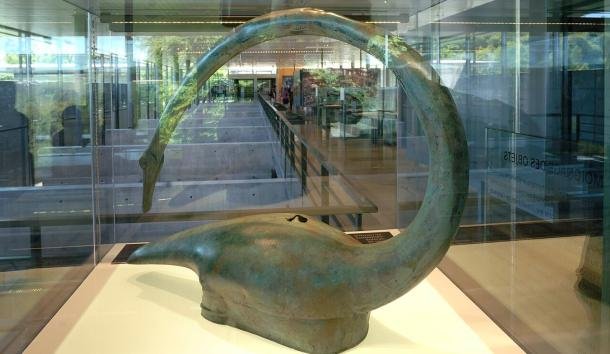
A rare Rare Swan Helmet discovered at an ancient sanctuary in central France is changing how historians understand Iron Age Europe. The 2,200-year-old ceremonial headpiece, uncovered at the Tintignac archaeological site, reveals sophisticated Gaulish metalworking, religious symbolism, and artistic culture that sharply contrasts with Roman accounts describing the Gauls as primitive tribes.
Table of Contents
Rare Swan Helmet From Tintignac
| Key Fact | Detail |
|---|---|
| Discovery location | Tintignac sanctuary, Corrèze, France |
| Age | Roughly 4th–2nd century BCE |
| Material | Hammered and cast bronze |
| Context | Ritual deposit including weapons and war trumpets |
Researchers continue to study the sanctuary and its artifacts using advanced scanning and chemical analysis. Archaeologists say each discovery adds detail to Europe’s pre-Roman past. As one heritage conservator noted, the Rare Swan Helmet demonstrates that the Gauls were not merely warriors but participants in a sophisticated artistic and religious tradition whose legacy still shapes European cultural history.
What Is the Rare Swan Helmet?
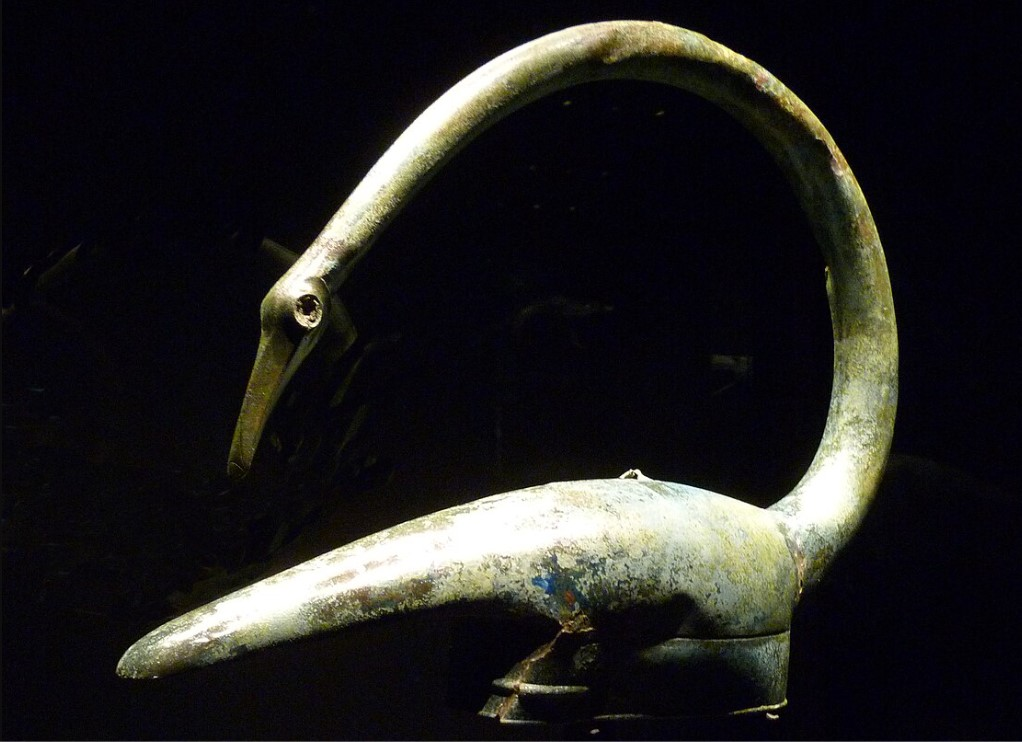
The Rare Swan Helmet was uncovered in 2004 during excavations at Tintignac-Naves, an important Celtic sanctuary used by the Lemovices tribe in what is now southwestern France.
Archaeologists discovered more than 500 objects buried together. The collection included swords, shields, chariot components, ceremonial fittings, and long bronze war trumpets called carnyces. The deliberate burial indicated a sacred ritual rather than military loss.
Researchers believe worship ceremonies took place at the sanctuary for centuries before the Roman conquest of Gaul in the first century BCE.
“The objects were intentionally deposited,” archaeologists reported in conservation studies. “They were offerings, not abandoned equipment.”
The helmet stands apart because it is not shaped for combat. A bronze swan rises above the wearer’s head, forming a curved crest. The design suggests performance, ceremony, or religious display.
Evidence of Advanced Craftsmanship
Metalworking Techniques
The Rare Swan Helmet demonstrates remarkable Gaulish metalworking skill during the La Tène period of Iron Age Europe (roughly 450–50 BCE).
To produce the helmet, artisans needed knowledge of:
- alloy composition
- temperature control
- hammer-hardening bronze sheets
- rivet joining techniques
- weight balancing for wearability
Bronze was not poured into a simple mold. Instead, craftsmen cast sections, hammered them thin, and then attached sculptural elements. The bird crest required hollow construction so the helmet remained wearable.
Experts note the work compares favorably with Mediterranean craftsmanship of the same era. This indicates the Gauls were technologically connected to wider trade networks across Europe.
Trade and Materials
Chemical analysis of similar Celtic artifacts shows bronze alloys sometimes included tin imported from Britain and copper from Alpine regions. That implies extensive trade routes across pre-Roman Europe.
Such exchange networks contradict the older assumption that tribal societies were isolated or technologically limited.
A Ritual Object, Not Military Armor
The context of discovery is crucial. Many weapons in the pit had been bent or broken before burial. Archaeologists interpret this as a ritual “decommissioning” of objects offered to gods.
The Rare Swan Helmet likely belonged to:
- a high-ranking warrior
- a chieftain
- or a religious officiant
The helmet’s symbolism reinforces that view.
In Celtic mythology, swans often represent:
- spiritual journeys
- divine transformation
- communication between worlds
Later Irish myths describe magical figures transforming into swans, suggesting a longstanding belief tradition across Celtic cultures.
The helmet therefore may have functioned similarly to ceremonial regalia or priestly attire.
Sound, Performance, and Ceremony
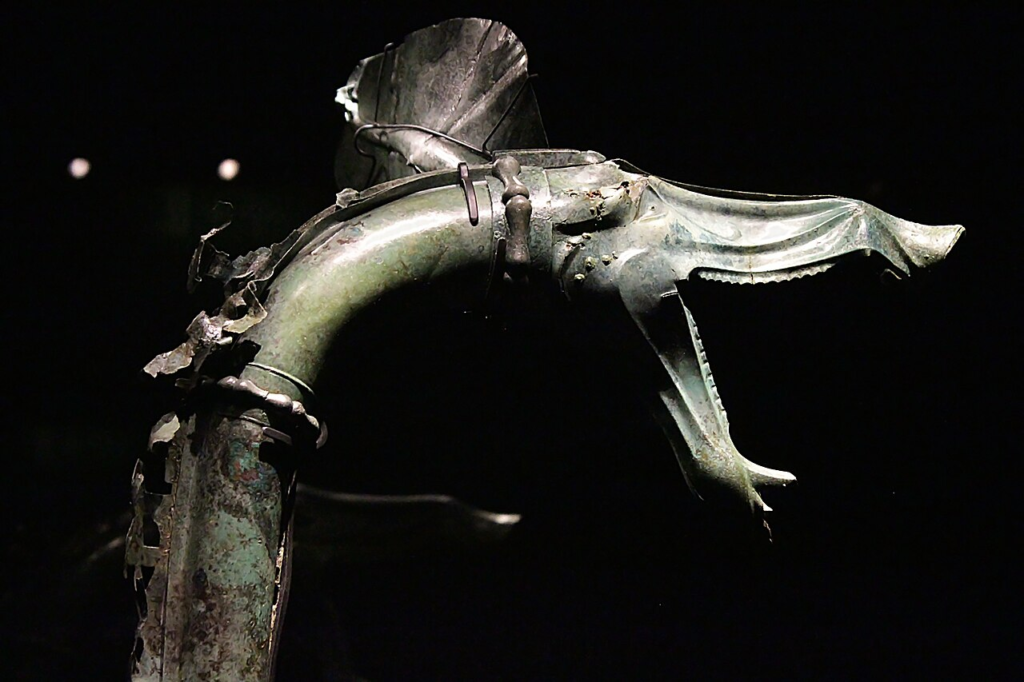
The presence of carnyces near the Rare Swan Helmet is especially important. These long bronze trumpets ended in animal-shaped bells, sometimes resembling boars or serpents.
Ancient Greek historian Polybius described the instruments as producing a terrifying sound in battle. However, in a sanctuary setting they likely played music during rituals.
Researchers now believe ceremonies may have included:
- costumes
- music
- procession
- and symbolic displays of power
The helmet may have been worn in dramatic performances representing warriors, ancestors, or deities.
Challenging Roman Accounts of the Gauls
Roman writings heavily influenced how history viewed the Gauls. Julius Caesar’s Commentarii de Bello Gallico portrayed them as brave but uncivilized.
Modern archaeology tells a more complex story.
Cultural Complexity
The Rare Swan Helmet indicates structured society and specialized labor. Skilled artisans produced luxury objects for elites, suggesting organized social hierarchy.
Archaeologists now argue Roman descriptions reflected political motives. Depicting conquered peoples as barbaric justified Roman expansion.
The new evidence shows a society that valued:
- symbolism
- ritual
- and craftsmanship
Instead of stone monuments, the Gauls invested artistic effort in portable objects — decorated weapons, jewelry, and ceremonial helmets.
Comparison With Other Celtic Artifacts
The Rare Swan Helmet is not isolated evidence. Across Europe, archaeologists have uncovered ornate Celtic artifacts including:
- gold torcs (neck rings)
- decorated shields
- horse harness ornaments
- enamel jewelry
However, no identical helmet has ever been found.
Some Celtic helmets had horns or animal shapes, but the swan crest is uniquely sculptural and naturalistic. The detail suggests an artistic tradition focused on motion and curved lines, typical of La Tène design.
Historians describe La Tène art as emphasizing flowing patterns instead of rigid geometric shapes seen in Mediterranean cultures.
Scientific Research and Preservation
Conservators spent years stabilizing the Rare Swan Helmet. Bronze corrodes underground, forming brittle layers that must be carefully cleaned.
Modern methods used include:
- microscopic cleaning tools
- chemical stabilization
- X-ray imaging
Researchers are now performing metallurgical analysis to determine how the helmet was assembled.
Scientists hope to learn:
- workshop location
- crafting sequence
- regional metal sources
Such data could identify whether specialized craft centers existed in Gaul.
Why the Discovery Matters
The Rare Swan Helmet helps historians reinterpret Iron Age societies. It suggests the Gauls were not simply tribal fighters but participants in a complex religious culture.
Key implications:
- Celtic religion involved theatrical ritual.
- Art was central to political authority.
- Skilled artisans held high status.
The helmet also shows how archaeological evidence can correct written history dominated by conquerors.
Broader Historical Context
The Roman conquest of Gaul began in 58 BCE and eventually integrated the region into the Roman Empire. After conquest, Celtic religious sites declined as Roman temples replaced local sanctuaries.
Tintignac therefore preserves a snapshot of Gaulish culture shortly before Roman rule transformed it.
The Rare Swan Helmet represents a world that disappeared within a few generations.
FAQs About Rare Swan Helmet From Tintignac
Was the helmet used in battle?
No. Its thin construction and elaborate crest indicate ceremonial use.
Who wore it?
Probably an elite individual such as a priest-warrior or tribal leader.
Why a swan?
Swans symbolized spiritual transformation in Celtic belief systems.
How rare is it?
No comparable helmet has been discovered elsewhere in Europe.