
Archaeological research confirms Sumerians Used Natural Bitumen Like Modern Asphalt 4,000 Years Ago, applying a naturally occurring petroleum material to waterproof boats, seal buildings, and strengthen early cities in southern Mesopotamia. Scholars say the discovery shows one of humanity’s first large-scale uses of hydrocarbons in engineering, long before modern asphalt roads or industrial chemistry.
Table of Contents
Sumerians Used Natural Bitumen
| Key Fact | Detail |
|---|---|
| Material used | Natural bitumen, a petroleum seep substance |
| Time period | Approximately 3rd millennium BCE |
| Main purposes | Waterproofing boats, mortar for bricks, sealing containers |
What Scientists Found
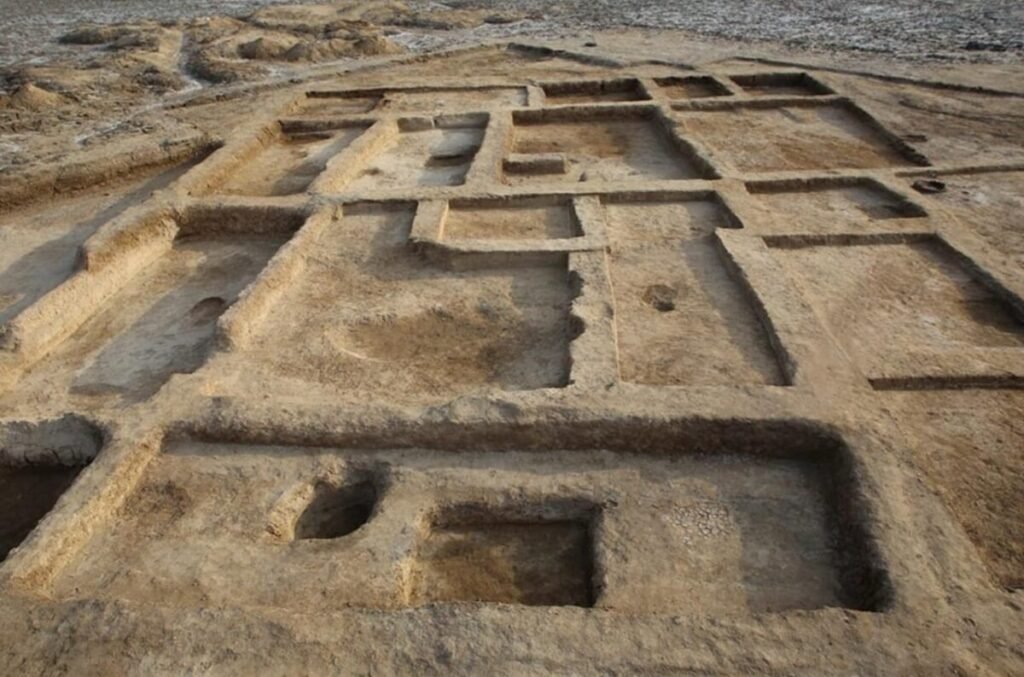
Archaeologists working at ancient Mesopotamian cities such as Ur and Uruk have identified black residues embedded in brick foundations, canal linings, and boat remains. Laboratory analysis confirmed the substance was bitumen — a viscous petroleum material chemically similar to modern asphalt.
Dr. Augusta McMahon, an archaeologist at the University of Cambridge who studies Mesopotamian urbanism, said in published research notes that bitumen “functioned as a structural sealant and waterproofing layer essential for survival in flood-prone environments.”
The Sumerians lived between the Tigris and Euphrates rivers, an area with seasonal flooding and marshlands. Mud-brick construction dominated their architecture, but those bricks erode quickly when wet. Bitumen solved that problem.
Researchers say the material hardened after cooling, forming a durable water-resistant coating.
Why Natural Bitumen Was So Valuable
A Natural Resource Beneath Mesopotamia
Southern Iraq contains natural oil seeps where petroleum rises to the surface. Ancient residents could collect bitumen directly, without drilling or refining.
Chemical studies conducted on samples from the ancient city of Ur, reported in archaeological journals, showed the bitumen likely came from the Hit region along the Euphrates River, a location still known for asphalt springs.
Dr. Eric H. Cline, professor of ancient history and archaeology at George Washington University, explains in lectures and research publications that bitumen was “as important to early Mesopotamia as metal or timber, both of which were scarce locally.”
Waterproof Boats and River Trade
One of the clearest uses appears in ancient river transport.
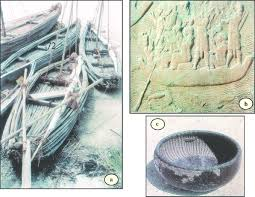
Sumerians built boats from bundles of reeds tied together with rope. These vessels naturally leaked. Archaeologists found preserved impressions of reeds coated in hardened bitumen, proving the material was used as waterproofing.
The British Museum reports that the coating allowed vessels to carry goods across canals and rivers, forming an early trade network across Mesopotamia and the Persian Gulf.
Trade and Early Commerce
The ability to move goods changed Sumerian society. Cities could import wood, stone, and metals unavailable locally.
According to cuneiform tablets translated by Assyriologists, merchants shipped copper from Oman and stone from Anatolia using river and sea routes. Bitumen made that transportation possible.
Construction, Cities, and the First Urban Infrastructure
The same substance also appears in buildings.
Archaeologists discovered bitumen used:
- as mortar between bricks
- lining canals and reservoirs
- sealing floors
- protecting temple foundations
In major temples known as ziggurats, builders layered mud-bricks with thin bitumen coatings to prevent groundwater damage.
Professor Harriet Crawford, a Mesopotamian specialist at University College London, wrote in her studies of early cities that waterproofing technology was “fundamental to maintaining dense urban populations in southern Iraq.”
Without it, irrigation canals would leak and buildings would collapse during floods.
Early Petroleum Technology
Historians increasingly view bitumen as one of the world’s earliest engineered materials.
The Sumerians:
- mined it
- transported it
- processed it by heating
- applied it with tools
Those steps resemble a primitive industrial process.
Researchers from archaeological chemistry labs have noted that heating bitumen improved adhesion — an intentional technique demonstrating material science knowledge.
Dr. McMahon said in an academic lecture that “this was not casual use of tar; it was controlled engineering.”
Broader Historical Context
Mesopotamia is widely considered the world’s first urban civilization, emerging around 3500 BCE. Its cities required irrigation, transport, and durable construction.
Other ancient societies relied on stone architecture, but southern Mesopotamia lacked both stone and timber. Bitumen filled that technological gap.
Scholars now argue early hydrocarbon use contributed directly to the rise of cities.
Why the Discovery Matters Today
Modern asphalt roads and roofing materials use refined bitumen derived from crude oil. The chemical principle is the same: a sticky hydrocarbon binder that hardens into a water-resistant surface.
The finding reshapes understanding of technological history. Instead of modern petroleum engineering beginning in the 19th century, its conceptual roots extend back millennia.
Historians now describe Mesopotamia as the first civilization to apply petroleum systematically to construction and infrastructure.
Ongoing Research
Archaeological teams continue chemical fingerprinting of bitumen samples from different sites to trace trade routes and economic networks.
Researchers hope the data will reveal how organized early governments were in controlling natural resources — an issue still relevant in the region today.
Dr. Cline notes that ancient societies “already understood resource management and supply chains in ways surprisingly familiar to the modern world.”
Final Outlook
New excavations and laboratory techniques are expected to refine dating and sourcing of the material. Scholars say each sample offers insight into the earliest urban engineering systems.
As researchers continue analyzing artifacts, they may further demonstrate how a naturally occurring petroleum substance helped sustain the first cities on Earth.
FAQs About Sumerians Used Natural Bitumen
Was bitumen the same as modern asphalt?
Not refined, but chemically related. Modern asphalt is processed petroleum, while Sumerians used raw natural bitumen.
Did other ancient civilizations use it?
Yes, but Mesopotamia shows the earliest large-scale systematic use in infrastructure.
Why is this discovery important?
It suggests petroleum materials contributed directly to the rise of early cities and organized trade networks.