
Sunken Military Vessel Near Thonis-Heracleion: and this discovery is rewriting what we know about ancient naval power, trade, and cross-cultural collaboration in the Mediterranean world. When experts announced the find near the submerged Egyptian port city of Thonis-Heracleion, it sent a ripple through the global archaeology community. This isn’t just about an old ship resting underwater. It’s about understanding how civilizations worked together, defended their interests, and built complex maritime networks more than 2,200 years ago.
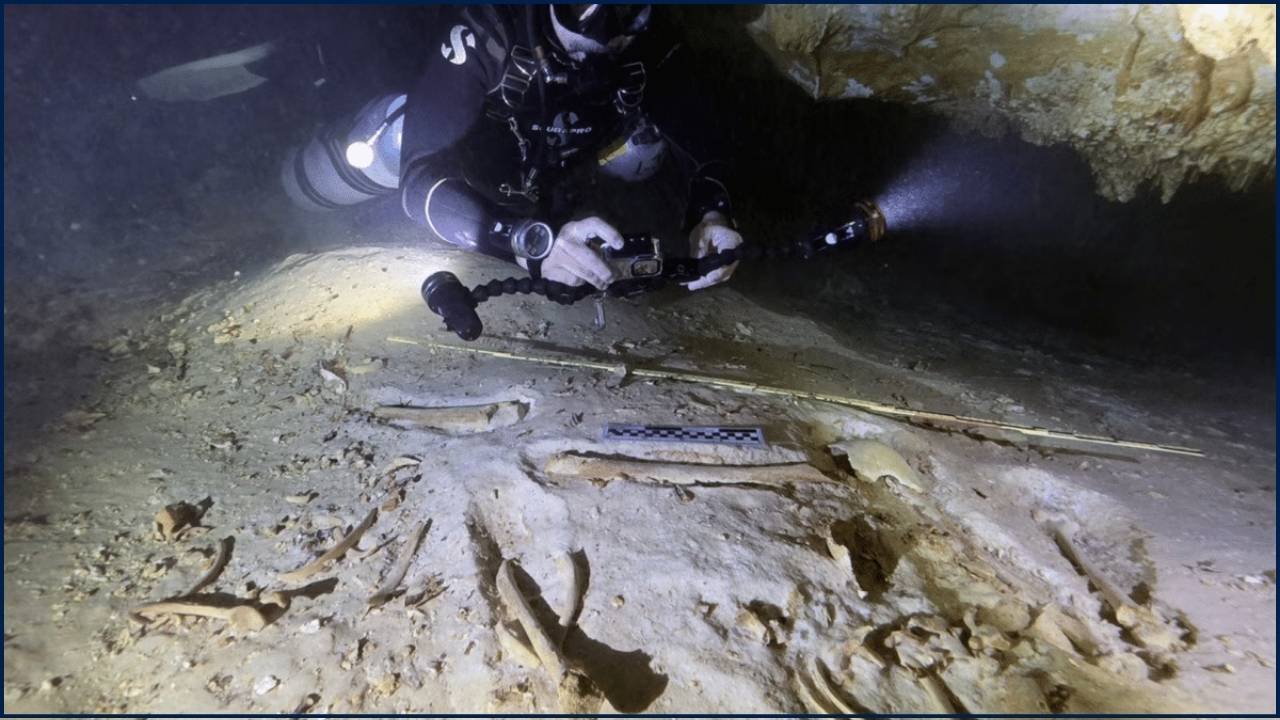
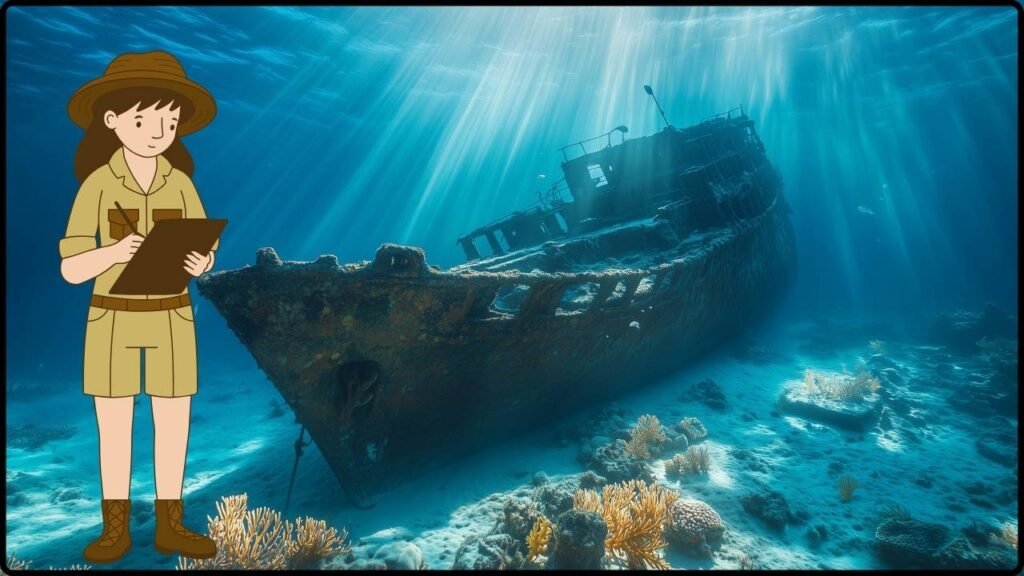
If you’re new to underwater archaeology, let me put it in everyday terms. Imagine a time capsule sitting at the bottom of the ocean for centuries. No sunlight, limited oxygen, sealed under layers of clay. That’s exactly what protected this ancient military vessel. Located in Abu Qir Bay, near Alexandria, the wreck was uncovered by divers from the European Institute for Underwater Archaeology, under the leadership of marine archaeologist Franck Goddio. This discovery connects ancient Egypt, Greek maritime engineering, military logistics, and global trade routes in one powerful narrative.
Table of Contents
Sunken Military Vessel Near Thonis-Heracleion
Archaeologists locating a sunken military vessel near Thonis-Heracleion is more than a headline — it’s a window into a complex ancient world. The 2,200-year-old warship offers rare insight into naval engineering, trade enforcement, cultural collaboration, and seismic vulnerability. From advanced Greek joinery to Egyptian hull design, this discovery bridges civilizations. It reinforces the value of scientific excavation, international teamwork, and long-term preservation. The ocean still holds stories waiting to be told. And as technology improves, we’re just scratching the surface.
| Category | Details |
|---|---|
| Discovery Location | Thonis-Heracleion, Abu Qir Bay, Egypt |
| Estimated Date | 2nd Century BCE (~2,200 years old) |
| Vessel Type | Ancient military warship |
| Length | Approximately 25 meters (82 feet) |
| Cultural Influence | Greek mortise-and-tenon + Egyptian hull design |
| Cause of Sinking | Collapse of the Temple of Amun during seismic activity |
| Excavation Authority | European Institute for Underwater Archaeology |
| Official Reference | https://www.franckgoddio.org |
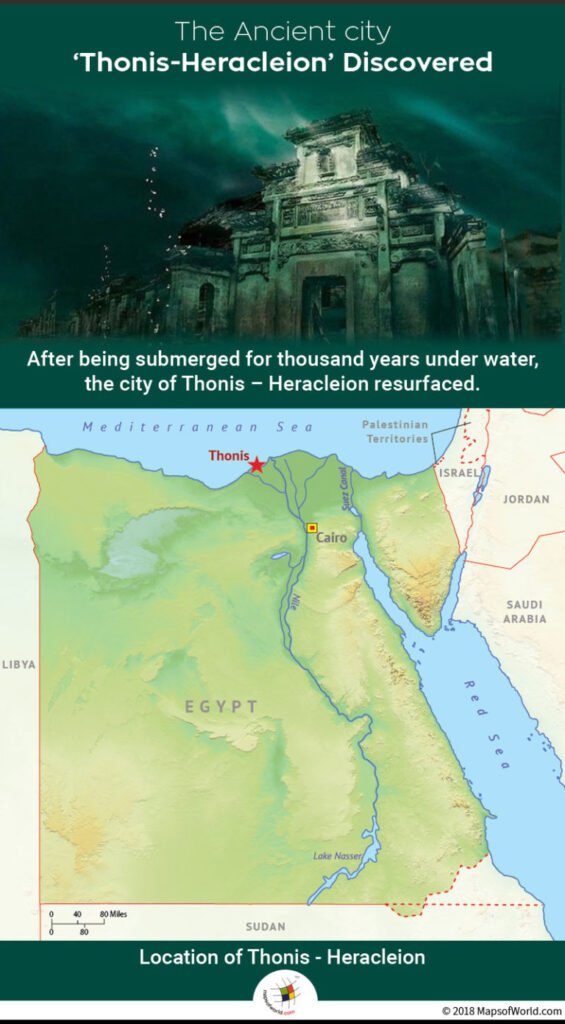
Understanding Thonis-Heracleion: Egypt’s Lost Maritime Gateway
Before Alexandria became the superstar port city of the Mediterranean, Thonis-Heracleion was Egypt’s primary international gateway. Greek historians like Herodotus mentioned it, but for centuries scholars debated whether it was legend or reality.
In 2000, Franck Goddio’s team located the city underwater. Since then, archaeologists have documented:
- More than 70 shipwrecks
- Massive statues of gods and pharaohs
- Gold coins and ceremonial objects
- Temple complexes dedicated to Amun
According to reporting from Reuters, the city likely sank due to a combination of earthquakes, soil liquefaction, and rising sea levels between the 2nd century BCE and 8th century CE.
Soil liquefaction happens when water-saturated sediment loses strength during seismic shaking. The ground literally behaves like quicksand. Structures collapse. Entire city blocks slide into the sea.
That’s how a thriving port becomes an underwater archaeological wonder.
What Makes This Sunken Military Vessel Near Thonis-Heracleion So Important?
Let’s get real — ancient ships rarely survive intact. Warships especially. They were often dismantled, burned, or reused. According to UNESCO’s Underwater Cultural Heritage program, only a small percentage of ancient naval vessels are preserved in archaeologically recoverable condition.
This particular ship is approximately 25 meters long — about 82 feet. That size indicates it wasn’t a small patrol boat. It was built for power and maneuverability.
Experts identified a fascinating construction blend:
- Greek mortise-and-tenon joinery, where wooden planks are fitted together with precision-cut joints
- Egyptian flat-bottom hull structure suited for Nile River navigation
This combination suggests cross-cultural shipbuilding knowledge during the Ptolemaic period, when Greek rulers governed Egypt after Alexander the Great’s conquest.
That’s more than just cool trivia. It proves international collaboration in military engineering more than two millennia ago.
The Ptolemaic Context: Why a Warship Was There
During the 2nd century BCE, Egypt was ruled by the Ptolemaic dynasty, descendants of Alexander the Great’s general Ptolemy I. The Mediterranean world at that time was competitive and politically charged.
Naval power meant:
- Protection of trade routes
- Defense against rival kingdoms
- Enforcement of customs duties
- Rapid troop deployment
Thonis-Heracleion controlled entry into the Nile Delta. Any vessel entering Egypt had to pass through its customs checkpoints. That made the port both economically and militarily strategic.
This warship was likely stationed near the grand Temple of Amun, serving as protection for commercial and religious activity. When the temple complex collapsed during seismic activity, heavy stone blocks crushed and buried the vessel.
Ironically, that destruction preserved history.
How Marine Archaeologists Found and Studied the Sunken Military Vessel Near Thonis-Heracleion
Underwater archaeology isn’t treasure hunting. It’s methodical, slow, and deeply scientific.
Step 1: Remote Sensing Technology
Teams use side-scan sonar and magnetometers to detect anomalies beneath the seabed. Variations in magnetic fields can indicate buried metal or wood structures.
Step 2: Grid Mapping
Divers establish a grid system over the excavation area to document precise locations. Every plank matters.
Step 3: Sediment Removal
Using water dredges, divers carefully remove sand and clay without damaging fragile wood.
Step 4: Documentation
High-resolution underwater photography and 3D modeling record every detail before lifting any material.
Step 5: Conservation
Saltwater-saturated wood must undergo stabilization treatments. Without chemical conservation, the wood would crack and disintegrate upon drying.
According to the National Park Service’s Submerged Resources Center, conservation can take years depending on the artifact’s condition.
This is long-game science, not a Hollywood quick dive.
Economic and Cultural Insights from the Ship
This vessel helps researchers understand:
Trade Control
The presence of military ships near customs hubs suggests strict regulation of imports and exports.
Cultural Integration
Greek shipbuilding techniques merged with Egyptian designs show shared craftsmanship.
Military Logistics
The vessel likely had both oars and sails, offering flexibility for river and sea operations.
Religious Protection
Stationing near the Temple of Amun suggests protection of sacred and economic institutions.
From a professional standpoint, this is primary-source data — physical evidence that confirms written historical accounts.
Climate Change and Underwater Preservation
Here’s where it gets modern and real.
Rising sea levels are affecting submerged archaeological sites worldwide. According to NOAA’s Climate.gov, global sea levels have risen approximately 8–9 inches since 1880, with acceleration in recent decades.
While deeper burial sometimes protects artifacts, changing water chemistry and stronger storms can destabilize sites.
In the United States, NOAA’s National Marine Sanctuaries program protects historic wrecks such as the USS Monitor. International cooperation is essential for preservation.
Protecting underwater heritage isn’t just academic. It’s about safeguarding cultural identity.
Practical Lessons for Students and Professionals
Patience Pays Off
This ship lay hidden for centuries. Discovery required advanced technology and disciplined methodology.
Interdisciplinary Work Matters
Geologists, historians, engineers, chemists, and divers all collaborate in marine archaeology.
Context Is Everything
Artifacts without documentation lose scientific value. Careful excavation preserves historical context.
International Collaboration Works
The French-Egyptian partnership demonstrates effective cross-border research.
If you’re pursuing a career in archaeology, maritime studies, or heritage management, organizations like the Archaeological Institute of America) offer professional resources and certification pathways.
Ancient 3,500-Year-Old Boar Tusk Helmets Unearthed Close To Pylos In Rare Archaeological Find
The Bigger Historical Impact
Discoveries like this reshape textbooks. Written sources from ancient historians sometimes exaggerate or misinterpret events. Physical evidence anchors narratives in reality.
This ship demonstrates:
- Advanced naval engineering
- Strategic military positioning
- Cross-cultural craftsmanship
- Economic enforcement mechanisms
For professionals, this provides comparative data alongside Mediterranean wrecks found in Greece, Italy, and Turkey.
For everyday readers, it’s a reminder that history isn’t static. It’s dynamic, evolving with every excavation.