
Best-Preserved Dinosaur Embryo: The discovery of the best-preserved dinosaur embryo ever found is turning heads across the scientific community and beyond. Found nestled within a fossilized egg in southern China, this 70-million-year-old marvel is more than just a stunning relic of the past—it’s a biological time capsule. While we’re still far from cloning a T. rex and unleashing it in Central Park (calm down, Jurassic Park fans), this fossil brings us a step closer to understanding ancient life, dinosaur evolution, and even the foundations of de-extinction science. This article walks you through everything you need to know—from the science behind the find to what it means for the future of evolutionary biology and biodiversity restoration. Whether you’re a curious 10-year-old or a seasoned scientist, you’ll walk away with a deeper appreciation of this extraordinary discovery.
Table of Contents
Best-Preserved Dinosaur Embryo
The best-preserved dinosaur embryo ever discovered is more than a scientific curiosity—it’s a rare, evolutionary time capsule. From proving how closely birds resemble their ancient dino cousins to shaping future research in genetics and developmental biology, Baby Yingliang opens doors that were long closed. It may not resurrect dinosaurs, but it resurrects knowledge, showing us where we came from and how behaviors like tucking and brooding emerged. In an age of mass extinction and technological wonder, understanding our planet’s biological history has never been more important.
| Feature | Details |
|---|---|
| Discovery | Dinosaur embryo in fossilized oviraptorid egg, ~70 million years old |
| Nickname | Baby Yingliang |
| Location | Yingliang Stone Nature History Museum, Liaoning Province, China |
| Preservation | Most intact dinosaur embryo ever found; preserved in “tucking” bird-like posture |
| Scientific Significance | Links bird and dinosaur behavior; provides rare developmental insights |
| DNA Recovery | No retrievable DNA; de-extinction of dinosaurs not possible via this specimen |
| Related Species | Oviraptorids—theropod dinosaurs related to modern birds |
| Official Source | Yingliang Stone Nature Museum Website |
What’s All the Best-Preserved Dinosaur Embryo Buzz About?
Let’s break it down: scientists in China discovered an embryo belonging to an oviraptorid dinosaur, a bird-like, feathered dinosaur species that roamed the Earth during the Late Cretaceous period. That places the egg at approximately 70 to 72 million years old—long before woolly mammoths, saber-toothed cats, or even the earliest humans walked the planet.
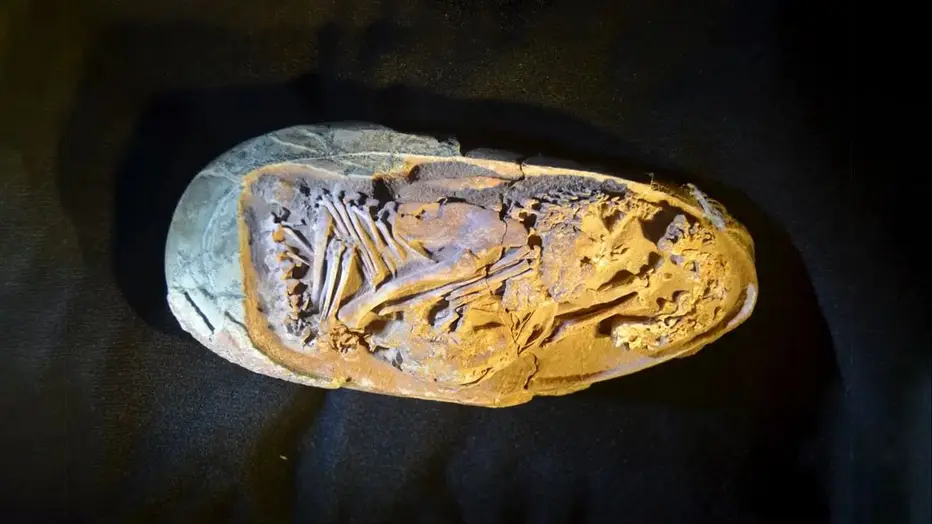
What makes this fossil stand out isn’t just its age. It’s the astonishing level of preservation. Unlike most fossilized eggs that contain crushed or fragmented remains, this embryo—now affectionately dubbed Baby Yingliang—is nearly complete, with its tiny bones still curled up in a natural position, mimicking how bird embryos prepare to hatch.
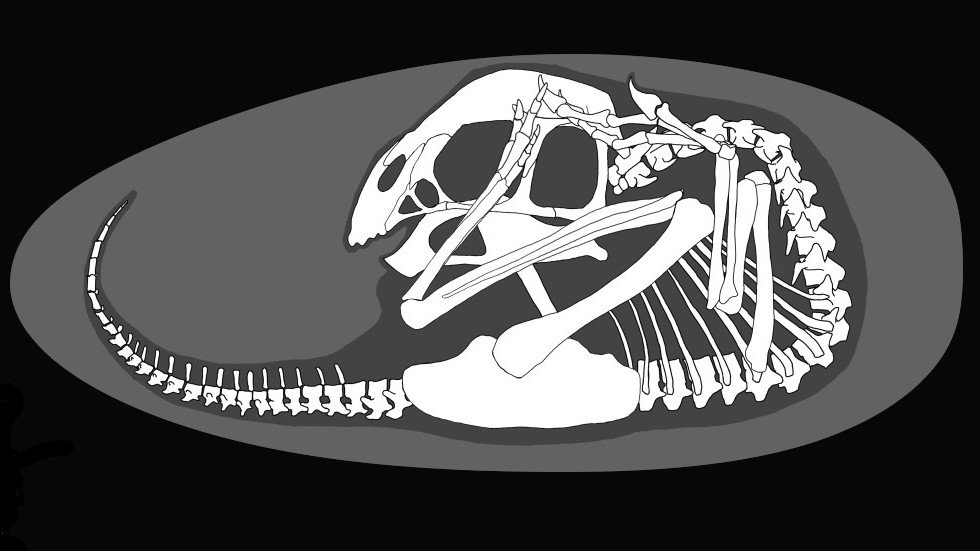
The embryo’s posture, known as “tucking”, was previously thought to be unique to modern birds. This behavior helps birds align their heads and wings to prepare for a successful hatching. But here it is, frozen in time, in a dinosaur fossil. That’s huge.
A Discovery Millions of Years in the Making
The egg was actually found over two decades ago but was forgotten in a storage room at the Yingliang Stone Nature Museum until recent renovations led curators to examine it more closely. When they noticed bones sticking out from the shell’s broken edge, they knew they were onto something special.
CT scans revealed a fully articulated embryo measuring about 10.6 inches (27 centimeters) long, with a curved spine, folded limbs, and a tucked-in head—almost like a modern-day chick preparing to hatch. The clarity and completeness of the bones have allowed scientists to map out precise anatomical features, revealing just how closely related some dinosaurs were to today’s birds.
“We are blown away by how similar this dinosaur embryo is to a modern bird embryo,” said Dr. Waisum Ma of the University of Birmingham, co-author of the study published in iScience.
Oviraptorids: The Original Helicopter Parents?
Oviraptorids, the group this embryo likely belonged to, are particularly interesting to paleontologists. These dinosaurs were feathered, beaked, and mostly bipedal. Many were small to medium-sized and believed to be omnivorous or herbivorous.
What sets them apart, though, is their nesting behavior. Fossilized oviraptorid adults have been discovered sitting on nests—arms spread out protectively over eggs—just like modern birds. This indicates active brooding behavior, a sign of parental care. It’s no stretch to say these creatures may have been the original “helicopter parents.”
The embryo’s curled posture supports this theory. It hints that complex embryonic behaviors and possibly neural circuits controlling those behaviors had already evolved by this time. That’s a monumental shift in how we view the intelligence and care strategies of dinosaurs.
Why Best-Preserved Dinosaur Embryo Changes Everything for Dinosaur Science?
We’ve always suspected that birds evolved from dinosaurs, but this fossil bridges the gap in a visceral, visual way. The “tucking” behavior previously seen in avian embryos is now firmly documented in a non-avian dinosaur, suggesting this behavior predates the evolution of birds.
Let’s be clear: birds are dinosaurs. They’re not just “related” to them—they are modern dinosaurs. Chickens, pigeons, even that noisy crow in your backyard—they’re all descendants of the same lineage as Baby Yingliang.
According to the research team, this fossil offers insights into:
- Pre-hatching behavior and movement
- Evolution of avian motor patterns
- Developmental timing in dinosaur reproduction
- How nesting behaviors may have evolved and spread
So… Can We Clone a Dinosaur Now?
Let’s address the million-dollar question: Can this embryo bring us closer to cloning dinosaurs?
The short answer? No—at least not yet.
While the fossil is physically intact, there is no surviving DNA. DNA begins degrading after death and has a theoretical half-life of just over 500 years. Even under ideal preservation conditions (think ice or amber), DNA simply doesn’t survive for tens of millions of years. This means that the dream of reviving a velociraptor with ancient DNA is, for now, firmly in the realm of science fiction.
But that doesn’t mean all hope is lost. This fossil provides developmental blueprints. By comparing its anatomy and behavior with modern birds, scientists can fill in gaps in the evolutionary record. These insights could help genetically engineer bird traits to resemble extinct ancestors—a direction some scientists believe could one day simulate “dinosaur-like” creatures.
Ethics of De-Extinction: Should We Even Try?
Even if the tech catches up—should we revive extinct species? It’s not just a question of can we, but should we.
Reintroducing extinct animals raises ethical, environmental, and even legal questions:
- Would they survive in today’s climate?
- Would their ecosystems still exist?
- Could they pose a danger to existing species?
- Who’s responsible for their welfare?
These are the same questions being debated in current efforts to revive the woolly mammoth and passenger pigeon—projects that do have access to usable DNA thanks to much more recent extinction events.
So while dinosaurs are out of reach (for now), these conversations are very much alive—and this fossil is adding fuel to that fire.
Comparing Other Embryo Finds
It’s worth noting that embryonic dinosaur fossils are extraordinarily rare. According to a 2017 Nature Communications review, fewer than a dozen complete dinosaur embryos have been documented worldwide. Most are partial or flattened beyond useful study.
For instance:
- In Argentina, sauropod embryos have been discovered, but with less-defined features.
- Mongolia has yielded some fragmentary theropod embryos, but none as complete as Baby Yingliang.
- The Lufengosaurus embryo find in China (2013) was well-preserved but lacked a curled posture.
None compare in clarity, articulation, or tucking behavior to this oviraptorid specimen.
What’s Next in the Research?
This fossil is just the beginning. Scientists plan to:
- Analyze bone microstructures to better understand growth rates.
- Compare limb and beak development with other embryos.
- Model the embryo’s movement using 3D simulations.
- Study the surrounding sediment for clues about environmental conditions at the time of fossilization.
All of this will deepen our understanding of not just this dinosaur, but how all dinosaurs evolved and lived.
A 70-Million-Year-Old Dinosaur Egg Hid a Crystal No One Had Ever Seen Before
Is This the Strangest Place in the Universe? Scientists Probe a Possible Fifth Dimension
Scientists Find That Just 27 Minutes of Meditation Can Create Measurable Changes in the Brain