
For most of human history, Antarctica has existed in our imagination as a blank white shape at the bottom of the globe. On classroom maps and atlases, it looked simple just ice, cold, and emptiness. But scientists have always known that was only the surface story.
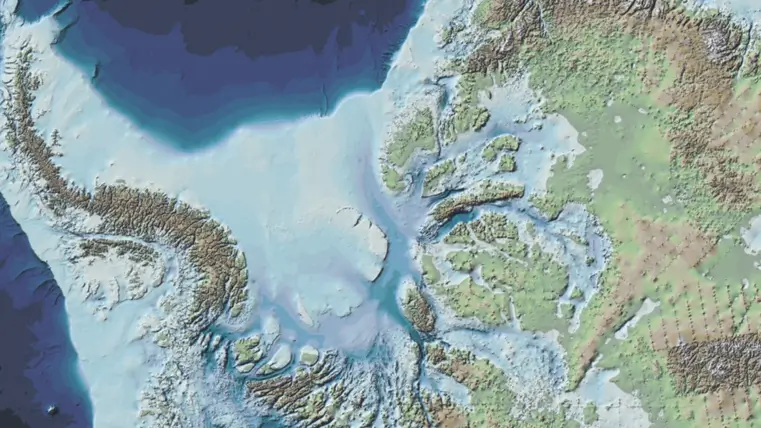
What lies underneath matters far more than what we see above. Now, thanks to new technology and decades of research, the Antarctica bedrock map is revealing a hidden continent that looks nothing like the smooth ice dome we once pictured. The Antarctica bedrock map shows a rugged, uneven world buried under miles of frozen water. This discovery is not just interesting geography. It directly affects sea-level predictions, climate science, and even the future safety of coastal cities around the world. Understanding what sits under Antarctica helps scientists answer a critical question: how fast can the ice melt, and what happens if it does?
The new Antarctica bedrock map is essentially a ground-level map of a continent nobody can physically see. Scientists sent radar signals through the ice sheet and measured how they bounced off the rock below. By calculating the return time, they reconstructed the terrain hidden beneath ice that in places is almost 4.8 kilometers thick. The result shows Antarctica has mountain chains, enormous basins, and deep valleys. These features determine how glaciers move. Instead of spreading randomly, the ice flows like slow rivers guided by slopes under it. The Antarctica bedrock map now allows climate models to simulate glacier behavior and collapse far more accurately than before.
Table of Contents
What Antarctica Looks Like Under the Ice
| Key Feature | Details |
|---|---|
| Mapping Project | BedMachine Antarctica |
| Ice Thickness | Up to 4.8 km (3 miles) |
| Tools Used | Ice-penetrating radar, satellites, airborne surveys |
| Major Discovery | Deep basins below sea level and buried mountain ranges |
| Scientific Importance | Improves glacier movement and sea-level models |
| Climate Impact | Better prediction of coastal flooding risks |
| Data Collected | Decades of international polar measurements |
| Key Finding | Terrain beneath ice controls melt speed |
For the first time, humanity can visualize Antarctica as a real landscape rather than a blank white mass. Beneath the ice lies a continent filled with mountains, valleys, and submerged basins. This understanding reshapes how scientists study glaciers and predicts future change. Most importantly, the Antarctica bedrock map strengthens our ability to forecast sea-level rise. What happens beneath Antarctica’s ice affects coastlines across the world. While the continent remains remote and difficult to reach, its influence touches millions of people living far away. By uncovering its hidden terrain, scientists have taken a crucial step toward understanding the future of our planet.
A Continent Shaped By Mountains And Valleys
- One of the biggest surprises revealed by the Antarctica bedrock map is how dramatic the landscape really is. Instead of flat terrain, the continent looks like a rugged mountain country buried under a frozen blanket. Researchers discovered long mountain chains, some comparable in scale to famous ranges found on other continents. Between them sit wide valleys carved by flowing water millions of years ago, back when Antarctica was warmer and not covered in ice.
- Some regions form giant bowl-shaped basins. These act like storage containers, holding thick ice in place. Other regions slope gently toward the ocean. These slopes work like highways for glaciers, allowing them to accelerate outward toward the sea. That movement matters. When ice moves faster, melting can increase rapidly once warming begins.
- Scientists were especially surprised by East Antarctica. For a long time, researchers believed it was stable and unlikely to change. The new map shows large low-lying areas hidden beneath the ice, meaning parts of East Antarctica may be more vulnerable to melting than previously thought.
How Scientists Mapped Beneath 3 Miles of Ice
- Creating the Antarctica bedrock map required patience and cooperation from scientists across many countries. It was not the result of a single expedition, but decades of measurements pieced together.
- Aircraft equipped with ice-penetrating radar flew thousands of kilometers across the frozen continent. The radar waves traveled through the ice and bounced back from the rock surface. Each reflection gave a depth measurement. Satellites added another layer of information by measuring ice height and slight variations in gravity. Heavier rock formations create tiny gravitational changes, which helped scientists estimate what lies below.
- Computers then combined all the data into one continuous model. The software filled gaps where direct measurements were unavailable, using physics-based calculations to estimate terrain. The result is the clearest picture ever produced of what exists beneath Antarctica’s ice sheet.
Why the Hidden Terrain Matters
At first glance, mapping hidden rock might seem like an academic exercise. In reality, it directly influences global climate predictions. Ice sheets do not simply sit in place. They move according to the land beneath them. Imagine pouring thick syrup over a tilted plate. It flows downhill. The same principle applies to glaciers. If the bedrock slopes inland, melting at the coast can cause the glacier to retreat deeper into the continent. This process can continue even if temperatures stop rising. Scientists refer to this as marine ice sheet instability. The Antarctica bedrock map shows several regions in West Antarctica are positioned exactly in a way that makes them vulnerable to this runaway retreat. Knowing where those areas are allows researchers to monitor them more closely.
Hidden Basins Below Sea Level
- Perhaps the most important discovery is how much of Antarctica actually lies below sea level. The ice sheet is not sitting entirely on high land. In many places it fills enormous depressions in Earth’s crust.
- If the ice disappeared, seawater would flood deep into the interior. The Antarctica bedrock map shows this is especially true in West Antarctica. Some glaciers rest on rock hundreds of meters below sea level, making them vulnerable to warm ocean water creeping underneath.
- This type of melting is particularly dangerous because it happens out of sight. Air temperatures can remain cold while the glacier melts from below. Researchers believe this underwater melting is already contributing to thinning in several Antarctic glaciers.
Improving Sea-Level Predictions
- Antarctica stores roughly 70 percent of Earth’s freshwater ice. Even a small loss has global consequences. Coastal communities depend on accurate predictions of sea-level rise, and until recently those predictions carried large uncertainty.
- Before the Antarctica bedrock map, models lacked reliable terrain data. Scientists could estimate ice thickness but not how the ground beneath shaped movement. Now they can simulate glacier flow more realistically.
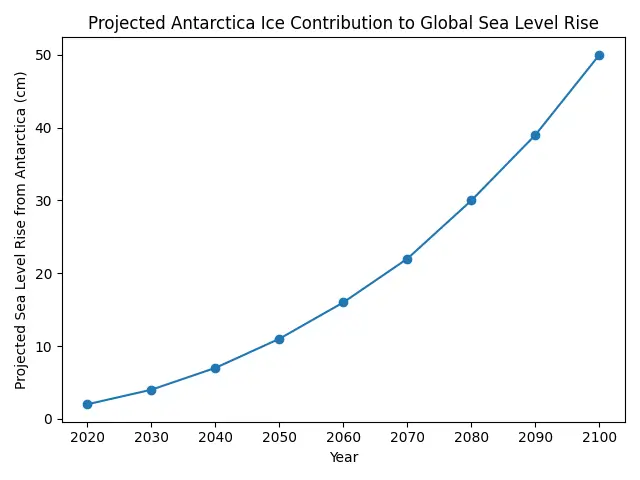
- Recent projections suggest Antarctica could significantly contribute to sea-level rise by the end of the century under strong warming scenarios. For low-lying cities, even a modest increase matters. Flooding risk rises, storm surges travel farther inland, and infrastructure planning becomes more complicated.
A New Era of Polar Research
- Beyond climate implications, the map opens a new chapter in Antarctic science. The valleys and ridges hint at a very different past. Long before the ice sheet formed, rivers likely flowed across a temperate landscape. Some mountains formed when ancient continents collided hundreds of millions of years ago.
- Scientists are now planning drilling projects guided by the Antarctica bedrock map. Ice cores collected from specific regions can trap tiny air bubbles from ancient atmospheres. These samples help researchers understand how Earth’s climate changed over hundreds of thousands of years and how current warming compares. The continent is no longer just a frozen desert. It is a geological archive waiting to be studied.
What Comes Next
The map represents a major milestone, but it is not the final version. Antarctica remains one of the least explored places on Earth. Some remote areas still lack direct measurements. Future satellites will measure ice thickness more precisely. Autonomous drones and robotic probes may one day explore beneath floating ice shelves. Researchers also want to combine the terrain model with ocean temperature monitoring, because warmer ocean currents are increasingly reaching glacier bases. The Antarctica bedrock map will continue evolving as new data arrives, improving forecasts year by year.
FAQs on Antarctica Looks Like Under the Ice
What Is the Antarctica Bedrock Map?
It is a scientific reconstruction of the land surface beneath Antarctica’s ice sheet created using radar, satellite measurements, and computer modeling.
Why Is The Antarctica Bedrock Map Important?
It helps scientists predict glacier movement and sea-level rise more accurately, improving long-term climate projections.
How Thick Is the Ice in Antarctica?
In some areas the ice is nearly 4.8 kilometers (about 3 miles) thick.
Can Antarctica Melting Affect Coastal Cities?
Yes. Because it holds most of Earth’s freshwater ice, large-scale melting could raise global sea levels and increase flooding risks.