
Planet-Scale Solar Ring: The Planet-Scale Solar Ring sounds like something straight out of a Saturday morning cartoon, but engineers, physicists, and energy planners are seriously studying it. The idea is simple to imagine: build a massive ring in space around Earth, cover it with solar panels, and send electricity back down to us 24/7. No night. No clouds. No winter shortages. I’ve worked around energy education and STEM outreach for years, and when kids first hear this concept, their eyes light up — then adults lean in, too. Why? Because this isn’t just sci-fi dreaming. It sits right at the crossroads of clean power, space exploration, and economic development. And frankly, the United States, along with Japan and Europe, is already researching space-based solar power.
Before we jump into the deep science, let’s slow down and ground this in real life. Every home, school, hospital, and data center depends on reliable electricity. Right now, America uses over 4,000 terawatt-hours (TWh) of electricity every year, and worldwide we use about 27,000 TWh annually. Meeting that demand without polluting the land, air, and water is the real challenge.
Table of Contents
Planet-Scale Solar Ring
The Planet-Scale Solar Ring sits in a fascinating place between dream and engineering plan. The physics checks out. The benefits are enormous: clean energy, stable power grids, and expanded space access. But the materials, launch logistics, and economic scale mean humanity still has a long road ahead. Still, every major technology — airplanes, satellites, the internet — once sounded impossible. What matters is that engineers are doing the math now. Whether it happens in 50 or 150 years, this idea represents how we think about stewardship: using knowledge to care for the land, water, and future generations.
| Topic | Details |
|---|---|
| What it is | A giant orbital structure covered with solar panels that collects sunlight continuously and transmits energy to Earth |
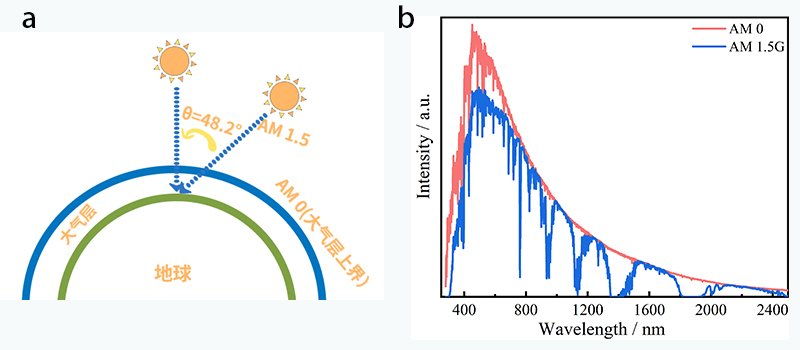
| Solar Energy in Space | About 1361 watts per square meter of sunlight (stronger than ground solar due to no atmosphere) |
| Potential Output | Could exceed global electricity demand if fully built |
| Key Technology | Microwave or laser energy transmission |
| Major Agencies Researching | NASA, U.S. Department of Energy, JAXA (Japan) |
| Career Fields | Aerospace engineering, robotics, materials science, electrical engineering, power grid management |
| Official Reference | https://www.energy.gov/eere/solar/solar-energy-technologies-office |
What Is a Planet-Scale Solar Ring?
Imagine a hula-hoop around Earth — but instead of plastic, it’s thousands of miles long and floating in orbit about 300–600 miles above us. That ring would hold solar panels facing the Sun all the time.
Because space has no nighttime and no clouds, the panels would generate power constantly.
Right now, solar panels on your roof only work during the day and lose efficiency in bad weather. Space solar panels avoid all that. In fact, solar power in orbit can receive nearly three times more usable sunlight than panels on the ground.
How the Energy Comes Down?
This is the part people worry about — and misunderstand.
The ring would not use power cables stretching to Earth.
Instead, engineers propose:
- Microwaves (safe, low-intensity)
- Directed radio-frequency beams
These beams would travel to large receiving antennas on the ground called rectennas. Those stations would convert the energy back into electricity and feed it into the grid.
The technology already exists in smaller tests. The U.S. Naval Research Laboratory successfully transmitted solar power wirelessly in space in 2020.
Why Engineers Care About the Planet-Scale Solar Ring?
1. Reliable Clean Energy
Here’s the big one.
Solar energy on Earth is intermittent. A hospital or factory cannot shut down when clouds roll in. A space solar ring would provide continuous baseload power — the same reliability as a nuclear or coal plant but without fuel.
2. Climate and Environmental Protection
Electricity generation is one of the largest sources of greenhouse gases. Replacing fossil fuels with continuous solar energy would dramatically reduce emissions.
3. Energy Independence
From a U.S. policy standpoint, dependable domestic energy reduces vulnerability to fuel price spikes and international conflicts.
The Science
Earth pulls everything downward with gravity.
So why wouldn’t the ring fall?
Because the ring would actually be moving. Inside it, a high-speed cable would travel at orbital velocity — around 17,000 miles per hour (27,000 km/h).
Just like a bucket of water swung in a circle doesn’t spill, the fast-moving mass keeps the structure held up.
Scientists call this a dynamic orbital structure.
The Big Engineering Challenges
Materials Problem
This is the biggest obstacle.
Steel is too heavy. Aluminum is too weak. The structure likely requires carbon nanotubes or graphene composites — materials stronger than steel but lighter than plastic. We can make small amounts today, but not millions of tons.
Launch Costs
Launching 1 kilogram into orbit currently costs thousands of dollars, even with reusable rockets. A planetary ring would need millions of tons of material.
Engineers believe asteroid mining or orbital manufacturing would have to exist first.
Space Debris
Space contains tiny rocks moving faster than bullets. Even a paint-chip-size impact can damage satellites. A solar ring would need constant robotic repair systems.
Control Systems
The ring would basically be the largest machine ever built. Computers and AI would constantly adjust speed, tension, and orientation to keep it stable.
Step-By-Step: How It Might Actually Be Built
Step 1: Reusable Rockets
Frequent, low-cost launches transport initial components.
Step 2: Orbital Factories
Robotic manufacturing in orbit builds structures without lifting everything from Earth.
Step 3: Power Satellites
Start small — individual solar power satellites first.
Step 4: Expand to Ring Segments
Link satellites into a partial ring.
Step 5: Full Energy Network
Continuous energy transmission to ground stations worldwide.
Practical Advice: Careers Connected to This Technology
If a student today wants to work on something like this, here are realistic paths:
Engineering Fields
- Aerospace engineering
- Electrical engineering
- Mechanical engineering
- Robotics engineering
Support Fields
- Power grid management
- AI software systems
- Environmental science
- Space law and policy
In the United States, internships through national labs and aerospace companies are already training workers in related technology.
Safety Concerns (Are the Energy Beams Dangerous?)
Short answer: no, not in the way people imagine.
The microwave intensity proposed is similar to sunlight levels. You could walk through a receiving field and feel mild warmth, like standing outside in Arizona sunshine. Aircraft flight paths would avoid the beam zones.
Safety standards would follow federal communication exposure limits.
Real-World Example
Japan’s space agency has tested transmitting energy wirelessly over distance and plans to demonstrate a space solar power satellite within this decade.
Meanwhile, U.S. agencies and universities are studying the same technology as part of long-term grid reliability and national infrastructure planning.
Giant Saturn-Like Planet Emerges from the Enigmatic Einstein Desert Discovery
NASA Reveals How a Command Mistake Temporarily Shut Down the TESS Planet Hunter
New Study Reveals Powerful Deep-Earth Secret Steering the Course of the Green River