

Green River Appears to Flow Uphill: You’ve probably heard someone say, “I swear that river’s flowing uphill!” when talking about the Green River — one of the great waterways of the American West. It sounds impossible at first, like something out of a tall tale or frontier legend. But if you’re curious about why the Green River appears to flow uphill in certain spots, you’re about to get the most complete, understandable explanation — one that combines solid science, geological history, practical examples, and insights professionals use when they actually study rivers and landscapes. Here’s the straight truth: water never flows uphill against gravity. But what looks like uphill flow along the Green River comes from one of the most fascinating earth processes you’ve probably never heard of: deep crustal movement over millions of years. The result is a natural illusion — and a perfect example of how landscapes evolve in ways that challenge our everyday instincts.
This article will take you through all the why’s, how’s, when’s, and what this means, using simple language, clear explanations, and expert insight. By the end, you’ll not only understand the Green River mystery — you’ll know exactly how earth scientists think about rivers, rock layers, mountains, and time.
Table of Contents
Green River Appears to Flow Uphill
The story of the Green River’s uphill illusion isn’t about water breaking physics — it’s about the Earth’s surface slowly bending, shifting, and rebounding over deep time. What looks like uphill water is really a flat‑footed testament to how landscapes record change and preserve history. From deep crustal forces like lithospheric dripping to the stubborn path the Green River carved and kept, this mystery teaches us something powerful: Earth’s surface is a living memory book, and rivers are some of the best storytellers we have. Whether you’re a student, a teacher, a professional geologist, or simply a curious reader, the Green River offers a lesson in why patience and perspective matter — especially over millions of years.
| Topic | Key Detail |
|---|---|
| River in Question | Green River — largest tributary of the Colorado River. |
| Mystery Explained | Appears to flow uphill due to geological movement after its path formed. |
| True Cause | Land uplift and down‑warping from lithospheric dripping. |
| River Length | ~730 miles through Wyoming, Colorado, and Utah. |
| Average Flow | ~6,121 cubic feet per second near Green River, Utah. |
| Mountains vs. River Age | Uinta Mountains ~50 million years old; river cut path ~8 million years ago. |
| Official Reference | U.S. Geological Survey (USGS): https://www.usgs.gov |
| Useful Fields | Geology, hydrology, geomorphology, environmental science. |
Introduction: A River That Confuses the Eye — But Not the Physics
Picture this: You’re staring down at the Green River winding through a rugged canyon in Utah. In a few places, the way the land tilts makes the river look like it climbs before it falls again. For a moment, you ask yourself, “Is this water going uphill?”
It’s a fair question. People have asked it for over a century, because the Green River’s path cuts straight through ancient mountain ranges — something you might expect a river to avoid unless it had special reasons. But here’s the ground rule for both river lovers and scientists: water always flows downhill. That’s a non‑negotiable principle of physics.
So how does the illusion happen? The answer connects the river’s route with deep earth processes, mountain building, and landscape evolution over millions of years.
To get this right, scientists look at rock structure, elevation records, geological surveys, and deep crust imaging techniques — the kinds of tools professionals use to read the Earth the way others read a book.
The Green River Basics: Geography You Can See on a Map
Before we dive into the science, let’s set the stage with the basics about the Green River:
- Location and Flow: The Green River originates in the high peaks of the Wind River Range in Wyoming. From there, it flows south into Utah, swings east into Colorado, and finally makes a sweeping return back into Utah where it meets the Colorado River.
- Total Length: Approximately 730 miles (about 1,175 kilometers).
- Landscape: The river traverses some of the most dramatic terrain in the American West, including deep canyons and broad valleys.
- Famous Sections: The Canyon of Lodore and Desolation Canyon are among the most spectacular stretches, carved deeply into rock layers over time.
- Average Discharge Near Utah: Roughly 6,121 cubic feet per second near the town of Green River, Utah, though this changes with seasonal snowmelt and rainfall.
These details aren’t just nice to know — they’re essential for anyone studying river dynamics, water management, or landscape evolution. Reliable data on rivers like the Green River comes from organizations like the U.S. Geological Survey (USGS), which monitors flow rates, elevation profiles, and geological features for researchers and the public.
Start With Gravity: Why Green River Appears to Flow Uphill
Before we get into the big Earth story, let’s set one thing straight:
Water flows downhill because of gravity. No river in nature ever flows uphill unless it’s pushed by human machinery or constrained in very unusual pressure environments.
This is fundamental physics that even a 10‑year‑old quickly learns once they watch rainwater travel down a driveway.
So if the Green River appears to go uphill in some places, something else must be going on — and that something else is the movement of the ground beneath the river, not the river overturning the laws of gravity.
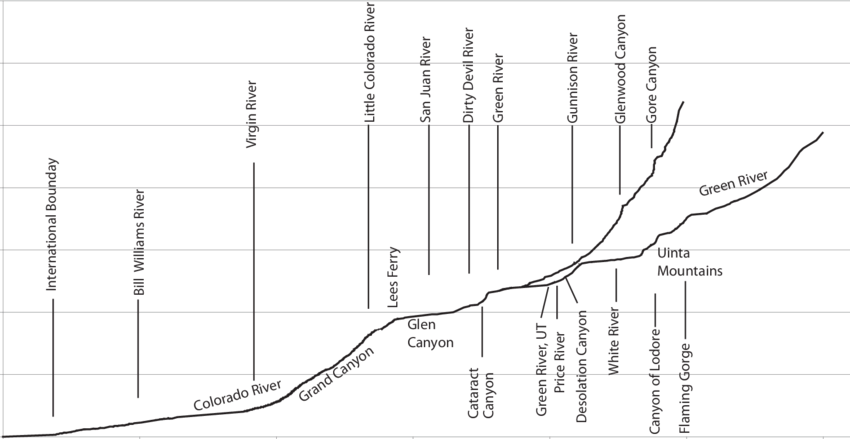
Mountains (Old) vs. River Path (Young): A Time Mismatch
Now we arrive at a crucial insight:
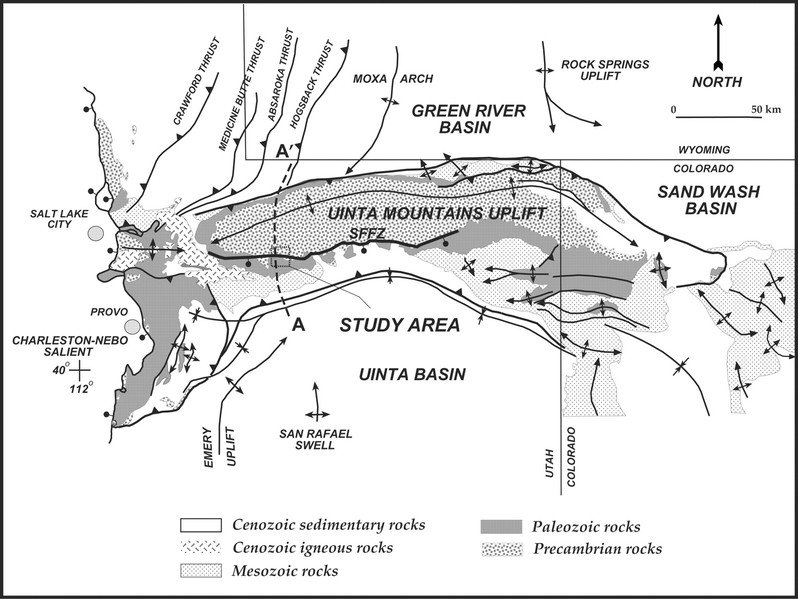
- The Uinta Mountains, which the river climbs near in elevation at some points, are about 50 million years old.
- The Green River’s path through those mountains was carved about 8 million years ago.
That’s a big difference. In geological terms, the mountains were already ancient when the river chose its current course. So the question becomes not “Why did the river go uphill?” but “What happened to the mountains after the river carved its way through them?”
This is where deep Earth processes come in to rewrite the landscape after the river was already flowing.
The Real Explanation: Green River Appears to Flow Uphill
The biggest breakthrough in solving this riddle came from research into a process called lithospheric drip — a geological phenomenon that causes sections of the Earth’s lower crust to slowly sink deep into the mantle under their own weight.
Here’s how it works in plain language:
- Deep Earth processes build dense rock layers beneath the crust, particularly near ancient mountain roots.
- Over millions of years, these heavy rocks begin to sink slowly (like a heavy block pressing into soft ground).
- As the dense material moves downward, it pulls the Earth’s crust with it, locally lowering the surface above.
- During this temporary depression, rivers like the Green River can carve straight through because their overall downhill gradient remains favorable.
- Later, when the dense root finally detaches and sinks deeper, the crust rebounds upward again — but the river already has its path cut into solid rock.
So the river is left running through ground that now sits relatively higher, creating the illusion that it once flowed “uphill.” In reality, the river always flowed downhill relative to the terrain at the time.
This explanation was supported by seismic profile data and geological imaging that shows evidence of ancient lithospheric dripping beneath the Uinta Mountains — the very area where the Green River’s uphill illusion is strongest.
Understanding this helps professional geologists interpret complex terrain and landscape evolution worldwide.
Step‑By‑Step: How the Illusion Formed
Let’s break it down clearly — like markers on a trail guide:
1. Millions of years ago, the Uinta Mountains were already old and tall.
2. A new river system (the Green River) started carving a path based on water flow from snowmelt and rainfall, following the easiest downhill path available at the time.
3. Deep beneath, heavy rock materials started to sink into the mantle, pulling the ground surface downward — like a slow, invisible earthquake.
4. This downward movement made the river’s route easier compared to trying to bend around high ground, so the river kept its straight path through the rock.
5. Once the dense rock detached and sank deeper, the ground rebounded — lifting the land around the river, but not the river bed itself.
6. The river now flows through ground that looks higher in spots, even though it still obeys gravity.
This sequence shows how gradual forces — not dramatic events — shape the earth’s surface over deep time.
Real‑World Impact: Why Green River Appears to Flow Uphill Matters
This isn’t just a geological curiosity — it has real implications for science and practical understanding:
- River Management: Knowing how rivers shape and respond to landscapes helps water resource managers plan for flood risks, irrigation, and ecological health.
- Landscape Interpretation: Toolkits like elevation models and terrain data depend on accurate geological context.
- Educational Value: This case becomes a powerful example in classrooms for explaining Earth systems, forces, and time scales.
- Geological Mapping and Resource Exploration: Deep geological processes inform not just river behavior but also mineral deposits and seismic risk.
In other words, what looks like an odd little scenic quirk is actually a clue into the deeper architecture of the planet.
Scientists Create a Low-Impact Building Material from Crushed Seashells
Scientists Study a Spider Silk That’s Stronger Than Steel and Spans Rivers