

Restore the American Chestnut Tree: Researchers Work to Restore the American Chestnut Tree is not just a conservation story—it’s a living example of how science, tradition, and community responsibility come together to repair something that once seemed permanently lost. For those of us who have walked Appalachian ridgelines, worked in forest management, or listened to our elders speak about how the land used to provide, the American chestnut is more than a species. It is a reminder of abundance, resilience, and responsibility. If you go back just a little over a century, the American chestnut tree (Castanea dentata) was one of the most important trees in the eastern United States. According to the U.S. Forest Service, it made up nearly one out of every four hardwood trees in some Appalachian forests. That’s a staggering figure. Imagine walking through a forest where every fourth tree towering above you was a chestnut. Now imagine nearly all of them gone within a few decades. That’s exactly what happened after the arrival of chestnut blight in the early 1900s.
Table of Contents
Restore the American Chestnut Tree
Researchers Work to Restore the American Chestnut Tree through a combination of backcross breeding, genetic engineering, and advanced genomic tools. Once numbering billions, this keystone species was devastated by chestnut blight in the early 1900s. Today, organizations like The American Chestnut Foundation, SUNY-ESF, and the U.S. Forest Service are leading long-term efforts to reintroduce blight-resistant trees. While challenges remain, science, stewardship, and sustained commitment offer a realistic path toward ecological restoration.
| Category | Details |
|---|---|
| Scientific Name | Castanea dentata |
| Historic Population | 3–4 billion trees before 1904 |
| Cause of Decline | Chestnut blight (Cryphonectria parasitica) |
| Restoration Methods | Backcross breeding, genomic selection, genetic engineering |
| Economic Value (Historic) | Rot-resistant timber, major wildlife food source |
| Current Status | Functionally extinct in wild; sprouts still survive |
| Official Reference | https://tacf.org |
The Historic Importance of the American Chestnut
The American chestnut wasn’t just common—it was foundational. Foresters sometimes call it a “keystone species,” meaning it played an outsized role in shaping the ecosystem.
Here’s what that meant in real terms:
- Food Source: Chestnut trees produced heavy annual nut crops. Wildlife like deer, black bears, wild turkey, and squirrels depended on them. Rural families collected chestnuts for food and income.
- Timber Value: The wood was straight-grained, lightweight, and naturally rot-resistant. It was widely used for barns, fence posts, log cabins, shingles, and furniture.
- Forest Structure: Because chestnuts grew quickly and tall—often over 100 feet—they shaped forest canopy layers and sunlight patterns.
The U.S. Forest Service notes that chestnut wood was so durable that many century-old barns in Appalachia still stand today because of chestnut beams. That durability made it economically significant across multiple industries.
For Native American communities in the East, chestnuts were part of seasonal gathering traditions. They were dried, ground into flour, and incorporated into winter diets. Restoring the tree, in that sense, is about cultural continuity as much as ecology.
Restore the American Chestnut Tree: What Caused the Collapse?
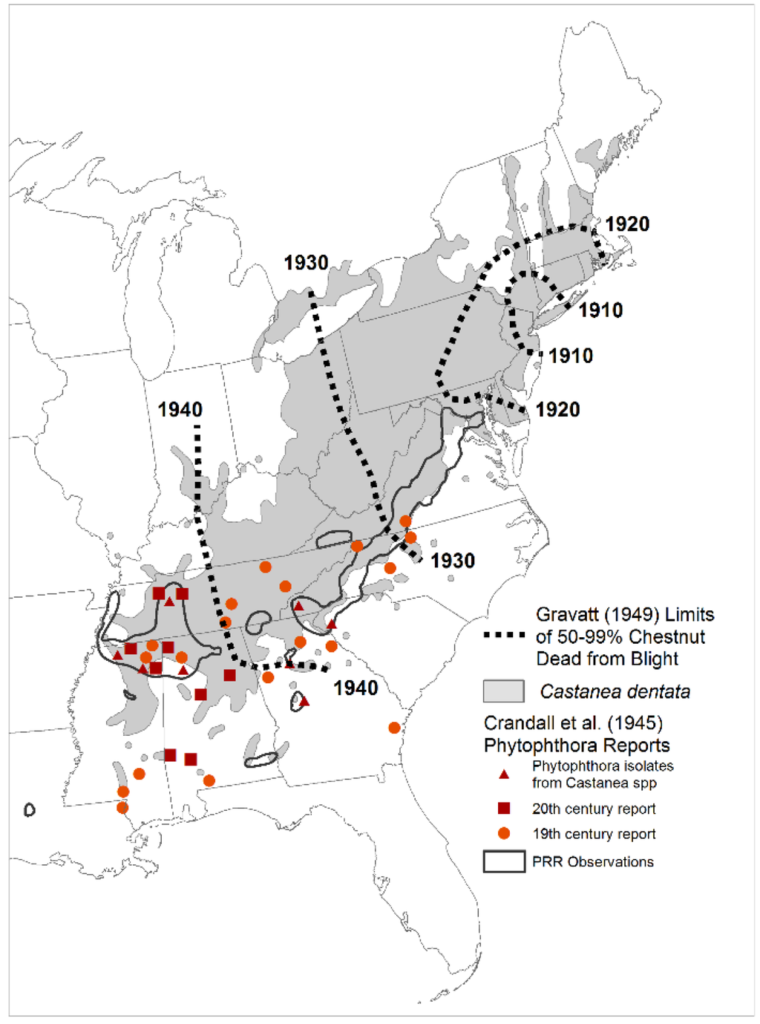
The collapse began in 1904, when chestnut blight was discovered in the Bronx Zoo in New York City. The fungus, Cryphonectria parasitica, had arrived from Asia on imported nursery stock.
Here’s how the disease works:
- The fungus infects bark tissue.
- It creates cankers that girdle the tree.
- The tree’s nutrient flow is cut off.
- The above-ground portion dies.
What makes it especially devastating is that while the roots often survive and send up sprouts, those sprouts eventually become infected again before reaching maturity.
By the 1940s, an estimated 3 to 4 billion American chestnut trees were dead, according to historical estimates cited by the USDA Forest Service. That level of ecological loss is almost hard to wrap your head around. It reshaped forest composition, wildlife feeding patterns, and even rural economies.
Current Status: Functionally Extinct but Not Gone
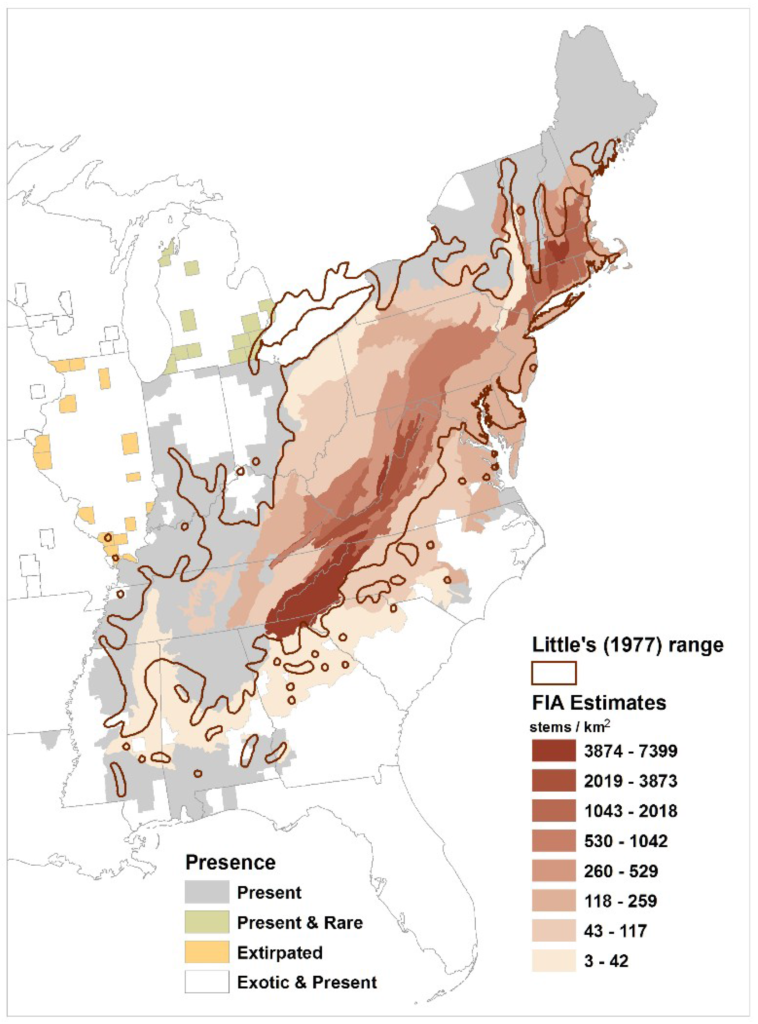
Today, the American chestnut is considered functionally extinct in the wild. That means mature, seed-producing trees are extremely rare, but root systems still exist across its former range.
If you hike through Appalachian forests today, you may see small chestnut sprouts growing from old root collars. They grow for several years, sometimes reaching 15 to 20 feet tall, before succumbing again to blight.
This persistent root survival is one reason restoration remains possible. The genetic blueprint of the American chestnut still exists. Scientists are not starting from scratch—they are building on what remains.
The American Chestnut Foundation and Backcross Breeding
One of the most influential organizations in restoration efforts is The American Chestnut Foundation (TACF). Founded in 1983, TACF leads a large-scale backcross breeding program designed to create blight-resistant American chestnuts while preserving native traits.
The strategy works like this:
- Cross an American chestnut with a blight-resistant Chinese chestnut.
- Then cross the offspring back with American chestnut.
- Repeat the process for multiple generations.
The goal is to retain approximately 94 percent American chestnut genetics while introducing resistance traits.
According to TACF’s official site, thousands of test trees are currently planted in research orchards and forest trials across multiple states. These plantings are monitored for growth, resistance, and ecological performance.
This process is slow. Trees take years to mature. But it follows classical plant breeding principles that farmers and foresters have used for generations. For professionals in forestry and conservation, this approach balances genetic integrity with practical resistance.
Genetic Engineering and the Darling 58 Line
Another major development in restoration research came from the State University of New York College of Environmental Science and Forestry (SUNY-ESF).
Researchers there developed a genetically engineered American chestnut known as Darling 58. Unlike backcross breeding, this method inserts a single gene from wheat that helps neutralize the acid produced by the blight fungus.
Here’s why that matters: The fungus kills trees largely because of oxalic acid production. The inserted gene enables the tree to break down that acid, allowing it to survive infection.
According to research published by SUNY-ESF:
- Darling 58 trees demonstrate significantly improved tolerance to blight.
- They grow and reproduce similarly to wild-type American chestnuts.
- The inserted gene does not produce toxins harmful to wildlife.
However, genetically engineered trees must undergo review by federal agencies including:
- USDA Animal and Plant Health Inspection Service (APHIS)
- Environmental Protection Agency (EPA)
- Food and Drug Administration (FDA)
Regulatory approval is a necessary step before large-scale distribution. The review process examines environmental impact, gene stability, and food safety.
This approach has sparked discussion. Some conservationists embrace biotechnology as necessary. Others advocate caution, emphasizing ecological unpredictability. For professionals, the conversation remains evidence-based and data-driven.
Genomic Selection and Modern DNA Tools
Modern genomics is accelerating chestnut restoration.
Recurrent Genomic Selection (RGS) uses DNA sequencing to identify seedlings most likely to carry resistance traits. Instead of waiting years to observe field survival, scientists can analyze genetic markers in young plants.
This reduces:
- Time to selection
- Field trial costs
- Generational breeding cycles
According to research supported by the U.S. Forest Service, genomic tools significantly improve predictive accuracy when selecting resistant individuals.
For forestry professionals, genomic selection represents a broader trend in forest genetics—using data to improve resilience against pests, pathogens, and climate stressors.
Ecological and Climate Benefits of Restore the American Chestnut Tree
Restoring the American chestnut is not just about replacing one species. It has broader implications:
- Carbon Sequestration: Fast-growing hardwoods capture atmospheric carbon.
- Wildlife Support: Annual nut crops stabilize wildlife food sources.
- Forest Resilience: Diverse forests resist pests and climate shifts better.
The U.S. Forest Service emphasizes that restoring foundational species strengthens ecosystem stability, especially under climate stress scenarios.
From a professional standpoint, chestnut restoration aligns with long-term sustainable forest management principles.
Practical Advice for Landowners and Professionals
If you are a landowner, conservation professional, or forestry manager interested in participating:
Site Considerations
American chestnuts prefer:
- Well-drained soils
- Slightly acidic conditions (pH 4.5–6.5)
- Full sunlight exposure
Avoid poorly drained or compacted soils.
Seedling Selection
Purchase seedlings only from reputable sources, such as local TACF chapters. Avoid unverified nursery claims of blight resistance.
Protection Measures
Young chestnuts are vulnerable to:
- Deer browsing
- Rodent damage
- Competing vegetation
Tree shelters and fencing significantly improve survival rates.
Monitoring
Document:
- Growth rates
- Signs of blight
- Wildlife interaction
Citizen science reporting supports broader research datasets.
Challenges and Realistic Timelines
Let’s keep it grounded. Restoration at landscape scale will take decades.
Challenges include:
- Persistent blight presence
- Regulatory uncertainty for biotech trees
- Climate variability
- Funding limitations
Forest restoration operates on generational timelines. Trees planted today may not reach full maturity for 30 to 50 years.
Professionals understand that ecological restoration is marathon work, not a sprint.
Atlantis Debate Returns as Researchers Compare Evidence and Myth
Researchers Detect a Small Organ Hidden Near the Nasal Passage
Researchers Analyse a 500-Year-Old Drawing to Trace Leonardo da Vinci’s DNA
The Broader Meaning of Restoration
Restoring the American chestnut tree is not about turning back the clock. It’s about moving forward responsibly.
Science has advanced. Genomics, breeding, and biotechnology offer tools that did not exist in 1904. At the same time, restoration honors historical knowledge and land stewardship traditions.
As professionals and community members, the responsibility is shared. Restoration requires:
- Long-term funding
- Transparent science
- Public education
- Regulatory diligence
- Intergenerational commitment
The story of the American chestnut is still being written. But for the first time in over a century, that story includes real, measurable hope.